





 English
  Francês
  Alemão
  Italiano
  Japonês
  Norueguês
  Portuguese
  Spanish
 3 min of reading


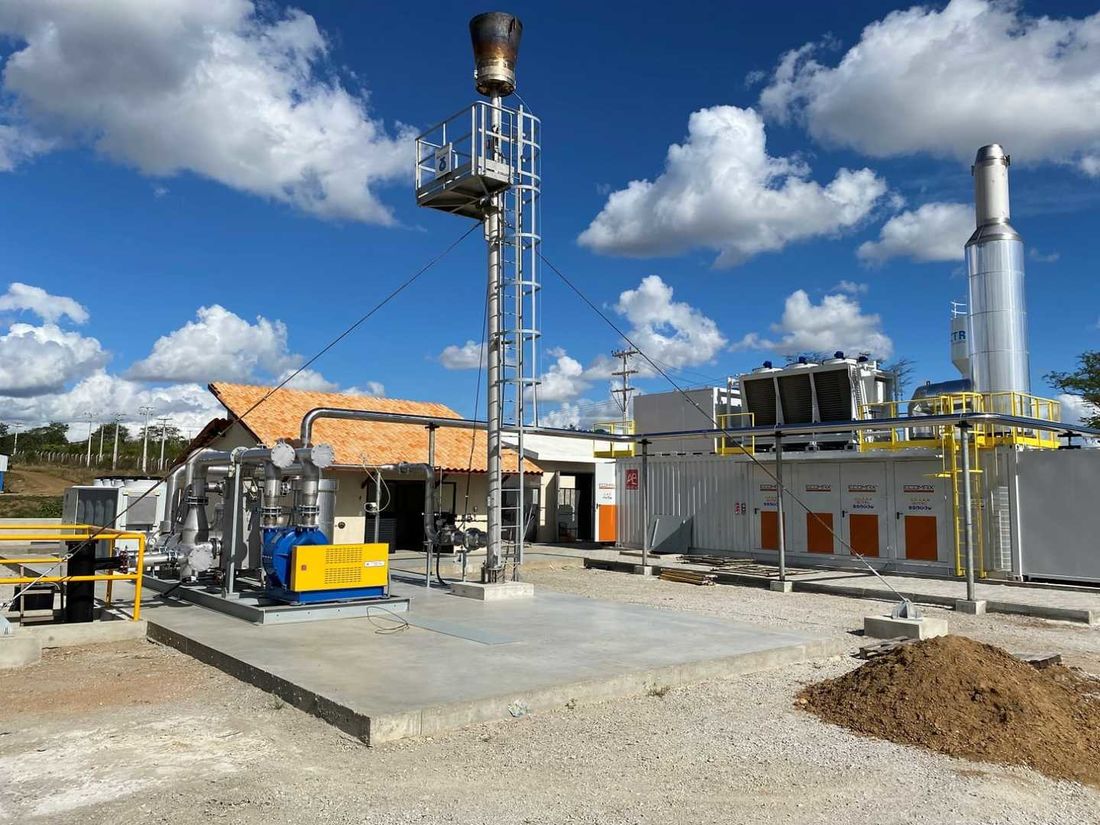
The Vivo Biogas Plant Generates Energy From Organic Waste That Is Going Directly To The Landfill In Caruaru, Pernambuco
Vivo, the largest telecommunications company in the country, is advancing initiatives that prioritize renewable energy sources and inaugurates in Caruaru, in the state of Pernambuco, its first biogas plant in the Northeast region. This is the second unit of this model dedicated to Vivo’s consumption in the country. See also: Claro Inaugurates The Largest Biogas Plant In Brazil, Capable Of Supplying More Than 2,991 Units Of The Company
- Job Openings In Naval Construction! Brasfels Shipyard Secures Contract With SBM For The Construction Of Modules And Skids Of The Largest FPSO Oil Producer That Will Begin Operating Offshore In Brazil
- Senac Is Offering Many Free EAD Courses In Management, IT, Games, Languages, And More
- A New Factory That Received Investments Of R$ 152 Million Was Inaugurated In Paraná. The Venture Could Generate Over 160 Jobs
- One Of The Largest Wind Turbine Manufacturers In The World, Nordex Group Receives Orders For The Installation Of Two 55 MW Wind Farms
- Log-In Intermodal Logistics Is Accepting Applications In ES And RJ For Its 2021 Internship Program
Details About The New Biogas Plant Inaugurated In Pernambuco
The new biogas plant of the operator was built and is operated by Grupo Gera. The plant is located at the landfill in the municipality of Caruaru, Pernambuco, and has the capacity to generate 18,834 MWh/year, intended to serve more than 1,100 consumer units of the company located in the state, such as stores, sites, and antennas.
In the distributed generation model, the energy production from plants, which are located closer to the consumer points of the companies, is injected into the distribution network of the local utility. Vivo’s Property Director, Caio Guimarães, reveals that renewable energy production in the distributed generation model brings economic, social, and environmental benefits, as it helps minimize losses in the system, alleviates the load on the grid, avoids environmental impact, and also encourages local development.
-
Unemployment rises again to 5.8% at the beginning of 2026, raising alarms about the end of temporary positions and its impact on the Brazilian job market.

-
Document organization can cut invisible costs in small businesses, a simple step that prevents waste, rework, and losses in daily operations.

-
While Russia dominates the global wheat market, Brazil emerges as an unexpected competitor in the Cerrado, offering grain available in July and August when stocks in the Northern Hemisphere are at their lowest point of the year.

-
China returned almost 20 Brazilian ships with soybeans, but now everything could change: the country that buys 80% of the grain is considering relaxing regulations after impurities held up shipments of thousands of tons and caused million-dollar losses.


In the case of energy generation through the biogas plant, the chemical energy of the gas from landfills is converted into mechanical energy through a controlled combustion process. This source activates a generator that produces electrical energy, which is injected into the network of the local utility, in this case, the Companhia Energética de Pernambuco (CELPE), a utility of the Neoenergia group.
Vivo’s Initiative To Invest In Renewable Sources
Since last year, Vivo has been expanding the distributed generation model with renewable sources from solar, hydropower, and biogas plants throughout Brazil. The initiative plans to install more than 70 plants, operating in 23 states, plus the Federal District. With the operation of the Caruaru plant, there are now 17 plants dedicated to Vivo in operation. The expectation is that most of the plants will be operational by the end of 2021.
Vivo’s distributed generation project will account for more than 80% of its low-voltage consumption, serving more than 28,000 units of the company. In addition to contributing to the environment by being renewable and low-impact, this measure is expected to generate significant annual savings on energy costs. With all plants operating, Vivo will produce about 670,000 MWh/year of energy, enough to supply the consumption of a city of up to 300,000 inhabitants.
Check Also: Biogas Plant Produces Energy From Waste In Minas Gerais
In Santana do Paraíso, a municipality located in the interior of Minas Gerais, a biogas plant has been inaugurated that generates energy extracted from waste. ENC Energy Brasil was responsible for the plant’s installation, which had an investment of R$ 6 million and will generate 1MW of energy. The plant is located at the CTR Vale do Aço landfill.
The responsible company, ENC, stated that the biogas from the plant, produced by the decomposition of organic waste, generates energy. Biogas is a mixture of methane and carbon dioxide, which is produced by the decomposition of organic waste in the absence of oxygen. According to the company, the process of converting the gas into energy also reduces the nearby methane odor.






Seja o primeiro a reagir!