





 Portuguese
  English
  Spanish
  5 min of reading
  0 comments


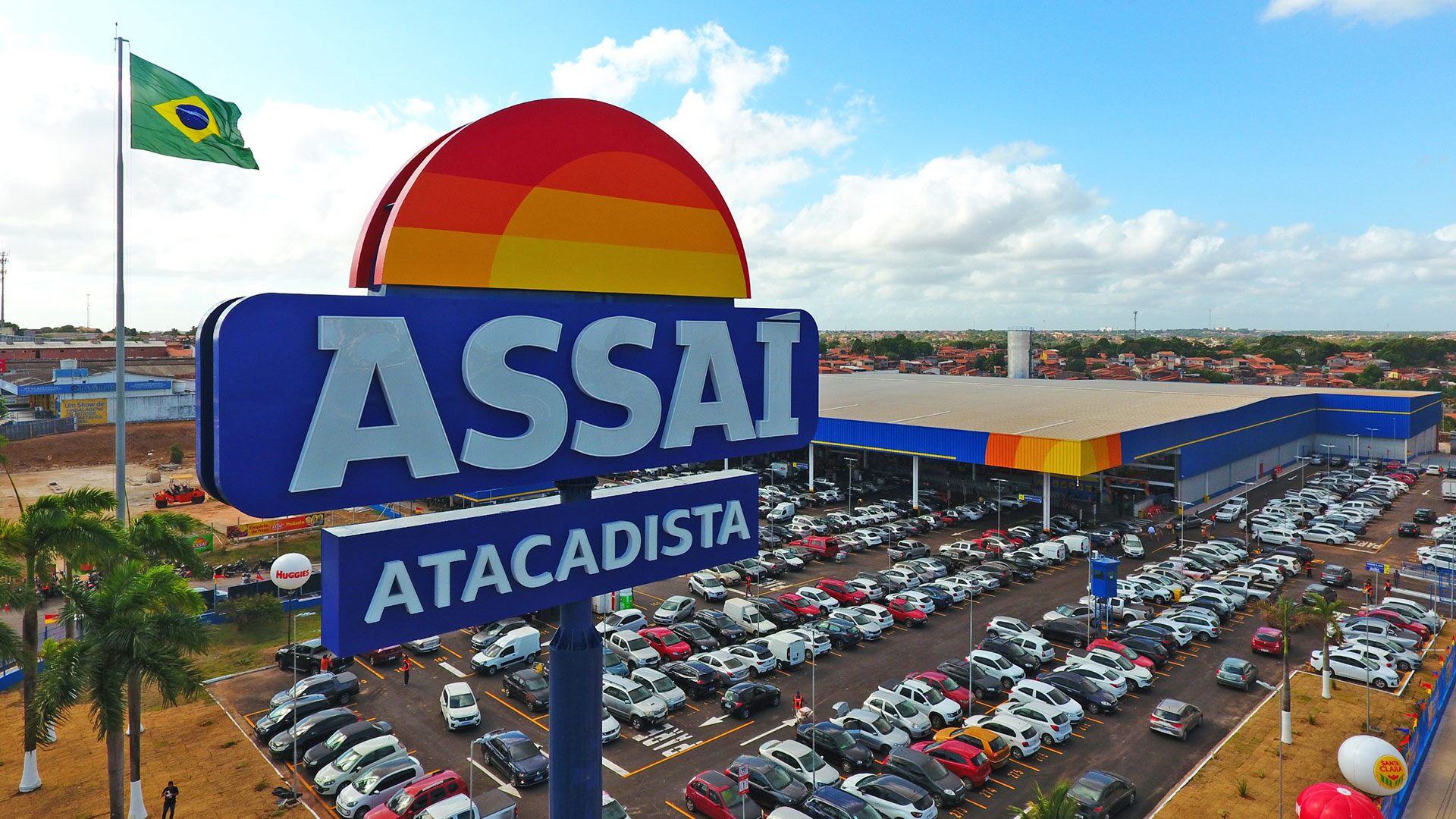
With An Impressive Rise, Brazilian Companies Are Increasingly Prominent In The Global Retail Ranking, Showing Solid Resilience In A Challenging Economic Scenario.
Brazil celebrates a historic achievement by placing five of its companies among the 250 largest retailers in the world, according to Deloitte’s annual ranking.
This is the best performance ever recorded by the country, which, despite facing a challenging economic scenario — with high interest rates and a rising debt rate among Brazilian families — demonstrates a strong global presence in the sector.
The Brazilian companies that made their mark among the giants of global retail are:
-
With 1,066 acrylic panels, the building known as the friendly alien is supported by a steel skeleton, has a façade that functions as a giant screen, and impresses the world without any internal columns.

-
Scientists warn that a comet about 1 km in size that has started to release gases may actually change direction in space. It was spotted by NASA and surprises with potential impacts near Earth.

-
These living root bridges and ladders are over 700 years old and help indigenous people survive in one of the rainiest regions in the world.

-
The largest food company on the planet, JBS, has just opened a 4,000 square meter laboratory in Florianópolis to develop customized proteins that modulate muscle mass gain, immune response, and metabolic performance.


- Assaí (92nd place);
- Magazine Luiza (Magalu) (156th place);
- Raia Drogasil (169th place);
- Casas Bahia (205th place); and
- Natura (214th place).
Greatest Brazilian Achievement In Global Retail History
At the top of the list, Assaí stands out as the greatest Brazilian achievement, reaching 92nd place, the highest position ever achieved by a national company.
This rise reflects a successful business model focused on the concept of cash and carry, which combines low prices with rapid expansion of its stores, becoming a market reference.
The performance of Assaí in 2024 was impressive, with a net profit of R$ 769 million and revenue of R$ 73 billion, representing growth of 8.3% and 11%, respectively, compared to the previous year.
These figures not only highlight the effectiveness of the company’s strategy but also reinforce the potential of the wholesale sector, even in an unstable economic environment.
The Impact Of Digitization And Innovation Strategies
Another big name on the list of the largest global retailers is Magazine Luiza, which occupies 156th place in the ranking.
The growth trajectory of Magalu is a clear example of how investments in digitization can transform a traditional business model.
Since the creation of Luiza Labs in 2012, the company has integrated retail, logistics, financial services, and technology.
This digital transformation movement has allowed Magazine Luiza to quickly adapt to market changes, putting a large portion of its sales on digital platforms, especially through its own app.
Digitization and the smart use of data have been crucial in optimizing the consumer experience and increasing the company’s competitiveness in the global market.
Today, Magalu is one of the main examples of how a solid digital strategy can leverage financial results and drive growth in challenging times.
Raia Drogasil And Natura: Sustainability And Convenience In Health And Beauty Retail
Raia Drogasil, on the other hand, achieved 169th place in the ranking, with an impressive adjusted profit of R$ 1.3 billion and revenue of R$ 38 billion.
With a growth of 16% in profit and 14% in revenue, the company stands out for its wide network of stores and its focus on convenience, aligning with global consumption trends, especially in the health and wellness sector.
Additionally, Raia Drogasil has increasingly positioned itself as a convenience reference for its consumers, with a presence in various points of sale and the ability to quickly adapt to changes in customer preferences.
The integration of digital services has been one of its major bets, which has boosted its competitiveness in the ranking.
Natura, present in 214th place, maintains its global relevance by focusing on sustainability and innovation.
The company has excelled in the cosmetics sector, with a strong value proposition aimed at responsible consumption and sustainable business practices.
Even facing challenges in its international operations, such as Avon, Natura continues to be an example of corporate purpose, something increasingly valued by new generations of consumers.
The Resurgence Of Casas Bahia: Overcoming Financial Challenges
Although Casas Bahia has faced significant financial challenges in recent years, including a request for extrajudicial recovery in 2023, the company managed to restructure, and as a result, was included in the list of the 250 largest global retailers in 205th place.
This impressive comeback is due to a restructuring process that began yielding results in the last quarter of 2024.
Compared to the previous year, Casas Bahia managed to reduce its losses by 54.8% and saw a growth of 300% in its adjusted Ebitda, which reached R$ 640 million.
The company’s recovery is a clear reflection of how effective strategic management and adaptation to new economic realities can ensure survival and growth even in times of crisis.
Global Retail: A Reflection Of Changes And Adaptations
According to Paulo de Tarso, a partner at Deloitte, the success of Brazilian companies in the global ranking is a result of strategic management, investments in technology, and an agile response to changes in consumption.
He explains that these companies have managed to combine operational efficiency with social responsibility and sustainability, aspects that carry significant weight in today’s global landscape.
This evolution of Brazilian companies in the ranking reflects the growth of global competitiveness, especially in countries like Brazil, India, and Indonesia, which have become increasingly relevant markets in the retail sector.
While North America and Europe account for 83% of the largest retail companies, the rise of other emerging economies is a growing trend that demonstrates a shift in the axis of power in global commerce.
Companies Essential For The Future Of Retail
The ranking data reveals that essential products, such as food, health, and hygiene, account for 65.5% of the revenue of the companies listed among the 250 largest.
This focus on essential goods has been a successful strategy, especially considering consumers’ basic needs and the pursuit of affordable prices and sustainable practices.
Brazil As A Protagonist In The Global Market
With these five Brazilian companies standing out among the largest in the world, Brazil establishes itself as an important player in the global retail sector.
The growing competition among companies from different continents and the adaptation of emerging markets, such as Brazil’s, show that there is increasingly more room for new business strategies, from digitization to social responsibility.
With the success of Assaí, Magazine Luiza, Raia Drogasil, Casas Bahia, and Natura, Brazil affirms itself as a global power capable of generating jobs, innovation, and growth opportunities in a highly competitive market.
Do you think other Brazilian companies will be able to enter the list of the 250 largest in the coming years? Share your opinion in the comments!







Seja o primeiro a reagir!