





 Portuguese
  English
  Spanish
  4 min of reading
  14 comments


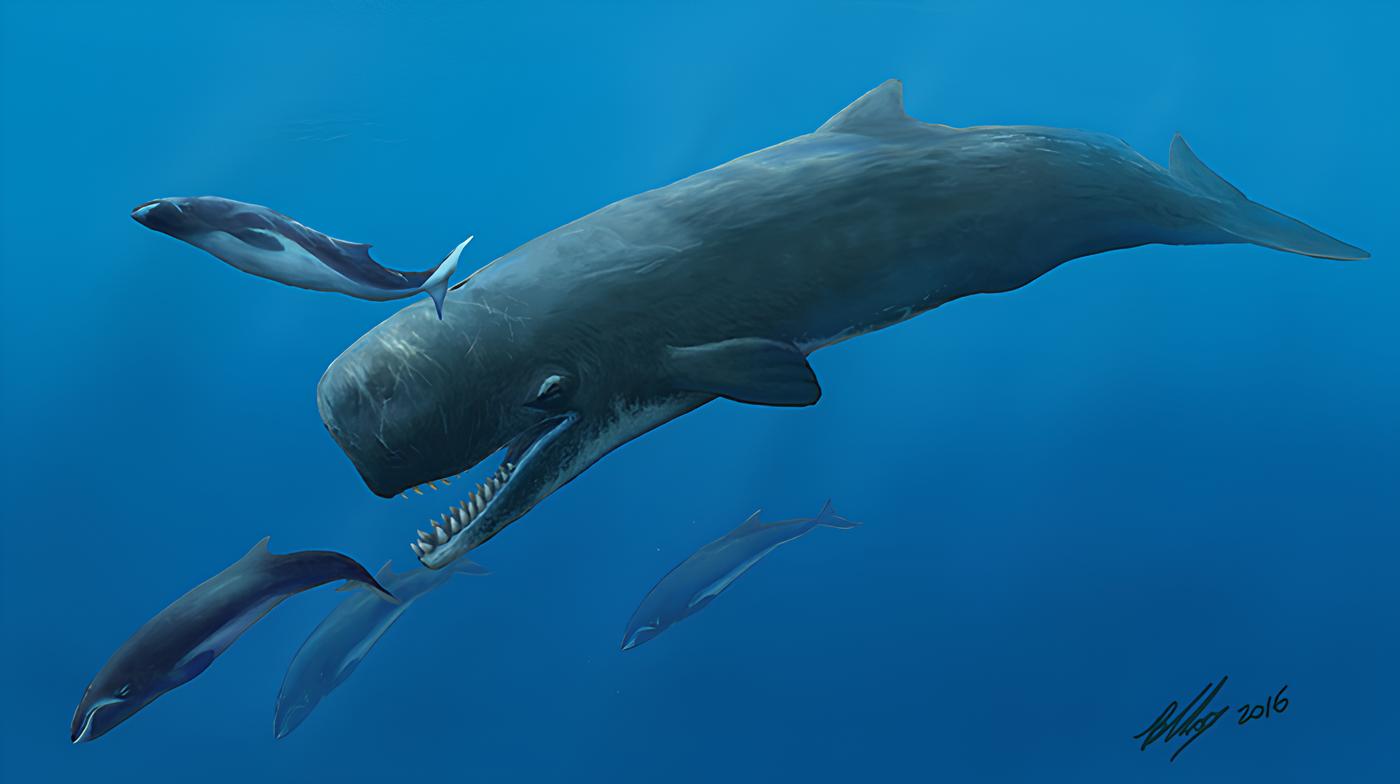


With Giant Teeth And Extreme Strength, The Livyatan Melvillei Was A Superpredator Of The Oceans That Rivaled Even Giant Sharks.
The emergence of Livyatan melvillei profoundly changed the way science understands the hierarchy of marine superpredators of the past. Officially discovered in 2010 from fossils found in the coastal desert of Peru, this extinct marine mammal revealed that, around 13 million years ago, the oceans were dominated not only by colossal sharks but also by carnivorous whales capable of facing gigantic prey.
Unlike modern whales, which feed by filtration or on small fish and squid, the Livyatan occupied the absolute top of the food chain, actively hunting large marine vertebrates.
A Predator With Scale Comparable To Mythological Monsters
With an estimated length of 13 to 17 meters, the Livyatan melvillei rivaled some current species of sperm whales in size.
-
The gigantic steel shell built to contain Chernobyl for a century has been pierced by a drone, exposing a critical system and creating a hole that could cost over 500 million euros to repair.

-
Brazilian Navy reaches a new level by taking over an airport with a 1,600-meter runway used by 1,800 military personnel and autonomous attack drone testing.

-
The Himalayas continue to grow to this day, with tectonic plates advancing 5 cm per year, mountains rising up to 10 mm annually, and the 2015 earthquake that killed 9,000 people may have increased the risk of an even larger seismic mega-event.

-
At an altitude of 400 km by astronauts from the International Space Station, Paris transforms at night into a golden mesh so precise that it reveals the outline of the Seine River, avenues, and entire neighborhoods like a luminous map drawn over the Earth.


However, the similarity practically ends there. While modern sperm whales have functional teeth only in the lower jaw, the Livyatan featured fully developed upper and lower teeth, some exceeding 36 centimeters in length, the largest ever recorded among all known mammals.
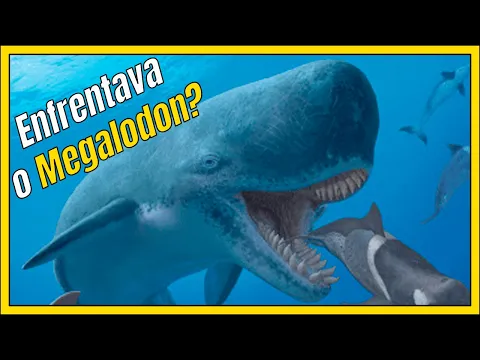

These teeth were not ornamental or vestigial. The skull anatomy indicates an extremely robust mandibular musculature, designed for violent and destructive bites, capable of fracturing thick bones and tearing tissues of large prey.
Functionally, the Livyatan was much closer to a “lion of the seas” than to any living whale today.
The Name That Reveals Its Ecological Function
The name Livyatan was not chosen by chance. It directly references the Leviathan, a colossal sea creature described in biblical texts as a symbol of absolute power.
The epithet melvillei honors Herman Melville, author of Moby Dick, a work that immortalized the human imagination about giant and dangerous whales.
This choice reflects exactly the scientific impact of the animal: a predator that confirms that the Miocene ocean was an environment of extreme competition among giants.
Diet Based On Whales And Large Vertebrates
Comparative analyses of the skull, dentition, and muscle insertions indicate that the Livyatan fed on smaller whales, primitive seals, giant dolphins, and other large marine mammals.
Bite marks found on fossils of whales from the same period reinforce this hypothesis, suggesting direct and violent attacks.
Unlike sharks like the Megalodon, which used multiple rows of replaceable teeth, the Livyatan relied on massive and permanent teeth designed for deep piercing and crushing.
This indicates a hunting strategy based on impact, prey control, and tearing, similar to large terrestrial predators like felines and bears.
Direct Rivalry With The Megalodon
One of the most fascinating aspects of the Livyatan melvillei is that it lived exactly at the same time and in the same oceanic regions as the Megalodon, the largest shark that ever existed.
Both inhabited the warm and productive seas of the Miocene and competed for similar prey, especially medium-sized whales.
While the Megalodon had advantages in speed and bite range, the Livyatan boasted greater intelligence, advanced muscular coordination, and possibly strategic behavior, characteristics common to mammals.
For many paleontologists, this coexistence represents one of the most extreme ecological confrontations ever recorded in the history of marine life.
A Large Brain For An Intelligent Hunter
Like all cetaceans, the Livyatan had a relatively large brain compared to its body. This suggests high cognitive ability, acute spatial perception, and possible use of complex hunting strategies.
Although there is no direct evidence of group hunting, the level of intelligence expected for an animal of this size indicates that it did not rely solely on brute strength but also on quick and efficient decision-making during the attack.
Additionally, it is likely that it utilized primitive echolocation, similar to that of modern sperm whales, allowing it to locate prey in deep or murky waters, further enhancing its advantage as a superpredator.
Why Did The Livyatan Disappear?
The disappearance of Livyatan melvillei is linked to profound changes in the oceans at the end of the Miocene. The reorganization of ocean currents, global cooling, and the reduction of productive tropical habitats directly impacted the populations of large whales, its main food source.
With decreasing prey and increased competition, extremely specialized superpredators like the Livyatan became vulnerable. Unlike more generalist species, it could not adapt to a less abundant ocean, disappearing millions of years before the emergence of humans.
The Legacy Of A Forgotten Colossus
The Livyatan melvillei occupies a unique place in natural history: the largest predatory marine mammal ever identified, an animal that proves that supremacy in the oceans did not always belong to sharks. Its discovery expanded the known limits of predation among mammals and revealed a little-imagined chapter of cetacean evolution.
Together with giants like the Megalodon, the Livyatan symbolizes an era when the seas were true battlegrounds among colossi, where size, strength, and intelligence defined who dominated the top of the food chain.
A striking reminder that long before humans, the Earth was already home to creatures capable of challenging any modern notion of greatness.








A diferença entre **** e golfinho é que a **** tem barbatanas na boca que servem para filtrar a água e reter o alimento. No caso dos golfinhos têm dentes.
The number of grammatical errors in this article made it painful to read! Who proof reads this prior to publication?
Why are the emojis you gave me to choose from in Portuguese ?