





 Portuguese
  English
  Spanish
  4 min of reading
  0 comments


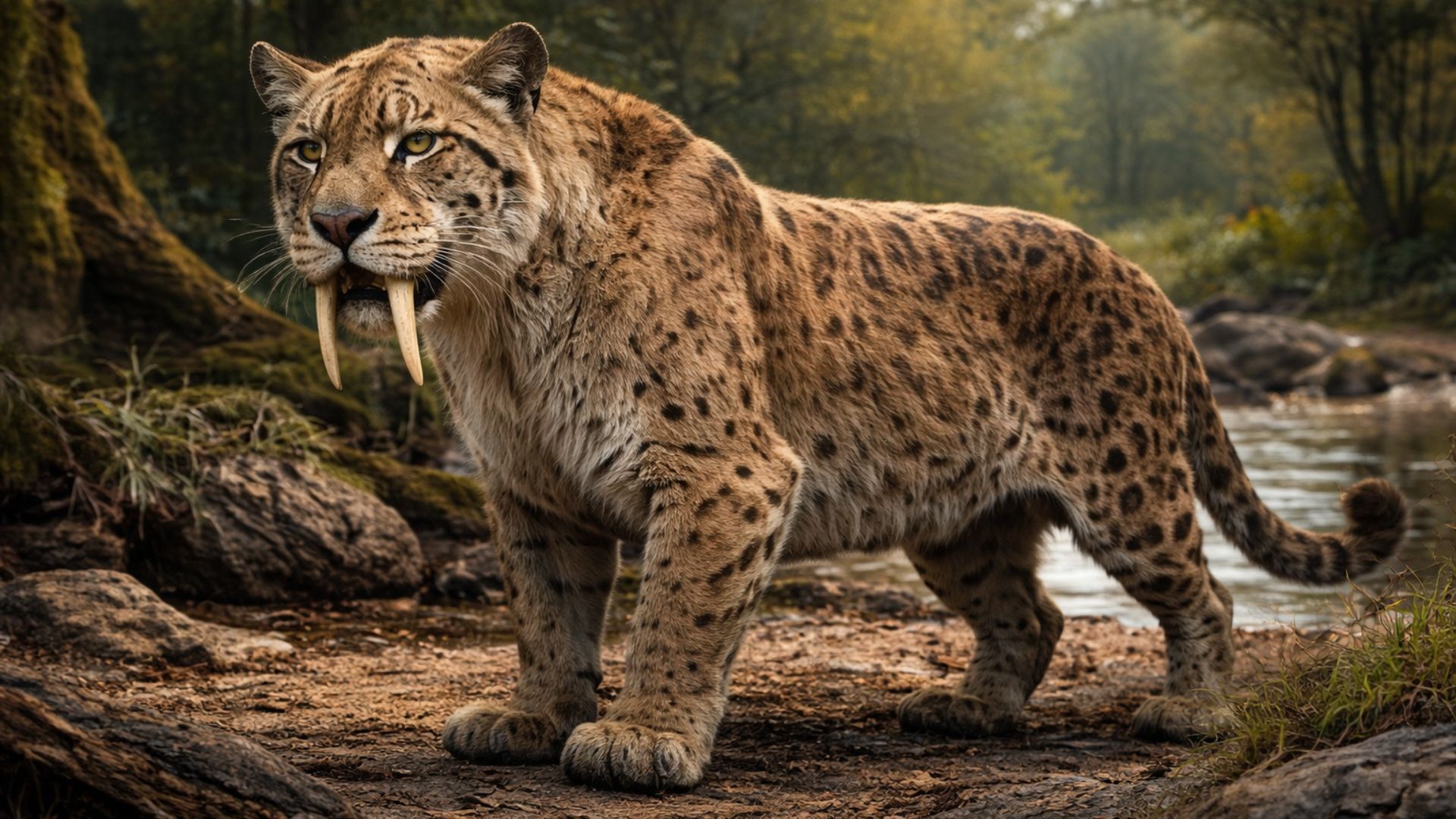
Extremely Long Upper Canines And Body Weight Above 300 Kilograms Place South American Prehistoric Feline As The Largest Representative Of Saber-Toothed Tigers Of The Pleistocene, According To Widely Documented Fossil Records.
The Smilodon populator is recognized in the scientific literature as the largest representative of the so-called saber-toothed tigers that lived in the Americas during the Pleistocene.
The species stood out for its exceptional body size and extremely elongated upper canines, characteristics that placed it at the top among the large extinct felines already identified.
What Was The Smilodon Populator
Despite its popular nickname, the Smilodon populator was not a modern tiger.
-
A historical discovery in the Andes Mountains reveals a gold deposit valued at 770 billion reais hidden over 4,000 meters above sea level on the border between Chile and Argentina, and the whole world is watching.

-
With just joint compound, white glue, and pigment, you can make a homemade paint that yields double the conventional amount, saves up to 70%, and leaves the wall with a finish that no one would believe wasn’t store-bought paint.

-
Home environment can influence the brain, mood, and well-being: studies indicate an increase of up to 15% in productivity, a reduction of 12% in stress with plants, and a direct impact of the circadian rhythm on the 24 hours of the day.

-
A Brazilian millionaire couple restores a farm over 150 years old in the interior of São Paulo and transforms the historic property with Portuguese tiles, antique furniture, and new spaces into a refuge that blends tradition, comfort, and sophistication.
It is an extinct feline belonging to the group of machairodontines, a lineage characterized precisely by the pronounced development of the upper canines, an anatomical structure that reached its peak in this animal.
Canines Up To 28 Centimeters Documented In Fossils

The canines of the Smilodon populator are well documented in fossil skulls preserved in scientific collections.
Studies describe long, laterally flattened, and curved upper teeth, with measurements that can reach about 28 centimeters when considering the visible crown, a value frequently cited in academic reviews and museum materials.
Estimated Weight Over 300 Kg
The body size of the Smilodon populator is also well established in the literature.
Analyses based on bone proportions, especially of limbs and skulls, indicate that the species had a body mass significantly greater than any living feline today.
Recurring estimates indicate weights exceeding 300 kilograms, with maximum values described in studies that analyzed large individuals.
These numbers position the Smilodon populator as the largest known among the saber-toothed felines.
In direct comparisons with other species of the same group, such as Smilodon fatalis and Smilodon gracilis, the South American species stands out for both absolute size and the robustness of the skull and dentition.
Distribution Throughout South America

The fossils attributed to the Smilodon populator have been found in several countries in South America, including Brazil, Argentina, Uruguay, Venezuela, Paraguay, Bolivia, and Chile.
This wide geographic distribution indicates that the animal occupied different environments throughout the continent during the Pleistocene, a period marked by the presence of large herbivorous mammals that made up the so-called megafauna.
Importance Of Smilodon Populator In Brazil
In Brazil, the Smilodon populator has historical significance in paleontology.
Skulls, teeth, and bones found in caves and sedimentary deposits were part of some of the first scientific collections of large fossil mammals in the country, contributing to the recognition of Brazilian territory as a significant part of South American megafauna.
Anatomy Compatible With A Large Predator
The preserved fossil material allows for observation of anatomical details consistent with a large predator.
The skull is wide and robust, with developed cervical musculature, a characteristic associated with the support and functional use of the long canines.
These elements reinforce the role of the Smilodon populator as one of the main terrestrial carnivores of its time.
Recognition As The Largest Saber-Toothed Tiger

The classification of the Smilodon populator as the largest saber-toothed tiger also appears in international compilations of natural records, which use consolidated data from the scientific literature to establish comparisons between extinct species.
In these records, the species is cited as the largest known saber-toothed feline, both in body mass and in overall dimensions.
Ongoing Advancements In Research
Academic research continues to describe relevant specimens, including exceptionally large skulls attributed to the species.
These findings expand the available data set and reinforce the dimensions already attributed to the Smilodon populator, without altering the general framing of the animal as one of the largest feline predators that ever lived.
Presence In Museums And Scientific Dissemination
The popularity of the Smilodon populator in museums and scientific dissemination is directly linked to the combination of size, morphology, and presence on the American continent.
The collection of preserved fossils provides a solid foundation for detailed anatomical reconstructions, widely used in exhibitions and educational materials.
With well-documented records of exceptional canines and high body mass, the Smilodon populator remains an absolute reference among large extinct felines and continues to be one of the most impressive examples of terrestrial predators in South America during the Pleistocene.
Given the volume of fossils already studied, what other details of the anatomy of this giant might still enhance the understanding of the largest predators that ever lived in the Americas?







-

-

-

-

-

-

533 pessoas reagiram a isso.