





 Portuguese
  English
  Spanish
  5 min of reading
  0 comments


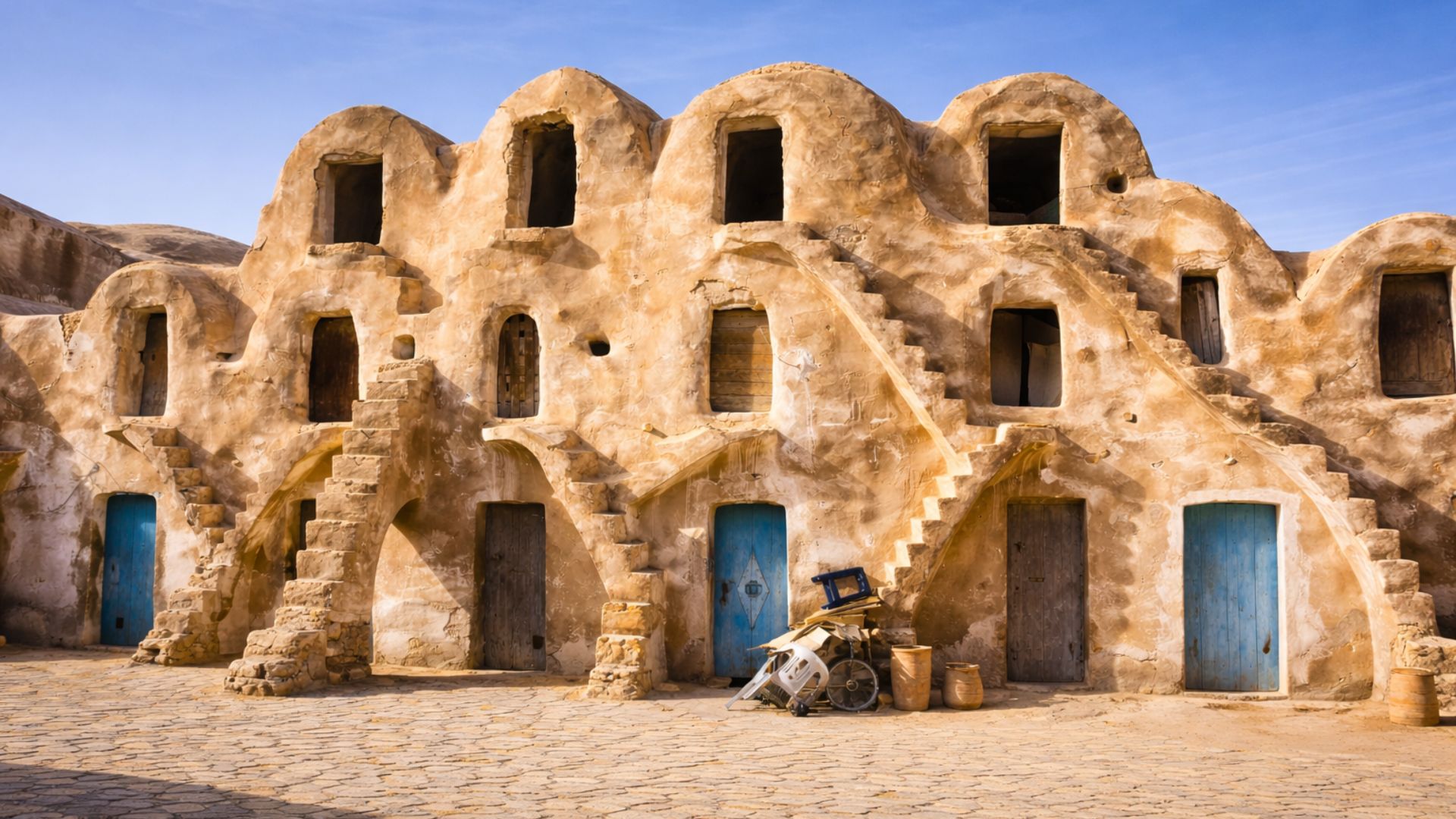
Landscape in Southern Tunisia Hosts Dwellings Dug into the Soil Using Earth as Natural Thermal Insulation. Troglodyte Structures of Matmata are Still Inhabited by Amazigh Families and Gained Fame After Appearing in Star Wars, Today Attracting Tourists and Researchers Interested in Climate-Adapted Architecture.
In southern Tunisia, in Matmata, some of the houses do not appear in the landscape like conventional homes, with façades, roofs, and walls built above ground.
There, the domestic space has been opened downwards from large courtyards dug into the earth, with rooms, kitchens, and support areas distributed along the inner walls of the crater.
Subterranean Architecture of Matmata
This housing model, associated with the Amazigh communities, also known as Berbers, has made Matmata one of the best-known examples of human adaptation to arid environments.
-
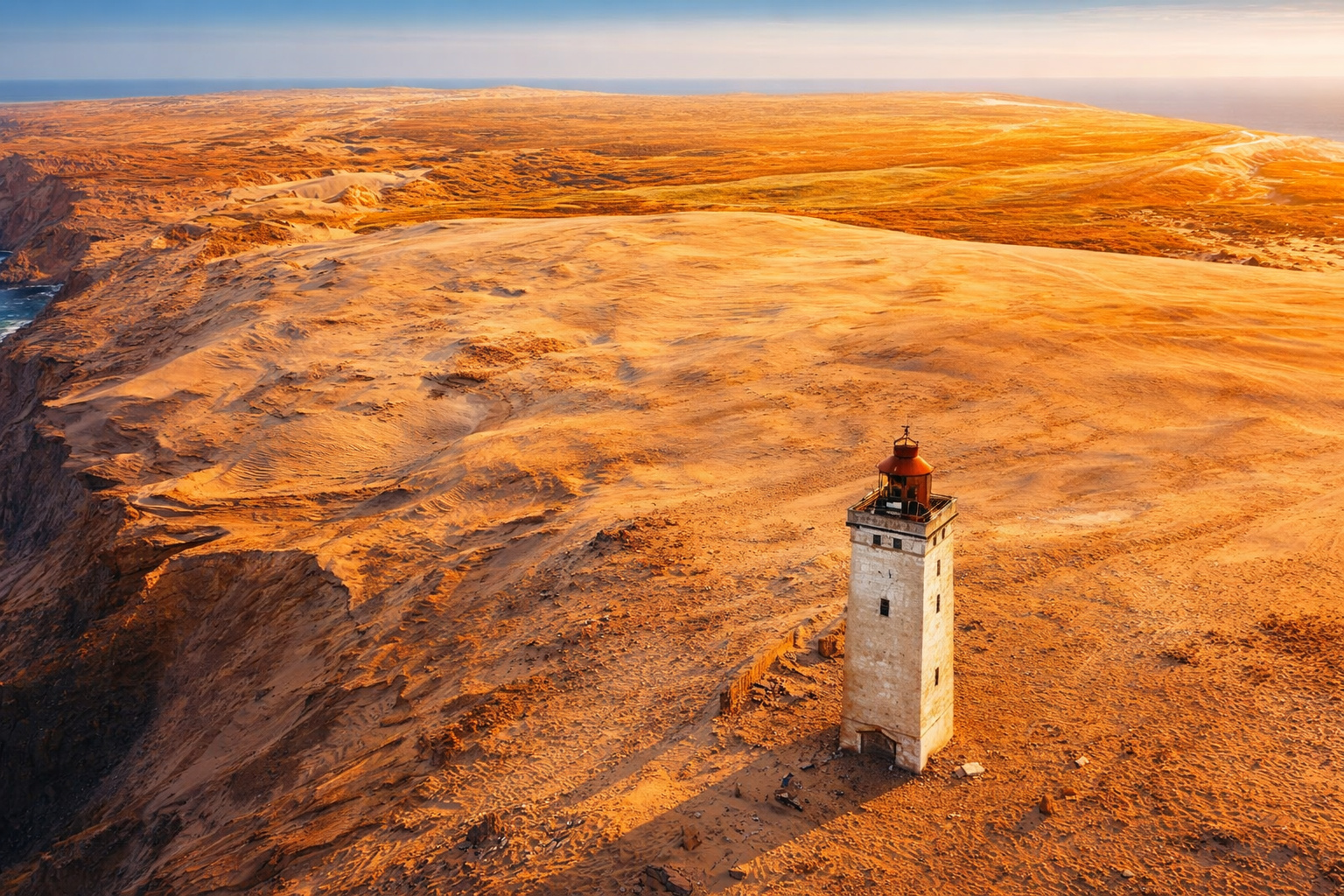
Attracting around 250,000 people a year, a lighthouse 200 meters from the sea, on a 60-meter high cliff, on the North Sea coast in Denmark, becomes one of the most impressive examples of how nature can threaten historical buildings.
-
The narrowest house in the world is only 63 centimeters wide, but inside it can accommodate a bathroom, kitchen, bedroom, office, and even two staircases.

-
In the middle of the sea, these enormous concrete and steel structures, built by the British Navy to protect strategic maritime routes, look like they came straight out of a Star Wars movie.

-
For years, no one could cross a neighborhood in Tokyo because of the tracks, but an impressive solution changed mobility and completely transformed the local routine.


Instead of confronting the extreme climate with exposed structures, these families turned to the terrain and mass of the soil as an essential part of construction.
According to UNESCO, the most characteristic form of these houses begins with the excavation of a large central courtyard, usually on sloped ground, from which the rooms open laterally.
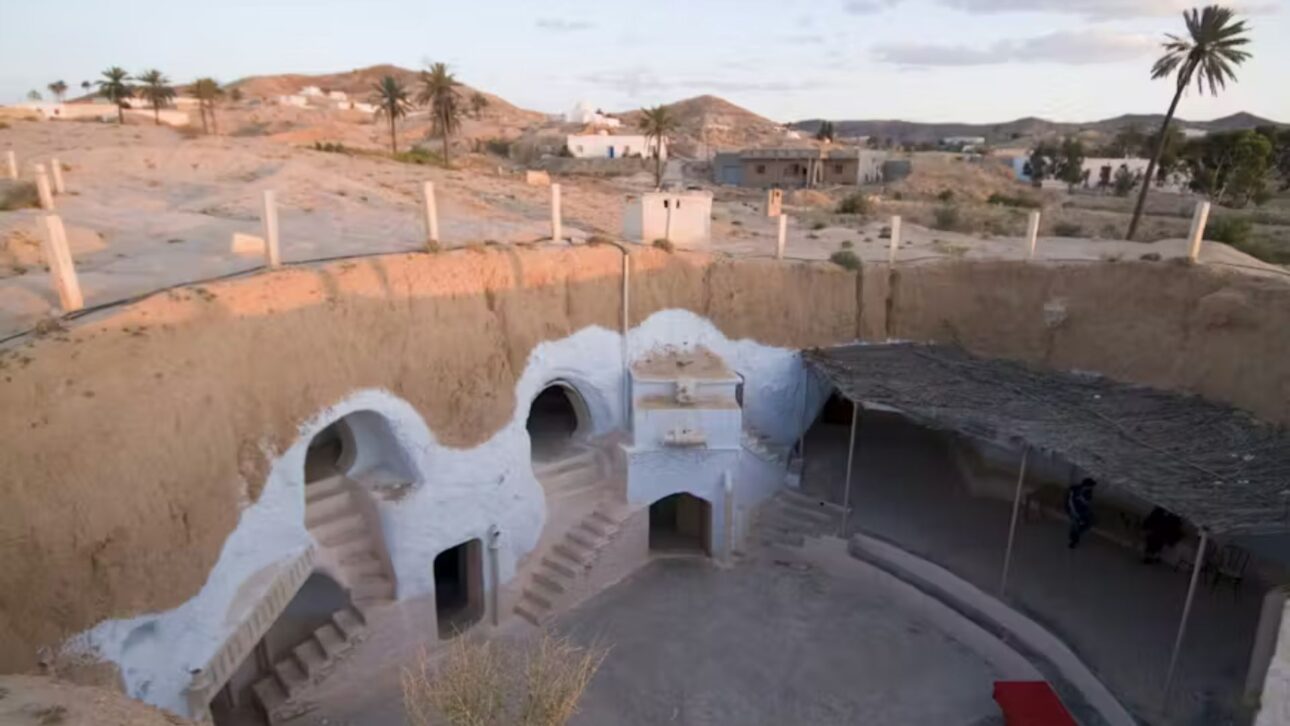
The result is a core protected from direct sunlight and strong winds, organized around an internal void that concentrates circulation.
Troglodyte Houses and Adaptation to the Desert
The arrangement of the environments follows a practical logic integrated into daily life.
Studies on the troglodyte architecture of Matmata describe semi-subterranean sets where bedrooms, kitchens, storage, and areas linked to domestic tasks or animal husbandry face the courtyard, which serves as the center of daily life.
In addition to reducing exposure to the severe desert conditions, this arrangement decreases the dependence on industrial materials and transforms the very terrain into the main building element.
It is not merely an aesthetic or historical solution, but a technical response to a context of intense heat, dry air, and strong temperature variation.
The thermal performance helps explain why this type of dwelling has remained in use over time.
UNESCO classifies the system as an example of efficient natural insulation, while research on the troglodyte houses in the region indicates that the interior tends to be cooler in the summer and milder in the winter than fully exposed constructions.
This climatic behavior is attributed to the thermal inertia of the soil, capable of absorbing and releasing heat more slowly than external surfaces directly hit by the sun.
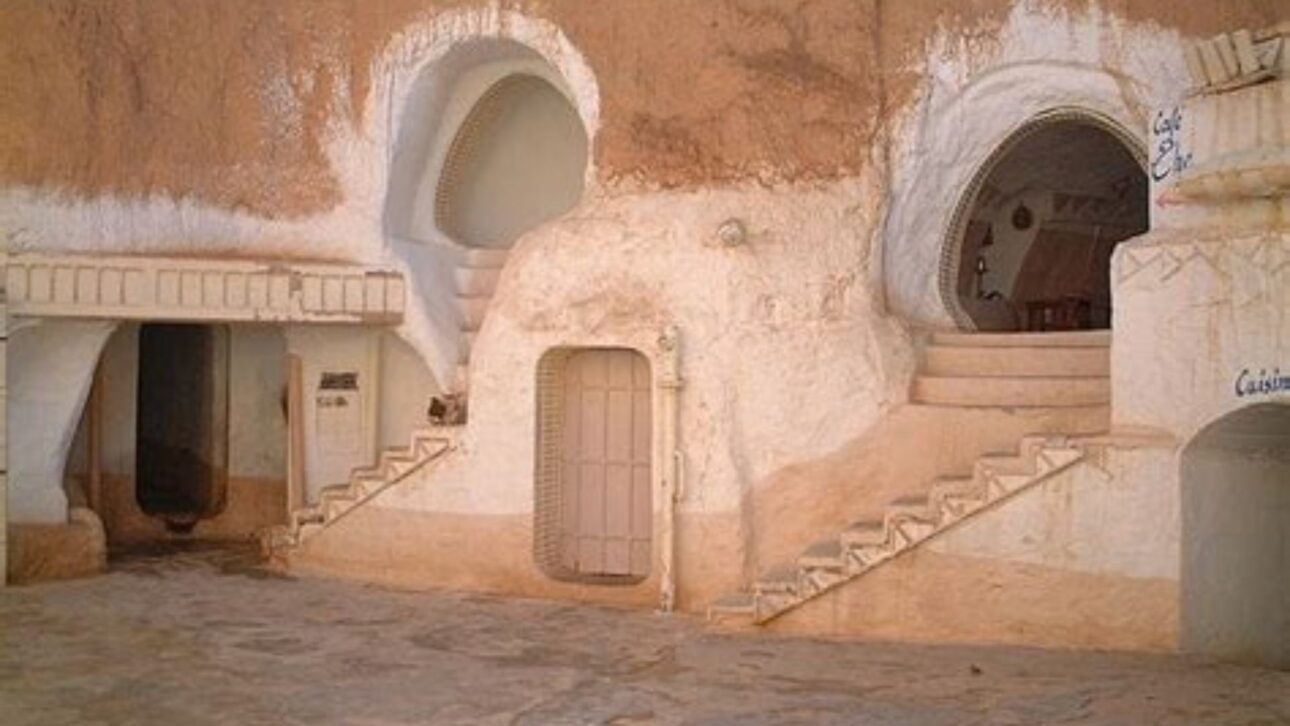
In a region where internal comfort may depend on passive solutions, the subterranean architecture of Matmata continues to be observed as a bioclimatic reference by researchers and professionals in the field.
Star Wars Set in the Tunisian Desert
The appearance of these houses also contributed to projecting Matmata beyond the field of vernacular architecture.
One of the subterranean dwellings in the region, converted into a hotel, was used as a location for Star Wars: Episode IV – A New Hope, released in 1977, and served as the setting for Luke Skywalker’s home on Tatooine.
The available references about the filming point to the Sidi Driss Hotel in Matmata as the location used for scenes in the internal courtyard linked to the Lars family home.
The link with the franchise enhanced the village’s international visibility and established the region as a tourist destination for visitors attracted by both the architecture and pop culture.
Tourism and Changes in Local Life
The tourist projection, however, did not eliminate the original function of these dwellings.
A Reuters report showed that, despite modernization and the expansion of urbanized areas above ground, some of the residents remained connected to the subterranean houses, either living in them or using these spaces as workshops, storage, or support for family activities.
In the same report, residents mentioned an economic routine sustained mainly by agriculture, especially the cultivation of olive trees, and by visits from tourists interested in the unique character of Matmata.
This dual role, between inhabited heritage and international attraction, helps explain why the village remains in the imagination of those seeking alternative ways of living.
Ancient Architecture That Continues to be Studied
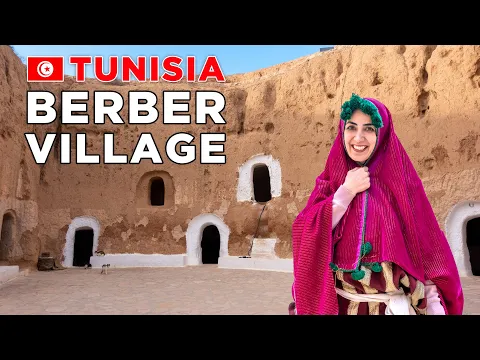

From above, the logic of this architecture challenges the most widespread image of what a house would be.
In many cases, what appears on the surface is merely the circular opening of the courtyard and discreet accesses between dry slopes, while most of domestic life happens below ground level.
This inversion of exterior and interior makes Matmata a rare case of immediately recognizable architectural identity.
There is no constructed volume dominating the landscape, but a dug space that almost disappears from a distance and yet organizes rooms, kitchen, storage, and circulation in a functional and continuous manner.
At the same time, the permanence of these houses does not mean that this heritage is free from pressure.
Reuters reported that rural exodus, inheritance disputes, and periods of heavy rainfall contributed to the abandonment of some structures, in a context where changes in habits and movements to newer areas altered the daily use of several properties.
Research on the vernacular heritage of southern Tunisia reinforces this diagnosis by pointing out that urbanization, migration, and social transformations have reduced the continuity of occupation in different troglodyte nuclei.
Still, academic interest remains precisely because Matmata brings together climate, geology, culture, and construction techniques in a single housing system.
The case also draws attention for offering an ancient response to a problem that is increasingly relevant.
Instead of relying solely on mechanical solutions for climate control, these dwellings utilize depth, soil thickness, and spatial organization to regulate temperature passively, with a direct impact on internal comfort and energy consumption.
For this reason, Matmata continues to be observed not only as a tourist curiosity or movie set, but as an example of constructive knowledge shaped by centuries of living with the desert environment.
The village synthesizes an architecture in which the shelter was not imposed on the landscape, but taken from it, in a direct relationship between need, territory, and cultural permanence.




-

-

-

5 pessoas reagiram a isso.