





 Portuguese
  English
  Spanish
  6 min of reading
  1 comment


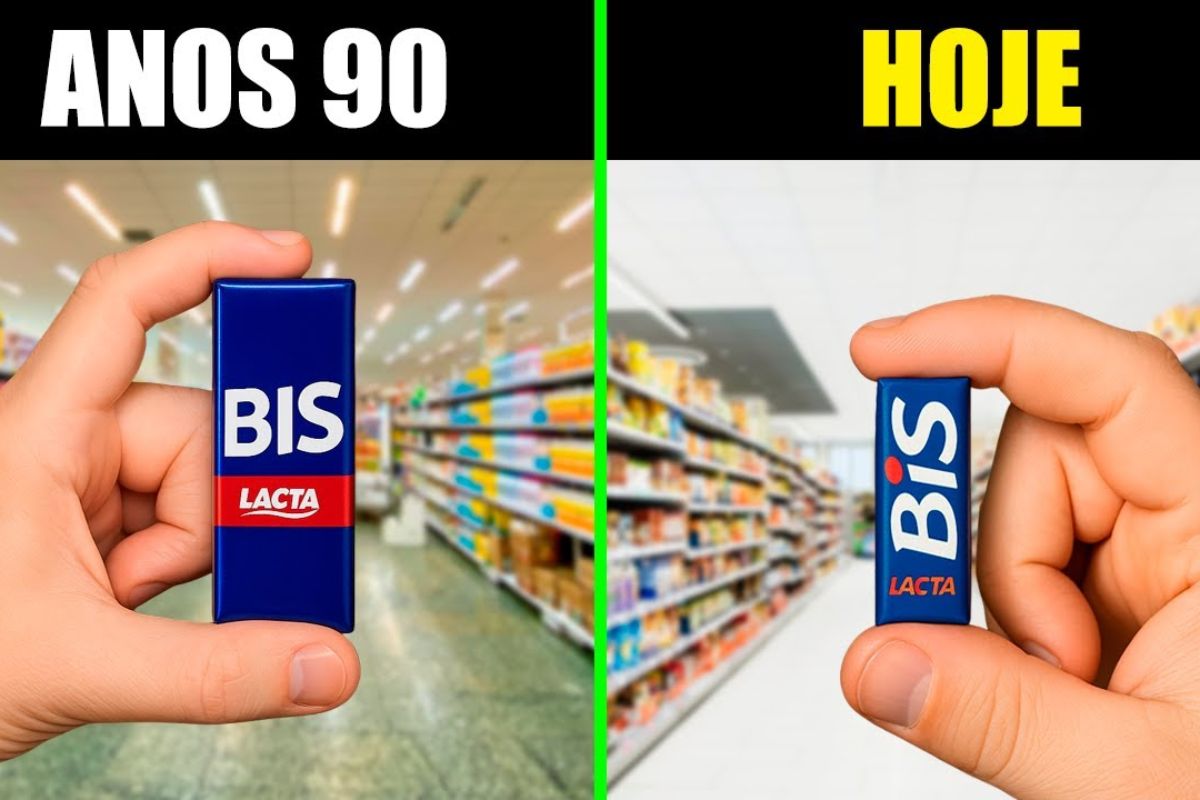


With Cuts of Up to 85% in Weight of Classic Products, Size Reduction Has Become a Silent Rule in Supermarkets: Packages Look the Same, but the Content Plummets While the Price Remains the Same or Even Rises, from Tang to Toilet Paper.
In recent years, Brazilian consumers have plunged headfirst into the size reduction era without noticing. From powdered juice to cookies, from panettone to laundry detergent, the strategy is the same: the product shrinks, the weight drops, but the price remains stable on the shelf. Often, the only clue is a discreet letter in the corner of the package, hard to notice in the rush of shopping.
While memory retains the feeling of a “hefty” Bis, a heavy panettone, a 1 kg package of laundry detergent, the current reality is different. Size reduction has become a discreet way to pass on costs without “scaring” in the final price, creating a sense of normalcy in a scenario where the consumer takes home less, even while paying the same amount – or more.
The Era of Size Reduction in Supermarket Classics
The logic of size reduction appears forcefully in the most well-known products, those that accompanied childhood, celebrations, and home routines. The case of Tang powdered juice is the most extreme example.
-
These living root bridges and ladders are over 700 years old and help indigenous people survive in one of the rainiest regions in the world.

-
From sertanejo star to international investor: Ana Castela invests millions in a mansion in the USA, creates a themed accommodation in Orlando, and shows that the “boiadeira” also wants to grow away from the stage.

-
The 10 most stunning motorhomes in the world: a $3 million trailer with a rooftop nightclub and garage for a Ferrari, “palaces on wheels” with Italian marble, private cinema, and five-star hotel luxury for billionaires.

-
Trump wanted to spend $400 million on the White House, but the courts prohibited the million-dollar construction.


At the time of commercials featuring the thirsty boy and the character Jaime, the Tang envelope contained 120 g of product.
Today, the regular version weighs only 18 g. This means a drop of around 85% in weight, maintaining the same brand and overall proposal.
It’s the kind of size reduction that transforms a robust package into an almost symbolic sachet, without the consumer’s mental image changing at the same speed.
In panettones, the scene repeats itself. Old commercials showed panettones of 500 g as standard, with “affordable” prices and even the option to pay with post-dated checks.
Currently, it’s common to find the same type of product with 400 g, a 20% size reduction in an item that symbolizes Christmas. The box remains beautiful, the colors are familiar, but the content has shrunk.
Tang, Bis, Panettone: When the Classic Comes in a Smaller Version
Among chocolates, the size reduction has also gone unnoticed. Bis, which in the 90s seemed like a “chunky” chocolate brick, is now visibly slimmer. The comparison is not just an impression.
Previously, the box containing 20 Bis units weighed 150 g. In current versions, the same box with 20 units weighs 100.8 g.
In practice, it’s as if an entire part of the box has disappeared. It’s a reduction of about one-third of the total weight, but the overall shape of the packaging remains similar, helping maintain the sense of continuity.
In cookies, examples like the Piraquê wafer show the same logic. Old packages had more product; today, the current version contains 100 g, representing a 37.5% reduction from the previous standard.
In the cornstarch cookie of the same brand, the package decreased from 200 g to 175 g, enough to cut about six cookies without the consumer immediately noticing this size reduction.
Laundry Detergent, Soap, and Toilet Paper: Hygiene Has Also Lost Weight
Size reduction doesn’t only happen in the food aisle. Cleaning and personal hygiene products have also quietly shrunk.
For a long time, the standard for boxes of laundry detergent was 1 kg. Old commercials highlighted this weight as a reference for all brands.
Today, the common packaging of laundry detergent has dropped to 800 g, a 20% reduction without the product visually appearing much different. In laundry soaps like IP in bar form, something similar occurs: the packaging that used to contain 1 kg now holds 900 g.
In soaps, classic brands like Lux and Dove were once sold with 100 g per unit. Today, the typical bar weighs 85 g. Each soap contains 15% less, yet the design of the packaging remains similar.
In day-to-day life, the perception of size reduction is slow and diluted, but the cumulative effect over the years is enormous.
Even toilet paper hasn’t escaped. In the past, standard rolls were 40 meters or more. There were even commercials highlighting “double-size” versions, with rolls of 80 meters. Today, even traditional brands sell rolls with 20 meters, half of what many consumers still believe they are getting. When the footage drops, trips to the market become more frequent, even when the apparent price hasn’t changed much.
Bread, Cereals, Snacks: Lighter Breakfast and Snacks
In breakfast, size reduction has also become a silent norm. One example is sliced bread. The traditional Plusvita used to work with packages of 600 g. Today, the same line appears with 480 g, meaning fewer slices in the package and quicker restocking.
In cereals, the can of Neston has seen a weight drop of almost 30%, while products like infant cereal and formula that used to come in cans of 1 kg now appear in versions around 360 g.
Ovomaltine, which used to have a can of about 500 g, has dropped to about 400 g, adding to the long list of products that have lost content.
On the snack shelf, the transformation is even more evident. In the 90s, an average bag of snacks like Fandangos weighed 100 g.
Today, it’s common to find medium-sized packages with 45 g, a 55% reduction in content. It’s more than half of the snack “evaporating” from the packaging, while the size and overall appearance maintain the illusion that “everything is the same.”
Even “luxury” items from back then, like the can of Pringles, have changed. They used to come with 200 g.
Now, current versions hover around 104 g, nearly half of the original amount, with the same brand occupying the same “premium chip” position in the consumer’s mind.
Why Size Reduction Happens Without Notice
The big question is: why has size reduction become such a common strategy? One reason is simple.
Altering weight or footage is less jarring to consumers than a blatant price hike on the tag. The packaging remains familiar, the label is the same, and commercials appeal to nostalgia.
At the same time, costs of raw materials, energy, logistics, and taxes have risen over the years. Instead of adjusting the value overtly, many manufacturers prefer to reduce weight, volume, or footage while keeping the price “apparently stable.” In practice, consumers end up paying more for less product.
Another reason for the prevalence of size reduction is emotional memory. We remember the cookie, the cereal, the panettone, but we don’t remember the exact weight of the old packaging. This opens the door for a slow transition, with successive cuts over time, without a significant shock.
In light of this wave of size reduction, the consumer’s main shield is awareness. Reading the weight, comparing weights, observing the footage of toilet paper, and calculating cost per kilo or per liter become decisive actions to determine if that “promotion” is genuinely advantageous.
It’s also helpful to follow news, reports, and comparisons that recover old packaging, commercials, and historical weights.
The more information the consumer has, the less room there is for size reduction to go unnoticed, especially in traditional products that have accompanied families for decades.
In the end, the feeling that “everything is getting smaller” is not just an impression.
The numbers for weight, volume, and footage tell a consistent story of silent shrinkage. The lingering question is how each person will react to this on their next trip to the market.
After seeing so many examples, tell me in the comments: have you noticed the size reduction of any product that was part of your childhood or daily life and felt deceived when discovering the difference?








A reduflação, que é o nome do efeito apontado pela matéria, é prova de que o poder de compra do consumidor está cada vez menor.
Grandes marcas tradicionais fazem uso dessa estratégia para parecerem competitivas em relação a marcas mais novas e baratas, enquanto entregam cada vez menos.
No entanto, a matéria peca ao colocar o Tang como exemplo notável desse assunto.
Diferentemente de todos os outros exemplos, a redução de peso do Tang decorre do investimento em tecnologia e mudança de fórmula.
Os 120g do pacote original continham 100g de açúcar, que foram substituídos por adoçantes, mas mantendo o mesmo rendimento de 1 litro, ou seja, continuamos recebendo o mesmo resultado do pacote original.
Inclusive, marcas com menos acesso a tecnologia continuam entregando seus pacotes com açúcar, o que torna o produto mais caro ao ter que transportar um peso maior por pacote.