





 Portuguese
  English
  Spanish
  6 min of reading
  1 comment


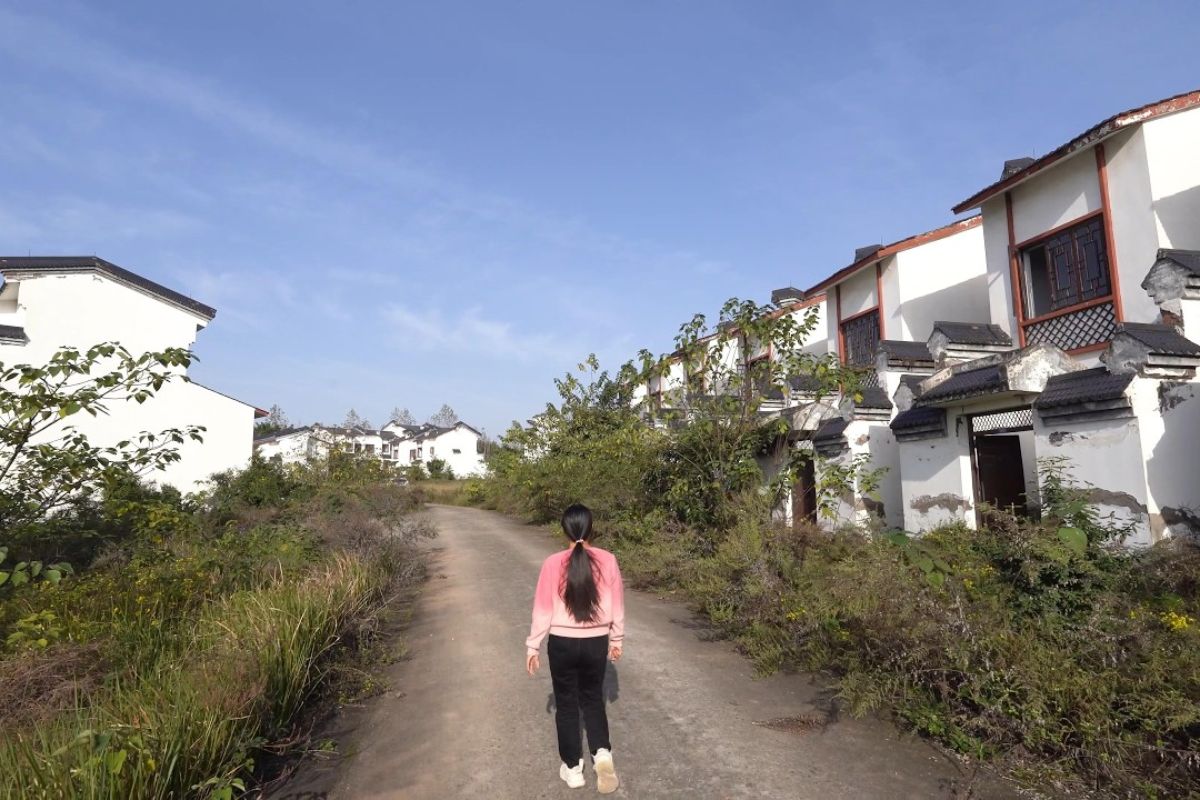


The Empty Mansions of Chongqing: The Complete Condominium That Was Built, Equipped and Left Uninhabited
On a mountain in the Jiangjin district of Chongqing, dozens of Chinese villas have turned into empty mansions, with finished houses, installed infrastructure, and an abandoned setting that contrasts with the privileged view of the city.
Built with patios, balconies, fences, water and energy networks, these constructions form almost a small town high in the mountains, but remain silent, taken over by weeds and trees growing between peeling walls and roofs covered by vines. The result is a set of empty mansions that seem frozen in time, as if the residents had given up on moving in.
An Entire Village Ready, but Uninhabited
The starting point of this story is a mountainous area in the Jiangjin district of Chongqing, where dozens of serial villas were built, organized like a medium to large-sized condominium.
-
Italian researchers have detected what appears to be a second Sphinx buried under the sands of Egypt, and satellite scans reveal a gigantic underground megastructure hidden beneath the Giza Plateau for over 3,000 years.

-
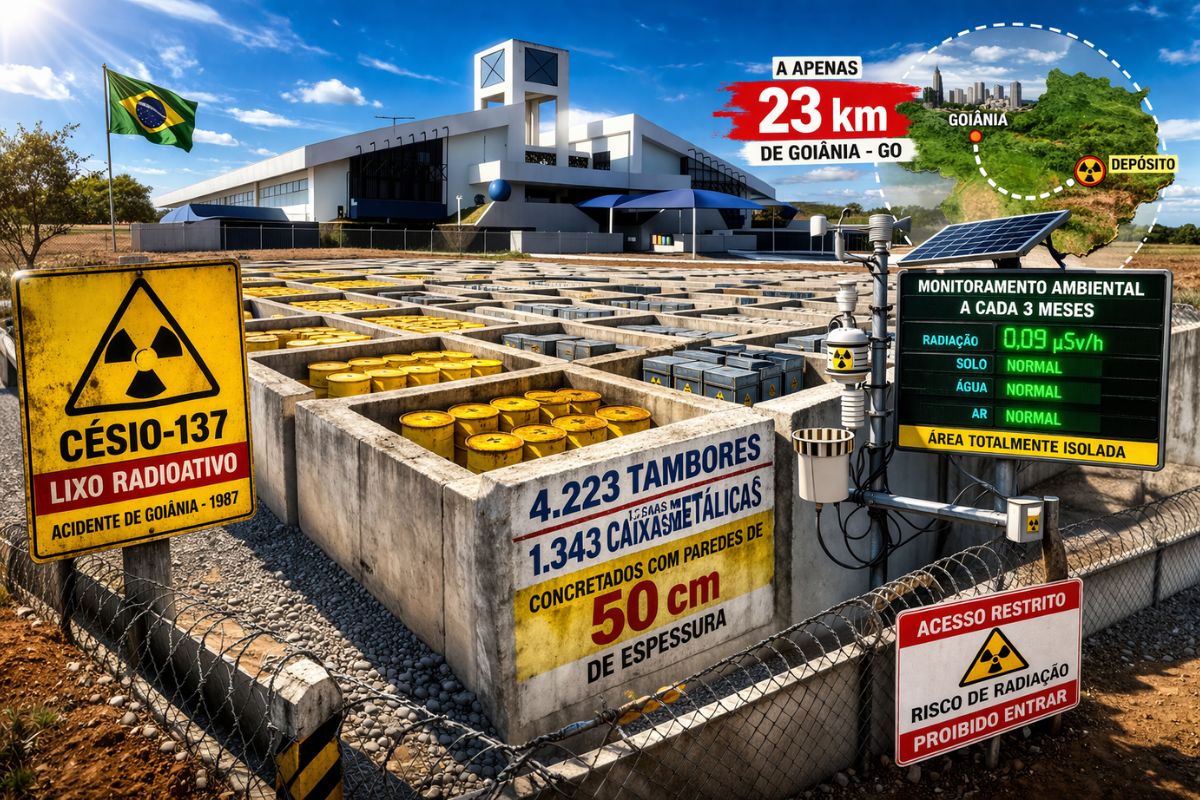
There are 4,223 drums and 1,343 metal boxes concreted with 50-centimeter walls that store the radioactive waste from Cesium-137 in the worst radiological accident in Brazil, just 23 kilometers from Goiânia, with environmental monitoring every three months.
-
Giant Roman treasure found at the bottom of Lake Neuchâtel in Switzerland reveals an advanced trade system, circulation of goods, and armed escort in the Roman Empire about two thousand years ago.

-
He buried 1,200 old tires in the walls to build his own self-sufficient house in the mountains with glass bottles, rainwater, and an integrated greenhouse.

Visitors to the site face internal streets, rows of houses and different types of units, ranging from small one-story villas to large three-story detached homes.
According to visual reports made on-site, this is not an interrupted construction project at the structural phase.
The houses are built, plastered, painted, with doors and windows installed, bathrooms assembled and visible plumbing in working order.
In many cases, it is just necessary to cross the open gate to enter spacious rooms, defined hallways, and internal areas already compartmentalized for bedrooms, kitchens, and service areas.
For those observing from the outside, the first question is inevitable: how did such a large development, with so many empty mansions ready, reach this level of abandonment without ever being effectively occupied?
Ready Houses, Complete Infrastructure and a Sense of Waste

As you walk through the constructions, it becomes clear that the project has progressed far beyond the basic phase. There are metal gates, wooden doors, internal glass doors, bathrooms with installed fixtures and plumbing in place.
In some units, light fixtures have been installed on the ceiling and electrical points are scattered throughout the rooms.
In several houses, the visitor has a clear impression that it would be possible to “move in with the luggage”, just needing cleaning, system checks, and minor repairs.
Metal railings have been placed on internal stairs and balconies, fences surround patios and outdoor areas, and the flooring in some sections appears to be laid down permanently.
This contrast between advanced construction and total absence of residents reinforces the sense of waste.
Each new open door reveals another of the empty mansions, with evident investment in materials and finishes, but without any trace of daily use.
Vegetation, Moisture, and Visible Signs of Abandonment
If the work has progressed far, time has left its marks. Among the houses, vegetation has taken over the internal streets and accesses.
In several areas, the weeds are so tall that they block passage, forcing visitors to look for the few remaining free entrances.
Some units are already partially covered by plants and trees that have grown against the walls.
In one of the single-story blocks, vines and creepers cross the living area, taking over walls and windows.
In front of certain houses, trees have grown so much that they exceed the roof, indicating that the abandonment is not recent.
Inside the villas, the walls show intense peeling, moisture stains, and a musty smell, classic signs of properties closed for long periods without adequate ventilation.
Metal fences, once new, now appear rusty but still sturdy, reinforcing the impression that the physical structure retains solidity despite the lack of maintenance.
Even the surroundings reflect this prolonged pause: roofs covered by vines, backyards taken over by weeds, and small wild fruits sprouting in areas that, in an occupied scenario, could be gardens or common spaces.
Traditional Architecture and Privileged View of the City
One of the most striking aspects of the development is the architectural standard chosen.
The houses follow the aesthetic of white walls and dark roofs, associated with the traditional style of certain Chinese regions, which gives visual unity to the condominium and reinforces the sensation of a planned project, not of improvised occupation.
The empty mansions were positioned dominantly on the mountain.
From certain points, it is possible to see the city below, with the urban landscape extending in the background.
What would be a strong selling point, had the development been occupied, now functions as a backdrop for a large uninhabited complex.
Wide balconies project out from the upper floors, with enough space for outdoor furniture and relaxation areas.
From a real estate product perspective, these are units with potential for panoramic views and comfort standards compatible with higher-income segments, which further amplifies the mystery surrounding the abandonment.
Empty Mansions and a Mystery with No Official Answer
So far, what is known from field observation is:
• The villas were built and reached the internal finishing phase
• Water, electricity, doors, windows, and bathrooms were installed
• The site has been abandoned long enough for trees and vines to dominate facades and roofs
• There are no signs of prolonged occupation, only fully finished structures that were never fully utilized
What does not appear in the scene are clear official statements regarding the reasons for the abandonment, such as government decisions, changes in urban regulations, or specific financing problems.
Without easily accessible public documents, any explanation remains in the realm of hypothesis.
In general, projects of this type can be affected by factors such as changes in land use regulations, shifts in real estate demand, economic viability issues, or impasses among different investors.
In the specific case of these empty mansions in Chongqing, however, there is no confirmed justification in the observed scene, only the result: a complete and silent condominium at the top of the mountain.
What This Case Reveals About Urban Occupation and Planning
Regardless of the cause, the set of abandoned villas helps illustrate a broader phenomenon: the gap that sometimes exists between planning on paper and actual occupation of the territory.
A development of this size requires investment in materials, labor, infrastructure, and logistics.
When the final product transforms into a cluster of empty mansions, the impact is not only visual but also economic and social.
The area that could house families, services, or tourism activities remains idle, while the city below continues to deal with challenges of density, mobility, and housing.
At the same time, these structures may, in the future, become targets for planned reoccupation, revitalization, or change of use, if there is political decision and economic interest.
Until then, they remain as a kind of suspended scene: streets with finished houses, installed fences, bathrooms assembled, and windows facing the landscape, but without residents to open the curtains.
In the end, this set draws attention not only for the images of the empty mansions, but for what it suggests about investment choices, risks of large projects, and the importance of aligning construction, real demand, and urban planning.
For you, looking at this type of scenario, what would make more sense: to recover these empty mansions with a new planned use or to demolish everything and start over in a different project format?










Mas eaí? Nunca descobriram por foram abandonadas??