





 Portuguese
  English
  Spanish
  5 min of reading
  0 comments


WhatsApp Vulnerability Exposes Millions’ Data and Increases Risk of Scams with Pix in Brazil
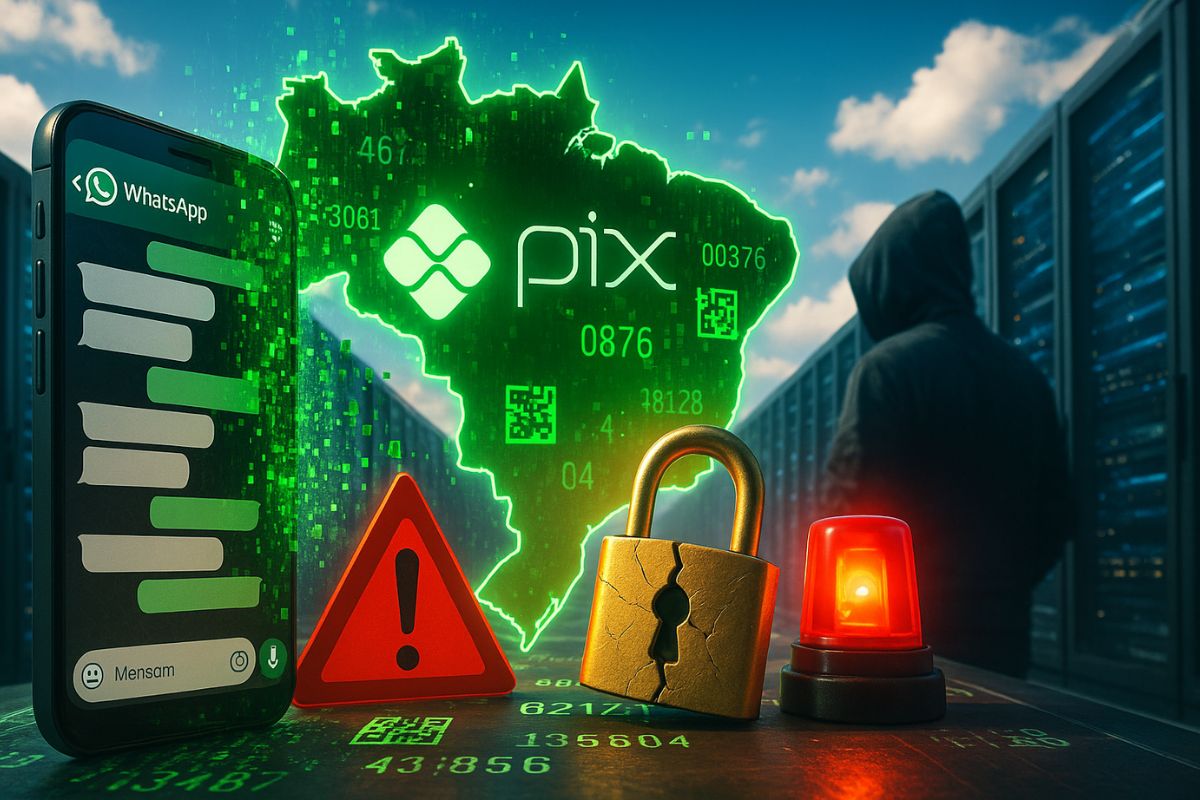
With a vulnerability that allowed mass harvesting of phone numbers, profile pictures, and even Pix keys, WhatsApp has come into conflict with digital security experts and data protection authorities. The flaw, detailed by researchers from the University of Vienna in partnership with Wired magazine, intensifies the pressure for swift responses and structural changes in how the app handles users’ public information.
In Brazil, where WhatsApp is part of the personal and professional routine of nearly the entire connected population, the episode triggered a major alert . The combination of widely used WhatsApp, exposed data, and visible Pix keys in profiles creates a perfect environment for more sophisticated scams, with a high potential for financial and emotional damage to victims.
How the WhatsApp Vulnerability Exposed Data on a Global Scale
The vulnerability exploited something that seemed simple but had enormous impact.
-
The largest executive jet in Brazil belongs to the Safra Family and is for sale: it is a 2002 Boeing BBJ, with a range of 11,500 km, 80 m² of interior space, a master suite, an office, and capacity for 18 passengers.

-
BRICS is building its own payment system that could be operational by 2030, and experts say it could increase trade between the countries by up to 10% per year and add 3% to the GDP of each member of the bloc.

-
Government suspends over 3 million traffic fines in Brazil and drivers breathe a sigh of relief.

-
Iran has just approved toll charges for ships in the Strait of Hormuz and has completely prohibited the passage of vessels from the United States and Israel in the world’s most important maritime route for the global energy market.


By querying WhatsApp from a valid phone number, the system automatically returned data that many users consider just “visual details” of the profile.
Depending on privacy settings, it was possible to obtain a name, photo, status, and other elements associated with that line.
The problem is that there was no effective limit on queries, which allowed researchers to simulate the behavior of an automated collector and access tens of millions of profiles in a short time.
In practical terms, it was enough to traverse large ranges of phone numbers to build massive databases with real user data scattered around the world.
In total, the breach is estimated to affect up to 3.5 billion accounts, covering regions where WhatsApp is practically the standard for communication.
In Brazil, this translates into an increased risk, as the app consolidates conversations with family, work, services, banks, and businesses.
Why Brazil is at the Center of the Alert
The Brazilian impact is considered critical because almost all smartphone users use WhatsApp as their primary contact channel, including for transactions and customer service with companies.
This means that exposed data are not just an abstract privacy issue but a direct input for targeted scams.
Another aggravating factor is the growing presence of the Pix key in WhatsApp profiles, especially since late 2024.
Many users have started using the description field or even the image to share their key, facilitating receipts, but also increasing the attack surface when this information is captured outside a trusted context.
In scenarios of massive data leaks, Brazil becomes fertile ground for phishing campaigns, account cloning, social engineering, and financial fraud that combine name, number, photo, and Pix key into extremely convincing approaches.
Practical Risks, from Phone Number to Pix Key
The exposure of data on WhatsApp does not just mean receiving more unwanted messages.
It paves the way for more personalized scams, exploiting the fact that the criminal already knows true data about the victim. Among the direct and indirect risks, they include:
Creation of segmented lists for malicious contacts with name, photo, and user context
Sending false messages that mimic family, companies, or banks using real information
Use of visible Pix key in the profile to reinforce scams involving collections, donations, or urgent payments
Cross-referencing WhatsApp data with other leaked databases to create complete profiles of victims
Financial phishing campaigns based on links that simulate official support to “fix the flaw”
When the criminal possesses phone number, name, profile picture, and Pix key, the approach gains credibility, reduces the victim’s suspicion, and increases the success rate of scams.
It is exactly this effect of “criminal personalization” that most concerns experts.
How Meta Reacted After the Discovery of the Flaw
After being notified by researchers, Meta, the parent company of WhatsApp, removed the data collected in the experiment and implemented stricter limits on automated searches by phone number.
The company claims that the restrictions reduce the possibility of mass queries and make it difficult to replicate the method used in the research.
Meta also reinforced the argument that the real exposure of each user depends on the privacy settings chosen within WhatsApp, especially regarding photos, messages, and data displayed to contacts or strangers.
However, the case shows that even with adjustments, there is a continuous challenge in how information considered “public” can be exploited outside the expected context.
Despite the specific technical correction, the episode fuels the debate about platform responsibility in limiting mass tracking and designing interfaces that do not induce users to expose more data than necessary.
How to Increase Security on WhatsApp Now
Even after the flaw was corrected, the attack surface remains high.
Therefore, the most important layer of protection becomes the user themselves, adjusting what is displayed and how the account is protected. Among the practical measures that can be adopted:
Review privacy settings and limit profile picture, status, and message to “My Contacts” or more restricted groups
Avoid leaving Pix key or banking information in permanent fields of the profile, such as description or images
Enable two-step verification on WhatsApp, creating an additional PIN that makes cloning the account more difficult
Be suspicious of any requests for money or Pix, even from known contacts, and always confirm through another channel
Keep the app updated to ensure that security patches are applied quickly
These actions do not eliminate all risks, but significantly reduce the chance that a data leak will result in financial loss or identity theft.
Digital Security is Routine, Not an Isolated Event
The WhatsApp case shows how flaws in widely used platforms can translate into real risk in just a few days, especially in countries where a single app consolidates much of the digital life.
It also reinforces that security is not a one-time setting, but rather a routine that involves updating apps, reviewing privacy, and being cautious about urgent offers and requests.
As scams with Pix and social engineering become more sophisticated, the combination of user best practices and prompt platform responses will be decisive in limiting the impact of new incidents.
In the short term, adjusting what your profile displays and heightening awareness of suspicious messages is the most concrete defense available.
And you, have you checked today how your privacy settings are on WhatsApp and if your Pix key is not more exposed than it should be?









Seja o primeiro a reagir!