





 Portuguese
  English
  Spanish
  5 min of reading
  0 comments


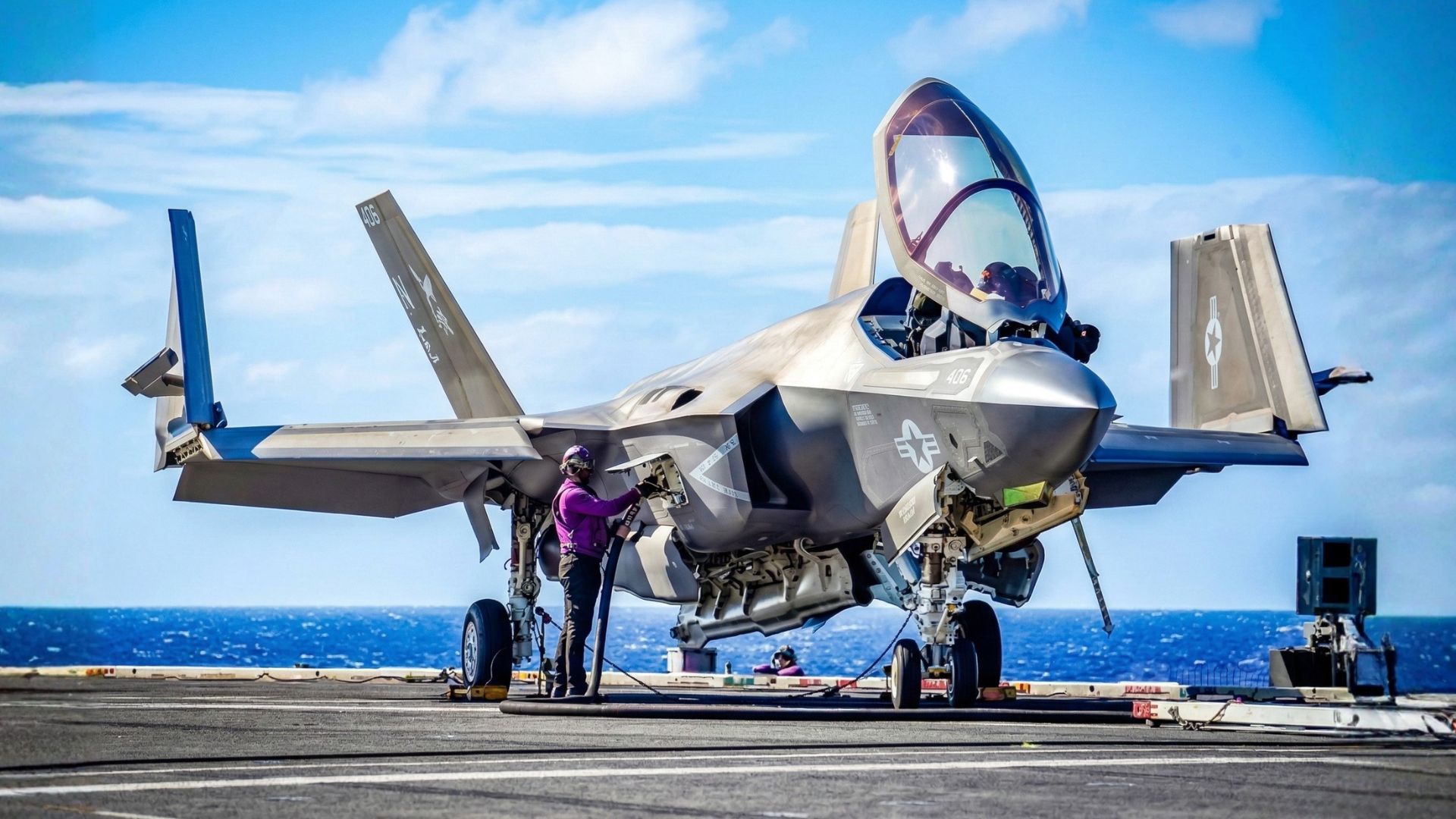
Real Interception in the Arabian Sea Exposed How an Aircraft Carrier Responds to Approaching Drones and Why Embarked Fighter Jets Remain a Central Component of Naval Defense.
An incident involving USS Abraham Lincoln, F-35C, and Shahed-139 highlighted self-defense procedures, rules of engagement, and the competition for air presence in areas of tension.
A stealth fighter F-35C took off from a U.S. Navy aircraft carrier and shot down an approaching Iranian military drone in international waters of the Arabian Sea.
According to American military officials, the action was taken in self-defense to protect the vessel and personnel on board, with no reports of injuries or damage to the aircraft carrier and its systems.
-
While the world looks at oil, the war with Iran is already disrupting helium supply from Qatar, affecting car and iPhone chips, threatening AI expansion, and putting pressure on aluminum packaging at the highest value in four years.

-
Global warming will expose a treasure hidden under the ice of Antarctica and may spark an international dispute over gold and valuable minerals.

-
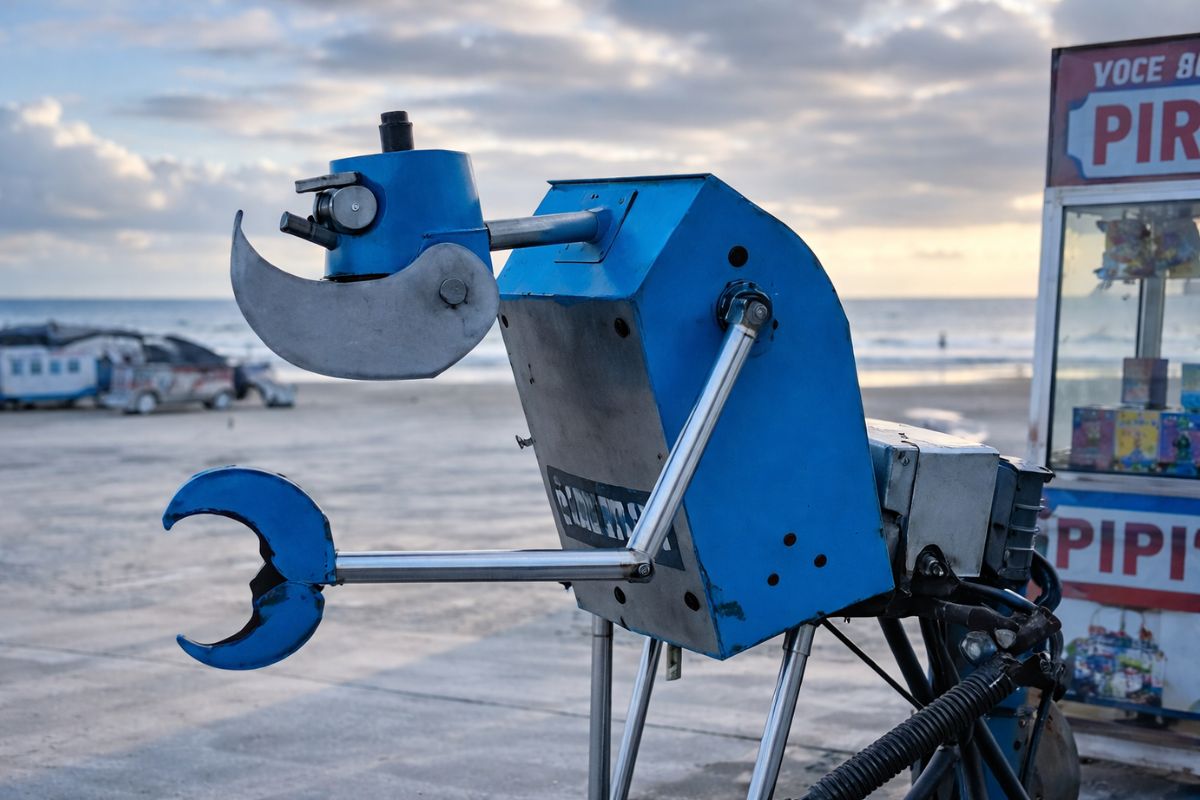
A street vendor from Praia Grande built a robot made of scrap from scooters and washing machines that pulls his popcorn cart on the beach, emits sounds, and interacts with customers, becoming an attraction on the coast of São Paulo.
-
The specifications of the Xiaomi 18 Pro Max have been leaked, and the highlight is a dual 200 MP camera with a new 22-nanometer technology that promises to consume less energy and capture details in shadows and bright areas using LOFIC HDR.


USS Abraham Lincoln and the Shahed-139 Drone
The U.S. Central Command (CENTCOM) identified the target as a Shahed-139 and described that the drone approached in a considered aggressive manner, with unclear intent, maintaining its course toward the ship despite measures taken to de-escalate the situation.
The aircraft carrier involved was the USS Abraham Lincoln, which was transiting the Arabian Sea about 500 miles off the southern coast of Iran, according to reports quoting CENTCOM spokesperson Captain Tim Hawkins.
The incident, which occurred on February 3, 2026, drew attention for putting on display a type of “quick reaction” that often goes unnoticed by the public: the immediate defense of an aircraft carrier, one of the most valuable and sensitive platforms in the American naval arsenal.
For a maritime task force, protection does not rely on a single system but rather on layers that combine surveillance, identification, and interception with aircraft and escorts.
F-35C: 5th Generation Embarked Fighter

The F-35C is the fifth-generation fighter variant designed to operate on aircraft carriers, with features adapted for catapult launches and arrested landings.
Although the CENTCOM release did not detail the responsible unit, specialized media outlets recorded the shootdown as being carried out by an F-35C operated by Marine Corps personnel embarked on the Abraham Lincoln, highlighting the routine role of naval aircraft in protecting the task group in tense areas.
AESA Radar and F-35 Sensors
Behind the name, what makes this fighter particularly relevant in such incidents is the combination of low observability with embedded sensors and processing.
The AESA (Active Electronically Scanned Array) radar, frequently mentioned in technical descriptions of the F-35, integrates a set of systems that includes electro-optical sensors and electronic warfare capabilities, gathering information to form a unique view of the operational environment.
Technical documents related to the program describe, for example, the presence of the AN/APG-81 radar and other sensors in the F-35 package aimed at detection, tracking, and situational awareness.
Self-Defense Procedures and Rules of Engagement
In real-world maritime situations, this type of capability connects to a routine that is less cinematic and more procedural.
When an unknown aircraft or drone approaches, the first step tends to be to identify and try to determine intent, including communications and warning maneuvers, before any engagement.
In the case reported by CENTCOM, the justification presented was that the drone persisted in its approach despite American actions described as de-escalatory, leading to the shootdown to protect the aircraft carrier and its crew.

The mention of “unclear intent” is an operational detail that weighs in this type of decision because aircraft carriers are not just ships; they are mobile air bases.
Any approach deemed anomalous can be treated as a potential threat, especially when it involves unmanned platforms, which can perform reconnaissance, targeting, or attack functions.
Reports that reflected the American statement highlighted that it was unclear whether the drone was armed, a frequently sensitive point in confrontations involving unmanned aircraft.
Iran’s Reaction and Narrative Dispute
From the Iranian side, there was contestation regarding the framing of the event.
International coverage noted that Tehran acknowledged losing contact with a drone and maintained that the mission was for surveillance in international waters, presenting the occurrence as part of a reconnaissance activity.
This contrast — “threat” versus “recognition” — is recurrent in incidents of this kind, in which the interpretation of air behavior becomes a political and diplomatic element.
Strait of Hormuz and Regional Escalation
The shootdown also did not occur in isolation.
In the same time frame, American officials reported an incident in the Strait of Hormuz involving an attempted approach of an American-flagged merchant vessel, the M/V Stena Imperative, described as harassment by forces linked to the Iranian Revolutionary Guard, with drone support, and intervention by the destroyer USS McFaul to prevent escalation.

Reuters and other outlets treated the two events as signs of a more tense phase in the bilateral relationship, amid diplomatic moves related to negotiations over Iran’s nuclear program.
Aircraft Carrier Defense and Drone Warfare
In this scenario, the F-35C emerges not just as “the aircraft that fired,” but as part of a larger readiness system.
The official materials from the F-35 program often emphasize the combination of stealth, advanced sensors, and data fusion as a central hallmark of the aircraft, in addition to connectivity to share information with other forces.
In the context of an aircraft carrier group, this logic translates into the capacity to react quickly, identify targets, and execute defensive actions without relying solely on the sensors of a single ship.
The case of the Shahed-139 near the Abraham Lincoln highlights how contemporary competition at sea and in the air has begun incorporating drones into routines of pressure, surveillance, and demonstration of presence.
For the public, the episode gains traction by combining a “symbolic machine” of modern aviation with an increasing component of international security: unmanned platforms operating in gray zones, between observation and provocation, with split-second decisions capable of reverberating for days in the diplomatic chessboard.
If military drones continue to approach large ships in contested areas, what will be the practical limit between “reconnaissance” and “threat” before new intercepts become routine?









-

-

-

3 pessoas reagiram a isso.