





 Portuguese
  English
  Spanish
  4 min of reading
  0 comments



Highway That Promises to Lower Food Prices in Brazil, Projects Between Goiás and Mato Grosso Integrate Logistical Corridor That Could Reduce Freight and Transform Agricultural Outflow in the Midwest
A bridge over 1 km long over the Araguaia River and the paving of a strategic section of BR-080 promise to change the logistics of agricultural production in Brazil. The region between Goiás and Mato Grosso, which still relies on ferries for crossings, is set to gain a direct road connection, shortening routes and reducing costs. The highway that promises to lower food prices in Brazil directly reflects on the final price of food for the consumer.
The project is part of the new PAC and integrates a transportation corridor that connects BR-158 to the future FICO (Central-West Integration Railway), linking the productive Cerrado to the ports of the Northern Arc. Experts indicate that the new route could reduce freight costs by up to 30%, in addition to eliminating historical bottlenecks in one of the main hubs of national agribusiness.
Where Is the Bridge and Why Is It So Important?
The Luís Alves Bridge is being constructed in the municipality of São Miguel do Araguaia (GO), over the Araguaia River, on the border with northeastern Mato Grosso. With a length of 1,030 meters and over 5.7 km of accesses, the structure will eliminate the need for ferries still used daily by trucks, residents, and tourists in the region.
-
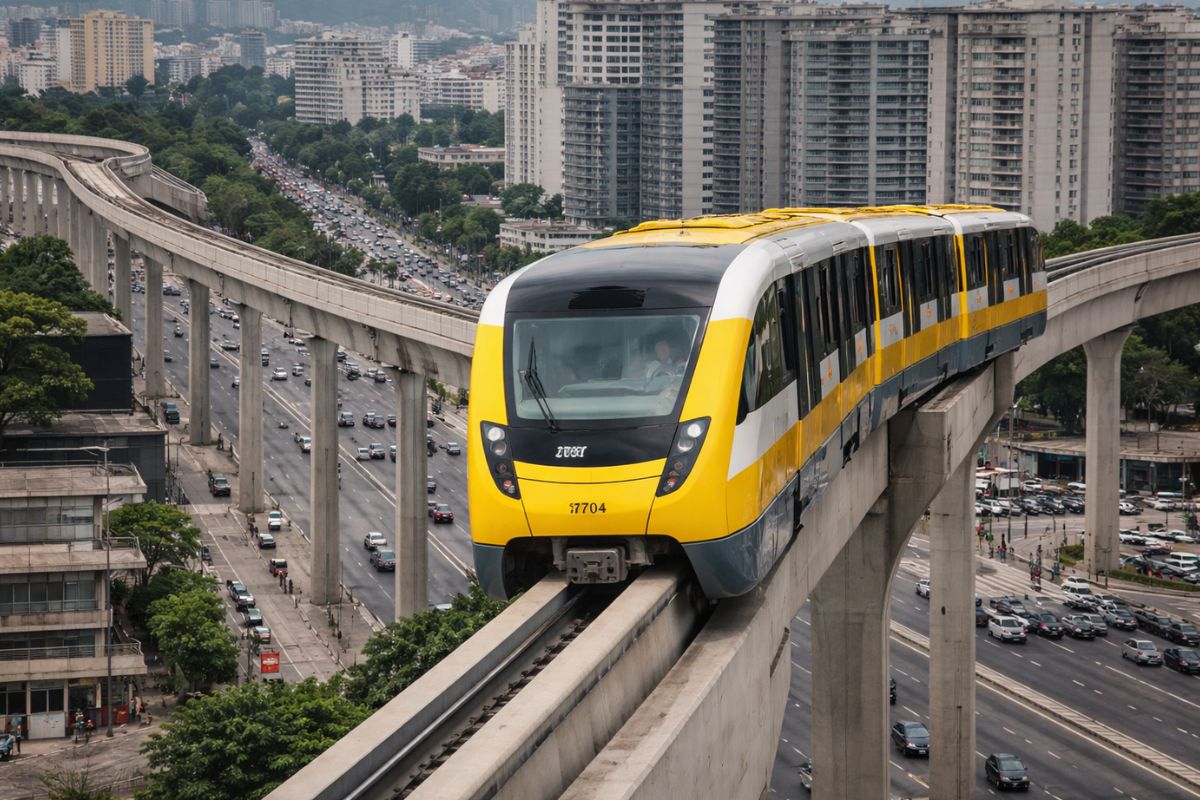
The project that was supposed to be ready for the 2014 World Cup in Brazil debuted with a 12-year delay and nearly R$ 6 billion invested: the Line 17-Gold of the São Paulo monorail opened with reduced hours and is only expected to operate fully in October.
-
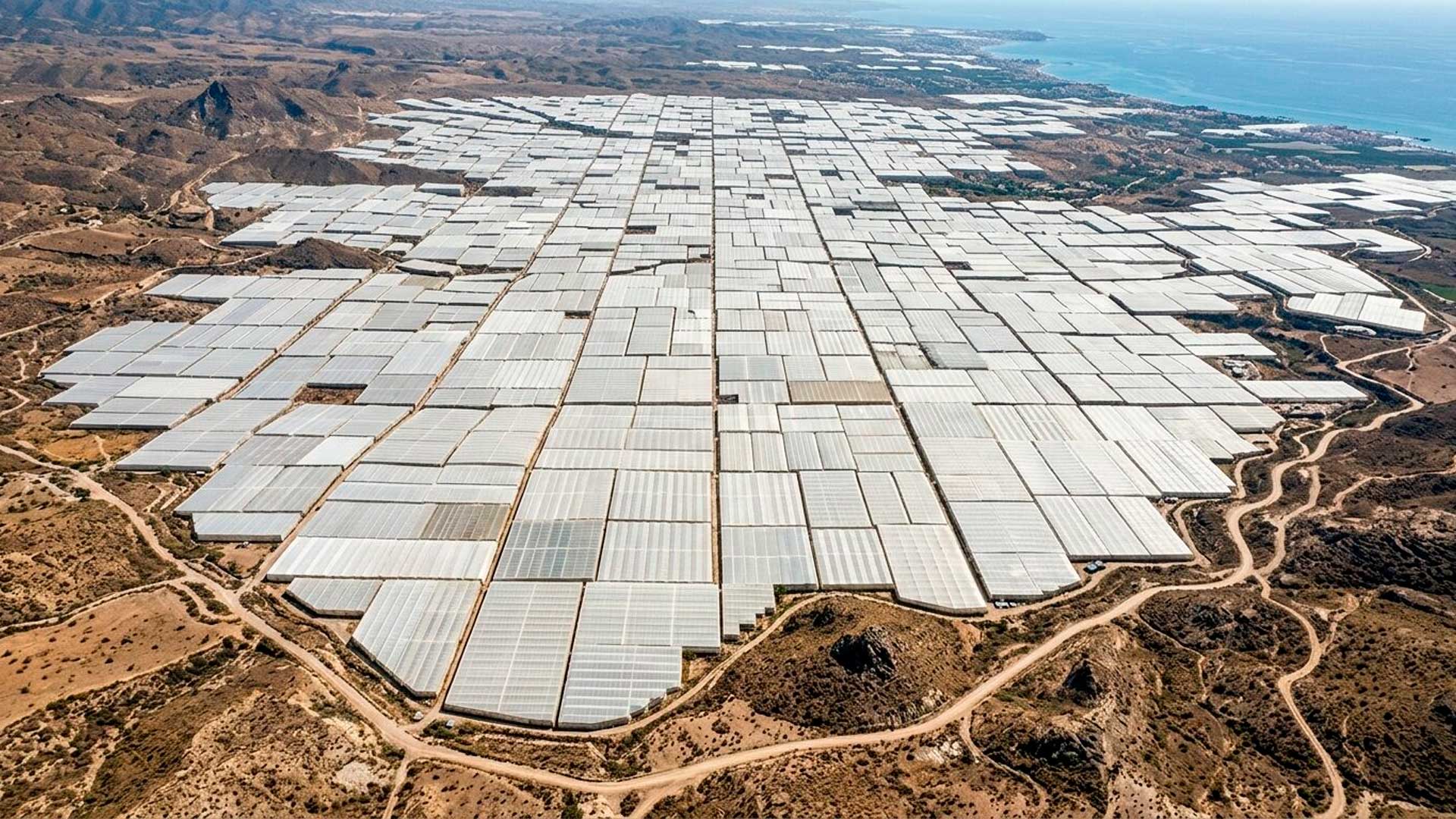
Neither the Pyramids nor the Great Wall of China, this gigantic construction in Spain is the human mark on planet Earth that intrigues the most when seen in images from space.
-
Surrounded by cliffs, mist, and chilling stories, the ancient Hotel del Salto has been reborn as a museum while still unable to shake off its reputation as a haunted place.

-
This star-shaped fortified construction, hidden near the border of Spain, may be the largest fortress on the planet.


The land connection between the two states will be integrated with BR-080 and BR-158, forming a crucial logistical axis for the outflow of soy, corn, meat, and other products to the ports of Santarém and Itaituba, in Pará.
This direct connection, according to DNIT technicians, addresses a historical flaw in the road network and opens the way for a new era of productive integration in the Midwest.
How Much Has the Project Advanced and When Will It Be Delivered?
According to data from the National Department of Transport Infrastructure (DNIT), the project is about 23% completed and the official delivery forecast is late 2026. The foundation has already had 92% of the metal piles installed in the riverbed, and the crowning blocks continue at a steady pace even during the rainy season, thanks to the production of precast parts and auxiliary shelters.
The bridge will feature a 14-meter wide deck, two traffic lanes, shoulders, and safety barriers. The pavement will be of the CBQU type, with high thermal resistance, the same used in highways like BR-163.
The structure has been designed to withstand intense heavy load traffic, with national technology and geotechnics adapted to the alluvial conditions of the Araguaia.
Will BR-080 Highway Also Be Paved?
Yes. After the completion of the bridge, the next step will be the paving of approximately 200 km of BR-080, between Luiz Alves and the junction with BR-158.
This stretch is vital to consolidate the so-called Center-North Corridor, which connects the productive hubs of Goiás and Mato Grosso to the ports of Pará. The expectation is that this route will reduce transport time and logistics costs by up to 30%, according to preliminary studies by the Ministry of Transport.
In addition, the integration with the FICO, under construction, will allow direct road-rail transshipment, enhancing efficiency and reducing CO₂ emissions per ton transported. Thus, the project aligns with environmental and global competitiveness goals for Brazilian products.
Is the Luís Alves Bridge Cheaper Than Other Large Projects?
Yes, and that is one of its great advantages. While the Rio-Niterói Bridge in Rio de Janeiro cost over R$ 2.5 billion (updated values) for 13 km of extension, the Luís Alves Bridge will have an estimated cost of R$ 165 million for just over 1 km, a cost per km up to eight times lower.
The project focuses on functional efficiency, not on aesthetic grandeur. The robust pillars and the use of national technology ensure low maintenance costs and long-term durability.
Who Will Benefit Directly?
In addition to agribusiness, which will have faster and more reliable routes for export, truck drivers, local producers, tourists, and residents in the region will also benefit. The end of reliance on ferries means less waiting time, more safety, and lower transportation costs, especially during floods or droughts.
More than 120 local workers have already been trained to work on the construction, with technical training in drilling, foundations, concrete, and safety. In other words, the project also represents local development, professional qualification, and income generation for the surrounding area.
Do you believe this project can really lower food prices? Have you faced transportation or freight issues in your region? Share your experience in the comments; we want to hear from those who live it.






-

Uma pessoa reagiu a isso.