





 Portuguese
  English
  Spanish
  5 min of reading
  0 comments


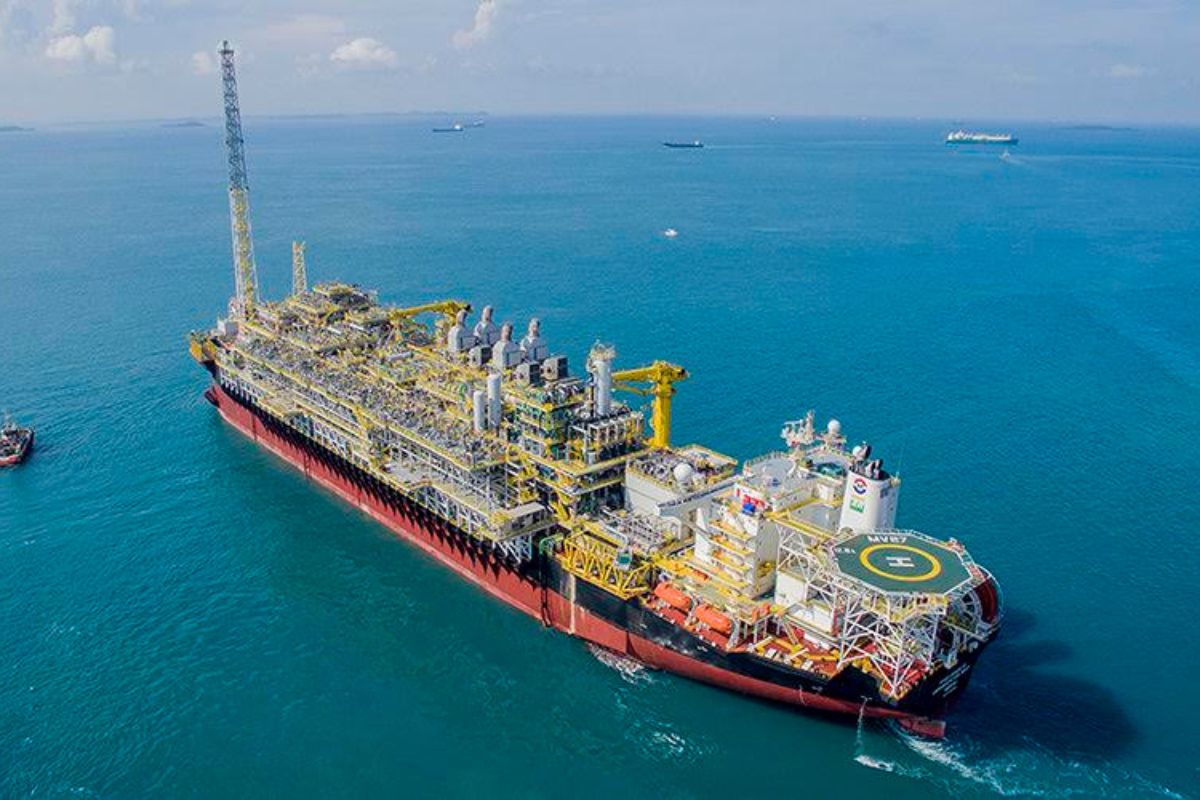
The New Advance in the Pre-Salt of the Santos Basin Marks the Beginning of Production in Lapa Southwest, with Investment of US$ 1 Billion, Three New Wells and Estimated Increase of 25 Thousand Barrels Daily in the Lapa Field.
The Brazilian pre-salt reached a new milestone on March 10 with the extraction of the first oil from the Southwest portion of the Lapa field, in the Santos Basin. The start of operations reinforces the strategic relevance of the asset and increases production of one of the most important projects in the region, now with the expectation of reaching approximately 60 thousand barrels of oil per day.
This new step in the pre-salt occurs within a project supported by US$ 1 billion in investments and sustained by three new wells connected to the FPSO Cidade de Caraguatatuba. The entry of Lapa Southwest into operation consolidates a new phase for the field, increasing production and strengthening the portfolio of the companies involved in the consortium.
First Oil Marks New Stage for Lapa Southwest
The extraction of the first oil from the Southwest portion of the Lapa field represents an important operational turning point for the pre-salt of the Santos Basin. The asset is part of the consortium formed by Repsol Sinopec, with 25%, TotalEnergies EP Brasil, the operator with 48%, and Shell Brasil, with 27%.
-
Petrobras surprises the world again by announcing a new discovery in the pre-salt with excellent quality oil.

-
Offshore industrial demand in Macaé skyrockets with the recovery of oil and gas and could grow by up to 396% by 2026 in the Campos Basin.
-
Offshore industrial demand in Macaé surges with the recovery of oil and gas and could grow by up to 396% by 2026 in the Campos Basin.
-
Brazilian giant expands borders in the Southeast: Petrobras confirms new oil discovery in ultra-deep waters in the pre-salt of the Campos Basin.


The new stage positions Lapa Southwest as a central piece in the growth of production from the field. The movement not only increases the daily volume of oil, but also reinforces the continuity of investments in an area already consolidated within the Brazilian offshore production map.
Investment of US$ 1 Billion Drives Expansion in the Pre-Salt
The development of Lapa Southwest was supported by an investment of US$ 1 billion. This funding was directed towards connecting three new wells to the FPSO Cidade de Caraguatatuba, a unit that was already operating in the Lapa field and now plays an even more relevant role in this new phase of the pre-salt.
The existing production structure was essential to enable the expansion. The FPSO Cidade de Caraguatatuba has the capacity to process 100 thousand barrels of oil equivalent per day and 5 million cubic meters of gas.
This operational base allows for more efficient integration of the new wells, accelerating the impact of the new production on the total output of the field.
Production of Lapa Rises to About 60 Thousand Barrels Per Day
In this initial phase, the estimate is that Lapa Southwest will add 25 thousand barrels of oil per day to the field’s production. Consequently, the total production of Lapa is expected to reach approximately 60 thousand barrels daily.
This increase reinforces the importance of the pre-salt in the expansion of national production and demonstrates how new connections can quickly enhance the performance of already active fields.
The projected leap in Lapa shows the potential for growth even in projects that have already been producing for years, as long as new fronts are incorporated with planning and compatible infrastructure.
Lapa Field Has a Trajectory That Began in 2007
The Lapa field, formerly the exploratory block BM-S-9A, was discovered in 2007. It is located in the central portion of the Santos Basin, about 300 kilometers off the coast of São Paulo, in water depths of approximately 2,140 meters.
The northeastern portion of the field entered production in December 2016. Now, with the first oil from Lapa Southwest, the pre-salt of Lapa enters a new phase of utilization, expanding the effectively productive area of the asset and deepening its relevance within the portfolios of the companies involved.
Repsol Sinopec Highlights Impact on the Portfolio
According to Alejandro Ponce, CEO of Repsol Sinopec Brasil, Lapa Southwest will significantly increase the daily production of the company’s portfolio, which includes other important assets, such as Sapinhoá, also in the Santos Basin, and Albacora Leste, in the Campos Basin.
The statement reinforces the strategic value of this advance in the pre-salt and indicates that operations in Lapa Southwest are not treated as an isolated movement.
It is part of a larger strategy of consolidation and growth in fields considered world-class, with a direct impact on the total production of the company in the country.
Repsol Sinopec Operates with a Focus on Oil, Gas and Decarbonization
Repsol Sinopec Brasil is a joint venture formed by Repsol, with 60%, and Sinopec, with 40%. The company operates in the exploration and production of oil and gas in Brazil, with operations aimed at generating energy responsibly and safely.
As part of the Repsol group, the company also links its operations to the commitment to achieve net-zero emissions by 2050.
This positioning appears as one of the strategic pillars of the company, alongside initiatives related to decarbonization technologies, environmental preservation, and social development.
Lapa Southwest Strengthens the Weight of the Santos Basin
The entry of Lapa Southwest into operation further strengthens the position of the Santos Basin as one of the most relevant areas of the pre-salt in Brazil.
The project combines volume, installed infrastructure, robust investment, and potential for production expansion in the short term.
The first oil extracted on March 10 is not only a technical milestone, but also a clear signal that the Lapa field continues to gain importance within the oil and gas sector.
With expanded production, three new wells, and integration with the FPSO Cidade de Caraguatatuba, Lapa Southwest now occupies an even more relevant space in the national offshore scenario.
In your view, does the expansion of Lapa Southwest demonstrate the strength of the pre-salt in Brazil, or can the sector advance much more in the coming years?








Seja o primeiro a reagir!