





 Portuguese
  English
  Spanish
  4 min of reading
  1 comment


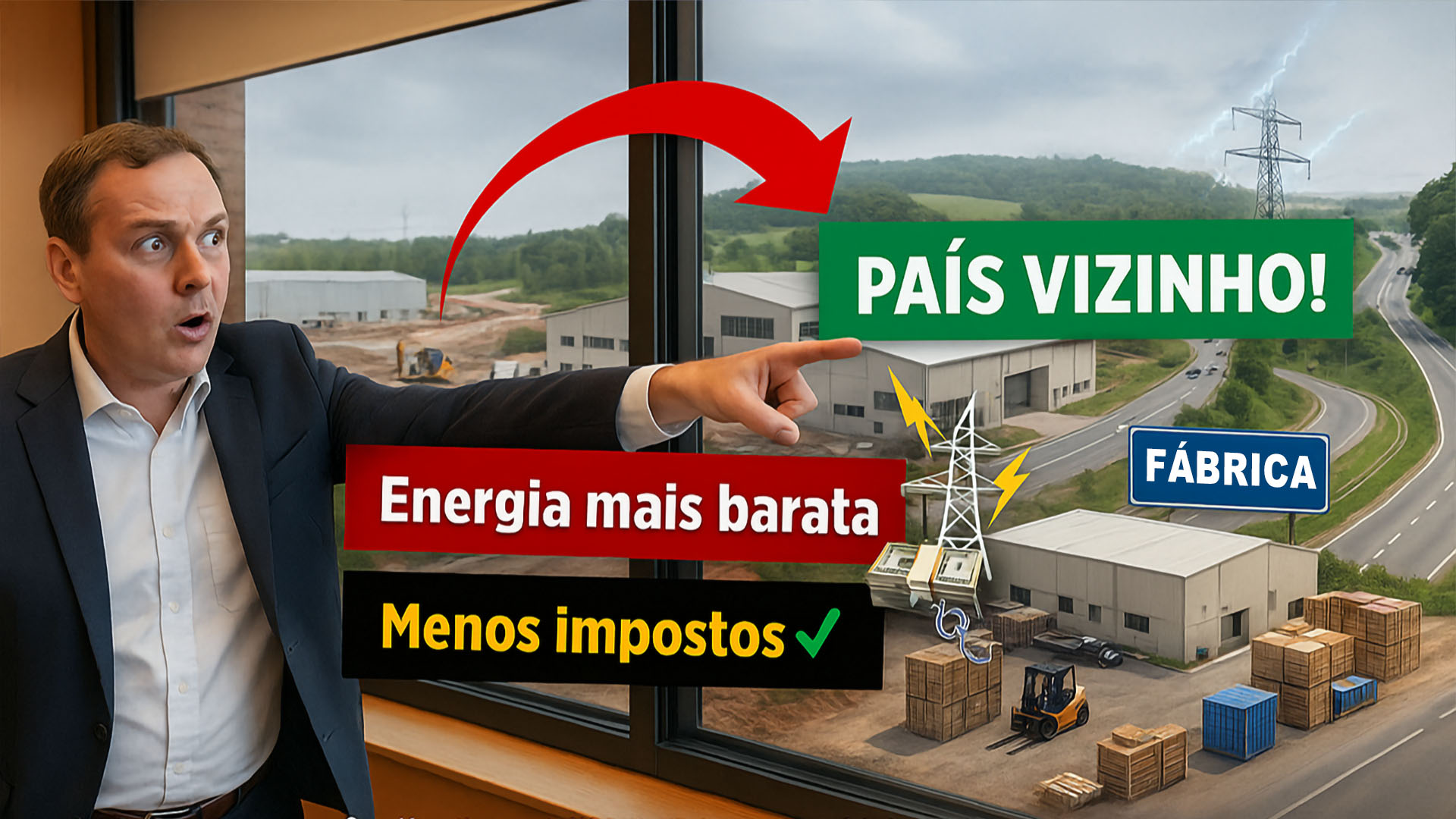


Efisa Will Invest US$ 9 Million to Build a Packaging and Pallet Factory in Paraguay, Starting in the Second Half of 2026; Announcement Was Made on September 17, 2025, by the MIC and the IP Agency.
The company Efisa, led by Brazilian Romano Diel, confirmed the plan to install a packaging and pallet factory in Paraguay. The estimated investment is US$ 9 million, with operations expected to begin in the second half of 2026. The announcement came after a meeting with Vice Ministers Marco Riquelme (Industry) and Rodrigo Maluff (Commerce and Services).
According to the authorities, the exact location has not yet been revealed. The priority is to enable the production line and the integration of inputs. The decision was communicated on September 17, 2025, focusing on serving industrial and logistics niches in the region.
Efisa plans to increase local content over time. The goal is to carry out most of the process in the country, incorporating 60% to 70% of value to ensure national provenance seal, while maintaining some imported raw material at the beginning of operations.
-
Larger than entire cities in Brazil: BYD is building a 4.6 km² complex in Bahia with a capacity for 600,000 vehicles per year, but the discovery of 163 workers in conditions analogous to slavery has shaken the entire project.

-
With an investment of R$ 612 million, a capacity to process 1.2 million liters of milk per day, Piracanjuba inaugurates a mega cheese factory that increases national production, reduces dependence on imports, and repositions Brazil on the global dairy map.

-
Brazilian city gains industrial hub for 85 companies that is equivalent to 55 football fields.

-
Peugeot and Citroën factory in Argentina cuts production by half and opens a layoff program for more than 2,000 employees after Brazil drastically reduced purchases of Argentine vehicles.


Who is Efisa and What is the Investment Strategy in Paraguay
Efisa has been operating in Paraguay since 2012 in forest plantations and wood processing. The company maintains different business units, including biomass and solid wood, and reports more than 400 employees following technical training programs.
The new project targets packaging and pallets, a segment linked to the forestry supply chain and cargo handling. The decision to expand industrial presence in the country is based on regulatory stability and competitive energy costs, according to the company’s evaluation in the official announcement.
For Diel, factors such as tax burden, proximity to the State, and favorable legislation influenced the decision. Mentions of Law 60/90 and Maquila were highlighted in the public communication from the MIC and the IP Agency.
Competitive Advantages: Cheap Energy, Law 60/90, and Maquila
The executive cited “the cheapest electricity in South America” as a differentiator. Recent studies indicate that Paraguay maintains industrial prices substantially below the regional average, supported by Itaipu generation. An IFC report points out that local tariffs are equivalent to less than 40% of the average in Latin America; independent sector comparisons also place the country at the top for lowest cost per MWh in the region.
In the tax field, Law 60/90 provides tax exemptions for capital goods and other incentives for industrial implementation, with deadlines and requirements defined by the Ministry of Industry and Commerce. This policy is known for reducing the initial investment cost for new plants.
The Régimen de Maquila applies a single tax of 1% on the value added in national territory (or on the invoicing made on behalf of the parent company), in addition to suspension of tariffs for temporary imports of supplies and machinery. This mechanism favors exports and the competitiveness of industrial chains such as packaging.
Location and Logistics: Why the Eastern Region Tends to Concentrate Factories
Although the plant address has not been disclosed, the Eastern Region (Alto Paraná) has been treated as a priority for industrial policy and attracting investments. REDIEX/MIC reinforced in 2025 the strategy to attract new industries to Alto Paraná, citing the region’s role as an “industrial pearl” and a focus for exports.
The recent Paraguay Business Week, held in Ciudad del Este, gathered thousands of participants and presented a portfolio of projects with US$ 2.79 billion in opportunities, including investment matchmaking. The timing of Efisa’s announcement occurred in this business-friendly environment.
Road logistics is also evolving. The expansion of Ruta PY02 under private concession has been increasing connectivity between Asunción and the interior, a relevant axis to integrate suppliers and consumer centers in Brazil. Improvements in the corridor help reduce time and costs of transporting pallets and packaging.
The disclosed timeline indicates operations in the second half of 2026. The company acknowledges that part of the inputs will be imported at first but states it is working towards a growing replacement with local products, increasing national content and export competitiveness.
Do you think incentives like Law 60/90 and Maquila and cheap energy justify the migration of factories to Paraguay, or are there other reasons that lead Brazilian entrepreneurs to invest in the neighboring country? Share your opinion in the comments.





Hi there to all, for the reason that I am genuinely keen of reading this website’s post to be updated on a regular basis. It carries pleasant stuff.