





 Portuguese
  English
  Spanish
  9 min of reading
  3 comments





In The Oldest Amazon City in Brazil, Santarém Combines Over A Thousand Years of Indigenous Occupation, Confluence of Waters That Do Not Mix, Markets Full of Strange Fruits, Powerful Natural Remedies, Hand-Made Flour, and A Riversides Life That Resists Time and Recent Droughts in The Region Today.
The oldest Amazon city in Brazil did not originate with the Portuguese, nor did it begin with any “official discovery.” Santarém emerged from an organized settlement that had already passed 1,000 years of history when Brazil had not even been named Brazil, right at the confluence of the Tapajós and Amazon rivers, in a strategic point of the forest.
Today, this same city mixes ancient archaeology, wooden boats, root remedies, crispy flour, and a confluence of waters that do not mix right away, creating a scene that seems fantastical but is pure Amazonian reality. Those who arrive thinking they will see “just another countryside city” discover a place that has country-size, the memory of an indigenous empire, and a demanding riverside routine.
Where The Oldest Amazon City In Brazil Is Located And Why It Is So Different

Santarém is located in the west of Pará, about 1,167 km from Belém, with approximately 357 thousand inhabitants spread over almost 18 thousand km² of territory, an area larger than countries like Lebanon or Montenegro. It is a medium-sized city on the map but proportioned like a continent.
-
Italian researchers have detected what appears to be a second Sphinx buried under the sands of Egypt, and satellite scans reveal a gigantic underground megastructure hidden beneath the Giza Plateau for over 3,000 years.

-
There are 4,223 drums and 1,343 metal boxes concreted with 50-centimeter walls that store the radioactive waste from Cesium-137 in the worst radiological accident in Brazil, just 23 kilometers from Goiânia, with environmental monitoring every three months.

-
Giant Roman treasure found at the bottom of Lake Neuchâtel in Switzerland reveals an advanced trade system, circulation of goods, and armed escort in the Roman Empire about two thousand years ago.

-
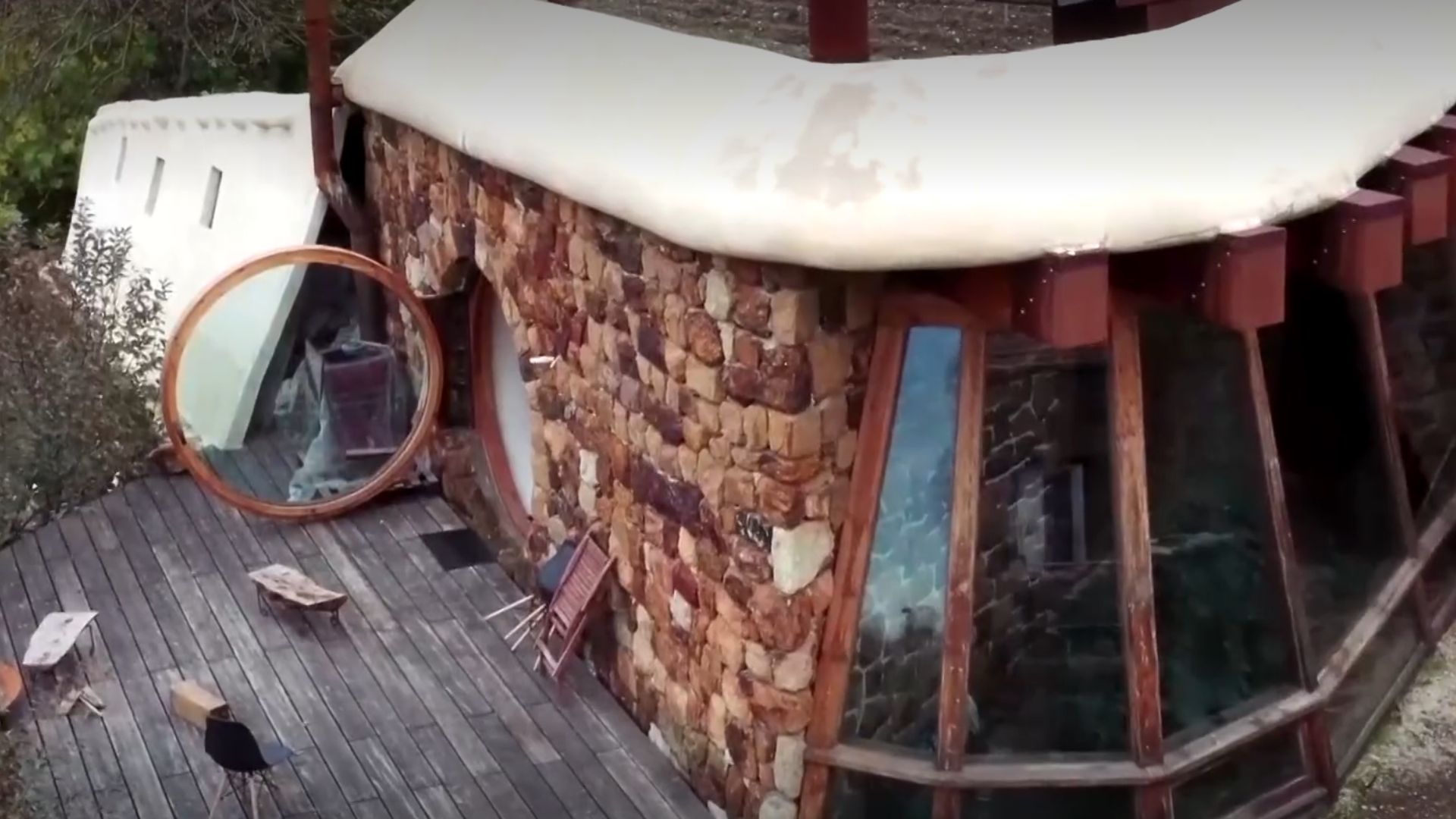
He buried 1,200 old tires in the walls to build his own self-sufficient house in the mountains with glass bottles, rainwater, and an integrated greenhouse.

Archaeological studies show that for over a thousand years there has been continuous settlement at the mouth of the Tapajós, exactly where the urban center is today.
Long before the churches, avenues, and Mercadão 2000, there was already an “indigenous metropolis” there, organized, populous, and connected to other peoples in the region. Recent research indicates that these pre-colonial Amazon cities could have tens of thousands of inhabitants, even without leaving stone buildings or written documents.
Letters and ancient maps from Spaniards, English, Dutch, and French marked a city at the mouth of the Tapajós in the 16th century, long before Portuguese presence was established in the Amazon.
When Santarém today celebrates its official elevation from village to city in the 17th century, the truth is that life there had already been thriving for centuries. That is what gives weight to the expression oldest Amazon city in Brazil.
Mercadão 2000: A Laboratory of Flavors You Didn’t Even Know Existed

If you want to understand the soul of the oldest Amazon city in Brazil, do not start in a museum; start at the market. The Mercadão 2000, created in 1985 to welcome the “future” of the year 2000, seemed too large when it was born. Today, it barely manages the avalanche of products from the forest and the field.
There, everything is excess: steaming tacacá, mountains of herbs, common fruits and fruits that seem invented, such as boiled pupunha, pitomba, ingá, cupuaçu, sweet wild passion fruit, regional melon, and much more. In the midst of that, good flour, the kind that crackles in your mouth and accompanies everything from fish to duck in tucupi.
The vendors do not stand still. It’s shouting, joking, chatting, and friendliness all the time, that savvy market style of Amazonia: “Come here, my dear, try this fruit, it’s medicine, it’s life.” In Mercadão, conversation is as valuable as the product.
And there are also items that carry memory: açaí baskets, charcoal boxes, utensils that were once everyday standards and today resist as a living reminder of a not-so-distant past, when everything arrived carried by hand and paddle.
Forest Remedies: A Living Pharmacy in The Heart of The City
In the same area where you buy fish, flour, and fruits, you find another institution of the oldest Amazon city in Brazil: the stall of natural remedies. It is not cheap mysticism, it is tradition of decades, sometimes centuries.
There, syrups for flu, colds, severe coughs, sinusitis, asthma, and chest wheezing appear. Kumaru, mastruz, milk from Amapá, weight-loss tea with dozens of herbs, not to mention the bottles with creative names that everyone knows by hearsay.
The bestsellers are the oils:
• Copaiba oil, called “natural antibiotic” by the vendors, used against inflammation, cough, skin problems, and even more serious issues.
• Andiroba oil, another Amazon classic, famous for its use in pain, inflammation, and insect bites.
The person in charge of the stall knows how to explain each bark, leaf, and root, with a confidence that does not come from books, but from generation to generation, from riverside dweller to riverside dweller. It’s a living pharmacy in the middle of the city, where the audience ranges from curious tourists to locals who always buy “because it has always worked.”
Confluence of Waters That Do Not Mix: The City’s Signature
The most famous image of the oldest Amazon city in Brazil is not a building, nor a square, nor a church. It is the fusion of two giants: the bluish-green and transparent Tapajós on one side, the muddy and immense Amazon on the other, flowing side by side without mixing right away.
This confluence can be seen from various points in Santarém, but becomes even more impressive aboard boats that take visitors to the “heart” of the phenomenon.
Guides and boatmen explain that differences in temperature, speed, color, and density of the waters create this perfect drawing on the surface, as if someone had drawn a line down the middle of the river.
Since 2014, this region of the water’s confluence has been recognized as cultural heritage of Pará, an official seal for something the local people have known for a long time: that place is the Amazon’s business card, a live geography, chemistry, biology, and poetry class.
Along the way, you can see dolphins, various birds, and the forest reflecting on the water. Even in dry periods, when the water levels drop significantly, the sense of grandeur remains, and the landscape continues to look like another planet.
Historic Droughts, Strained Riversiders, and The River That Sets The Rhythm of Life


Those who only see the beautiful photo of the water’s confluence cannot imagine the extent of the strain when the water levels drop.
In the recording made in November 2024, the drought was so severe that boatmen showed channels that were once navigable and now turned into mere strips of sand and isolated lagoons.
Riversiders who depend on the river to transport watermelon, cattle, flour, and other products find it difficult to leave their communities. In some stretches, the boat simply cannot pass. Tourism also suffers: guaranteed tours now depend on the ebb and flow of the waters.
Veteran boatmen say that the recent drought was the worst they have seen in years of work, affecting everything around. Still, the logic remains the same: the river is a road, supermarket, water tank, place of leisure, and work.
In the oldest Amazon city in Brazil, the river level rules the clock, not the clock hands.
Wooden Boats and Shipwrights That Are Disappearing
Another symbol of the oldest Amazon city in Brazil is the construction of wooden vessels, a craft that has made Santarém one of the main naval hubs in the North.
In the simple shipyard by the river, shipwrights shape entire boats by eye, measuring tape, and accumulated experience.
One of these masters is Mr. Elito, a shipwright who learned from his family. Of the eight siblings, seven followed the craft, but almost no young ones want to learn the art of building wooden boats. The pressure for steel and aluminum vessels, coupled with the lack of successors, makes this profession rare.
He shows off a newly completed vessel, proud of knowing that each boat is, at the same time, a tool for work, transport, home, school, and a connection to the world for many riverside families. But he admits that, if nothing changes, river craftsmen may become museum pieces in a few decades.
The Archaeology That Changes What You Learned In School
When we talk about “ancient cities” in Brazil, names from the coast or famous colonial centers quickly come to mind. What studies in Santarém reveal is another story.
Researchers point out that in the region of lower Amazon and Tapajós, there was a very strong settlement well before the Portuguese, with large villages, but dense and connected by rivers and internal paths. European chroniclers already reported riverbanks “heavily populated,” with thousands of indigenous warriors ready for war.
Today, with excavations and more modern studies, these narratives gain weight. Fragments, ceramics, traces of ancient settlements, and soil analyses reinforce that Santarém, the current oldest Amazon city in Brazil, was already an important hub when Europe still barely knew that this part of the world existed.
16th-century maps mark a city at the mouth of the Tapajós recognized by Spaniards, English, and Dutch, which aligns with the idea of “Metropolis of the Tapajós,” long before the Catholic baptism of “Mission of Our Lady of the Conception among the Tapajó Indians” in 1661.
Life in The Countryside, Respectable Flour, And Homemade Colorau
A few kilometers from the center, in the Curuçunã community, life runs at a different pace. Mrs. Celina and Mr. Luís run a small farm where everything is grown, in the classic model of Amazonian family agriculture.
The highlight is manioc, which after about a year is harvested to become flour. Good quality flour, made by hand, with heat, in a press, in the flour house, following a ritual that combines heavy work, technique, and tradition.
It’s this flour that creates the perfect accompaniments for fried fish, duck in tucupi, broths, and whatever else appears on the table.
Mrs. Celina doesn’t stop at manioc. She makes her own colorau with annatto, uses manioc or cassava dough, prepares saffron at home, and prefers everything natural, without relying on industrialized seasoning.
The strong sun, the heat almost year-round, and the routine of “taking care of chickens, ducks, plants, and washing clothes in the igarapé” create a picture very different from the urban image that many people have of the Amazon.
Flavors That Define Identity: Duck in Tucupi and Sweet Passion Fruit
If there is a dish that summarizes the personality of Pará, it’s on Mrs. Celina’s table: duck in tucupi. The yellow broth, sour and fragrant, comes straight from the manioc, goes through a careful cooking process, and becomes the base for a dish that is half soup, half ritual, half embrace of the forest.
The tucupi appears at the market, in bottles of various sizes, coming from the hands of those who produce, sell, and consume it from childhood.
When the duck lands on the plate with tucupi and a good crispy flour on top, the experience ceases to be merely gustatory; it becomes a part of understanding where one is.
In the same Santarém, you find the sweet passion fruit, the kind you eat by breaking the shell with your hand, crunching on the seeds, and a flavor that surprises those who only know the sour passion fruit from juice with sugar.
“It’s one of the tastiest I’ve ever eaten,” confesses the presenter, in the middle of the market, with a shopping bag full.
Why Does This Oldest Amazon City In Brazil Still Hold So Many Secrets
Santarém shows that the Brazil is much larger than the map portrays and the hasty summary of textbooks. The oldest Amazon city in Brazil condenses in one landscape:
• Rivers that meet without immediately mixing
• Markets that seem like living museums of fruits, spices, and remedies
• Simple shipyards that build the future in wood
• Rural communities that produce their own food and seasonings
• Archaeological memories that reposition the Amazon as the cradle of large human centers
All of this in a scenario where faith, the countryside, the boat, the market, and science walk side by side, without asking for permission for any stereotype.
If you’ve made it this far, you already know that this city is much more than “the countryside of Pará.” So tell me in the comments: which part of the oldest Amazon city in Brazil caught your attention the most, the confluence of rivers, Mercadão 2000, or the simple life in the countryside with tucupi and flour?










Minha cidade. Eu acho Santarém maravilhosa e a reportagem está perfeita. Parabéns para o jornalista que reuniu todas as informações de forma bem clara e verdadeira. Obrigada
Tudo é importante. É maravilhoso saber dos meandros históricos de Santarém.
O encontro dos rios e um fenômeno natural espetacular.