





 Portuguese
  English
  Spanish
  6 min of reading
  0 comments


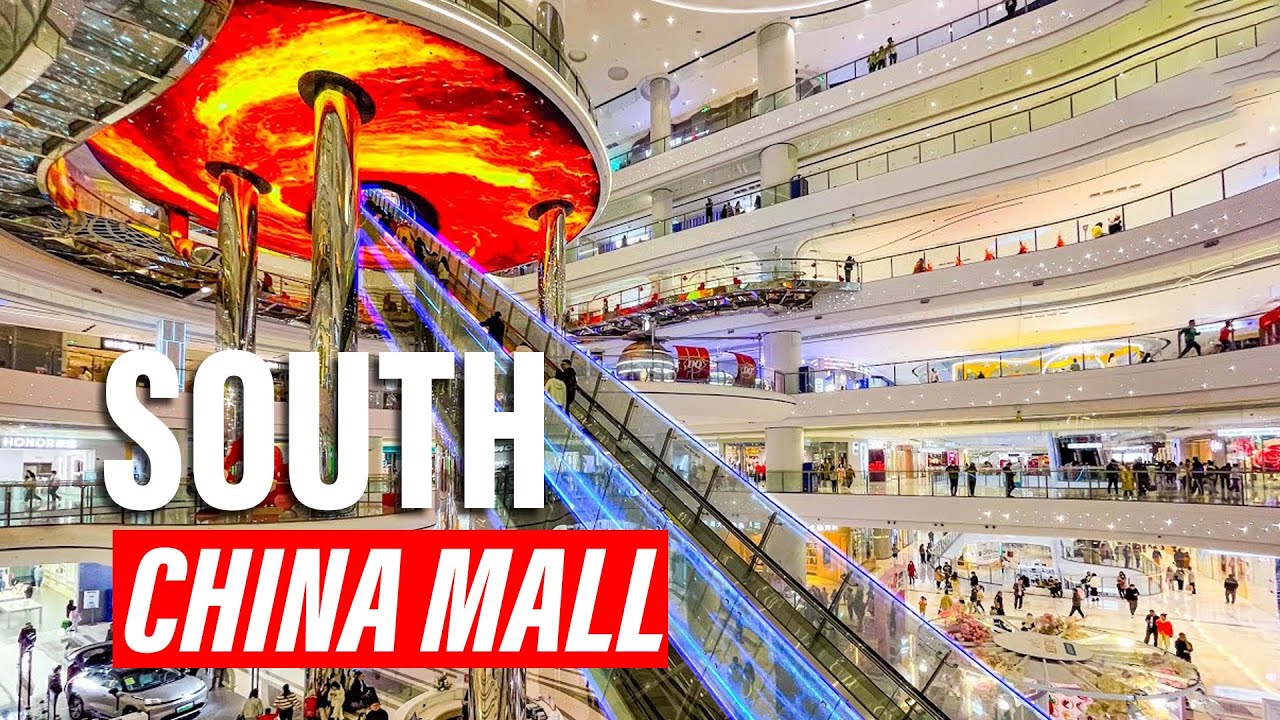
Discover The Story Of South China Mall, The Largest Mall In The World That Became A Symbol Of Abandonment Of Shopping Centers In China. From Billion-Dollar Megaproject To Attempt At Urban Reinvention.
In 2005, China surprised the world by opening the South China Mall in Dongguan, Guangdong province. The ambitious project was conceived with a single goal: to transform the space into the largest mall in the world.
The idea was to combine shopping, leisure, and tourism in one complex, with over a thousand stores, international themed zones, amusement parks, hotels, and dining areas. On paper, it seemed like the new commercial epicenter of Asia.
But what was meant to be an icon of energy infrastructure and the new Chinese economy quickly became a symbol of the abandonment of shopping centers. For almost two decades, South China Mall was referred to by the international press as a “ghost mall,” and its gigantic structure remained virtually deserted, accumulating losses and revealing deep flaws in the country’s unplanned accelerated growth logic.
-
These living root bridges and ladders are over 700 years old and help indigenous people survive in one of the rainiest regions in the world.

-
From sertanejo star to international investor: Ana Castela invests millions in a mansion in the USA, creates a themed accommodation in Orlando, and shows that the “boiadeira” also wants to grow away from the stage.

-
The 10 most stunning motorhomes in the world: a $3 million trailer with a rooftop nightclub and garage for a Ferrari, “palaces on wheels” with Italian marble, private cinema, and five-star hotel luxury for billionaires.
-
Trump wanted to spend $400 million on the White House, but the courts prohibited the million-dollar construction.


This article traces the trajectory of South China Mall, analyzes the causes of its collapse, its impact on the shopping mall industry, and recent attempts to rehabilitate its image, contextualizing the case within the global phenomenon of the crisis of large shopping centers.
The Dream Of The Largest Mall In The World
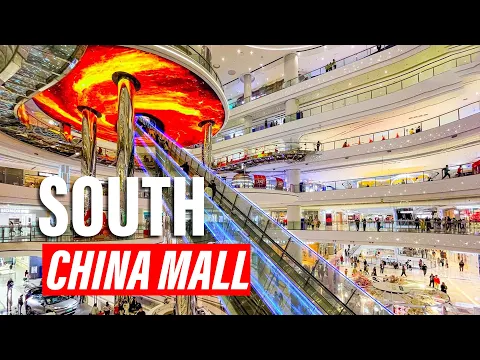

The South China Mall was conceived by Hu Guirong, a former farmer who had amassed a fortune in the real estate sector and wanted to turn Dongguan into a tourist and commercial hub of international scale. The city, with around 10 million inhabitants, was known for its manufacturing industry — but lacked cultural and leisure attractions.
With a built area of 890,000 square meters and a gross leasable area (GLA) of over 659,000 square meters, the mall surpassed all its global competitors in size, including the Dubai Mall (USA) and the Mall of America (United Arab Emirates). It was expected to house more than 2,300 stores, in addition to:
- 25-meter Ferris wheel
- Venice-inspired gondola canal
- Replica of the Arc de Triomphe in Paris
- Five-star hotel
- IMAX theaters
- Indoor parks and themed areas with European architecture
The project received over US$ 1 billion in investments, largely financed by Chinese state banks. The mall was promoted as a “global shopping city,” aimed at both local residents and foreign tourists.
The Collapse: When The Largest Mall Became A ‘White Elephant’
Despite the grand opening, the largest mall in the world never reached its potential. The occupancy rate did not exceed 10% in the first years. Stores closed before even completing a year of operation.
The Chinese press practically silenced the failure, but international media — such as CNN, Bloomberg, and South China Morning Post — began referring to the place as the “largest ghost mall on Earth.”
The images were emblematic: empty corridors, escalators turned off, facades covered by hoardings, and absolute silence amidst the largest commercial structure ever built.
Main Causes Pointed Out By Analysts:
- Poorly Planned Location: Dongguan was not a tourist destination and lacked nearby hotel and airport infrastructure.
- Difficult Access: Until 2015, there was no direct connection to subways or expressways.
- Low Local Purchasing Power: The working class of Dongguan did not have sufficient income to support a luxury mall.
- Positioning Error: The proposal was too elitist for the regional reality.
- Excessive Optimism Of The Chinese Real Estate Market, which believed that “if you build it, they will come” — which clearly did not happen.
The Crisis Of Shopping Malls In China
The case of South China Mall is emblematic within a broader phenomenon of uncontrolled expansion of shopping centers in China. Between 2005 and 2015, over 4,000 malls were built in the country, many of them in medium-sized cities, without proper feasibility analysis.
According to data from the China Chain Store & Franchise Association (CCFA), over 30% of Chinese shopping centers built during that time operated with critically high vacancy rates for years. The term “abandonment of shopping centers” became common in industry reports.
This concrete bubble was fueled by easy credit, regional growth targets, and political incentives to develop urban areas even without corresponding consumer demand.
South China Mall began to be studied in universities and by urban planners as the ultimate symbol of speculative urbanization — where infrastructure comes before social function.
After years of abandonment, the local government and the managing company South China Mall Holdings decided to reverse the situation. Starting in 2015, a series of structural reforms, tax incentives, and promotional campaigns attempted to recover consumer traffic.
Main Measures Taken:
- Construction of a subway station with direct connection to the mall
- Redefinition of the mix of stores, focusing on popular brands and local anchor stores
- Creation of multifunctional spaces such as universities, clinics, and cultural centers
- Holding of large-scale events: music festivals, student fairs, e-sports competitions
- Implementation of public services, such as notaries, health posts, and municipal services
By 2023, the occupancy rate had risen to about 60%, according to internal reports from the management. However, the average daily traffic was still considered weak for the scale of the enterprise.
The Economic And Social Impact
The initial failure of South China Mall had lasting effects. Entrepreneurs lost millions, thousands of jobs were not created, and confidence in the sector was shaken. State banks suffered from the lack of return on financing, and Dongguan became marked as a symbol of economic megalomania.
Sociologists and economists used the case as a warning for the need for urban planning and rational use of public spaces. The concept of “largest” began to be questioned: it is not enough to be the largest mall in the world — it must be the most functional, the most accessible, and the most connected to the reality of the population.
Comparison With Other Global Cases
The abandonment of shopping centers is not exclusive to China. In the United States, the phenomenon of dead malls — malls abandoned due to the rise of e-commerce — has been documented since the 2000s. In Brazil, projects like Shopping Gama (DF) and Leste Aricanduva Shopping Center (SP) also faced difficulties after grand openings.
However, no case has the scale and global visibility of South China Mall, which still appears on lists of curiosities and examples of failed investments.
The New Role Of Shopping Malls In The 21st Century
With the rise of e-commerce and changes in consumption habits, malls need to reinvent themselves. South China Mall is trying to follow this trend, seeking to be not just the largest mall, but a multifunctional urban center.
New projects include:
- Expansion of coworking spaces and startups
- Technology incubators in partnership with universities
- Public libraries and permanent cultural centers
- Green areas, community squares, and sustainable mobility
The focus now is on the consumer experience, not just on shopping. Instead of competing with online platforms, the mall wants to be a place where people go to meet, study, take care of their health, or participate in events — and eventually buy something.
South China Mall was, for many years, a symbol of what went wrong in urbanization and mass consumption in China. Initially intended to be the largest mall in the world, it became the most emblematic case of shopping center abandonment in recent history.
However, its story does not end in failure. Slowly, South China Mall is trying to reinvent itself, learning from past mistakes and adapting to the present. The megamall, which was once synonymous with waste, is now trying to be a reference for reconstruction and re-signification of urban spaces.
Whether it will succeed or not, time will tell. But what is certain is that its trajectory serves as a warning — and inspiration — for everyone who thinks about the city, commerce, and society.







Seja o primeiro a reagir!