





 Portuguese
  English
  Spanish
  4 min of reading
  7 comments


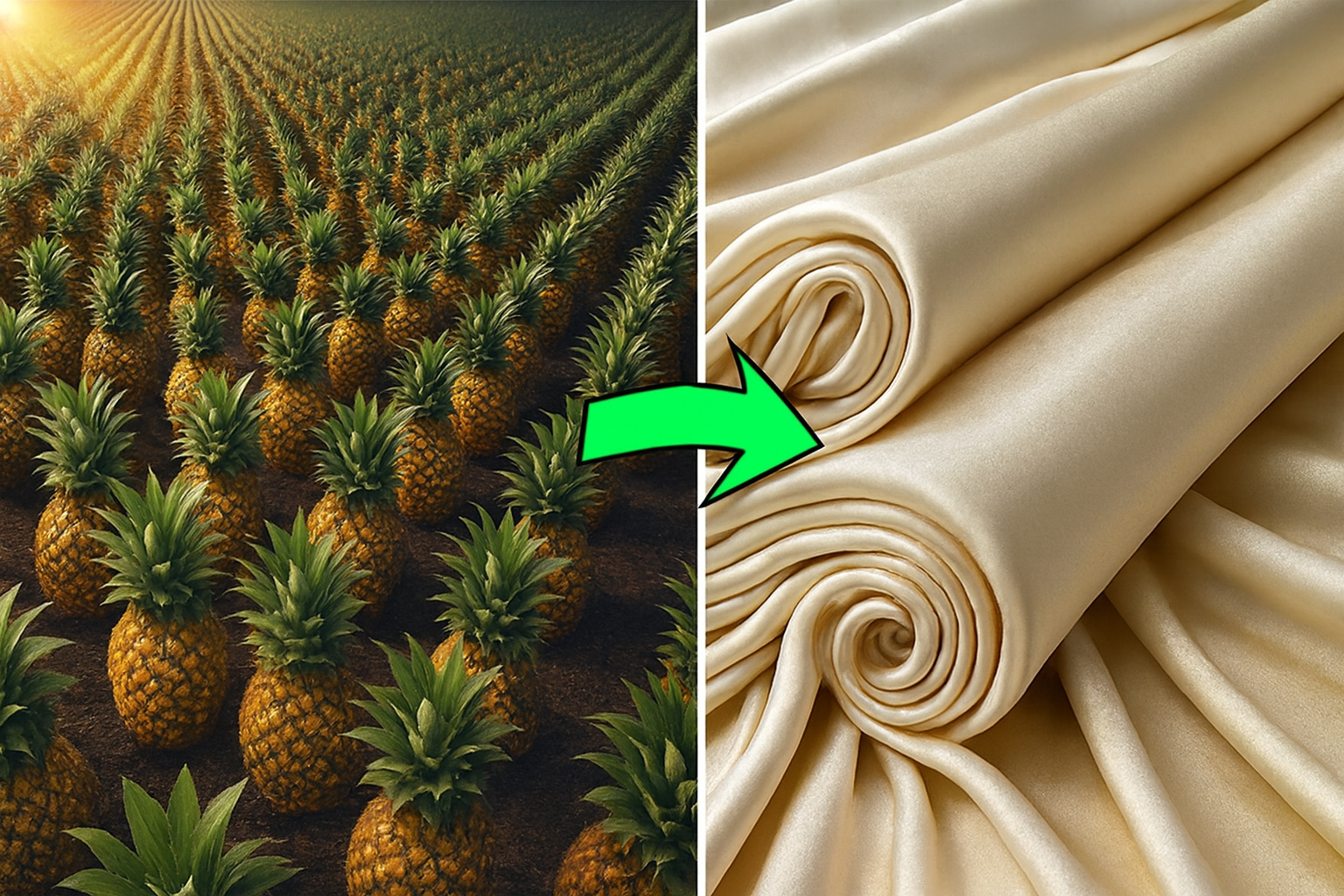


Pineapple Fibers Transform 13 Million Tons of Leaves Into Premium Textile Material, Replace Leather and Gain Space in the Global Industry.
What for decades was just an invisible residue in tropical agriculture is now beginning to be used in bags, sneakers, coatings, and premium pieces in the fashion and design market. We are talking about the fiber obtained from pineapple leaves, a raw material that starts at the mechanical defibration stage and ends its journey on international runways. Behind this is a precise industrial chain, based on huge agricultural volume, controlled physical-chemical processes, global market, and material technology.
Pineapple Leaves: An Agricultural Residue With Global Industrial Scale
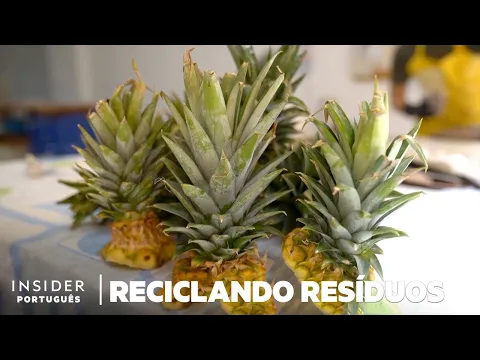
Pineapple is grown in dozens of tropical and subtropical countries and ranks among the most produced fruits on the planet. According to estimates from international agricultural organizations, the global volume of vegetable waste from pineapples, mainly leaves discarded after harvest exceeds 13 million tons per year.
These leaves were previously left to rot, burn, or decompose in the field, which generated:
-
Historic bankruptcy of Centauro shocks the market, and the century-old company puts more than 500,000 products, machines, and complete infrastructure up for online auction.

-
New shoe factory in Ceará is expected to create 400 jobs and strengthen the local economy.
-
No one imagined it, but a mixture of sawdust with a mineral that fights fires surprises scientists with a result that changes the course of fire-resistant construction.
-
From empty land to a high-end house, wooden construction uses a lightweight system, metal structure for the foundation, ventilated ceramic cladding, and special windows to create an efficient and comfortable living space throughout the year.


• agricultural waste
• unwanted emissions
• pest risk
• handling costs for the producer
Starting in the 2010s, this liability began to transform into input for an emerging textile chain.
From Plantation to Fabric: How the Pineapple Fiber Production Chain Works

The industrial process has three macro stages, with variations depending on the final destination:
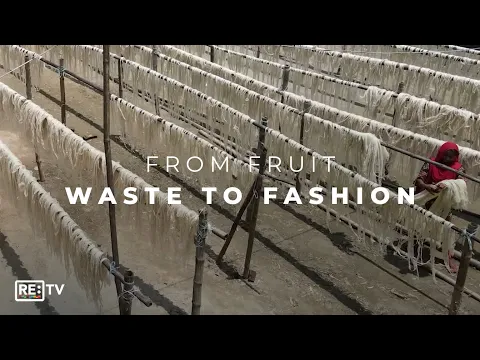
Collection and Defibration
After the fruits are harvested, the leaves are removed and fed into defibration machines that perform:
• mechanical scraping
• separation of cellulose fibers
• washing and removal of natural resins
The result is a fiber with high cellulose content, similar to linen and hemp in terms of structure.
Drying and Treatment
After extraction, the fibers undergo:
• controlled drying in the sun or in a greenhouse
• treatment for alignment and optional bleaching
• granulometric selection by fineness
Adjusting moisture is crucial to avoid mold and mechanical loss.
Transformation Into Fabric or Composite Material
Uses are divided into two main routes:
✔ Non-Woven Fabric Type Felt (called Piñatex): used in fashion and upholstery
✔ Composite Sheets with Plant or Synthetic Polymers: used in coatings and footwear
This process produces a material that visually and mechanically resembles leather, with different rigidities and thicknesses depending on the destination.
Who Produces and Where Is the Pineapple Fiber Industry
The agricultural production of pineapple is concentrated in tropical countries, mainly:
• Philippines — one of the largest sources of pineapple in the world
• Costa Rica — global exporter of fresh fruit
• Thailand
• Indonesia
• India
• Vietnam
The Philippines and Costa Rica stand out not only for their agricultural volume but also for already having established chains that collect leaves and generate textile material. At the same time, interest has grown in Europe and the United States as part of a movement for advanced biomaterials.
Fashion, Footwear and Coatings: Where “Pineapple Leather” Is Being Used
The material has already appeared in the following segments:
- Shoes (sneakers, sandals, soles, and tongues)
- Bags and Backpacks
- Internal Coatings of Concept Cars
- Jackets and Premium Pieces
- Wallets and Accessories
The differentiator for the fashion sector is the combined package:
• leather-like appearance
• lower environmental impact
• absence of traditional chemical tanning
• plant-based and traceable origin
Some international brands have created experimental collections combining plant fibers with corn-based biopolymers or water-based polyurethane resins.
Why Pineapple Fiber Works So Well as a Biomaterial?
There are physical and chemical reasons that make pineapple interesting:
High Cellulose:
The fiber has a high cellulose content, which ensures tensile strength, thermal stability and compatibility with resins.
Intermediate Fiber Length:
Facilitates industrial processing and homogenization in composites.
Low Density:
Light materials are valuable for footwear, fashion, and automotive.
Adequate Surface:
This improves bonding with polymers in composites.
Industrial Impacts: From Agricultural Liability to Added Value
For the farmer, the fiber creates a new revenue source from something that previously had no value.
For the industrial sector, it opens a front in:
• biomaterials
• functional textiles
• plant leather
• sustainable design
And, unlike much purely environmental narrative, here there is real scale: we are talking about a residue of millions of tons, distributed globally, with an extraction, drying, logistics, and transformation chain already in operation.
Next Step: Automotive and Light Architecture
Recent research has begun to incorporate pineapple fiber into composites for: internal panels, automotive uses, partitions, thermal-acoustic insulations, and flexible laminates.
The logic is the same as for hemp, linen, and jute fibers, which are already common in the European automotive industry.
If the trend continues, pineapple may migrate from fashion accessories to lightweight engineering, especially in parts requiring specific rigidity, low density, and good surface aesthetics.
Transforming discarded leaves into a valued material is more than sustainability: it is applied industrial engineering to a massive biomass flow.
Pineapple fiber demonstrates how material biotechnology can move from narrative to real economy, with scale, logistics, and clear applications.
And all indications are that we are just at the beginning of the transformation of this agricultural residue into a global product with multiple industrial routes.







Vamos reciclar e só falta ao estado reciclar o lixo recolhido nas ruas…Na natureza nada se cria e tu se transforma…
Abacaxi, ****, cana de açúcar, cânhamo… Várias fibras vegetais ignoradas no “século do petróleo” voltam a se tornar interessantes! Aquela calça de linho fresca e bonita ainda vai voltar à moda!
Um artigo que trata de um assunto extremamente importante e interessante, mas de difícil leitura por causa das propagandas.