





 Portuguese
  English
  Spanish
  4 min of reading
  32 comments


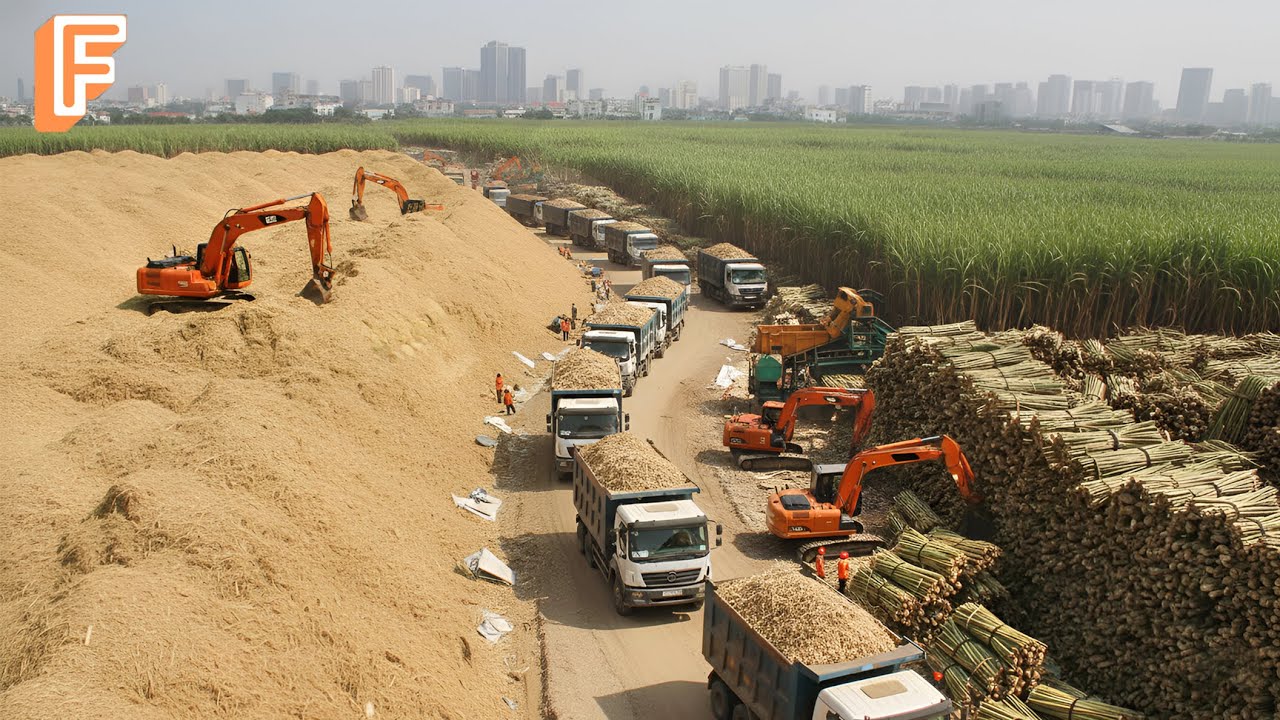


Sugarcane Bagasse Becomes MDF and Plywood: 200 Million Tons Per Year Supply Furniture and Partitions and Replace Industrial Wood.
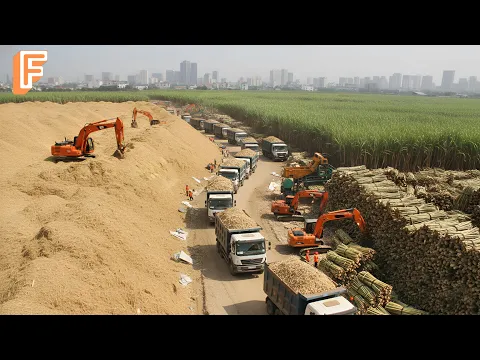
What few people realize is that sugarcane produces more than just sugar and ethanol. Behind the scenes of the mills, the Brazilian industrial cycle reveals a colossal byproduct that rarely makes headlines: bagasse, a fibrous waste that reaches 200 million tons per year, and is now being contested by sectors that go far beyond thermal energy.
Today, this material is crossing a silent inflection point: it is no longer just mill fuel but is becoming raw material for structural panels used in furniture, partitions, and commercial architecture, replacing wood and gaining ground in a global market worth billion of dollars.
The Size of the Industrial Cycle
Brazil is the absolute leader in sugarcane. In recent harvests, over 600 million tons were harvested. During milling, about one-third becomes bagasse — a biomass rich in cellulose and lignin, two essential ingredients for material engineering.
-
The gigantic steel shell built to contain Chernobyl for a century has been pierced by a drone, exposing a critical system and creating a hole that could cost over 500 million euros to repair.

-
Brazilian Navy reaches a new level by taking over an airport with a 1,600-meter runway used by 1,800 military personnel and autonomous attack drone testing.

-
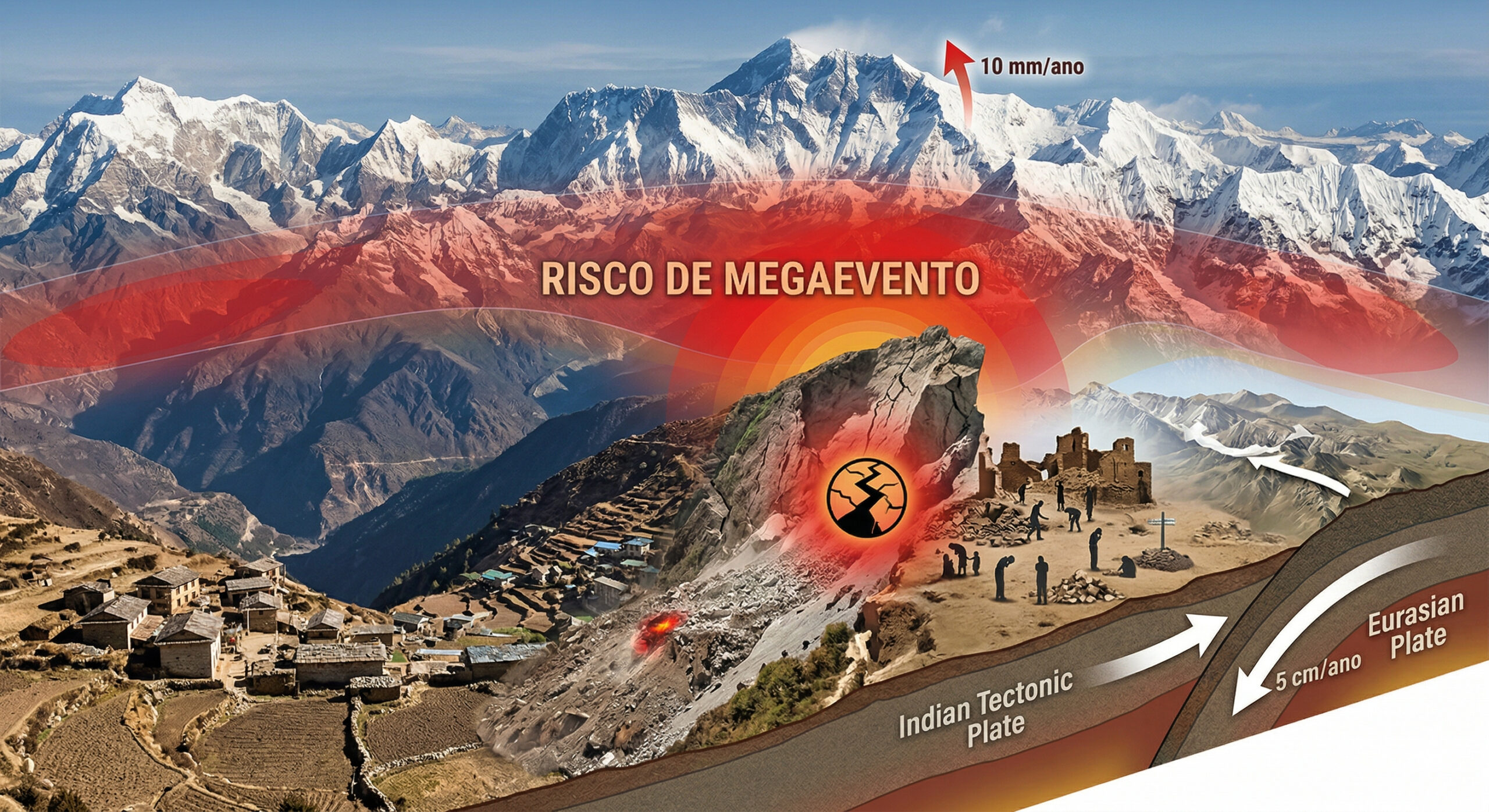
The Himalayas continue to grow to this day, with tectonic plates advancing 5 cm per year, mountains rising up to 10 mm annually, and the 2015 earthquake that killed 9,000 people may have increased the risk of an even larger seismic mega-event.
-
At an altitude of 400 km by astronauts from the International Space Station, Paris transforms at night into a golden mesh so precise that it reveals the outline of the Seine River, avenues, and entire neighborhoods like a luminous map drawn over the Earth.




Just to get a sense of scale: no other lignocellulosic waste in the world is produced in comparable volume and with a concentrated generation point. While straw, peels, and forest residues are scattered across small properties, bagasse accumulates in hundreds of mills, already standardized, ground, and available in silos.
This concentration matters because it drastically reduces logistics costs — one of the main barriers to transforming biomass into a competitive product.
Why Bagasse Works Instead of Wood
The interest from the furniture and panel industry is not “sustainability,” it’s applicable chemistry:
● Cellulose (40–45%) → provides rigidity, moldability, and tensile strength
● Hemicellulose → acts as a bridge between fibers
● Lignin (18–22%) → acts as a “natural glue” when pressed under heat
This composition is practically identical to the wood used for conventional MDF. The difference is that wood requires years of rotation, land planted, truck transport, and industrial processing.
Bagasse arrives for free at the mill and ready.
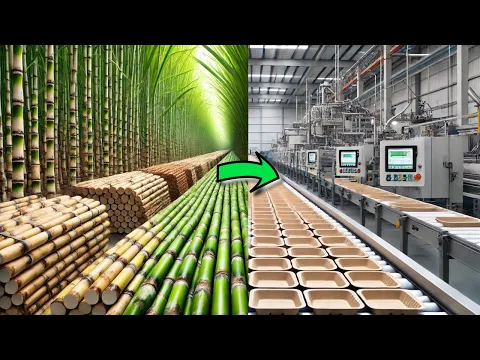
How a Panel is Born from Bagasse
The chain that transforms bagasse into MDF or plywood follows a clear industrial script:
- Drying to reduce moisture
- Refining to standardize particle size
- Mixing with resins (depending on use: UF, MUF, or low-VOC alternatives)
- Pressing with heat, pressure, and controlled cycle
- Curing and finishing for machining or laminating
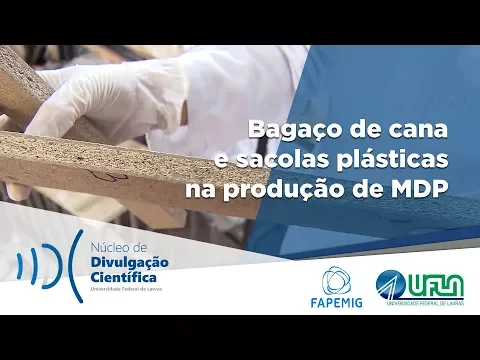
At the end of the process, the panel accepts drills, milling, CNC, glue, melamine lamination, painting, and edging, meaning that it enters the same production line as conventional MDF.
It is not an “experimental” material. It is an industrial material.
Sectors That Are Already Using Bagasse MDF
This panel is appearing where Brazil has strength:
● custom furniture
● corporate environments
● ephemeral architecture (exhibitions, stands, events)
● retail design (kiosks, displays, exhibitors)
● internal partitions
● scenography
And abroad it has made headway in India and China, where the pressure on wood is even greater and the availability of sugarcane is enormous.
The Economic Turn: When Waste Becomes Market
There are three economic movements happening simultaneously:
Wood has become expensive and scarce
The panel market struggles with price, logistics, and forest restrictions.
Biomass has become a strategic input
Automotive, furniture, and construction chains are seeking lightweight, predictable, and cheap materials.
Mills want to diversify revenue
Selling energy is good, but selling structural material changes the margin level.
This is where bagasse enters as an emerging industrial commodity.
For Furniture, the Impact is Immediate
MDF is dominant in Brazilian furniture. It replaced particle board, took space from solid wood, and became the market standard. If part of this demand starts to be met with bagasse, you have two consequences:
● reduction of pressure on planted forests
● vertical integration of agribusiness into construction and design
It is a movement similar to what happened in the European automotive sector with hemp and linen — but now with a tropical waste on an industrial scale.
Brazil, India, and China: The Axis Driving Transformation
● Brazil — largest volume, greatest concentration, highest industrial maturity in MDF
● India — uses bagasse for MDF and paper because wood is expensive and limited
● China — integrates bagasse into composites and decorative panels because of its colossal internal market
The combination of these three markets is already enough to sustain a global biomaterials chain.
Where This Could Lead in the Coming Years
If the trend continues, we will have:
- hybrid composites (bagasse + polymers)
- light acoustic panels
- sustainable decorative laminates
- self-supporting panels for modular construction
- thermal-acoustic panels for retail
The point is not “environment, it’s materials engineering + scale + margin. Bagasse comes in because it makes industrial sense, not because it’s nice in marketing.
The transformation of sugarcane bagasse into MDF and plywood marks a silent shift in the Brazilian industry: a gigantic agricultural waste has ceased to be just fuel and has begun to compete with industrial wood, targeting a solid, globalized market that is in need of alternatives.
And the most important: unlike many narratives, here there’s no fantasy, no trade show prototype, no lab for photo ops. There is machinery, presses, resin, milling machines, CNC, trucks, stores, and end customers. That’s how a material stops being waste and becomes a product.








A reportagem é muito interessante. Gostaria de saber como está a cogeração nas usinas. Demanda, produção, custos entre outros.
Fantástica essa matéria, pelo próprio senso da informação e pela seu grau de utilidade pública. Parabéns.
Também se usa para produzir papeláo ondulado junto aparas de papel..