





 Portuguese
  English
  Spanish
  5 min of reading
  0 comments


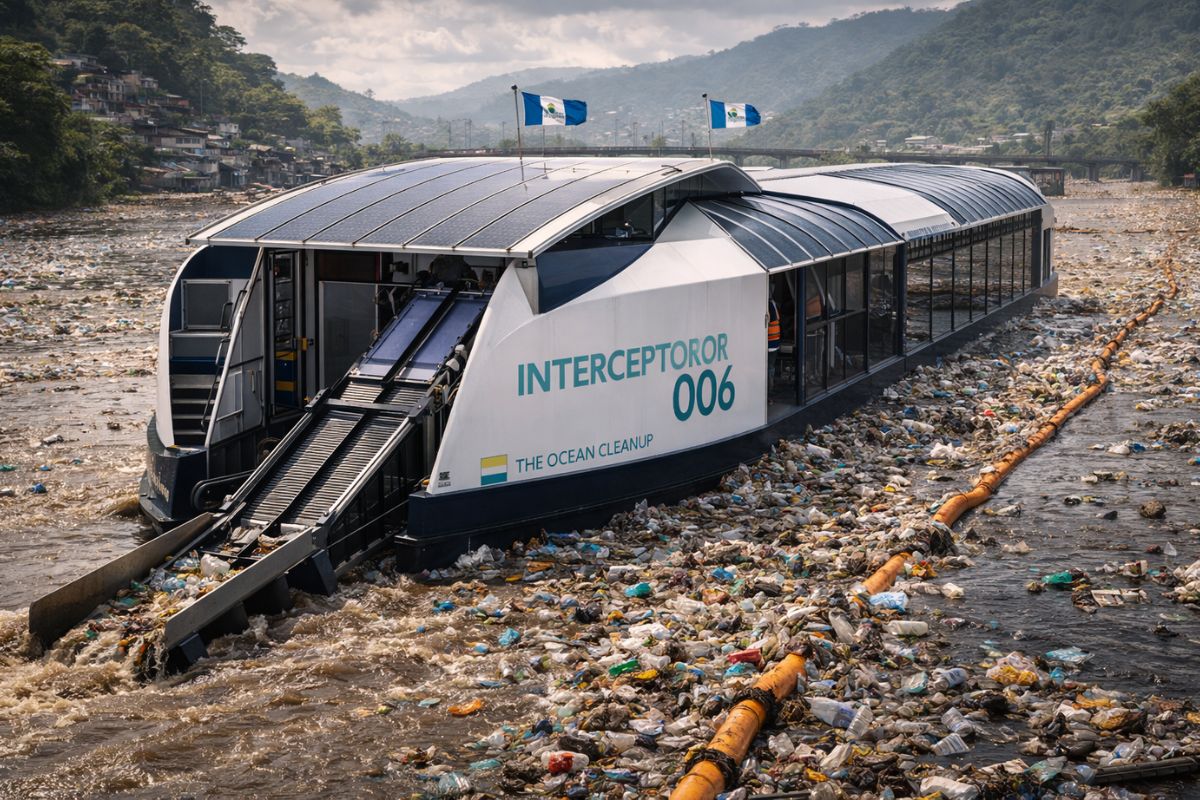
Interceptor 006 Arrives at Las Vacas River, in Guatemala City, as a New Bet from The Ocean Cleanup After the 2022 Failure, Replacing the Old Fence with an Interceptor Barrier with Two Barriers, One Upstream and Another Downstream, Designed to Yield Under Pressure and Retain Floating Waste.
The Interceptor 006 is positioned on the Las Vacas River, in Guatemala City, to face a scenario that has become routine during rainy seasons when the current brings a “flood” of waste and the volume of plastic increases in minutes. The initiative from The Ocean Cleanup aims to prevent thousands of tons from flowing downstream and reaching the Caribbean Sea.
The new attempt does not hide the recent history. In 2022, the operation came close to working, but a flooding event on May 26 exposed the structural limit of the previous arrangement, forcing the team to redesign the solution and reposition the intervention. From then on, the focus shifted to the Interceptor barrier, set up to deal with more aggressive water.
What Changed After the ‘Almost’ of 2022

In the memory of The Ocean Cleanup team, the ‘almost’ of 2022 is an operational milestone.
-
Engineers rewrote all the apps from scratch and bet everything on a buttonless screen: now the creator of the iPhone says that Apple needs to make the same revolution again because of AI.

-
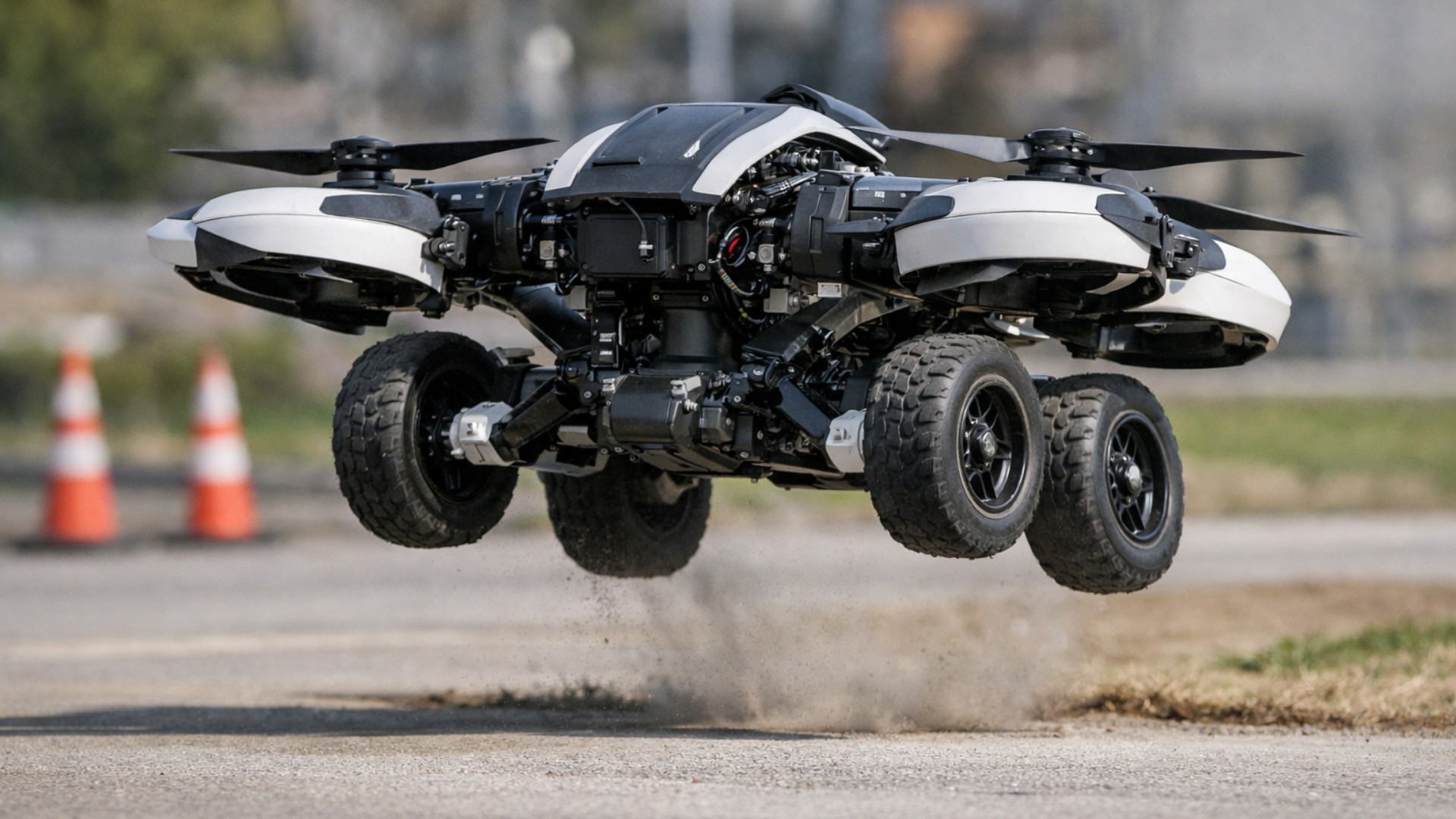
Researchers in the U.S. have created a flying robot that transforms into a land vehicle while still in the air. The technology, based on aerodynamic transition, converts landing into a scene worthy of Transformers and redefines mobility between sky and ground.
-
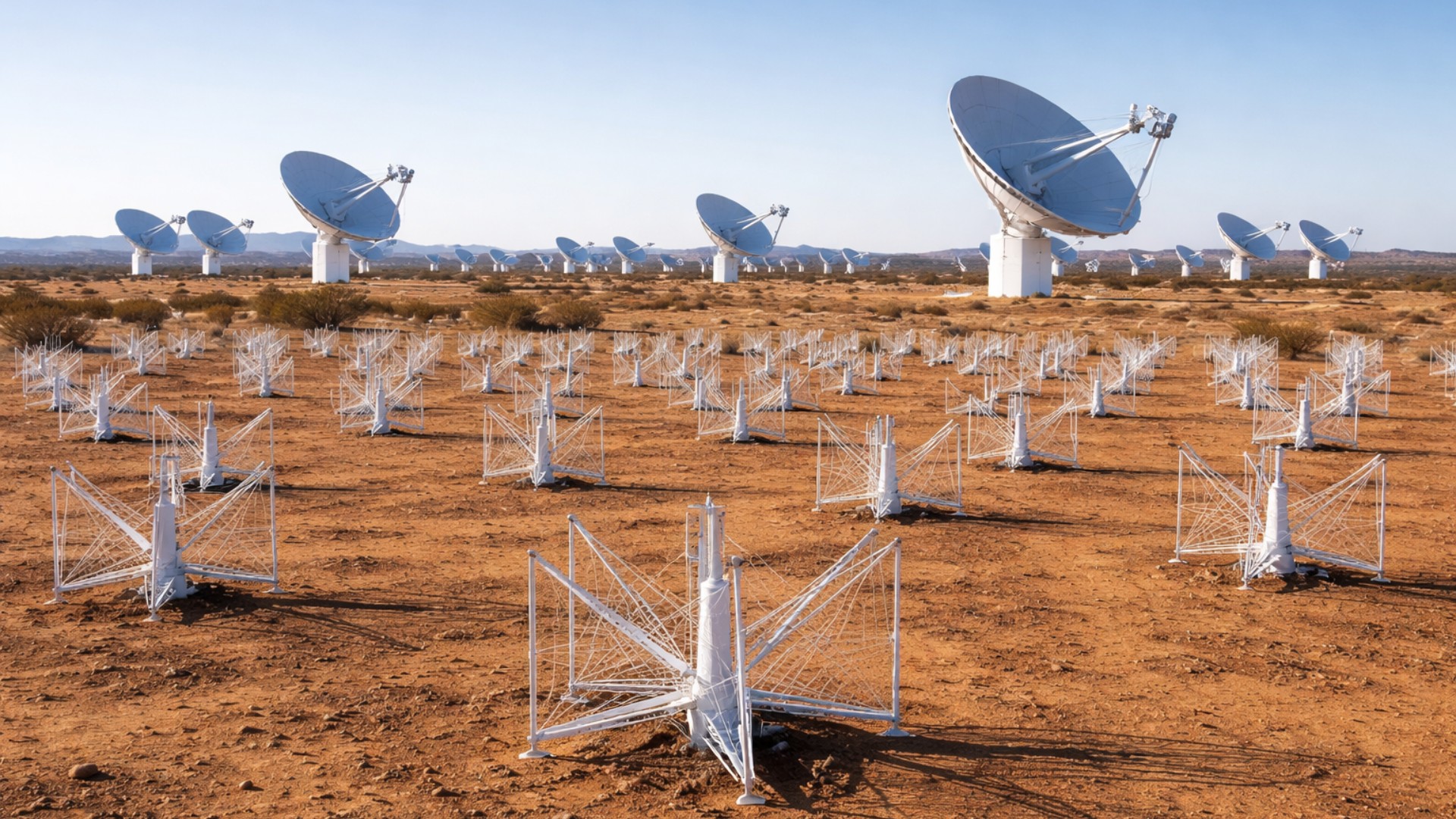
Spread across two continents, with 197 parabolic antennas in South Africa, 131,000 2-meter antennas in Australia, and a range of up to 150 km, the SKA begins to “listen” to the Universe on an unprecedented scale and accelerates the search for black holes, primitive galaxies, and nearly invisible radio signals.
-
Goodbye batteries: a new sensor created by Japanese scientists uses sweat as an energy source and points to a promising path for more sustainable devices, with greater autonomy and less need for frequent recharging.


The previous installation, known as the waste fence, managed to capture part of the flow, but the force of the Las Vacas River during the flood knocked down poles and swept away materials and labor time downstream.
The failure was not silent; it was visible and costly in human effort.
The Interceptor 006 arises from this diagnosis.
Instead of insisting on the same logic, the project was rebuilt as an Interceptor barrier with planned failure points so that the system yields when pressure exceeds the limit, avoiding total rupture.
The choice of location also changed, seeking a stretch of the river with lower hydraulic pressure.
The Hydrodynamic Logic of the Interceptor Barrier with Two Barriers

The Interceptor barrier works as a set of two barriers, one upstream and another downstream, installed to operate sequentially.
The first, about 50 meters wide, has external support and is designed to withstand stronger water, reducing the chance of the system rotating and maintaining the angle of direction of the waste.
The second barrier is about 100 meters in design and is placed where the flow tends to be more linear since it is in the middle of a reservoir and remains submerged.
In practice, what passes through the first stage is pushed to the second, creating operational redundancy.
When the level rises and the material “rises along with it,” the second line exists to hold what escaped.
From Capture to Truck, How Waste is Removed Without Taking Water Along

In the arrangement of the Interceptor 006, the collection does not end in the water.
The angle of the barriers directs floating material to the left bank, where an excavator removes it with a perforated bucket, avoiding carrying excess water in the same movement.
This reduces useless weight in the operation and speeds up disposal into trucks.
This land flow is a critical part of the efficiency. If removal is slow, the waste returns to the channel or creates local blockage.
Therefore, the Interceptor barrier was designed to “deliver” the material at a predictable point, allowing the team in Guatemala City to maintain a removal cadence without relying on short windows of time.
The Bottleneck After Collection, Sorting, Destination, and Local Coordination
The question that arises right after capture is straightforward: what to do with the waste.
The operation acknowledges that sending everything to the landfill is the easiest way, but also the least effective since the passive only changes location.
Based on this premise, the strategy has been to separate materials and seek buyers, increasing the chances of reuse.
This is where the partnership with local actors comes in.
The Ocean Cleanup cites collaboration with the Guatemala City Mayor’s Office and other partners to expand sorting capacity and adjust the “design” of the guiding lines, resulting from brainstorming sessions to gain efficiency with small changes.
It is an incremental approach because the problem is large and requires multiple fronts at the same time.
Why Las Vacas River Became a Reality Test for Plastic Solutions
The magnitude of what flows down the Las Vacas River, according to reports from the team, causes shock on the first visit. The volume is described as gigantic, to the point of turning any solution into a continuous stress engineering test.
In this context, the Interceptor 006 is less an isolated piece and more of a living prototype, subject to adjustments as the river “responds.”
Even so, the tone is not one of resignation.
The narrative of those responsible emphasizes that the defeat in 2022 did not end the project and that the Interceptor barrier was assembled precisely to gain operational robustness and learn from previous failures.
The logic is simple: capturing before it reaches the ocean is still more controllable than trying to recover afterward.
The Interceptor 006 now enters the phase where promise and reality meet in the first complete test, with rain, level variation, and enough waste to put every point of the structure to the test.
If the solution works as planned, Guatemala City gains a more predictable tool to reduce daily pressure on the river and its banks.
The question that remains, which can be answered with personal experience, is this: in your city, is there any river, canal, or ditch that becomes a “corridor” of waste on rainy days, and what would be the first concrete measure you would demand to cut this flow at its source?






-

3 pessoas reagiram a isso.