





 Portuguese
  English
  Spanish
  7 min of reading
  0 comments


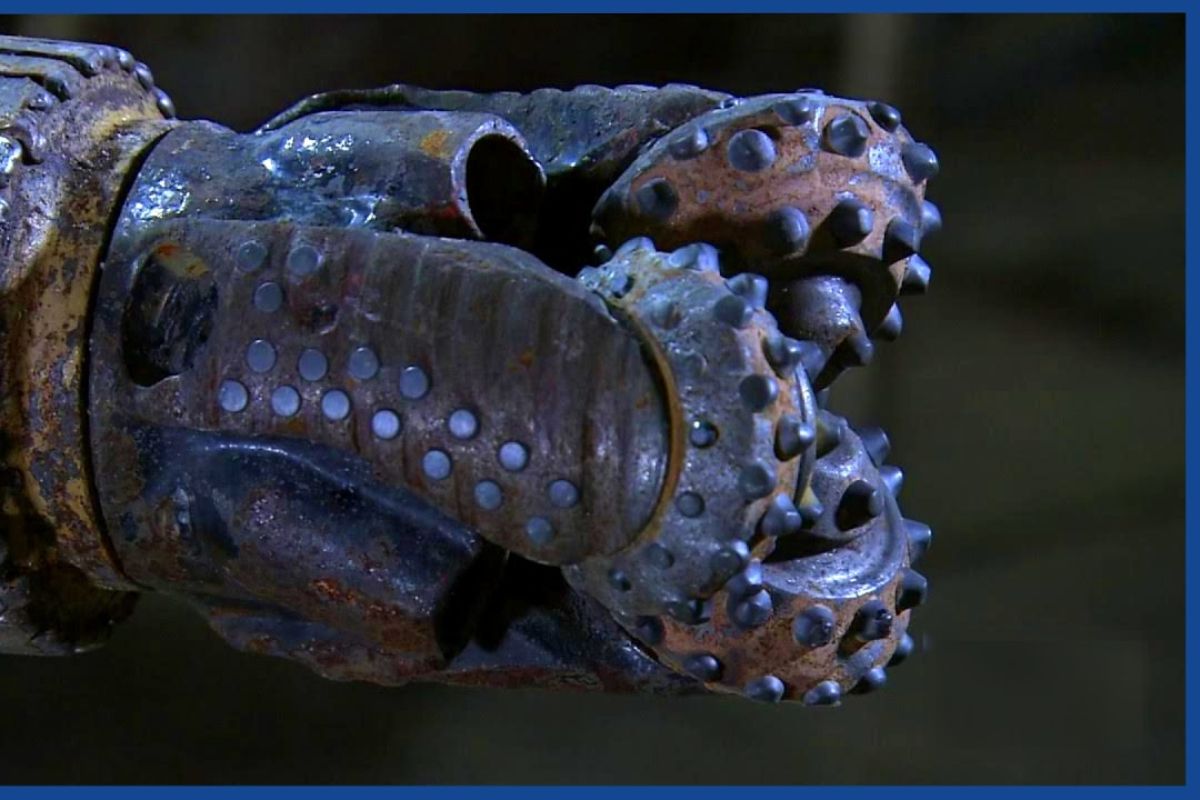
From The Mine Under Frozen Soil To Supersonic Centrifuges, Enriched Uranium Is Turned Into Uranium Pellets That Become Nuclear Fuel, Enter The Nuclear Reactor And Release Nuclear Energy Sufficient To Supply Thousands Of Homes For Years On End With A Handful Of Highly Concentrated Material.
Each fuel cell made with enriched uranium produces enough heat to generate about 1 million kWh of electricity, enough energy to power thousands of homes for an entire year. At first glance, it’s just a small pellet, but behind it lies a brutal process of mining, chemistry, and precision technology.
From the rock hidden beneath frozen soil at minus 30 ºC to the blue glow inside a reactor, the path of uranium is long. We follow this journey from the largest high-grade uranium mine in the world to the nuclear fuel factory where the uranium pellets that feed nuclear reactors and generate nuclear energy for entire cities are born.
From Frozen Rock To Uranium Concentrate

It all starts in uranium mines located in remote regions. Countries like Australia, Kazakhstan, and Canada together account for more than 60% of the world’s uranium production, and it is in the Canadian province of Saskatchewan that there is a special mine, with ore that can exceed 20% uranium concentration, up to 100 times more than in common deposits.
-
A gigantic dam project in the Himalayas could solve one crisis but silently create another for millions of people.
-
Nikola Tesla said that intelligent people tend to have fewer friends, and now science partially confirms this: a study with over 15,000 people showed that for the more intelligent, socializing too much can even reduce life satisfaction.

-
A superyacht worth US$ 17 million is delivered in impeccable condition, sets out to sail, and hits a bridge in the Bahamas just two hours later.

-
Residents of Australia woke up to a sky completely red like blood before the arrival of Cyclone Narelle, which hit the coast with winds of 250 km/h, tearing off roofs and lifting iron dust in a scene they described as apocalyptic.



This uranium ore remains hidden beneath a thick layer of sandstone completely saturated with water. If engineers simply dug, the mine would turn into a radioactive swimming pool in minutes.
The solution was to use artificial soil freezing: deep drillings are fitted with tubes through which calcium chloride brine circulates at around –30 ºC, forming an ice barrier that keeps water away from the ore.
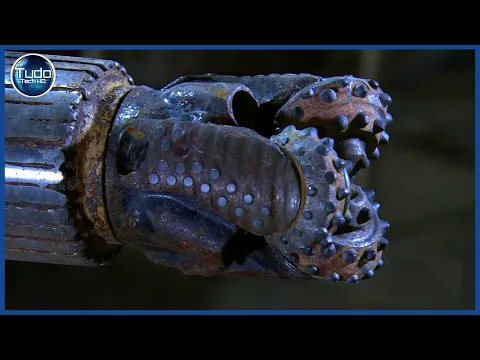
Tungsten carbide drills bore through the sandstone while tubes are installed, and each piece of tubing can take days to be ready. The miner controls everything remotely, keeping a safe distance from radioactive uranium and the risks of rock falls, while the mine is ventilated with fresh air every 20 minutes.
When the ore is finally reached and fragmented, it falls into extraction chambers and is transferred through ducts to processing.
Crushing, Acid, And The Preparation Of Enriched Uranium
The fragmented ore passes through a crusher that turns it into smaller pieces, then into something resembling fine sand. Next, water is added, creating a slurry that can be pumped to the surface. Special trucks carry this uranium slurry to a mill, tens of kilometers away.
There, the heavy chemical part kicks in. The powdered ore is treated with acid in large tanks, and the acid dissolves the uranium, leaving most of the rock behind, which settles at the bottom. The acid solution rich in uranium proceeds, while unwanted minerals remain along the way.
With a series of additional chemical reactions, uranium is purified and heated until it turns into a dark, highly concentrated powder.
This powder is packaged in 210-liter steel drums, sealed, and labeled, already indicating radioactivity. It is not yet enriched uranium, but it is the raw material ready to be converted into gas and enter the next stage, the one where the nuclear fuel used in nuclear reactors actually begins to be born.
Supersonic Centrifuges And The Birth Of Enriched Uranium
To become enriched uranium, the concentrated uranium needs to be converted into a gas suitable for the isotope separation process.
The resulting gas is introduced into centrifuges that spin at extremely high speeds, pushing the heavier molecules to the edges and allowing the slightly lighter ones to be more concentrated in the center region.
In natural uranium, about 99.3% is uranium 238, which does not undergo fission as easily, and only 0.7% is uranium 235, the ideal isotope to maintain a stable chain reaction in a nuclear reactor. The function of the centrifuges is precisely to gradually increase that fraction of uranium 235, in cascades of connected equipment.
In facilities that produce nuclear energy, the goal is to reach something between 3% and 5% of uranium 235, enough to maintain controlled fission. For nuclear weapons, this value exceeds 90%, which explains the global concern about proliferation.
In the case of electricity generation, enriched uranium leaves the centrifuges ready to proceed to the manufacture of nuclear fuel that will power the plant’s turbines.
Uranium Pellets: The Heart Of Nuclear Fuel
At nuclear fuel processing centers, enriched uranium goes through new chemical stages. First, it becomes uranium trioxide, then it is converted into uranium dioxide, which appears as an extremely fine powder.
This powder is carefully homogenized in centrifuges and then goes to hydraulic presses capable of applying several tons of pressure.
This is where uranium pellets emerge, small dark cylinders the size of a peanut. Despite their tiny size, a single pellet can generate as much energy as approximately 800 kg of coal or about 560 kg of oil, showcasing the concentrated power of enriched uranium.
The uranium pellets pass along conveyors to a furnace where they stay for about 24 hours. The heat eliminates internal pores and causes the pellets to shrink, further increasing the density of the uranium, in a before-and-after process that impresses any visitor.
Then, robotic arms arrange these pellets into trays and bring in zirconium tubes, the metal that withstands heat and corrosion without blocking the neutrons of fission.
Assembly Of Nuclear Fuel Rods
Robots push groups of about 30 uranium pellets into each zirconium tube, forming long rods. The ends of these tubes are automatically welded, creating sealed bars of nuclear fuel.
A new robot takes each rod and carries it to an assembly device that organizes 37 rods in a vertical position, forming a bundle. Once assembled and closed, the bundle is weighed to confirm it contains exactly the amount of uranium specified in the design.
Before entering a nuclear reactor, the radioactivity emitted by these rods is still relatively low, allowing for safe handling by workers under controlled conditions.
These bundles of nuclear fuel made with enriched uranium are then sent to the plants, where they will play a much more dramatic role. It is inside the nuclear reactor that the uranium pellets finally showcase their full ability to produce nuclear energy on a city-wide scale.
Inside The Nuclear Reactor: Chain Reaction And Extreme Heat
In the plant, the nuclear fuel bundles are inserted into the core of the nuclear reactor. Inside, some uranium 235 atoms present in the enriched uranium are hit by neutrons and become unstable. When they split into two smaller fragments, they release energy in the form of heat and trigger new neutrons, which in turn hit other uranium atoms.
This process is called nuclear chain reaction. If left unchecked, the nuclear reactor could quickly spiral out of control.
That is why there are safety systems that absorb some of the neutrons and regulate the intensity of the reaction, in addition to reinforced concrete walls about 2 meters thick and mechanisms that automatically shut down the system if the temperature rises too high or the pressure drops too quickly.
The heat generated by the uranium pellets is used to heat water and turn it into steam. This steam rushes through pipes to turbines installed in a gigantic building, about 400 meters long and the height of 20 stories, where the rotation drives generators connected to the power grid.
In some cases, the turbine spins at hundreds of revolutions per minute and drives a generator capable of producing more than 750 megawatts of electricity, enough to meet the needs of about half a million people.
Nuclear Energy Today And The Destination Of Used Fuel
The nuclear energy generated by the nuclear reactor burns enriched uranium at a relatively slow rate. After about a year of operation, the useful content of the rods drops and the fuel is considered depleted, even though it still contains important radioactive materials.
At this point, the rods are extremely hot and dangerous to direct contact.
Leaving the core, the nuclear fuel bundles are placed in large pools within the plant itself, approximately 8 meters deep.
The water acts as a shield against radiation and also helps cool the material, which can remain there for up to 10 years before being transferred to another type of storage. In some repositories, there are over 700,000 submerged radioactive fuel rods, a result of decades of operation.
Meanwhile, the same technology that produces bombs also keeps lights on in millions of homes around the world, which explains why the debate over nuclear energy is so heated.
For many countries, uranium pellets and enriched uranium are central pieces in a low-carbon electricity generation strategy, but this requires maximum responsibility regarding waste and safety.

Knowing all this, do you think that nuclear energy should have more space in Brazil’s energy matrix or do you prefer to bet on other sources for the future of electricity?





-

Uma pessoa reagiu a isso.