





 Portuguese
  English
  Spanish
  4 min of reading
  0 comments


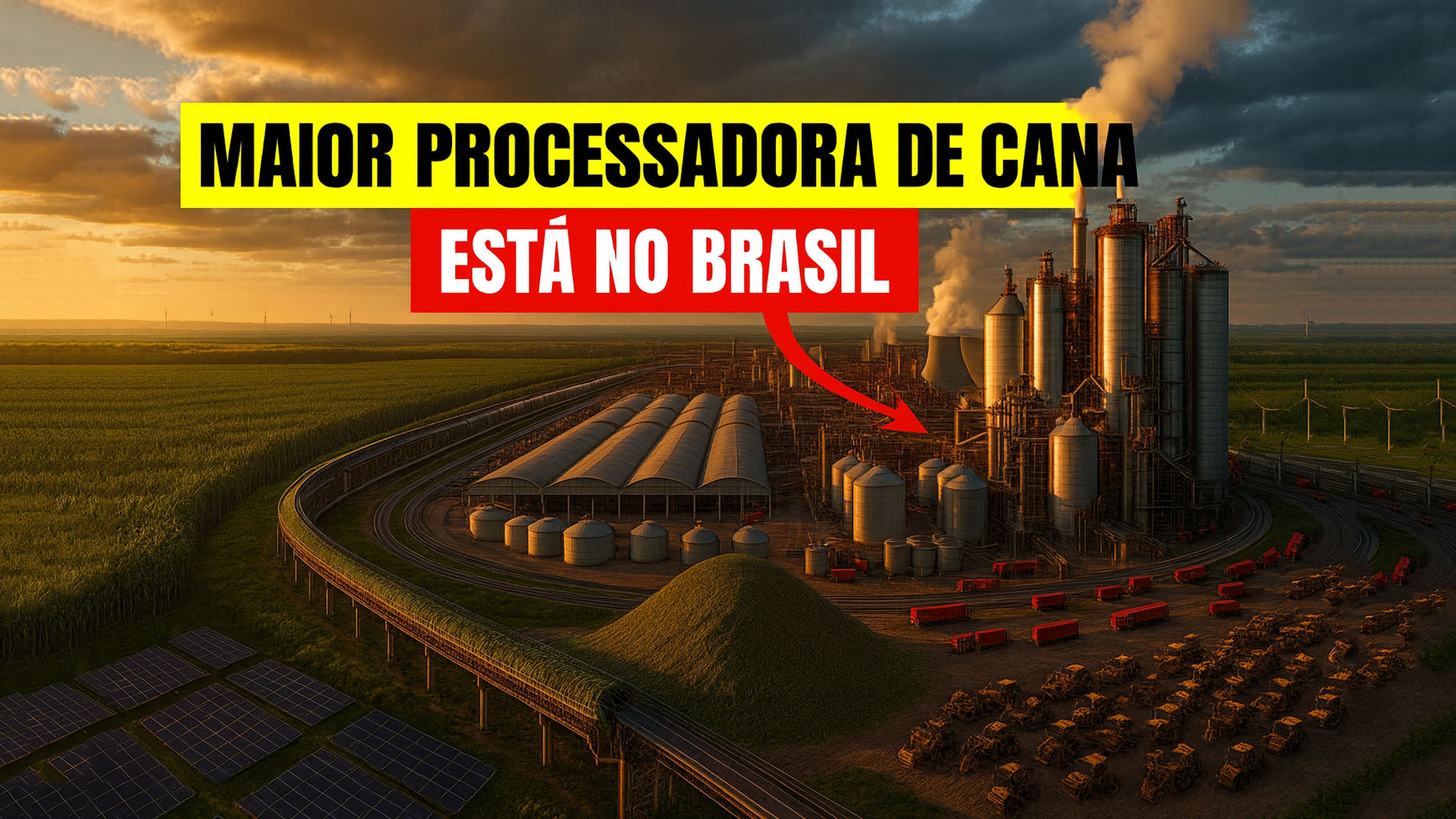
São Martinho Unit, in Pradópolis, Is a Global Reference, Milling About 10 Million Tons Per Harvest, Operating Internal Railway and Expanding Cogeneration. Certification for Ethanol Suitable for SAF Reinforces Leadership.
The São Martinho Plant, in Pradópolis (SP), is identified by the company as the largest sugarcane processor in the world, with a capacity of 10 million tons per harvest. The industrial complex was founded in 1948 and currently employs almost 5 thousand employees, with a high degree of mechanization.
The unit is part of the country’s main sugar-energy hub and operates with its own logistics for the flow of sugar and ethanol. The structure includes a internal railway branch with bulk shipping to the Port of Santos, which reduces costs and increases predictability.
The industrial highlight is accompanied by bioenergy projects and international recognition in sustainability, enhancing the plant’s relevance during a phase of firm demand for ethanol and increased focus on decarbonization.
-
He started running at 66 years old, broke records at 82, and is now a subject of study for having a metabolic age comparable to that of a 20-year-old, in a case that is intriguing scientists and inspiring the world.

-
Oldest tree on the planet reappears after 130 years of searches: Wattieza, 385 million years old, was 10 meters tall and had no leaves or seeds; Gilboa fossils in New York solved the mystery in 2007.

-
A 48-square-meter house assembled in hours with 4,000 bricks made of recycled plastic that does not absorb moisture, has natural thermal insulation, and costs less than 90,000 reais in a complete kit.

-
Luciano Hang revealed that Havan’s air fleet has already accumulated more than 20,000 landings, 10,000 flight hours, and 6 million kilometers traveled, and he says that without the planes, the company would never have grown so quickly.


What Does “Largest Processor” Mean and Why Does It Matter
In practice, “largest processor” refers to the installed milling capacity at a single unit. According to São Martinho, the Pradópolis plant achieves approximately 10 million tons per harvest, a level that places it at the global top of the sector. For the market, industrial scale often translates to operational efficiency and better cost dilution.
The location in the interior of São Paulo enhances the supply of sugarcane through a nearby mechanized agricultural network, reducing harvest and transportation losses. This helps maintain productivity even in challenging harvests.
In 2025, the South-Central region sees declines in productivity and ATR compared to the previous year, according to CTC, which pressures margins and highlights the importance of efficiency. Adverse climatic conditions have become a key variable for sugar-energy groups.
Production of Sugar, Ethanol, and Energy: Scale with Logistics and Cogeneration
The plant delivers sugar and ethanol in large volumes, supported by bulk storage and a dedicated railway. The logistics corridor to Santos provides export competitiveness and a lower CO₂ footprint per ton of product transported.
In the energy sector, São Martinho received support from the BNDES to expand biomass cogeneration at the Pradópolis complex, with 40 MW of power and a potential of up to 210 thousand MWh/year in the regulated market, representing an increase of ~22% in the site’s cogeneration.
In terms of diversification, the group is investing in corn ethanol at the Boa Vista Unit (GO), with expansion approved for 2025 and the start expected in 2027/28, reinforcing the supply of biofuels in light of the prospect of greater blending in gasoline and the advancement of low-carbon mobility.
Sustainability and Certifications: Ethanol Suitable for SAF and Environmental Management
The São Martinho Unit has achieved ISCC CORSIA Low LUC Risk certification, becoming the first sugarcane ethanol producer in the world qualified to supply low carbon intensity ethanol for Sustainable Aviation Fuel (SAF) production. The validation covers criteria for traceability and low risk of indirect land use change.
This recognition adds to other certifications of the company and reinforces practices of regenerative agriculture, emissions control, and efficient use of process residues, such as sugarcane bagasse for energy. The strategy positions the plant in global sustainable fuel chains.
For the Brazilian public, the certification indicates the supply of qualified ethanol for demanding international markets, without losing sight of domestic supplies of sugar and hydrous/anhydrous ethanol, essential for energy security and competitiveness.
Regional Impact, Employment, and Next Steps in Pradópolis
In Pradópolis, the plant is an economic anchor with thousands of direct and indirect jobs, along with social initiatives such as the Environmental Education Center (CEA) and sugarcane protection programs (Viva a Cana). The multiplier effect reaches services, transportation, and the supply chain.
The high mechanization reduces operational risks, improves safety, and maintains industrial quality standards. In an environment of unstable climate, operational stability is a differential for fulfilling contracts and attending export windows.
On the horizon of 2025/26, the sector monitors climate, exchange rates, and international prices. The scale of Pradópolis, combined with cogeneration and certifications, tends to keep the unit as a global reference in productivity and sustainability.
Want to comment? Share your thoughts on whether milling concentration in giant plants helps or hinders rural producers in price formation and contracts. Should the certification for SAF guide investments in Brazil, or should the focus be on the domestic ethanol market?









-

-

-

-

-

-

76 pessoas reagiram a isso.