





 Portuguese
  English
  Spanish
  5 min of reading
  0 comments


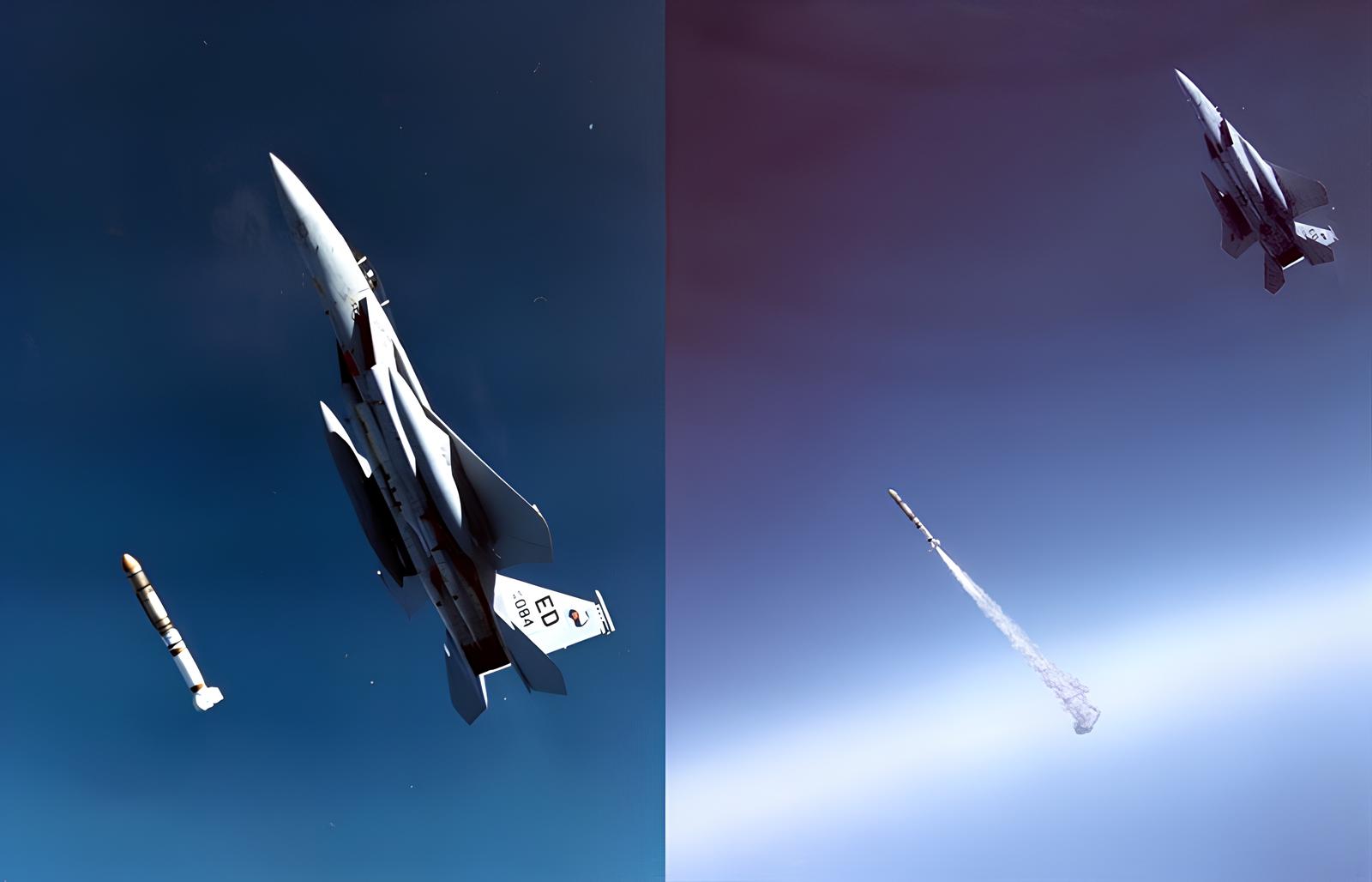
Armed with Nuclear Warheads and Launched by Thor Missiles, the Program 437 Was the First Operational Anti-Satellite Weapon in the World, Capable of Blinding Space with Nuclear Explosions.
During the Cold War, the competition between the United States and the Soviet Union extended beyond Earth. Long before lasers, hackers, and kinetic weapons, there was a time when the solution found to destroy enemy satellites was detonating nuclear bombs in space. This little-known chapter in military history had a name, timeline, trained teams, and warheads ready for use. It was called Program 437.
Unlike conceptual projects or paper studies, Program 437 was actually deployed, kept in operational readiness, and integrated into the U.S. nuclear command chain. Strategically, it represented the first time a superpower admitted, in practice, that future warfare would involve the control — or denial — of space.
The Context That Led to an Orbital Nuclear Weapon
In the early 1960s, satellites became key pieces of military superiority. Photo reconnaissance, early warning, and strategic communications began to support nuclear decisions in minutes. For Washington, the possibility of Moscow seeing bases, silos, and movements in near real-time was unacceptable.
-
He started running at 66 years old, broke records at 82, and is now a subject of study for having a metabolic age comparable to that of a 20-year-old, in a case that is intriguing scientists and inspiring the world.

-
Oldest tree on the planet reappears after 130 years of searches: Wattieza, 385 million years old, was 10 meters tall and had no leaves or seeds; Gilboa fossils in New York solved the mystery in 2007.

-
A 48-square-meter house assembled in hours with 4,000 bricks made of recycled plastic that does not absorb moisture, has natural thermal insulation, and costs less than 90,000 reais in a complete kit.

-
Luciano Hang revealed that Havan’s air fleet has already accumulated more than 20,000 landings, 10,000 flight hours, and 6 million kilometers traveled, and he says that without the planes, the company would never have grown so quickly.



The answer was not a precision missile, but something more brutal: if it was not possible to hit each satellite individually, it would be more efficient to make the orbital environment hostile. Exploding a nuclear bomb outside the atmosphere promised three simultaneous effects: electromagnetic pulse, intense radiation, and a cloud of energetic particles capable of disabling sensitive electronic systems.
How Program 437 Worked in Practice
The heart of the system was a ballistic missile Thor IRBM, originally designed for medium-range nuclear strikes. In Program 437, it was adapted to carry W49 nuclear warheads, with an estimated yield between 1 and 2 megatons.
The launch did not aim for direct collision with the target. The missile was programmed to detonate the warhead tens or hundreds of kilometers away from the satellite, within low Earth orbit. The explosion, occurring in a vacuum, produced specific effects:
– a electromagnetic pulse (EMP) capable of burning electronic circuits
– ionizing radiation that degraded sensors, solar panels, and optical systems
– particles trapped in the Earth’s magnetic field, creating artificial radiation belts
In simple terms, a single detonation could blind not just one satellite, but several that crossed that orbital region in the following hours or days.
Where the Weapon Was Based
Program 437 operated from the Johnston Atoll, a remote atoll in the Pacific, chosen precisely for its distance from inhabited areas. There, Thor missiles were kept in a state of readiness, with trained teams, warheads mounted, and procedures defined.
The most important detail is this: the system was not in testing. It was declared operational in 1964. This means that, if political leadership authorized it, a launch could occur within hours.
Nuclear Tests That Proved the Concept
Before becoming operational, the program relied on concrete data from actual nuclear tests in space. Between 1958 and 1962, the United States conducted various explosions outside the atmosphere during the Hardtack and Dominic series.
The most famous of these tests, Starfish Prime, detonated a nuclear warhead at an altitude of about 400 km. The result was alarming even for the scientists themselves: orbiting satellites were damaged, electrical systems failed on distant islands, and an artificial radiation belt persisted for months.
These tests confirmed that space, far from being a harmless void, could be transformed into a lethal environment for orbital technology.
Against What Targets the System Was Designed
The main focus of Program 437 was Soviet satellites in low Earth orbit (LEO), especially photo reconnaissance ones. At the time, these platforms were large, poorly protected, and extremely sensitive to radiation.
The doctrine was clear: in a scenario of nuclear escalation, blinding the enemy’s eyes in space could delay decisions, reduce the accuracy of attacks, and generate strategic confusion. It was not just about destroying machines, but about breaking the information chain.
The Problem of Collateral Damage
Over time, it became evident that Program 437 was too powerful a weapon to be used safely. A nuclear explosion in space did not distinguish the nationality, function, or alliance of the affected satellites.
The main identified risks were:
– destruction of civilian and allied satellites
– creation of radiation belts that would affect future missions
– damage to U.S. military satellites themselves
– risk of orbital cascade effect, making entire regions unusable
In other words, using the weapon would be like setting fire to the global space infrastructure, including one’s own.
The Shift in Direction and the End of the Program
In 1967, the Outer Space Treaty came into force, prohibiting the placement of nuclear weapons in space. Although Program 437 remained for a few years as a residual capability, its strategic utility began to fade.
At the same time, the United States became increasingly dependent on satellites for navigation, communications, and nuclear warning. Destroying space began to be seen as strategic self-sabotage.
The system was officially deactivated in 1975.
The Silent Legacy of Program 437
Even deactivated, Program 437 left a profound legacy. It demonstrated that space could be militarized to an extreme degree and that orbital denial was a weapon as powerful as missiles and bombers.
From it, powers began to invest in less destructive alternatives: kinetic anti-satellite weapons, ground-based lasers, electronic warfare, and, more recently, cyberattacks against space networks.
Still, Program 437 remains a historical milestone. It was the moment humanity came closest to transforming Earth’s orbit into an active nuclear battlefield.
Why This Story Matters Today
In an increasingly satellite-dependent world for economy, defense, and communication, the logic behind Program 437 haunts strategists once again. The central question remains valid: is it possible to win a modern war without access to space?
The answer, implicit since the 1960s, is no. And that is exactly why, during a silent decade of the Cold War, missiles armed with nuclear bombs stood ready to explode above the planet, not to destroy cities, but to erase the sky.
This was the invisible war that almost happened and helps explain why space is now treated as the most sensitive battlefield of the 21st century.









-

Uma pessoa reagiu a isso.