





 Portuguese
  English
  Spanish
  6 min of reading
  0 comments


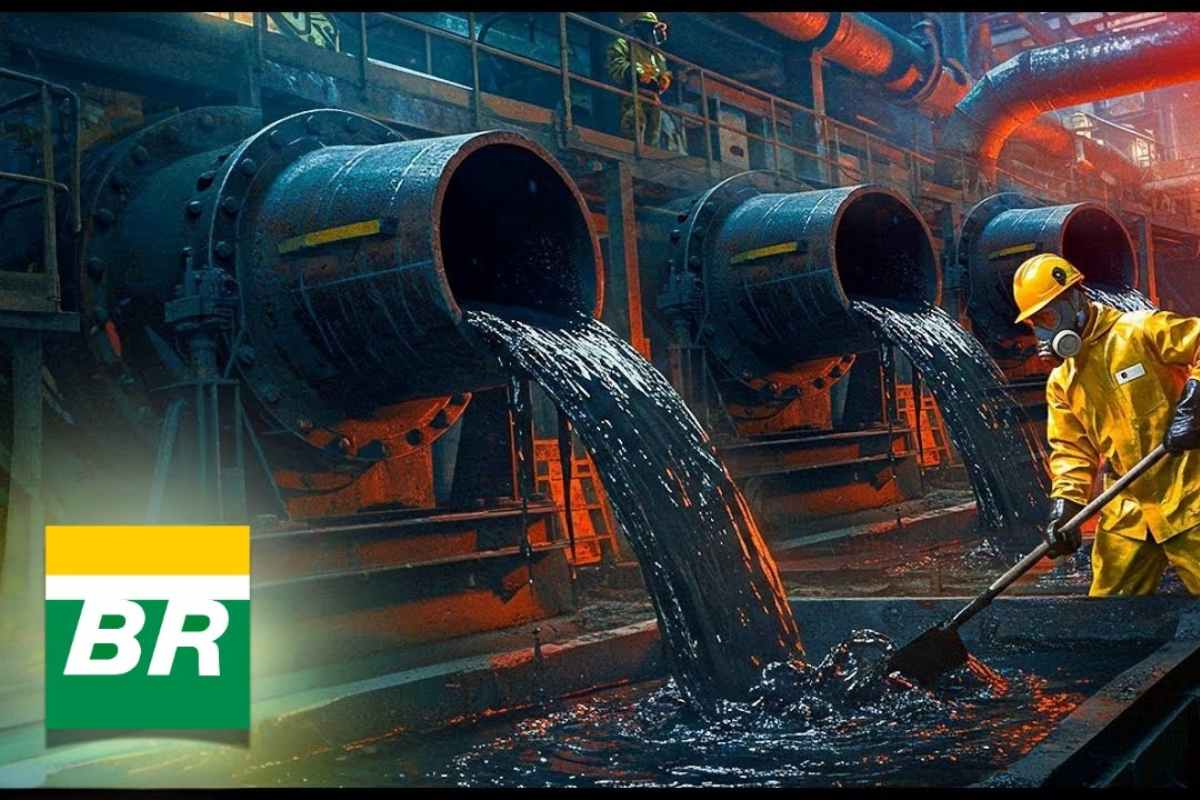
From Drilling in Fields with Wells to 4,000 Meters to 370 °C Towers, Gasoline Crosses Pipes, Pumps, and Labs in a Huge, Noisy, Expensive, and Risky Process That Needs to Work Every Day to Keep Millions of Vehicles Moving Safely, Without the Driver Thinking About Anything.
Every day, about 800 million vehicles consume 7 billion liters of gasoline, fueling cars, motorcycles, trucks, and machines that keep the economy running. Behind every silent refueling at the station, there is an industrial chain that starts in ancient rocks, kilometers deep, and ends in your car’s tank.
At the same time, gasoline is not a simple product. It originates from crude oil extracted under constant heat, pressure, and risk, goes through towers of 370 °C, 8,000 km of pipelines, and performance tests before being released for use. Understanding how gasoline is made helps to see why this flammable liquid is treated as a strategic asset worldwide.
From Oil Trapped in Rock to Gasoline Raw Material

The story of gasoline begins long before the first car existed.
-
Attracting around 250,000 people a year, a lighthouse 200 meters from the sea, on a 60-meter high cliff, on the North Sea coast in Denmark, becomes one of the most impressive examples of how nature can threaten historical buildings.

-
The narrowest house in the world is only 63 centimeters wide, but inside it can accommodate a bathroom, kitchen, bedroom, office, and even two staircases.

-
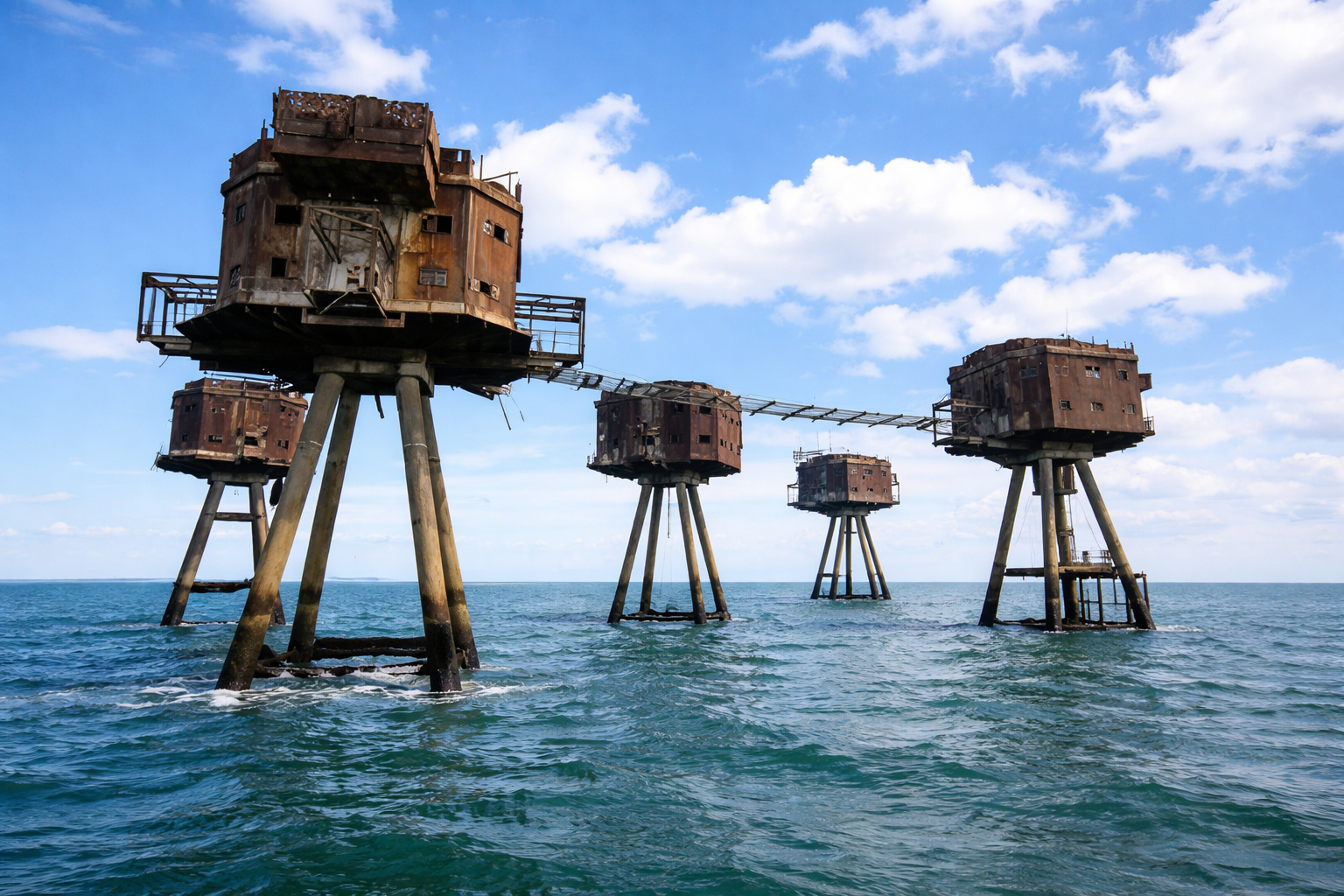
In the middle of the sea, these enormous concrete and steel structures, built by the British Navy to protect strategic maritime routes, look like they came straight out of a Star Wars movie.
-
For years, no one could cross a neighborhood in Tokyo because of the tracks, but an impressive solution changed mobility and completely transformed the local routine.


For tens of millions of years, plants and tiny marine organisms accumulated at the bottom of ancient oceans, were covered by sediments, and subjected to heat and pressure until they transformed into crude oil, the so-called black gold.
This oil is now trapped in rocks up to 4,000 m deep in regions such as Texas, the Campos Basin, and other producing areas.
In some locations, these rocks are about 542 million years old, which shows the length of the time window involved for gasoline to exist as we know it.
For a long time, gasoline was just a bothersome byproduct of kerosene production.
Only with the popularization of the internal combustion engine and the automobile, at the end of the 19th century, did gasoline move from the category of waste to essential fuel.
Extreme Drilling to Bring Oil to the Surface

Before turning into gasoline, oil must be located and extracted.
The search begins with seismic surveys, which indicate possible underground reservoirs.
Even with technology, each well is still a risky bet.
In Texas’s thermal basin, for example, more than 2,000 new drillings are started every month.
Companies like Occidental Petroleum open, on average, one new well per day, helping to sustain a production exceeding 900,000 barrels daily in that region alone.
To reach the oil, huge motors rotate a diamond-tipped drill, which descends attached to drill pipes.
The friction against the rock generates intense heat, so high-pressure water is pumped in to cool the tool.
This fluid returns to the surface carrying debris in the form of thick mud.
The operation is continuous, about 5 meters drilled per hour, with workers adding pipe sections every few meters, 24 hours a day.
Everything needs to be calibrated: if the drilling fluid pressure is too low, the rock doesn’t break; if it’s too high, the equipment can be damaged, and there is still a risk of leaking flammable gases capable of causing explosions.
When the reservoir is finally hit, the oil’s natural pressure makes it rise through the holes to the surface.
Over time, this force diminishes, and plunger pumps come into play, which function like huge metal syringes pulling the oil up in a constant back-and-forth motion.
From the Field to the Refinery Where Gasoline Begins to Take Shape
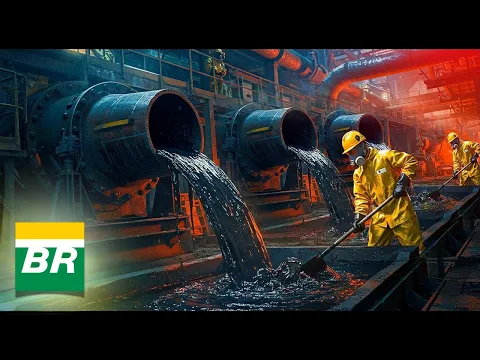

The oil from various wells is carried by pipelines to a gathering point, where gases such as carbon dioxide, hydrogen sulfide, and natural gas are separated.
Next, pumping networks pressurize the liquid toward pipelines that can be up to 1,000 km long, transporting crude product to large refineries.
At one of these plants, considered the largest in the United States, more than 562,000 barrels of crude oil are processed daily.
The infrastructure is impressive: there are 8,000 km of pipelines in an area of 10 square kilometers, with around 4,000 workers using over 1 million earplugs a year to cope with the constant noise.
At these facilities, Texas oil is not the only type processed.
Tankers bring oil from several countries, which will be transformed into gasoline, diesel, jet fuel, propane, asphalt, lubricants, and petrochemical inputs.
The first step in producing gasoline is cleaning the oil by removing, for instance, hydrogen sulfide, which can be converted into sulfur used even as fertilizer.
370 °C Tower: The Heart of the Transformation into Gasoline
It is in fractional distillation that gasoline finally starts to take shape.
Crude oil, a mixture of hydrocarbons of different sizes and weights, is heated to over 370 °C and pumped to the base of a distillation tower.
Inside the tower, the heated oil turns into vapor that rises like in a boiling pot of water. As this vapor rises and cools, the fractions separate according to their boiling points:
the heavier fractions condense at the bottom, becoming residues like asphalt
intermediate fractions give rise to diesel and jet fuel
lighter fractions, such as gasoline, are captured at the upper parts of the tower
From every 191 liters of processed oil, the typical output is distributed as follows: about 88 liters of gasoline, 48 liters of diesel, 26 liters of jet fuel, 7 liters of propane, and 32 liters of other products, such as lubricants and raw materials for plastics.
When this volume of gasoline is summed up with that of the global fleet, the result is impressive: the amount produced daily would allow for approximately 770 round trips to the Moon in terms of distance traveled by vehicles.
How Gasoline Is Tested Before It Reaches the Station
Generating volume is not enough.
Gasoline needs to have performance, safety, and consistent standards, or the engine suffers.
That’s why each batch undergoes specific tests.
One of the most important is testing in modified old engines designed to measure the octane rating, that is, the gasoline’s ability to resist spontaneous ignition under compression.
If gasoline detonates prematurely, it leads to knocking, power loss, and risk of engine damage.
When the results are not within the desired range, the mixture is adjusted in the refinery, combining different fractions or altering the composition to reach the ideal rating.
Only after that is gasoline released.
This step shows why gasoline is not just “cooked oil”, but a precisely adjusted product designed to function in engines of millions of vehicles, under vastly different climates, altitudes, and usage conditions.
From Terminal to Tank Truck and Finally to the Pump
After passing the tests, gasoline follows a network of underground pipes to terminals near urban centers, reducing the need for long-distance truck transport right from the outset.
At these terminals, gasoline is loaded into tank trucks that supply the stations.
Loading a tank truck is more delicate than filling a car’s tank. A connection error can cause leaks and explosions, so the procedure includes:
Every day, about 4 million liters of gasoline travel this path to the stations, repeating an industrial ritual that the average driver almost never sees.
At the end of the line, the operation boils down to one simple action: removing the hose, pulling the trigger, and watching the liters rise on the display.
A Huge, Dangerous, and Invisible Process for Those Refueling
When you put it all together, from drilling in rocks 4,000 meters deep to the 370 °C towers and performance testing, gasoline reveals itself as the result of gigantic and highly controlled engineering, which needs to operate with daily precision so that cities do not come to a halt.
Each step carries technical, environmental, and financial risks.
A failure in drilling pressure, gasoline distillation, or truck loading can result in losses, accidents, or serious environmental impacts, which is why the system operates with successive layers of control, sensors, and procedures.
Next time you pull up to the station and refuel a few liters of gasoline in a matter of minutes, you will know that liquid has traveled a long, hot, noisy, and meticulously monitored path to get there.
And you, did you have any idea how many stages and risks are hidden behind every liter of gasoline that goes into your car’s tank, or do you still think it’s “just” refined oil?





-

-

-

3 pessoas reagiram a isso.