





 Portuguese
  English
  Spanish
  5 min of reading
  0 comments


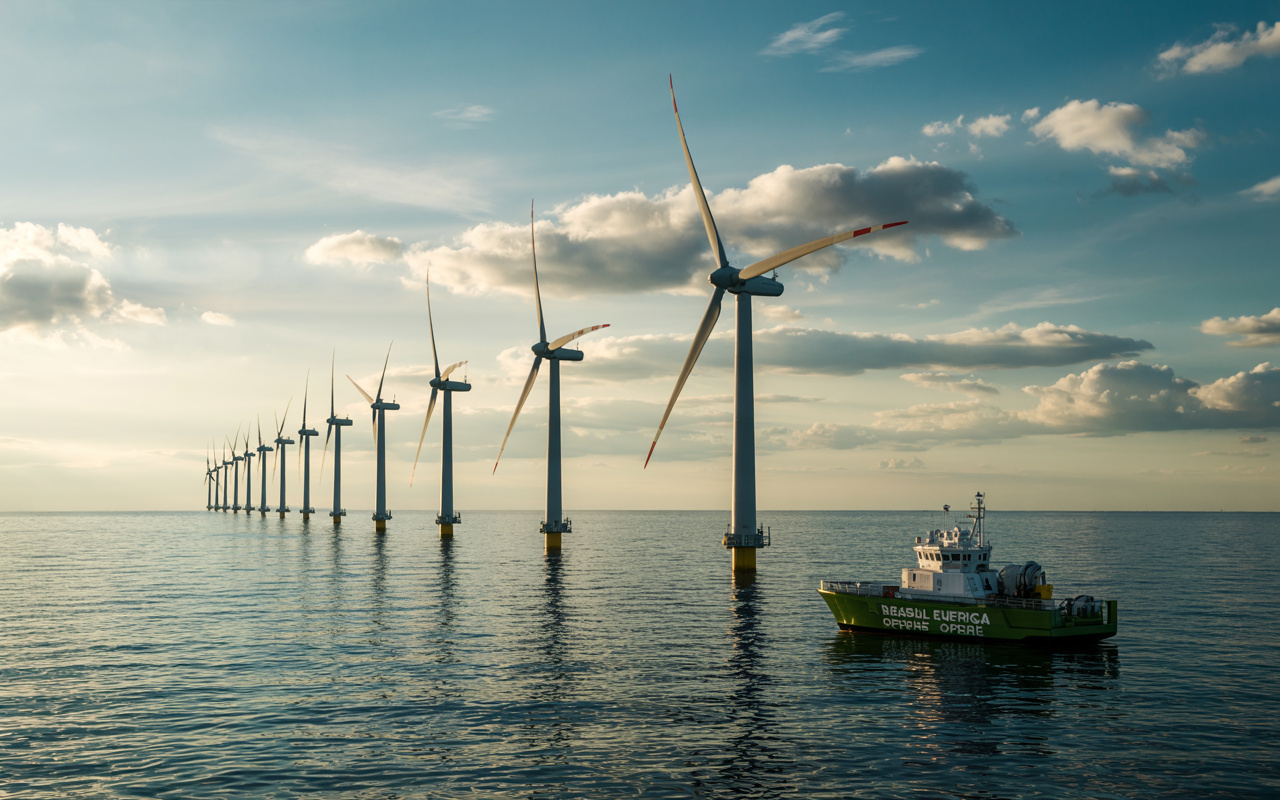
New 2025 Law Paves the Way for Offshore Wind Auctions in Brazil in 2026. Projects Already Total 100 GW Under Review at Ibama and Could Attract Billions in Investments.
The offshore wind energy sector — electric power generation from turbines installed at sea — has just received the decisive boost it has been waiting for years in Brazil. In January 2025, Law No. 14,754 was enacted, creating the legal framework for the exploration of the source in the country. The legislation establishes guidelines for the auction process, definition of maritime areas, and environmental criteria, opening up space for one of the world’s largest energy potentials.
Despite the anticipation, the government chose to postpone the first official auction to 2026, with the aim of adjusting rules, consolidating technical studies, and allowing foreign investors to enter. Nevertheless, the mere approval of the law has already triggered a rush of national and international companies seeking environmental licensing from Ibama.
A Potential Exceeding 100 GW Under Review
According to Ibama itself, by August 2025, applications for more than 100 GW in offshore wind projects had already been submitted. This number is impressive: it corresponds to almost the entire current installed capacity of the Brazilian electricity system, which hovers around 200 GW.
-
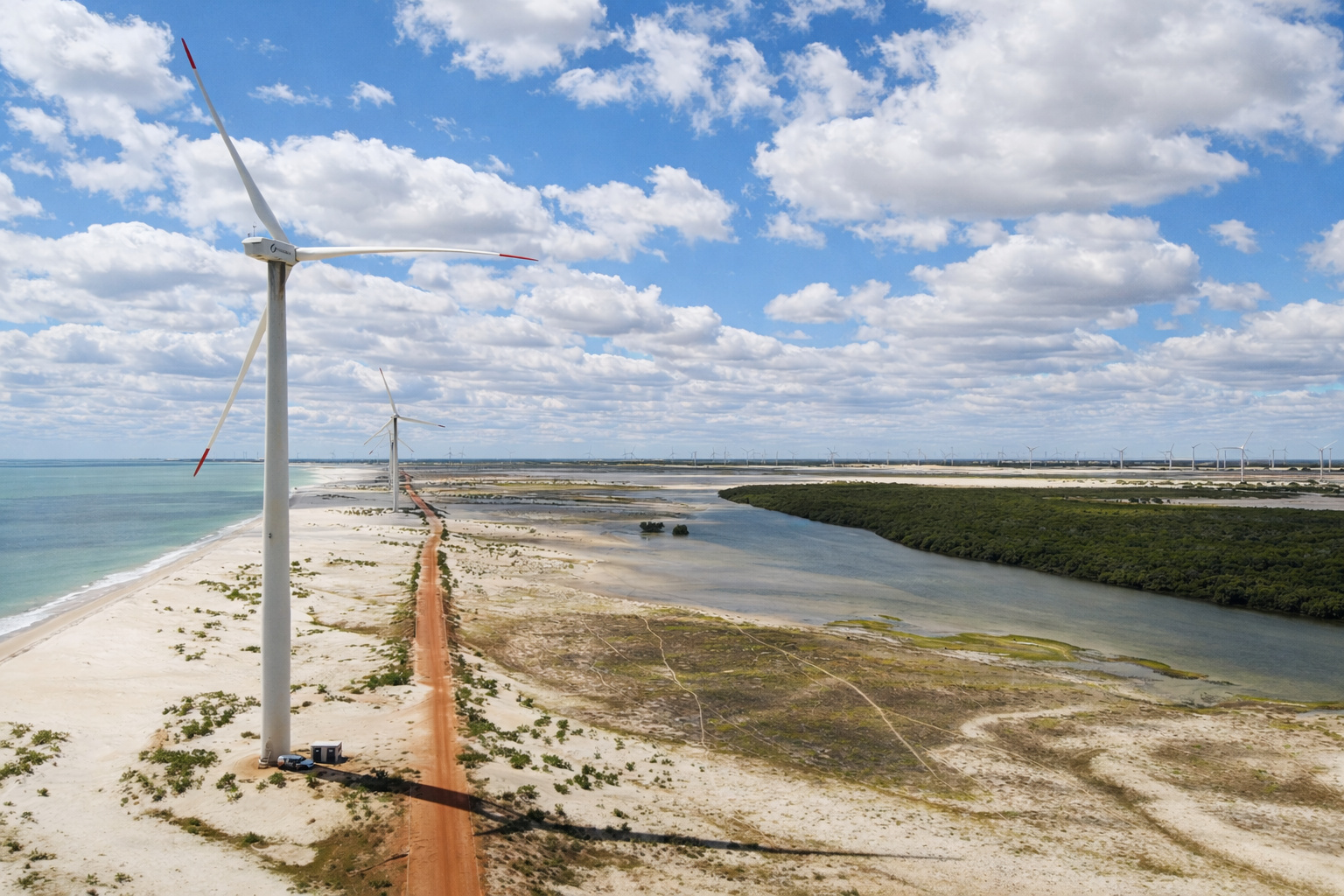
Conflict in the Sertão: Rural communities in Rio Grande do Norte report issues with wind farms and the new challenges of clean energy in the semi-arid region.
-
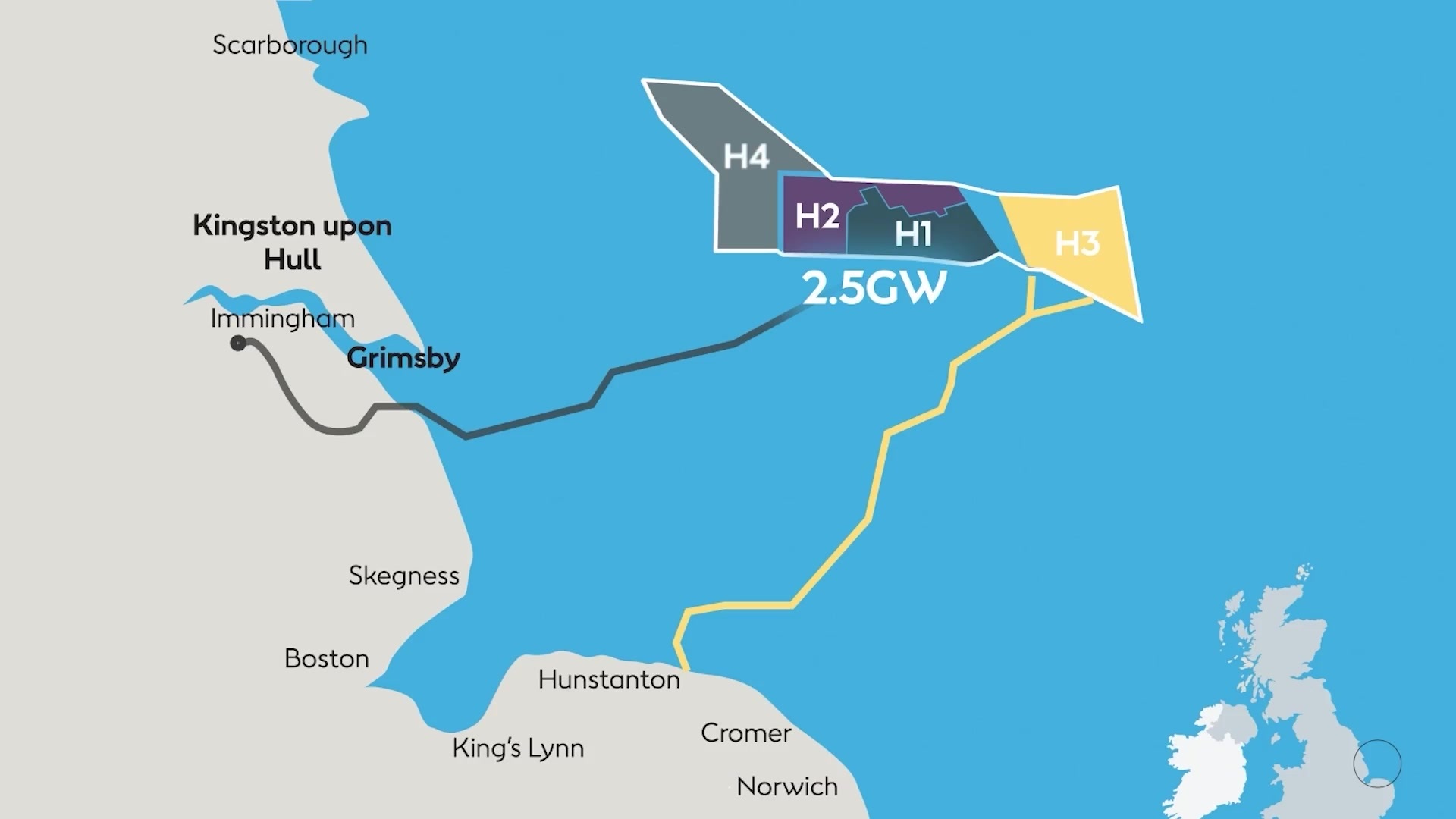
231 turbines of 260 meters at 160 km from the coast, monopiles weighing as much as nine blue whales embedded in the North Sea, and a crane ship taller than the Eiffel Tower: Hornsea 3 will be the largest offshore wind farm on the planet by 2027, and its first components have already arrived in England.
-
International Certification Puts Senai Norte on the Renewable Energy Map and Expands Access to Essential Training for Qualified Wind Power Professionals

-
The Winds of the Northeast Are in Foreign Hands: Nearly 70% of the Region’s Wind Farms Are Owned by International Companies, with France, China, and Italy Leading Investments in Wind Energy in Brazil
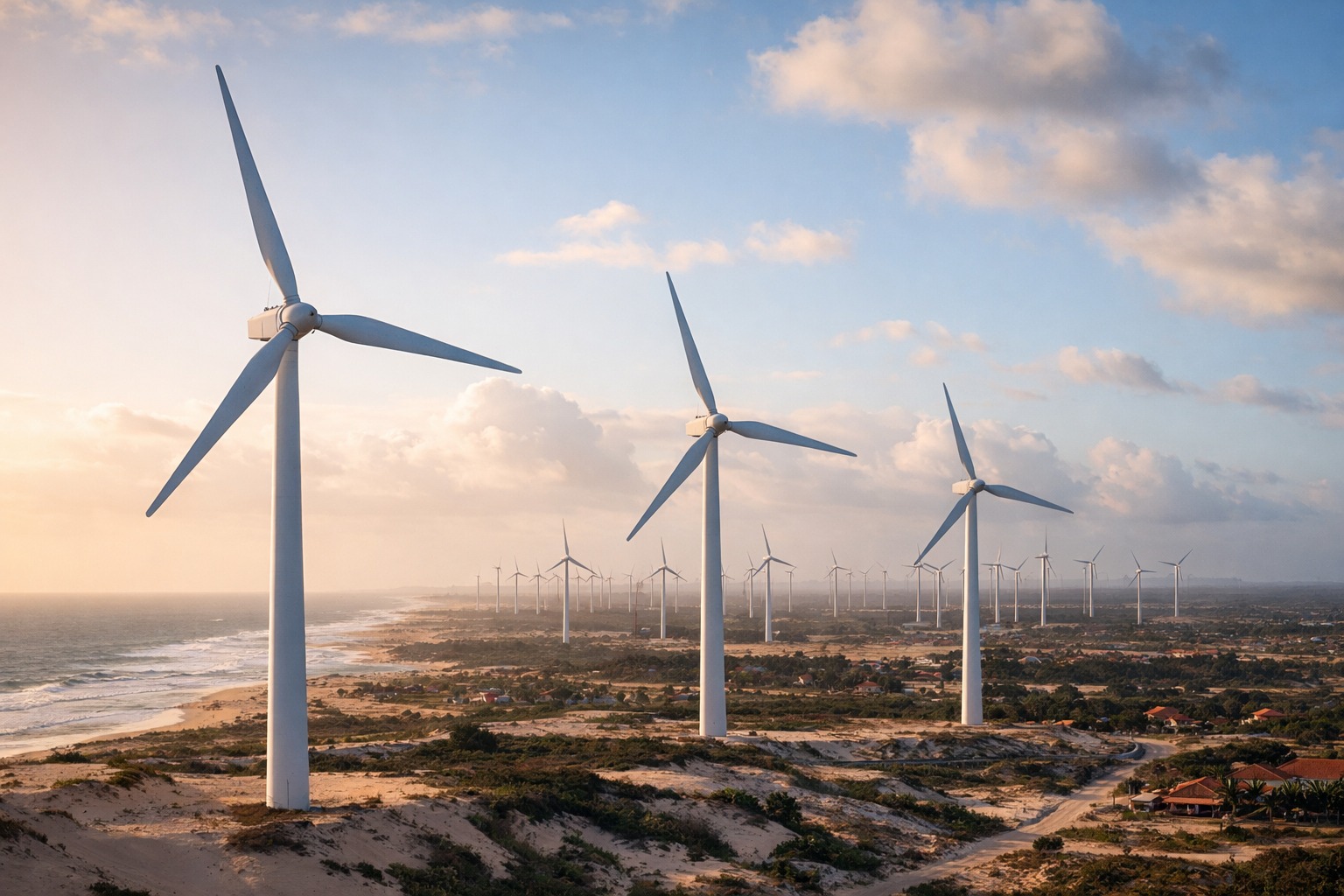

Among the interested groups are energy giants such as Equinor, Shell, TotalEnergies, and Iberdrola, as well as Brazilian companies looking to diversify their matrix.


The massive interest reinforces Brazil’s attractiveness for investments in renewable energy, especially given its vast coastline — spanning over 7,000 km and stable winds in strategic regions such as the Northeast and South.
Why Does Brazil Spark So Much Interest?
Brazil’s prominence in the energy sector is already recognized. The country has one of the cleanest energy matrices in the world, with more than 80% of electricity generated from renewable sources (mainly hydropower, followed by onshore wind and solar).
The arrival of offshore wind represents the chance to further diversify this matrix and enhance energy security. The factors that make Brazil attractive include:
- Ideal Natural Conditions: strong and consistent winds along the coast, with low seasonality.
- Proximity to Shore: reduces transmission costs compared to countries with deeper seas.
- Previous Experience: the success of onshore wind, which already accounts for over 14% of power generation.
- Growing Demand: the need to expand supply to meet the electrification of the vehicle fleet and new industrial hubs.
The Role of Ibama and Environmental Challenges
The environmental licensing process is currently the main bottleneck for projects. As of August 2025, no undertaking had received a definitive license, although dozens were under review.
Studies must assess impacts on marine biodiversity, migratory bird routes, artisanal fishing, and coastal communities. The reconciliation between development and preservation will be vital for the success of offshore wind in Brazil.
Ibama has already announced that it will publish specific guidelines in 2026, with the first license expected to be granted in the same year, provided the projects meet technical and environmental criteria.
Billion-Dollar Investments on the Horizon
According to industry estimates, each 1 GW of offshore wind capacity requires between US$ 2.5 billion and 3 billion in investments. If even half of the projects under review move forward, Brazil could attract more than US$ 150 billion over the next 15 years.
This funding will not only impact energy generation but also strategic industrial chains: manufacturing of towers and turbines, shipbuilding, offshore operation services, and port infrastructure. States like Ceará, Rio Grande do Norte, and Rio Grande do Sul are already coordinating to host production and logistics hubs associated with the sector.
The Impact on Global Energy Transition
The advancement of offshore wind in Brazil has implications beyond national borders. The International Energy Agency (IEA) projects that the source will be one of the main contributors to achieving carbon neutrality by 2050, especially in countries seeking to replace coal and reduce dependence on natural gas.
In this context, Brazil positions itself as a strategic supplier of clean energy for carbon-intensive industries. There are studies on using offshore electricity for the production of green hydrogen, which can be exported to Europe and Asia on a large scale.
International Comparisons
Brazil is not alone in the race for offshore wind energy. Other countries have already made significant advancements:
- China: has the largest offshore park in the world, with over 30 GW installed.
- United Kingdom: a global reference, with nearly 15 GW in operation.
- Germany and the Netherlands: leaders in the European Union, integrating offshore production with climate policies.
If it can unlock licenses and auctions, Brazil could join this group in the next decade, establishing itself as a global renewable powerhouse.
Bottlenecks and Uncertainties
Despite the enthusiasm, the sector faces several challenges:
- High Costs: offshore projects are more expensive than onshore or solar ones, requiring robust credit lines.
- Port Infrastructure: few Brazilian ports are equipped to handle large-scale equipment.
- Integration into the Electrical System: it will be necessary to reinforce the transmission network to avoid bottlenecks in the delivery of generated energy.
- Regulatory Stability: investors are awaiting clear rules on tariffs, subsidies, and concession periods.
Outlook for 2030
With the law already enacted and the first auction scheduled for 2026, experts project that Brazil could have between 10 GW and 20 GW of offshore wind installed by 2035. This amount would represent an energy revolution, capable of powering millions of households and reinforcing the security of the national system.
If combined with green hydrogen production, the impact could be even greater, placing Brazil on the radar of the new geopolitics of clean energy, alongside powers like China and Germany.
The approval of the law in 2025 and the forecast of auctions for 2026 mark the beginning of the decade of wind in Brazilian waters. With over 100 GW in projects under review, the country has the potential to transform its coastline into a vast corridor of clean energy, attracting billion-dollar investments and creating a new industrial axis.
The energy transition will not be simple, but Brazil has already demonstrated, with the expansion of onshore wind and solar, that it can become a global reference. If it can replicate its success at sea, it will definitively enter the group of global renewable powers, redefining its role on the international stage.









Seja o primeiro a reagir!