





 Portuguese
  English
  Spanish
 6 min of reading
  3 comments


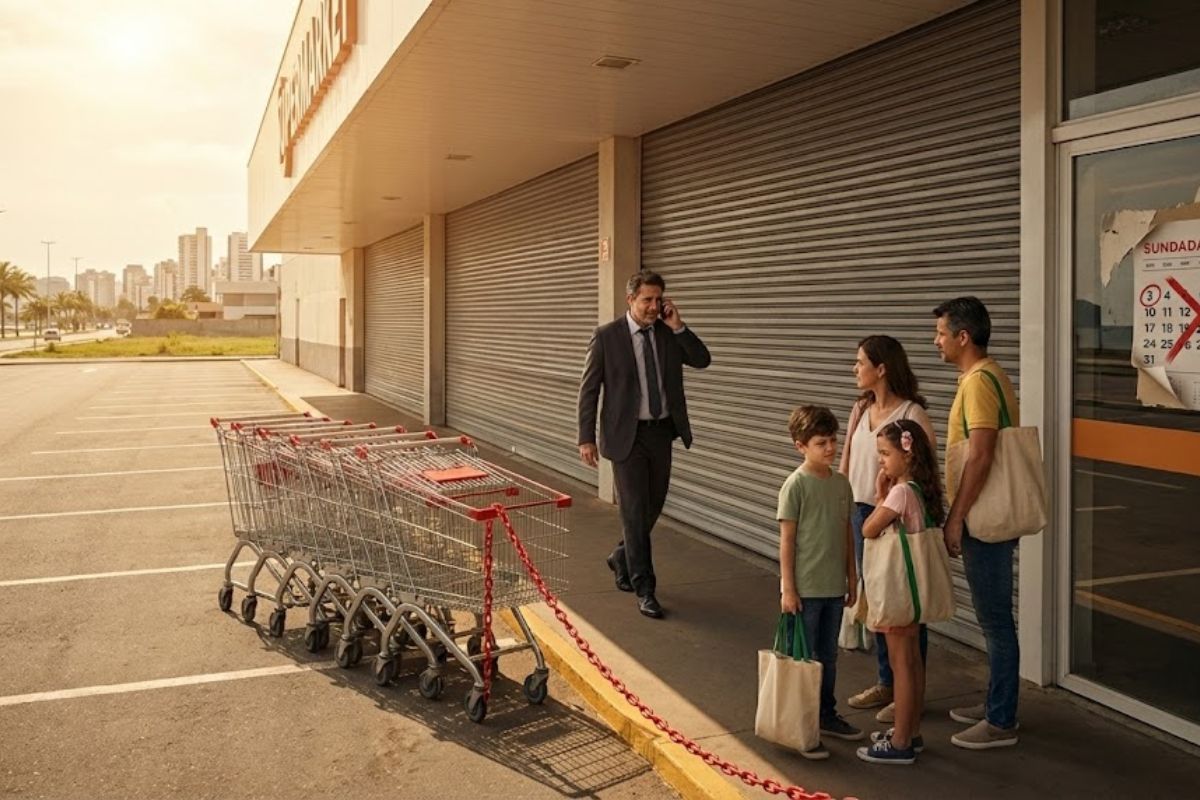


Agreement Between Unions and Employers Determines That Supermarkets, Wholesalers and Small Stores in Espírito Santo Close on Sundays Starting in March 2026, Opening a Testing Period With Risk of Revenue Drop, Changes in Employees’ Weekly Rest and Strong Political and Economic Pressure on the Capixaba Retail.
In Espírito Santo, the end of supermarket openings on Sundays in 2026 transforms a routine that seemed consolidated in urban life. The negotiation between unions and employers creates an unprecedented regional experiment, where revenue drop, weekly rest and new consumption habits now walk together under the watchful eye of employers, workers and government.
At the same time, the state assumes the role of a national showcase. The way supermarkets, wholesale chains, and small businesses structure shifts, inventories, and promotions throughout the week will be observed by other federative units interested in understanding whether closing on Sundays strengthens the weekly rest without deepening the revenue drop in the sector.
Which Supermarkets and Stores Will Be Required to Close on Sundays
The agreement establishes that supermarkets, markets, wholesalers, small grocery stores, and construction material stores with hired employees will not be allowed to operate on Sundays between March and October 2026, a period defined as a testing phase in Espírito Santo.
-
Brazilian city bets on the business environment to generate jobs and attract investments in the energy sector — secretary reveals strategy at Macaé Energy 2026.

-
50 viaducts, 4 tunnels, 28 bridges, and 40 kilometers of bike paths: BR-262 in Espírito Santo will receive 8.6 billion reais for the largest engineering project in the state’s history, inspired by the Immigrant Highway in São Paulo.

-
Brazil produces too much clean energy and doesn’t know what to do with it: over 20% of solar and wind capacity was wasted in 2025 while investors flee and 509 renewable generation projects were abandoned in the last year.

-
Piauí will produce a new fuel that replaces diesel without needing to change anything in the truck’s engine and reduces pollutant gas emissions by half: truck drivers from all over the Northeast are already celebrating the news that will arrive later this decade.


The measure directly alters the weekend logic in entire neighborhoods, especially in urban areas.
In the larger centers of Espírito Santo, supermarket chains that used to concentrate aggressive offers on Sundays will have to redistribute campaigns to Fridays and Saturdays.
The change also affects wholesalers that depend on bulk purchases made by families and small traders on these days, increasing fears of revenue drop in stores that relied on Sunday as the main revenue window.
In shopping malls, only supermarkets will be affected by the closure on Sundays.
Other retail segments remain free, preserving part of the usual leisure and consumption movement.
Still, the loss of customer flow that circulated exclusively for shopping in supermarkets is likely to indirectly impact snack bars, pharmacies, and other nearby establishments.
What Continues to Function on Sundays in Espírito Santo
Despite the restriction on supermarkets, Sunday will not be a commercial desert in Espírito Santo.
Neighborhood bakeries, independent butcher shops and small family-owned businesses remain authorized to open, as long as they do not fall within the categories covered by the collective agreement between unions and employers.
This loophole preserves a minimum of local supply for emergency replenishment of food and basic items, reducing the immediate shock on consumers used to concentrating purchases on Sundays.
The general reading is that the closure of supermarkets on Sundays reorganizes the flow of demand, but does not eliminate options for those who plan poorly or have last-minute needs.
Moreover, online shopping platforms and delivery apps continue to operate, which tends to shift part of Sunday consumption to digital channels.
Depending on the logistical capacity of the networks, this movement may mitigate the revenue drop of large groups, although it increases pressure for technological solutions and fine-tuning adjustments in the weekly rest of teams involved in distribution centers.
How Consumers Will Have to Adapt Their Shopping Habits
With supermarkets closed on Sundays, planning returns to the center of capixaba families’ routines.
Those who previously left supermarket trips for the weekend will need to anticipate shopping for weekdays or Saturday, revise lists, and better organize their household inventory of food, hygiene items, and construction materials.
For many consumers, the main change will be psychological.
The feeling that there would always be supermarkets open on Sundays allowed for last-minute purchases and a scattershot approach to shopping.
With the new rule, the habit of concentrating weekly purchases gains ground, a pattern already observed in countries that strongly restrict Sunday commerce, but still consolidating in Espírito Santo.
At the same time, neighborhoods with strong bakeries, well-structured butcher shops, and small family markets may gain relevance on Sundays, capturing some of the demand shifted from supermarkets.
This territorial rearrangement of consumption will be one of the silent indicators of the capixaba test, alongside the assessment of revenue drop and the real effect on workers’ weekly rest.
Revenue Drop and Pressure From Businesses on the Agreement
The most sensitive point of the debate is the possible revenue drop of large supermarket and wholesale chains.
Sundays usually concentrate high foot traffic and significant average tickets, especially in capitals and mid-sized cities.
In Espírito Santo, business owners have already indicated that they will closely monitor monthly revenue between March and October 2026 to quantify the impact.
The São Paulo Commercial Federation has already warned of financial risks associated with similar changes in work hours and store operations.
Although the current agreement focuses on Espírito Santo, this kind of signaling reinforces the narrative that the revenue drop on Sundays could ultimately pressure margins, delay investments, and reduce the opening of new supermarket stores in less profitable regions.
On the other hand, unions argue that the cost of the measure needs to be compared to the gain in structured weekly rest.
They argue that, with Sundays off, supermarket workers gain predictability in their time off, ease in spending time with family, and less physical and emotional wear.
The clash between these two narratives is likely to intensify business pressure for future adjustments to the agreement.
Weekly Rest, Quality of Life and National Demonstration Effect
On the Brazilian labor map, Espírito Santo begins to operate as a laboratory for a new design of weekly rest in commerce.
If, at the end of the experimental period, employment and economic activity indicators remain stable and the revenue drop on Sundays remains controlled, other states may feel authorized to copy parts of the model.
From a social standpoint, the reinforced weekly rest can reshape the capixaba Sunday.
With fewer supermarkets open, there is more space for leisure activities, family gatherings, and the use of public services, without the constant pressure of consumption.
Labor relations specialists see this type of experience as a way to practically test how to balance expanded weekly rest and the financial sustainability of establishments.
At the same time, Espírito Santo sends a message to the country: it is possible to negotiate stricter rules for supermarket openings on Sundays without immediately disrupting the retail operation.
The outcome of this test, however, will depend on the ability of networks, consumers, and unions to jointly manage both the weekly rest and the inevitable revenue drop on Sundays during the transition period.
What to Expect After October 2026 in Espírito Santo
Once the testing phase concludes, it will be up to unions, employers, and authorities in Espírito Santo to decide whether to maintain, adjust, or revoke the closure of supermarkets on Sundays.
This decision will take into account not only the revenue drop but also employment data, workers’ perceptions about weekly rest, and consumer satisfaction levels.
If the experience is considered successful, Espírito Santo may establish itself as a reference for paid weekly rest in commerce.
In this scenario, supermarkets and wholesalers would have to permanently incorporate the logic of operating without Sundays, with a lasting impact on work contracts, shift schedules, and investment plans.
If, on the contrary, the revenue drop is viewed as unsustainable, the state may reopen space for supermarkets to operate on some Sundays throughout the year, on specific dates, or revert to the traditional model of full opening.
In any case, the capixaba test will enter the radar of legislators, union centers, and business groups throughout Brazil.
Ultimately, what is at stake in Espírito Santo goes beyond supermarket opening hours.
The discussion about Sundays, weekly rest, and revenue drop questions what kind of balance society is willing to accept between quality of life for workers and maintaining retail competitiveness.
Do you think the closing of supermarkets on Sundays in Espírito Santo improves workers’ weekly rest more or weighs more on revenue drop and families’ wallets?










Éh perfeitamente possível, a queda de receita será insignificante visto que as pessoas não deixarão de comprar, apenas migrarão as compras de domingo para outro dia, simples assim.
Na Europa os supermercados não abrem nos fins de semana e as pessoas tendem a se organizar e respeitar a folga de quem também precisa.
É preciso pensar também, na saúde física, mental e na qualidade de vida do trabalhador, que sempre é o prejudicado na relação patrão/ empregado. Com certeza, haverá uma pequena redução na margem de lucro desses patrões. No entanto, com um dia a mais de descanso o funcionário tendera a ser mais produtivo, o que resultará em benefício para a empresa!