





 Portuguese
  English
  Spanish
  5 min of reading
  0 comments


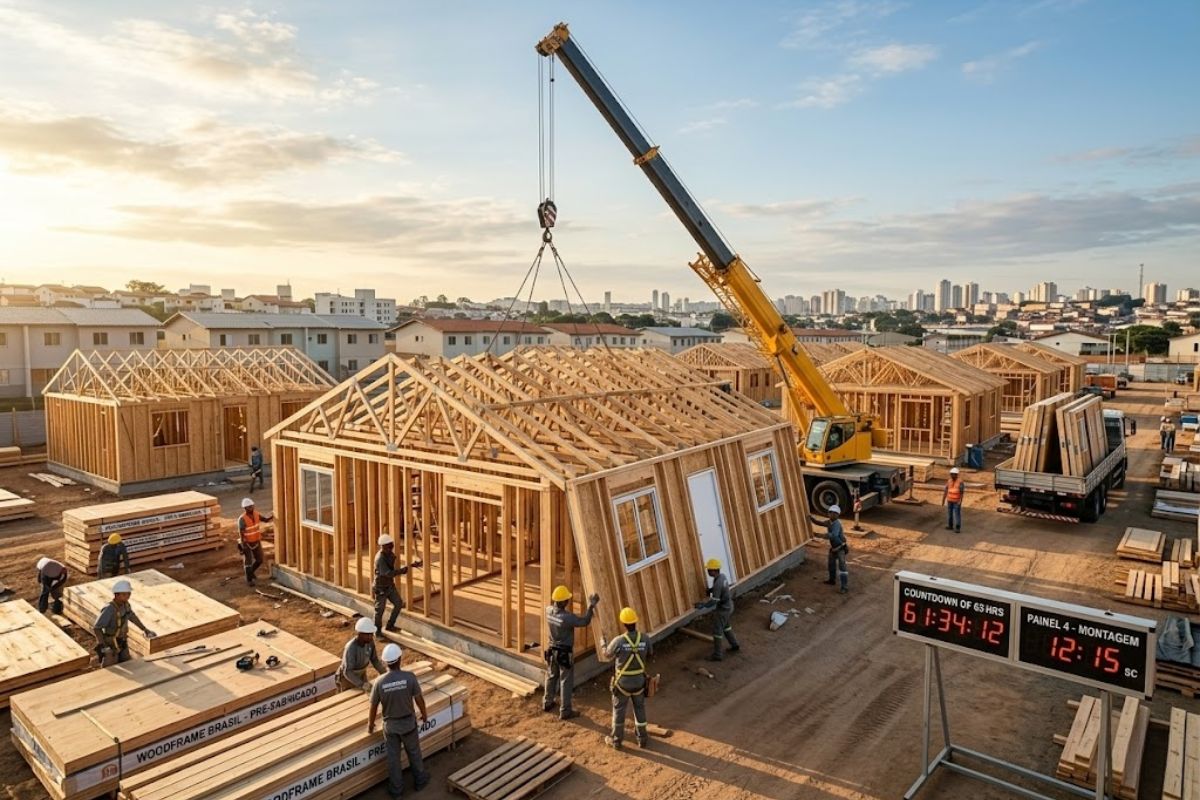
The Popular House Made in Wood Frame Gained Industrial Scale with Tecverde in Paraná, Where 75% of the Process Leaves the Factory, Assembly Can Occur in 63 Hours and the Cost Remains Close to Masonry, While the Sector Observes a Faster, Cleaner and Financed Construction in Brazil.
The popular house has firmly entered the radar of industrialized construction with Tecverde’s investment in wood frame, a system that gained scale in Paraná and has been presented as an alternative to reduce timelines without breaking the cost logic of masonry. The promise is straightforward: a popular house in 63 hours, with assembly mentioned in 1.5 hours in industrial stages.
This movement draws attention because it relies not only on speed. The model tries to reorganize construction as a manufacturing process, shifting 75% of the stages into the industry, with quality control, standardization, and less waste generation. Instead of relying on almost everything at the construction site, the proposal is to have construction arrive more ready to the ground and reduce the time spent on final assembly.
How Tecverde Brought Wood Frame to Popular House Construction
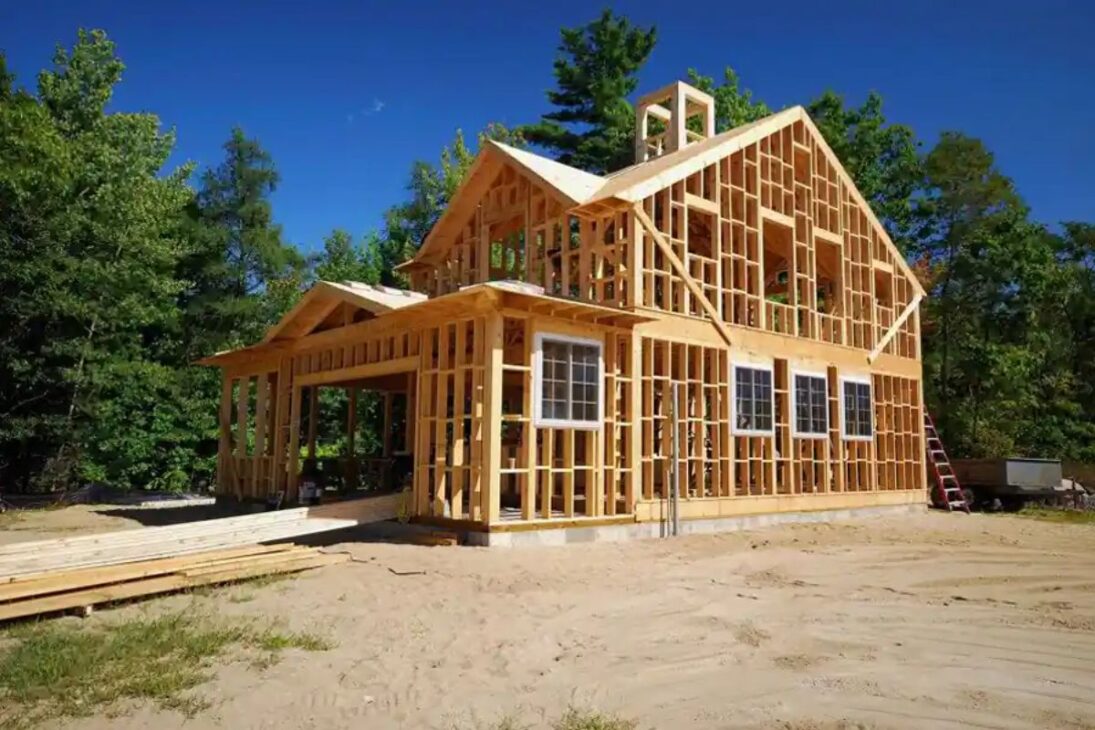
Tecverde was founded in 2009 with the idea of applying a logic similar to that of the automotive industry to construction.
-
Attracting around 250,000 people a year, a lighthouse 200 meters from the sea, on a 60-meter high cliff, on the North Sea coast in Denmark, becomes one of the most impressive examples of how nature can threaten historical buildings.

-
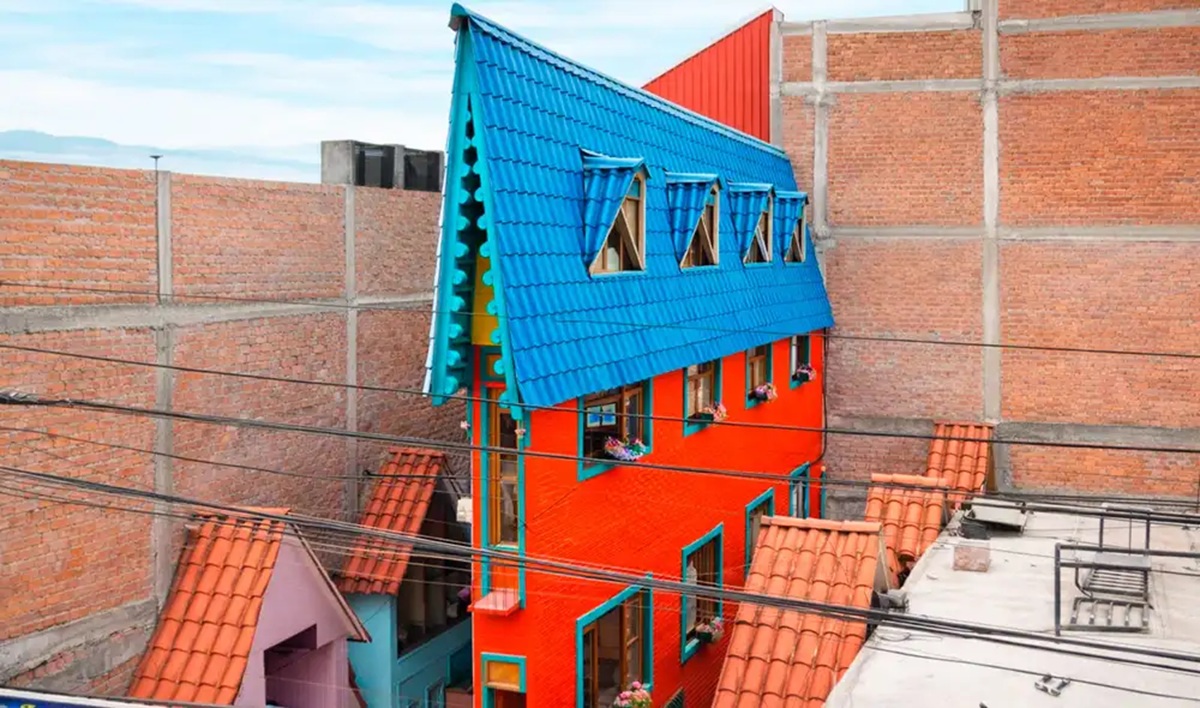
The narrowest house in the world is only 63 centimeters wide, but inside it can accommodate a bathroom, kitchen, bedroom, office, and even two staircases.
-
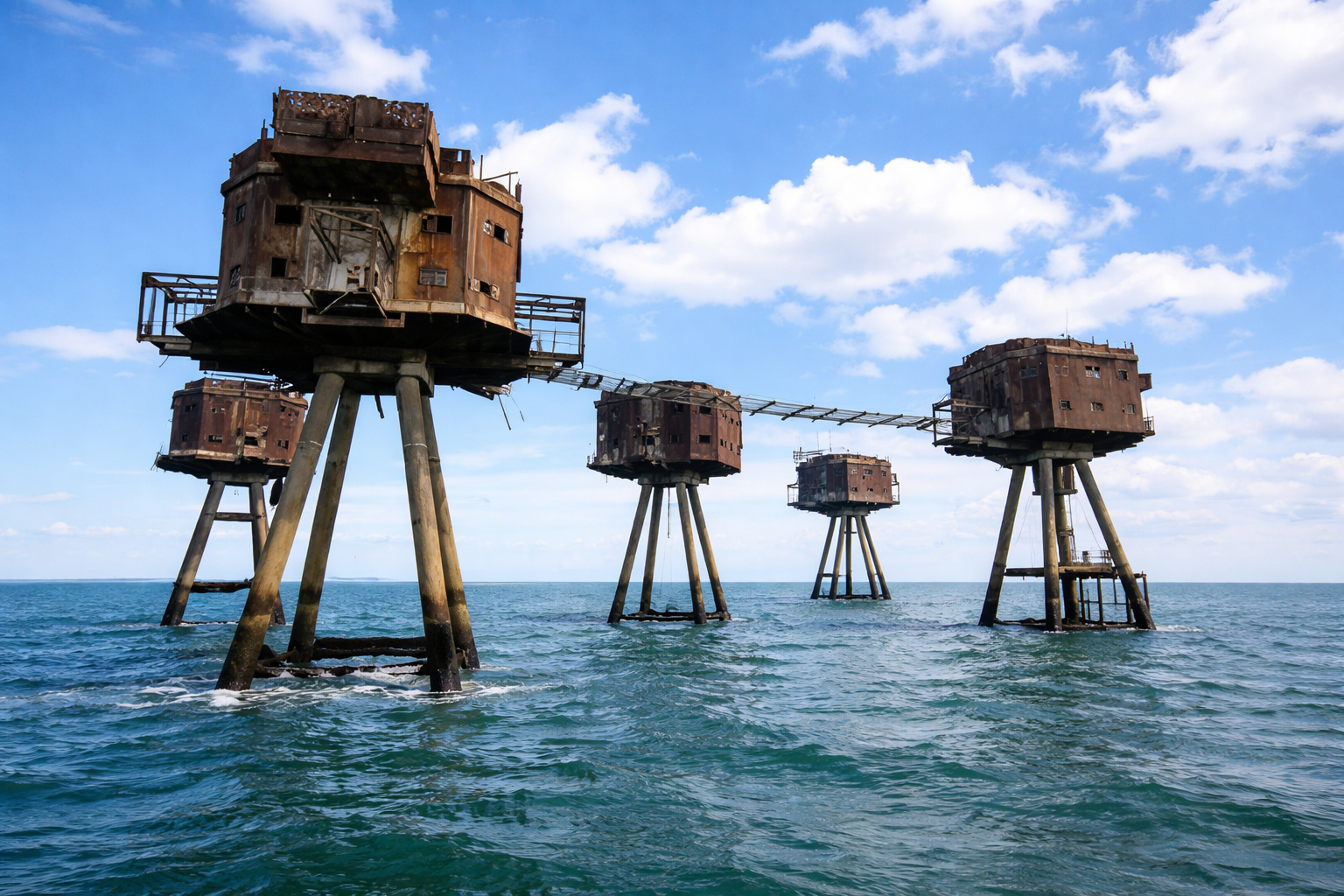
In the middle of the sea, these enormous concrete and steel structures, built by the British Navy to protect strategic maritime routes, look like they came straight out of a Star Wars movie.
-
For years, no one could cross a neighborhood in Tokyo because of the tracks, but an impressive solution changed mobility and completely transformed the local routine.

The first challenge was to find a technology that reduced timelines and waste without compromising performance.
The solution came from Germany, through the wood frame system, later adapted to the Brazilian market with sturdier walls to better fit the local profile.
This process did not happen in isolation. The operation received support from Fiep and SENAI-PR, as well as a collaboration with the Ministry of Economics of Baden-Württemberg for technology transfer.
In 2010, the first factory was inaugurated in Pinhais, in the metropolitan region of Curitiba, in Paraná, funded by investors, support from Finep, and German subsidy.
From then on, the popular house was no longer conceived merely as a traditional project and began to be treated as an industrializable product.
Why the Promise of a Popular House in 63 Hours Draws So Much Attention
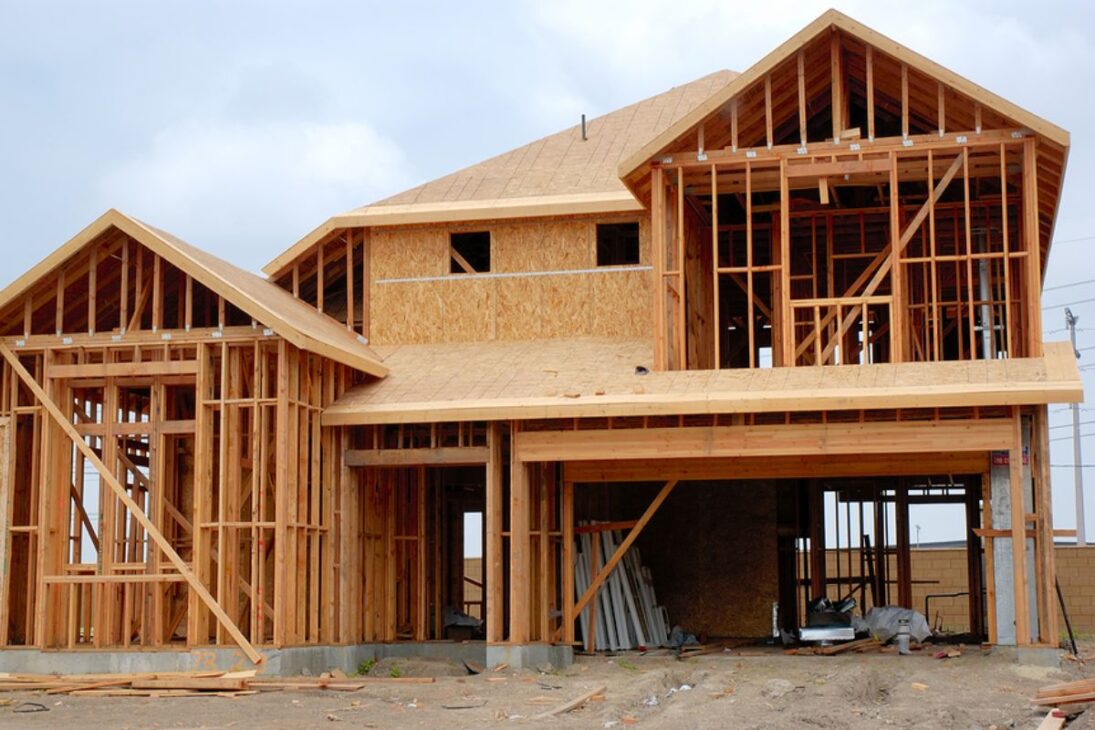
The idea of a popular house in 63 hours draws attention because it tackles the most sensitive point of social interest construction: the timeline.
Caio Bonatto claims that a house can be assembled in 1.5 hours and that a four-story building can be raised in 10 days. In 2018, the company also received an award for building a residence in 10 hours, with finishes, ready to move in.
The numbers do not describe exactly the same stage, but all point in the same direction: drastically shortening the construction time.
This speed gain is only possible because 75% of the process occurs in a manufacturing environment. The developer or builder receives from Tecverde the residence structure already assembled, with walls, internal plumbing, and roof structure. This reduces improvisation, shortens steps on the site, and makes construction more predictable. For a popular house, this predictability is crucial because project delays often increase costs, stall delivery, and pressure financing.
What Wood Frame Delivers Beyond Speed
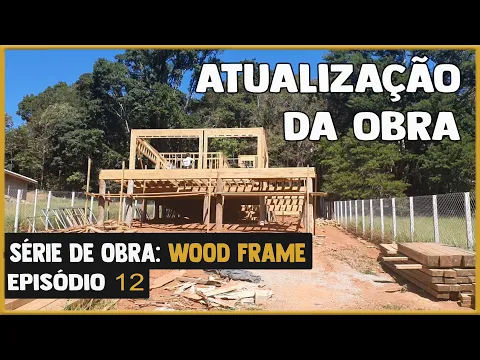

The wood frame used by Tecverde combines structural wood from planted forests with double drying and treatment with chemical preservatives.
On the structural profiles are applied OSB and waterproof membranes, while the finishing uses cement boards on the exterior and drywall on the interior.
The sought-after result is to combine durability equivalent to conventional systems with better thermal and acoustic comfort.
The proposal is not just to be fast, but to maintain a technical standard comparable to that of masonry.
There is also a traceability component that reinforces the industrial discourse. Through a QR Code on the frame, it is possible to visualize internal hydraulic and electrical structures of the wall and even identify the origins of the materials used. This allows recalls when necessary and increases control over the process.
In a conventional construction, this type of tracking is much more challenging. In the case of the popular house, the gain lies in transforming a product historically marked by improvisation into something more controlled.
How Cost, Waste and Water Factor into the Construction Account
The cost for the owner is similar to that of masonry financed by government social programs. This is decisive because speed alone would resolve nothing if the popular house were significantly more expensive.
What puts the system on the radar is precisely the combination of a short timeline and competitive pricing, something that Tecverde has tried to sustain throughout the operation’s growth.
In environmental terms, the reported numbers are also strong. The process reduces waste generation by 85% and water resource usage by 90%.
Company studies indicate that 13,000 tons of CO2 emissions have been avoided and 22,100 tons of waste have not been produced, in a total already accumulated of 130,000 square meters built.
In practice, wood frame appears not only as a shortcut for timelines but as a complete reorganization of construction on an industrial scale.
Where Paraná Comes in the Expansion and Why Financing Was Decisive
Paraná was the starting point for this structure. One year after its founding, 34 companies were already mobilized to supply raw materials and equipment, forming a robust production chain in the state.
The production capacity jumped from 34 houses in 2010 to 3,400 units per year in 2018, with the expectation of reaching 4,200 after the factory’s expansion.
This leap demonstrates that the popular house in wood frame is no longer just an isolated demonstration but has begun to operate on a much more ambitious scale.
Another central point was real estate financing. In 2011, regulations began allowing banks to finance houses made with wood frame structures.
Two years later, the Ministry of Cities authorized Tecverde’s technology for social interest housing.
Without this approval, the popular house would hardly have real market space. Industrial speed without regulatory acceptance does not translate into housing policy or a financeable product.
The strength of this proposal lies in the combination of factory, standardization, and scale. The popular house in wood frame gained visibility because Tecverde managed to push construction into a more industrial logic, with the promise of very rapid assembly, costs close to masonry, and significant reductions in waste and water consumption.
In Paraná, this model moved from the experimental stage to operating with a productive chain, financing, and approval.
Still, the most relevant point may be another: the system draws so much attention because it touches on an old wound of Brazilian construction, marked by slow work, waste, and low predictability.
When a popular house appears in 63 hours, the impact is not just in the number, but in the contrast with the historical standard of the sector.
Do you think that wood frame has a real chance of gaining space in the popular house market in Brazil, or will masonry still dominate despite this industrial advancement?




Seja o primeiro a reagir!