





 Portuguese
  English
  Spanish
  4 min of reading
  0 comments


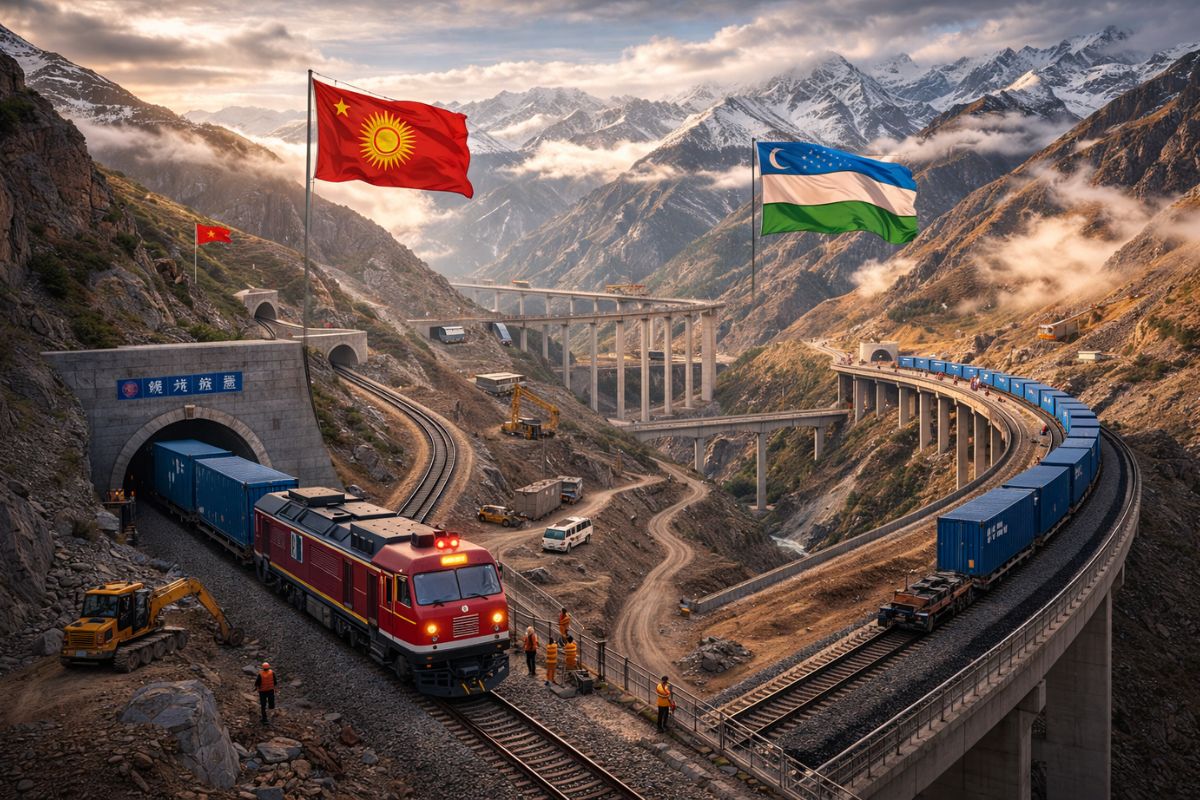
The New Railway Announced by China Foresees Credit Exceeding 2 Billion, Crosses Mountainous Terrain with 29 Tunnels and 50 Bridges and Promises to Shorten Commercial Distances Between Kyrgyzstan and Uzbekistan, While Governments Calculate Costs, Timelines, and Logistical Returns of a 120 Km Project in Central Asia in an International Corridor.
The new railway announced by China to connect its territory to Kyrgyzstan and Uzbekistan comes with a figure of over R$ 11 billion, 120 km in length, 29 tunnels and 50 bridges in an international corridor designed for Central Asia. The package combines logistical ambition with an engineering challenge in a mountainous area.
The project also exposes a choice of public policy: using railways to reduce distances to larger markets, lower transportation costs, and enhance regional integration. At the same time, the history of major projects shows that timelines, geography, and coordination between countries are variables that determine whether the new railway becomes a structural gain or a delayed promise.
Geography, 29 Tunnels and 50 Bridges as Proof of Engineering

The new railway is 120 km long and was presented as one of the most complex projects in Central Asia precisely due to the mountainous terrain.
-
Scientists use sawdust mixed with clay to create a lighter brick, promising efficient thermal insulation and impressing by transforming waste into a solution for construction.

-
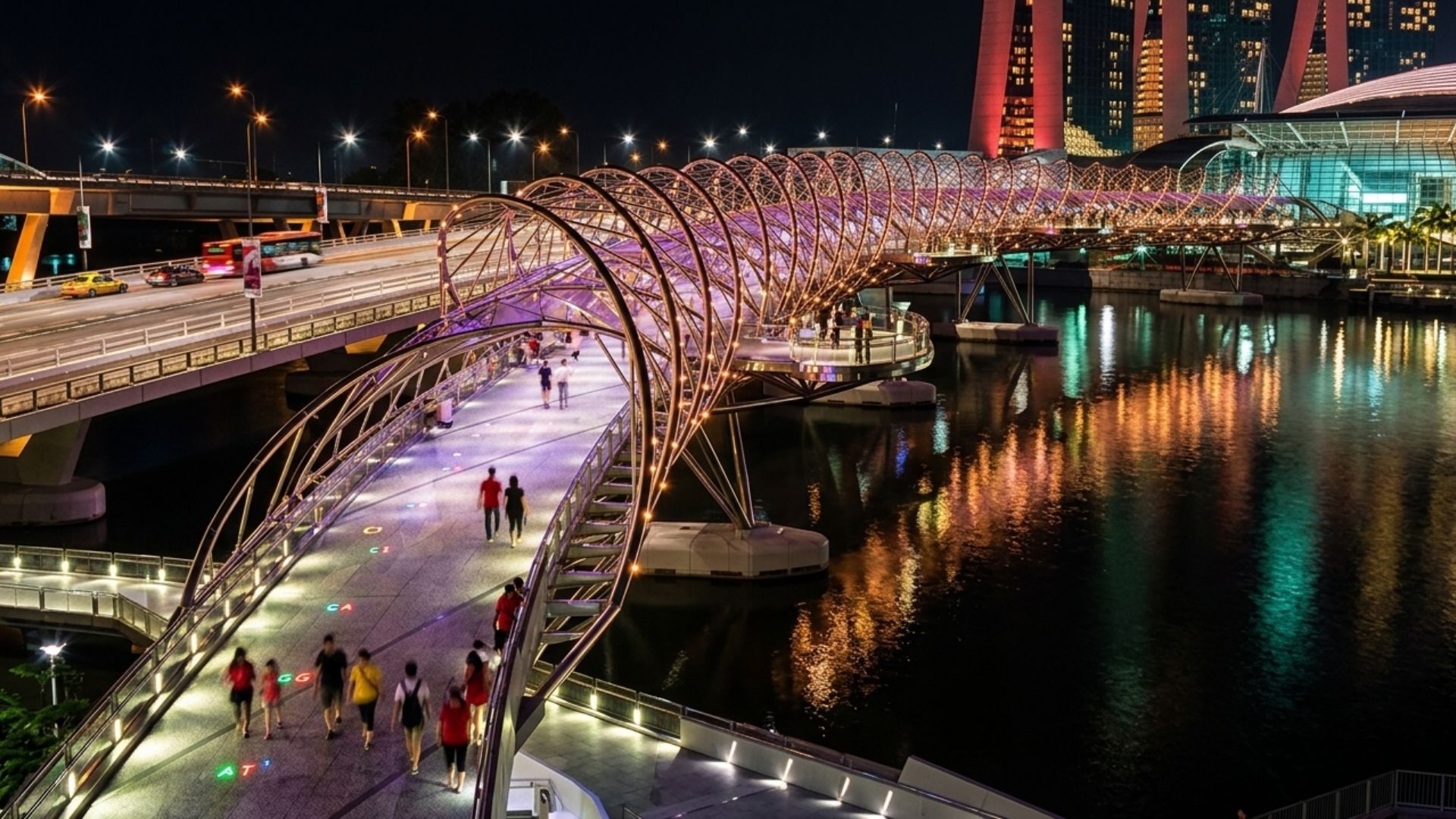
With a DNA shape, this bridge in Singapore draws attention in modern architecture and surprises tourists by transforming a simple crossing into an unforgettable visual experience in the urban heart.
-
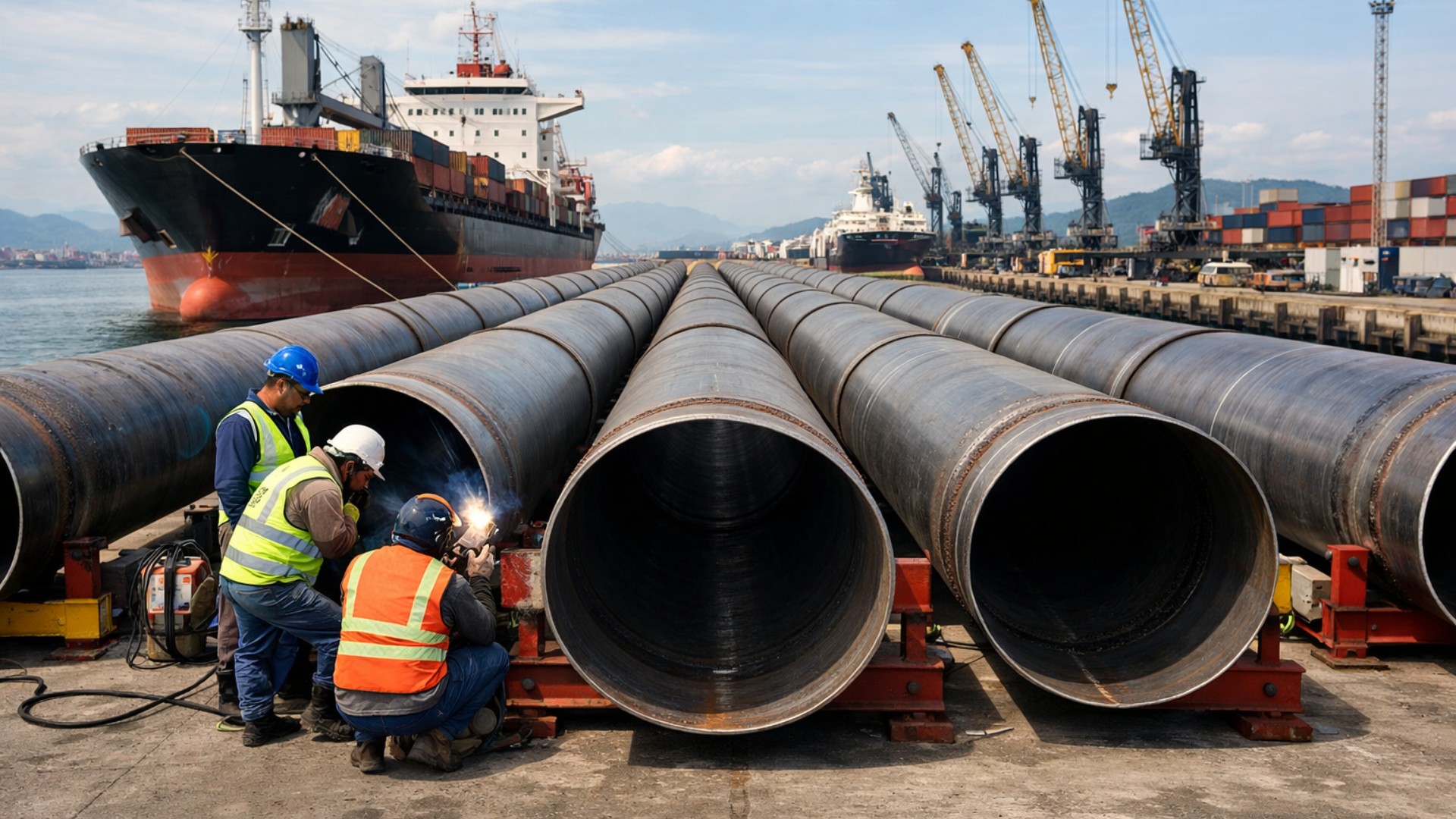
Giant underwater pipeline begins to take shape with a R$ 134.7 million project at the Port of Santos: the 1.7 km structure uses 12-meter and 700 mm pipes to supply water to 450,000 people in Guarujá.
-
A mason reveals a professional plastering technique that uses aligned guides and a 3-meter ruler to plaster an entire wall in up to 3 hours, without visible seams, with uniform thickness, perfect plumb, and a finish ready for painting without rework.


In this context, the 29 tunnels are not a decorative detail: they set the pace of the worksite, the cost per kilometer, and the level of technical risk associated with excavation, ventilation, drainage, and mass stability.
The 50 bridges serve a similar role.
Bridges concentrate critical decisions about foundations and assembly, in addition to requiring compatibility with access, spans, and local conditions.
When tunnels and bridges dominate the spreadsheet, the project stops being merely transportation and becomes an exercise in heavy engineering with a direct impact on the schedule.
Financing, Credit and the State Machinery Behind the New Railway

The announcement attributes to the Chinese government credit exceeding 2 billion as a step to enable the project.
In international projects, this type of financing usually acts as a trigger for execution: it reduces initial uncertainty and allows engineering, contracting, and construction fronts to advance with budget predictability.
Even so, money alone does not resolve operational friction.
The new railway intersects the interests of at least three countries, which often requires compatible rules for operation, technical standards, and maintenance.
The more complex the tunnels and bridges, the greater the need for clear governance to prevent regulatory bottlenecks from nullifying physical gains in infrastructure.
The Corridor Between China, Kyrgyzstan and Uzbekistan and What Changes in Trade
The economic justification is linked to reducing distances to broader markets.
By connecting China, Kyrgyzstan and Uzbekistan, the new railway is likely to reorganize freight routes and decrease dependence on longer routes, increasing predictability and reducing logistics costs in repetitive movements.
This effect, however, depends on effective use. A railway only becomes competitive when it can operate regularly, integrate terminals, and maintain service standards over time.
For Kyrgyzstan and Uzbekistan, the promise is to gain more efficient access to regional flows; for China, consolidating a land corridor capable of distributing goods with fewer steps.
Social Benefits and Practical Limits for Kyrgyzstan and Uzbekistan
In social terms, the narrative associated with the new railway usually comes with expectations of new services and jobs, due to the movement of construction and the creation of a more structured transportation route.
Integration may also facilitate the movement of people between cities, as long as commercial operation is viable and sustainable.
The limit lies in execution and the operational phase.
Rail infrastructure requires continuous maintenance, and structures like tunnels and bridges increase operational weight over the years.
If the coordination between Kyrgyzstan and Uzbekistan does not keep up with common standards and inspection routines, the risk is that the railway exists on maps but fails to deliver the promised gains in mobility and trade.
What to Measure to Know if the New Railway Delivered Results
The success of such projects is usually perceived through indirect indicators, such as the stability of cargo delivery timelines, reduction of time on strategic routes, and increase of flow in previously underutilized corridors.
In the case of this new railway, it is worth observing whether the layout with 29 tunnels and 50 bridges can operate without frequent interruptions and with predictability throughout the seasons.
The relationship between investment and use also matters. With over R$ 11 billion, public demand tends to be for macro effects, not marginal improvements.
When the benchmark is regional, the railway needs to prove integration, and this involves efficient cross-border operation between China, Kyrgyzstan, and Uzbekistan, without bureaucracy and bottlenecks nullifying the promise of shortening distances.
The new railway of over R$ 11 billion, with 120 km, 29 tunnels and 50 bridges, enters Central Asia as a bet on engineering and integration between China, Kyrgyzstan and Uzbekistan.
The potential to reduce costs and create an international corridor exists, but delivery depends on the details that rarely make headlines: stable operation, governance between countries and heavy maintenance.
If you had to choose a risk point in this project, would you bet more on the tunnels, the bridges, or the coordination between China, Kyrgyzstan and Uzbekistan, and why? And looking at the regional impact, does this new railway change the game or just redistributes existing routes?








-

-

3 pessoas reagiram a isso.