





 Portuguese
  English
  Spanish
  5 min of reading
  0 comments


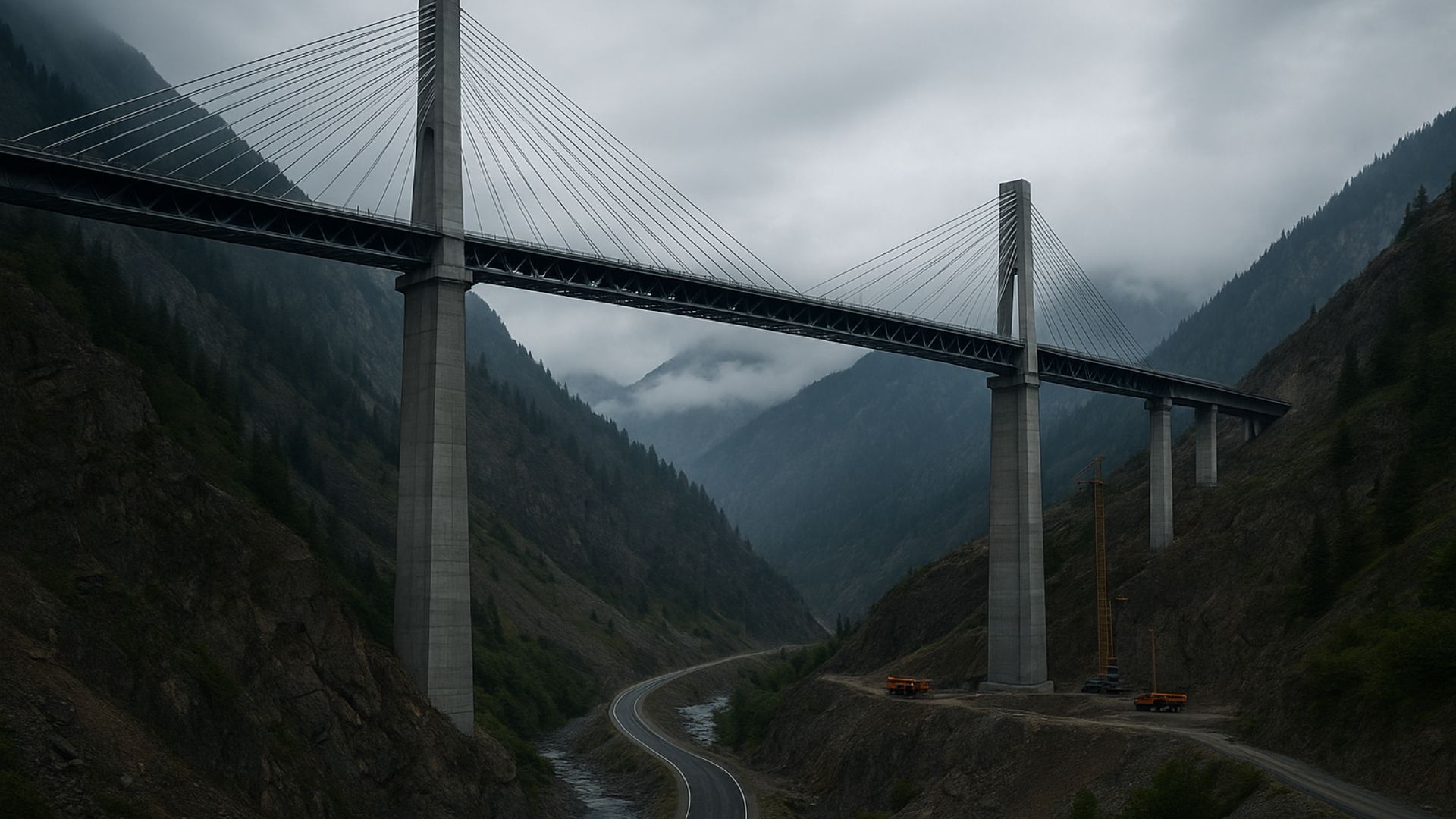
Structural Monument Advances in Eastern Kazakhstan and Promises to Transform Logistics, Tourism and Road Safety in the Region by Replacing One of the Most Dangerous Sections of the Altai Mountains.
In the mountainous east of Kazakhstan, the construction of a bridge over the Pikhtovka gorge is progressing as the centerpiece of a major road project that promises to change the way people travel through the Altai region.
With pillars exceeding 40 meters in height and approximately 175 meters in length, the structure will be the highest bridge in the country and is expected to be completed in 2026, eliminating a winding and risky mountain stretch around the Osinovsky pass.
Although the value is reported in different currencies, the total investment is around 13 billion Kazakh tenges, which currently corresponds to approximately US$ 25 million, about R$ 140 million based on the average dollar rate in 2025.
-
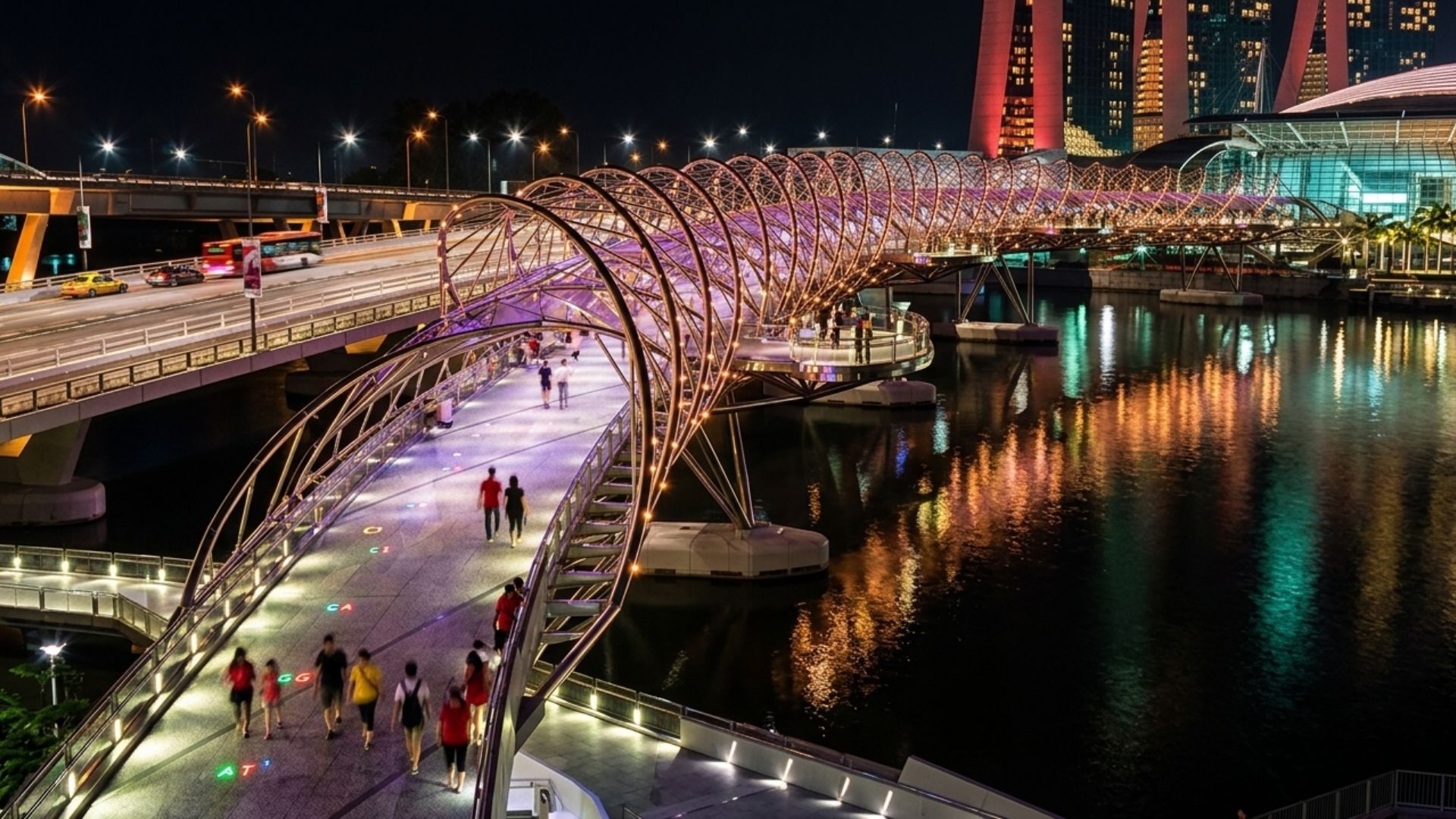
With a DNA shape, this bridge in Singapore draws attention in modern architecture and surprises tourists by transforming a simple crossing into an unforgettable visual experience in the urban heart.
-
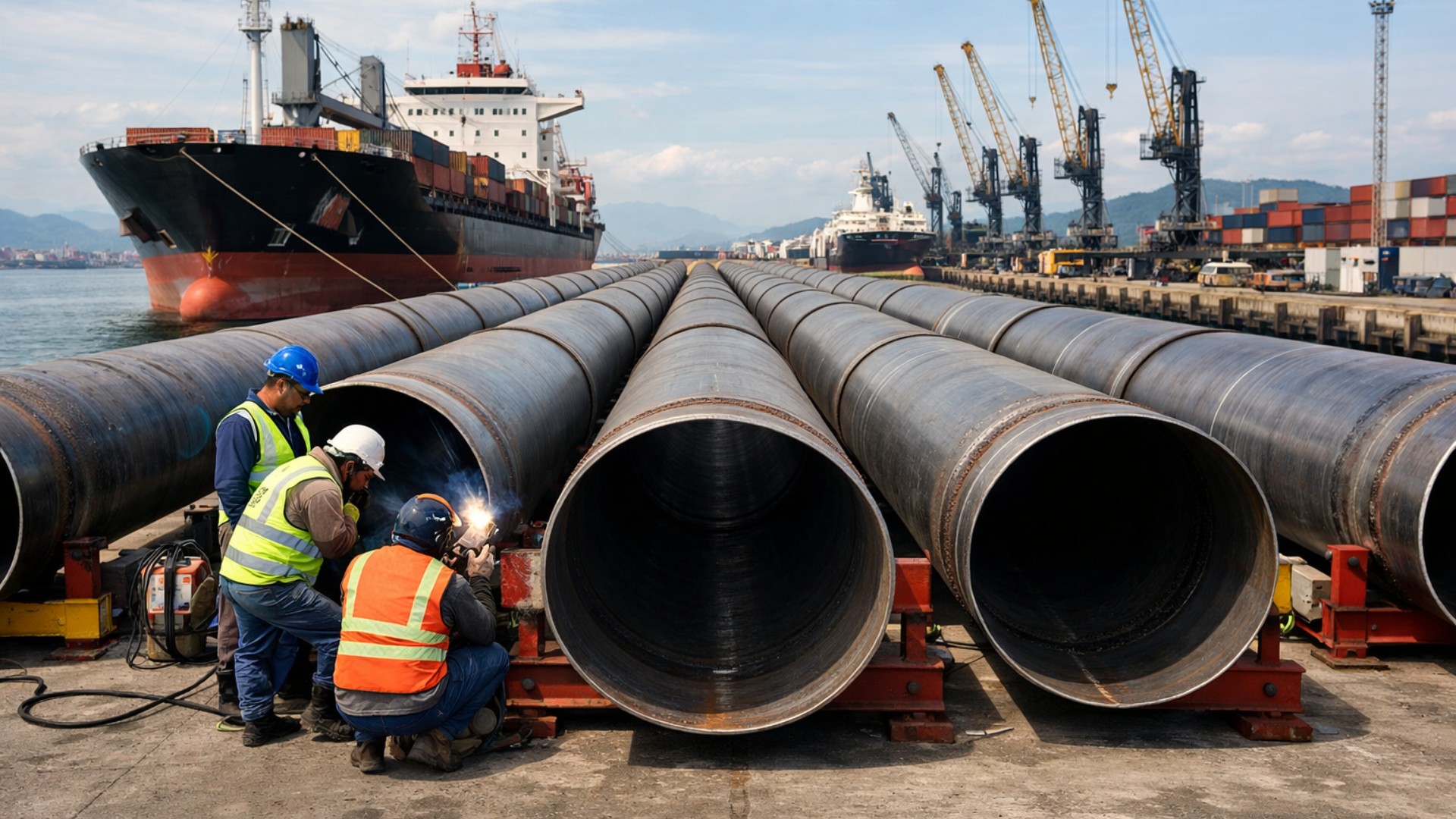
Giant underwater pipeline begins to take shape with a R$ 134.7 million project at the Port of Santos: the 1.7 km structure uses 12-meter and 700 mm pipes to supply water to 450,000 people in Guarujá.
-
A mason reveals a professional plastering technique that uses aligned guides and a 3-meter ruler to plaster an entire wall in up to 3 hours, without visible seams, with uniform thickness, perfect plumb, and a finish ready for painting without rework.

-
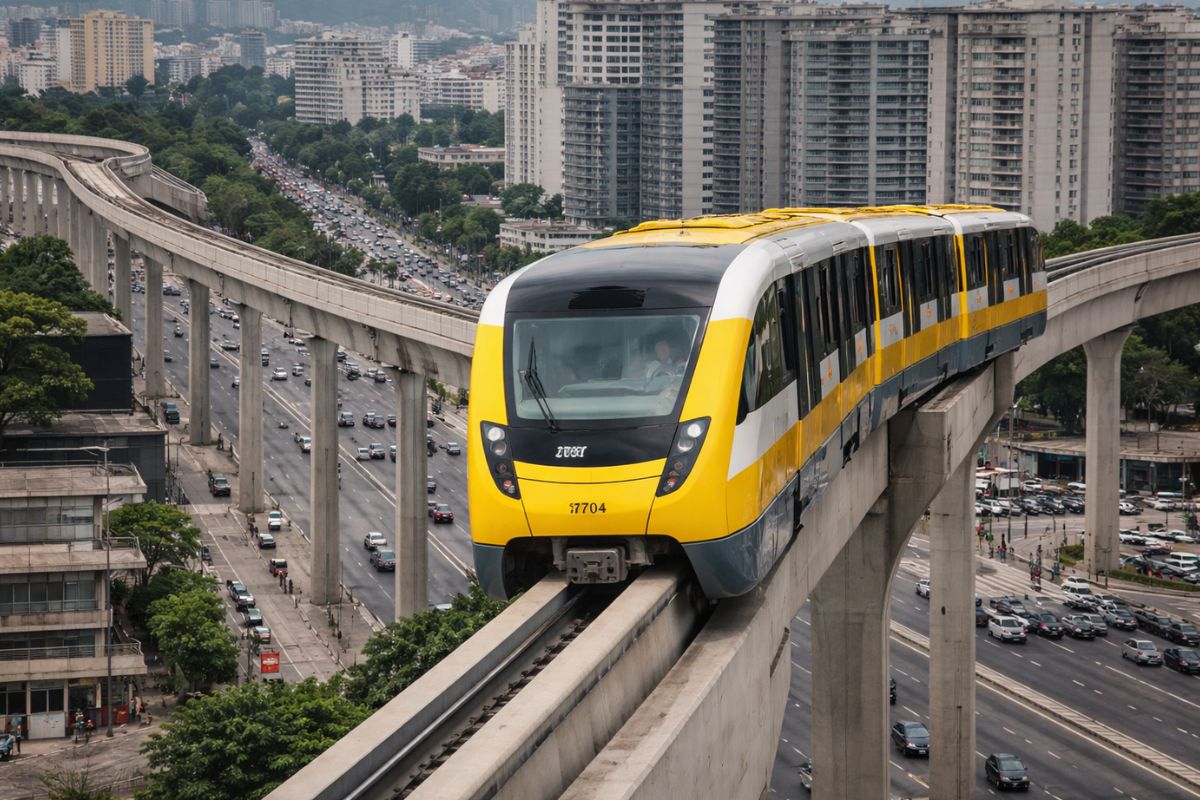
The project that was supposed to be ready for the 2014 World Cup in Brazil debuted with a 12-year delay and nearly R$ 6 billion invested: the Line 17-Gold of the São Paulo monorail opened with reduced hours and is only expected to operate fully in October.

Economic Impact of the New Pikhtovka Bridge
The connection over the Pikhtovka gorge is part of the Ust-Kamenogorsk – Altai – Ulken Naryn – Katon-Karagai – Rakhmanovskie Klyuchi highway, a route that connects urban centers, agricultural production areas, and tourist hubs in the eastern part of the country.
By replacing a section of mountain with tight curves with a straighter and more stable road, the bridge is likely to shorten travel time, reduce fuel costs, and lower logistics expenses for freight transport.
Mining companies, rural producers, and tour operators will have access to a more predictable route, with fewer interruptions due to snow, ice, or landslide risks.
This gain in logistical efficiency adds to the direct effect of the construction site.

The construction mobilizes specialized teams in earthworks, deep foundations, concreting, and structure assembly, in addition to support services such as transportation, catering, and accommodation.
Even without a consolidated official number, the regional government points out that large roadworks have contributed to increasing employment in the construction industry and in related services along the Ust-Kamenogorsk–Altai axis.
The trend is that, after the inauguration, the improvement in accessibility will attract new businesses, such as hotels, restaurants, service centers for truck drivers and tour operators near the new road intersections and the future observation area in the Pikhtovka gorge itself.
Integration of Altai and Reduction of Isolation
The Osinovsky pass is considered one of the most difficult sections of the region’s road network.
Residents and drivers describe the current route as a twisting narrow track, steep descents, and successive curves, which in winter becomes a frequent blockage point due to snow, ice, and avalanche risks.
With the new bridge and the bypass road, traffic between Ust-Kamenogorsk, Altai, and the areas near the Bukhtarma reservoir and Rakhmanovskie Klyuchi will no longer depend on the most critical section of the mountain road.
This improves access to healthcare, education, and commerce for smaller communities along the highway and reduces response times in emergencies, such as accidents or severe weather.
The Altai region, in turn, gains in tourist attractiveness.
The Pikhtovka gorge itself is being treated by the local press as one of the most scenic landscapes along the route, and there are already plans for the installation of an observation deck near the bridge, aimed at visitors wishing to view the valley and the new engineering structure.
This combination of a safer road, shorter travel times, and appreciation of natural beauty is likely to strengthen segments such as ecotourism, mountain lodges, and thermal resorts along the Rakhmanovskie Klyuchi route, a traditional leisure destination in eastern Kazakhstan.
Engineering Challenges in Uneven Terrain
Building the highest bridge in the country in a narrow and deep valley requires specific engineering solutions.
Geological studies have detected irregular and unstable soils on the gorge’s banks, which led to the adoption of deep foundations, over ten meters, to ensure the stability of the pillars.
In addition to depth, the project needed to deal with slopes subject to mass movements, abrupt temperature variations, and intense freezing and thawing cycles.
To cope with these conditions, teams are using reinforced concrete, non-welded rebar, and concreting techniques adapted for colder periods.
Another sensitive point is dealing with avalanche risks in areas near the highway.

Recent studies on snow dynamics and landslides in the East Kazakhstan region reinforce the need to protect the roadway and supporting structures against sudden events.
This reality explains the parallel investment in protective tunnels, barriers, and drainage systems along the new route.
International Connectivity and Logistical Role of Kazakhstan
The Pikhtovka bridge is not an isolated project.
It is part of a broader effort by Kazakhstan to strengthen its transport infrastructure and consolidate the country as a land corridor between Europe and Asia, especially in the context of the Belt and Road Initiative.
By reducing internal bottlenecks and making the movement of trucks and buses in the eastern territory smoother, the work helps integrate the Ust-Kamenogorsk–Altai axis with routes connecting Russia, China, and other neighboring markets.
In parallel, the country inaugurated, in 2024, its longest bridge over the Bukhtarma reservoir, also in the eastern region, in another logistical improvement front.
This combination of projects is expected to reduce transportation costs for goods, increase the competitiveness of Kazakh exporters, and attract investors interested in logistics platforms, cargo terminals, and industrial parks near the new road axes.
Quality Control and Safety in Execution
To ensure that the structure meets high safety standards, the project is monitored by specialized technical bodies.
The National Road Asset Quality Center, through its unit in the East Kazakhstan region, conducts regular material tests, focusing on controlling the concrete used in the foundations, pillars, and deck of the bridge.
This monitoring includes periodic sample collection, mechanical resistance verification, inspection of rebar, and assessment of the pavement layers of the access road.
According to official reports, each stage is approved only after technical validation, considered essential in a construction site subject to harsh weather, operation with explosives, and deep excavations on rocky slopes.
With the pillars already advanced and the superstructure in the assembly phase, the authorities expect to complete the entire project — including the bridge and the remaining road section around the Osinovsky pass — by 2026, concluding a cycle of nearly a decade of ups and downs in the construction of the alternative route.
As the structure takes shape and redefines mobility in the region, curiosity arises about how residents, tourists, and drivers will perceive the real impact of this transformation when the bridge finally goes into operation.








-

-

2 pessoas reagiram a isso.