





 Portuguese
  English
  Spanish
  7 min of reading
  13 comments





Neymar’s Jet, a Falcon 900LX Valued at R$ 250 Million, Exposes the Secrets of Executive Aviation by Showing How Much It Costs to Keep It Ready to Cross the Atlantic, from Monthly Costs with Crew, Hangar, Fuel, and Maintenance to the Level of Extreme Luxury Onboard That Turns Each Flight into a Status Symbol and into an Ongoing Million-Dollar Operation.
Neymar’s jet, a Falcon 900LX valued at around R$ 250 million, is much more than a status symbol in the football world: it is a machine designed to cross the Atlantic in about 10 hours, deliver high-standard comfort, and operate at a cost level that few can imagine. With three engines, a spacious cabin, and intercontinental range, the aircraft allows the player to leave Paris and land in São Paulo nonstop, saving time in an intense and globalized travel schedule.
At the same time, Neymar’s jet exposes the less glamorous side of executive aviation: fixed monthly expenses even when it is parked, heavy maintenance, highly qualified crew, and a fuel bill capable of turning a single flight into something equivalent to the annual salary of many people. Between extreme luxury and sophisticated financial decisions, the aircraft has become an asset that helps explain how multimillionaires structure their mobility and public image.
From the First Light Jet to the Reign of the Falcon 900LX

The player’s relationship with executive aviation didn’t start with Neymar’s current jet.
-
With a façade that resembles a giant zipper, the building in Milan creates a sense of strangeness, featuring lighting that transforms engineering and attracts the attention of residents and tourists.

-
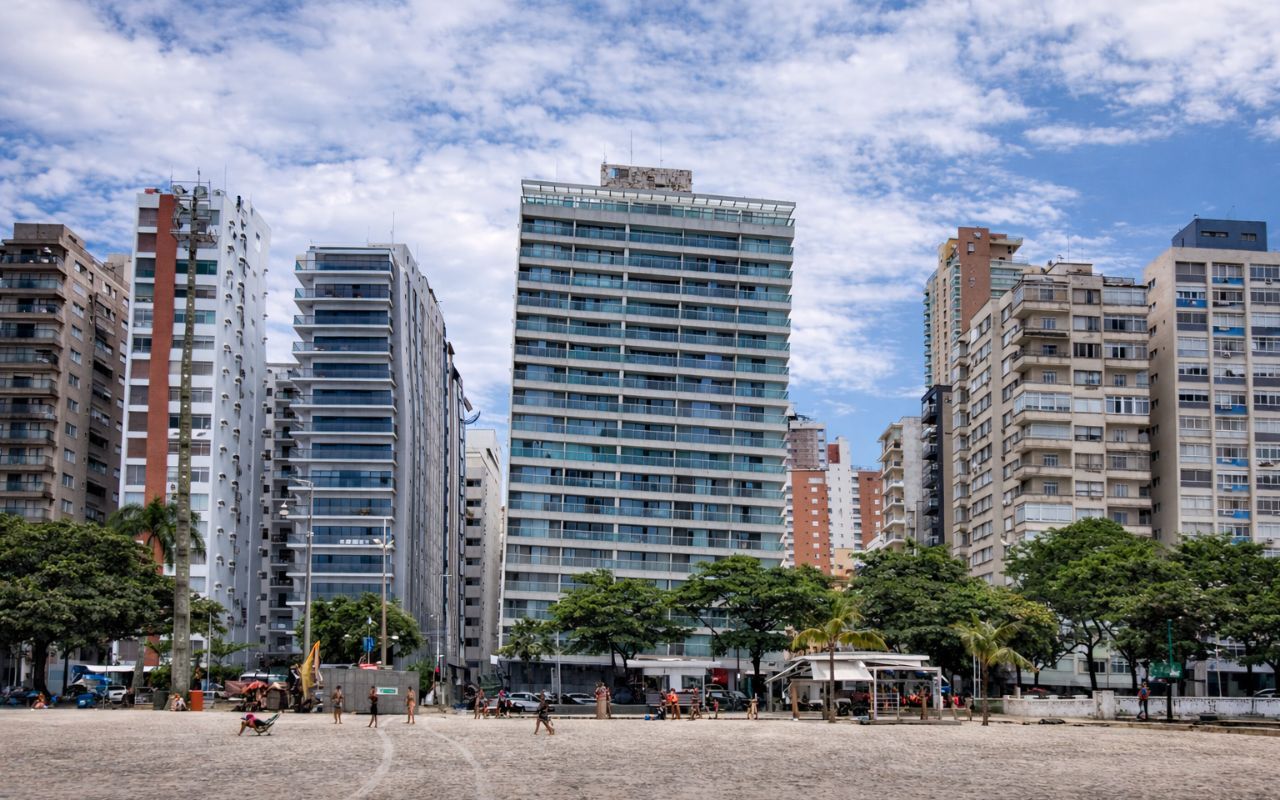
The Brazilian city has 319 crooked buildings built on sandy soil without proper deep foundations, houses the largest beach garden in the world, with over 5 km, and is still considered the birthplace of surfing — meet Santos, in São Paulo.
-
New Zealand builds a shimmering building that vibrates, featuring a 62-seat cinema, moving sculptures, and an environment where sound, light, and energy are felt in the body.

-
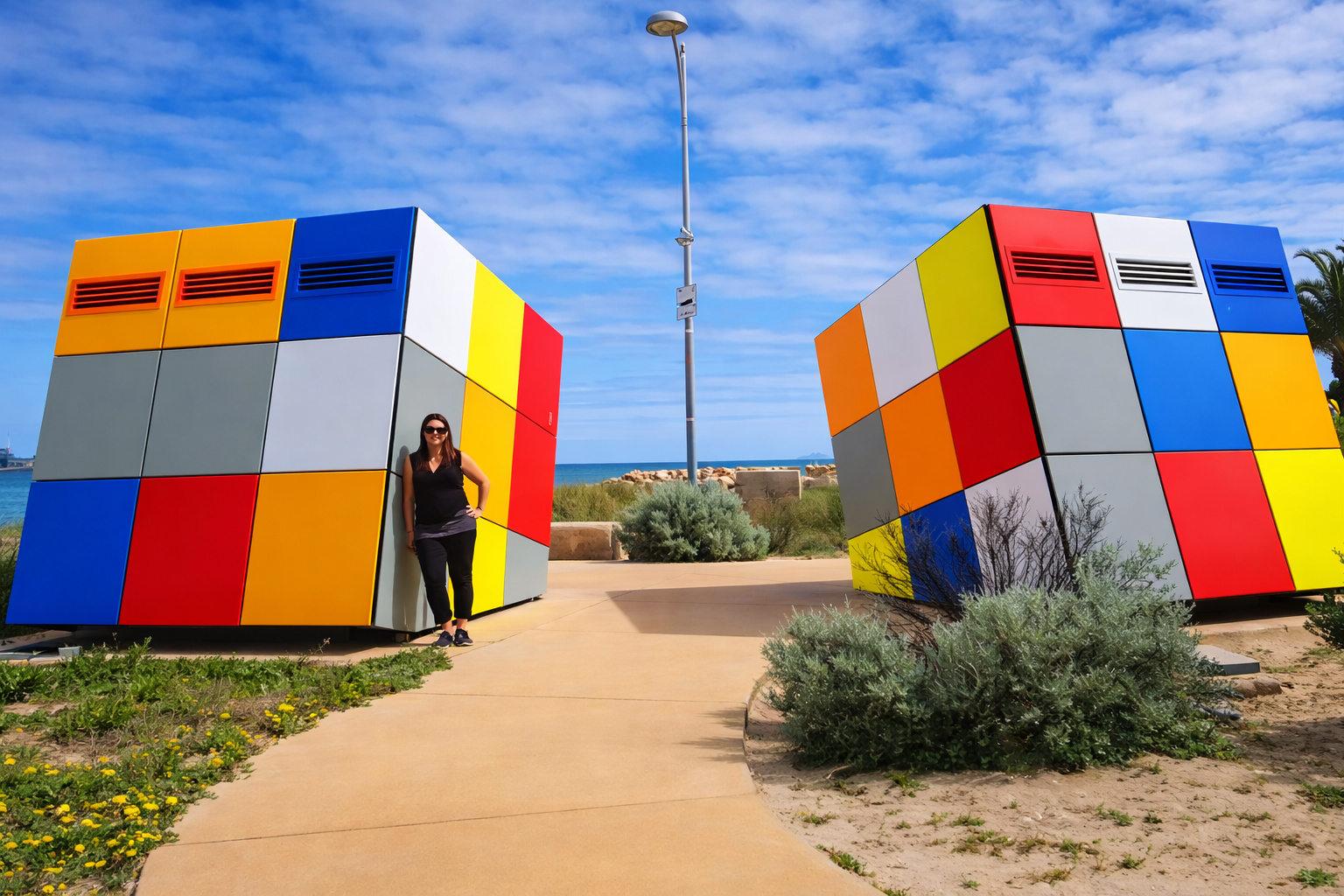
Two colored cubes of 2.5 m transform a public bathroom into a selfie spot in Western Australia, costing up to 75% less than traditional construction and helping to reduce vandalism in public spaces.

Still at Santos, at 19 years old, he acquired an Embraer Phenom 100, a light jet valued at around R$ 20 million, widely used by artists and entrepreneurs needing to cross Brazil quickly and with some level of economy.
For the reality of a young star from Vila Belmiro, it was the pinnacle.
With his move to Barcelona, contracts with major clubs, and global sponsorships, Neymar’s jet needed to keep up with the new level of demand.
The Phenom could no longer accommodate direct flights to Europe, requiring layovers that consumed time and logistics.
Then comes the second aircraft, a Cessna Citation Sovereign valued at around R$ 100 million, faster and more spacious but still limited for the standard of frequent transatlantic trips.
What Makes Neymar’s Jet Different from a Common Flight

The definitive leap occurs with the arrival of the Falcon 900LX, now Neymar’s main jet.
The aircraft was registered with a tail number that references the player’s initials and delivered exactly what was lacking in the previous models.
The Falcon 900LX offers range close to 8,800 km, enough to connect Paris to São Paulo nonstop without the need for technical stops.
With a cruising speed of about 930 km/h, Neymar’s jet can cross the Atlantic in about 10 hours, while a commercial flight can take 13 or 14 hours depending on the route and connections.
Another differentiator is the operational altitude.
Neymar’s jet can fly at around 15,500 meters, above much of the turbulence and the denser cloud layers, delivering a more stable and quieter experience for those in the cabin.
In the original design, the capacity is up to 12 passengers, but the chosen configuration is more exclusive, with the cabin adjusted to accommodate about six people with much more space per person.
Luxury at 15,000 Meters: What Is the Interior of Neymar’s Jet Like
It is inside the cabin that Neymar’s jet distances itself from any comparison with commercial aviation.
The interior was customized with an investment estimated at several million reais, just in finishing and adaptation.
The Italian leather seats recline up to 180 degrees, transforming into individual beds, with massage and heating functions.
Each seat on Neymar’s jet costs more than many brand-new cars sold in Brazil, reinforcing the project’s level.
At the rear, Neymar’s jet features a real king-size bed, allowing the player to sleep as if at home while crossing the ocean.
The bathroom completely defies the idea of “airplane bathroom”: spacious, covered with noble materials like marble and with a shower, allowing for in-flight bathing.
The cabin also integrates high-speed Wi-Fi, a premium sound system, LED internal lighting with customizable colors, and a kitchen equipped so that a flight chef can prepare complete meals at 15,000 meters above sea level.
From an experience standpoint, Neymar’s jet was designed to function as a high-standard flying apartment.
The Fixed Costs of Neymar’s Jet Even When It Doesn’t Take Off
While for the public the image of Neymar’s jet is synonymous with luxury, behind the scenes it is also synonymous with high fixed costs.
Even when parked, the aircraft generates a structure of expenses that keeps running month after month.
The crew of Neymar’s jet includes at least two pilots with international certification and thousands of flight hours, in addition to a dedicated flight attendant.
This team costs, combined, something in the range of R$ 80,000 to R$ 120,000 per month, regardless of the number of flights.
The hangar to safely store the aircraft adds something between R$ 30,000 and R$ 50,000 monthly, considering space, protection, and associated services.
The insurance for Neymar’s jet needs to cover an asset valued at around R$ 250 million. This means a monthly bill in the range of R$ 100,000 to R$ 150,000, just to ensure coverage in case of incidents.
Scheduled maintenance, with mandatory checks based on flight hours and calendar, adds around R$ 100,000 to R$ 250,000 per month, including component replacements, inspections, and expensive items like tires that can cost tens of thousands of reais each.
All together, Neymar’s jet costs something between R$ 360,000 and R$ 570,000 per month just to exist, even if it doesn’t leave the ground.
It’s a bill that is equivalent to thousands of ride-hailing trips or a significant social budget, which fuels debates about resource use in an unequal country.
How Much It Costs to Fly on Neymar’s Jet on a Transatlantic Leg
When Neymar’s jet actually takes off, the costs rise to even higher levels. The Falcon consumes about 1,300 liters of jet fuel per flight hour.
Considering an average price of around R$ 4 per liter, the consumption amounts to around R$ 5,200 per hour just in fuel.
On a leg of about 10 hours, like Paris–São Paulo, Neymar’s jet can consume something in the order of R$ 52,000 in fuel.
And this is just one part of the equation. There are also airport fees for landing at major terminals, which can reach tens of thousands of reais per operation, in addition to parking costs at airports where the aircraft overnight, taking up high-demand positions.
There are also fees related to air navigation and communications, which are charged according to the airspace used.
Each crossing of the Atlantic on Neymar’s jet is a major financial operation, even if proportional to the athlete’s income.
When Neymar’s Jet Stops Being Just an Expense and Becomes a Business
A point often little discussed is that Neymar’s jet does not need to remain idle when the player is not flying.
Like other owners of executive aviation, he can make the aircraft available for charters to third parties, usually high-net-worth entrepreneurs.
In this model, Neymar’s jet can be rented for amounts in the range of tens of thousands of reais per hour, depending on route, demand, and service packages.
On intercontinental legs, a chartered flight can easily exceed several hundred thousand reais, helping to offset part of the fixed costs that run every month.
Besides the Falcon 900LX, the player’s mobility package includes the Cessna Citation Sovereign and a helicopter, making up a fleet valued at around R$ 400 million in aircraft.
The monthly cost to maintain everything is around R$ 1 million, something that, for someone with an income in the range of tens of millions of reais per month from salaries and sponsorships, represents a small fraction of the total budget.
In practice, Neymar’s jet acts as a tool for work, image management, and, at times, a revenue-generating asset through occasional charters.
Carbon Footprint, Public Image, and the Symbolic Price of Luxury
Alongside engineering and finance, Neymar’s jet is also at the center of discussions about environmental impact and the responsibilities of public figures.
An emblematic episode was the use of the jet for a movement of about 150 km in France, a journey that could be made by car in a few hours and which, by plane, concentrated in minutes carbon emissions equivalent to months of commuting for an average person.
This type of situation fuels the debate about the environmental footprint of Neymar’s jet, especially in an era when emissions, sustainability, and public example have gained political and social weight.
On one side, there is the logic of time efficiency and safety that the jet offers; on the other, the perception of excess in a world pressured by climate crises and economic inequality.
The comparison made in the pilot’s report is revealing: the total monthly cost of the player’s air fleet is significant but represents something like 5% of his income, a proportion similar to that of an average-income worker spending a modest part of their salary on transportation.
This shifts the discussion from “can pay” to “does it make sense” in ethical, environmental, and symbolic terms.
Ultimately, Neymar’s jet synthesizes a dilemma of the superstar era: technology allows comfort and speed on an unprecedented scale, but also exposes the contrast between extreme luxury and the collective challenges of a country and a planet in crisis.
And you, if you had the athlete’s income, would you use Neymar’s jet with this level of luxury and cost or prefer to invest that money in another direction?







Quem tem e deve à sociedade a questão da desigualdade é o poder público que é pago pra isso, ele está usufruindo de algo que ele pessoalmente conquistou em mérito que Deus o deu. Parabéns Neymar, vá em frente .
É tudo proporcional, o dinheiro precisa ser investido… Simples assim….
Eu investiria em muitos imóveis e mais ajuda humanitária as pessoas que trabalham, maís tem família grandes sem condições de sustentar,,,