





 Portuguese
  English
  Spanish
  5 min of reading
  4 comments


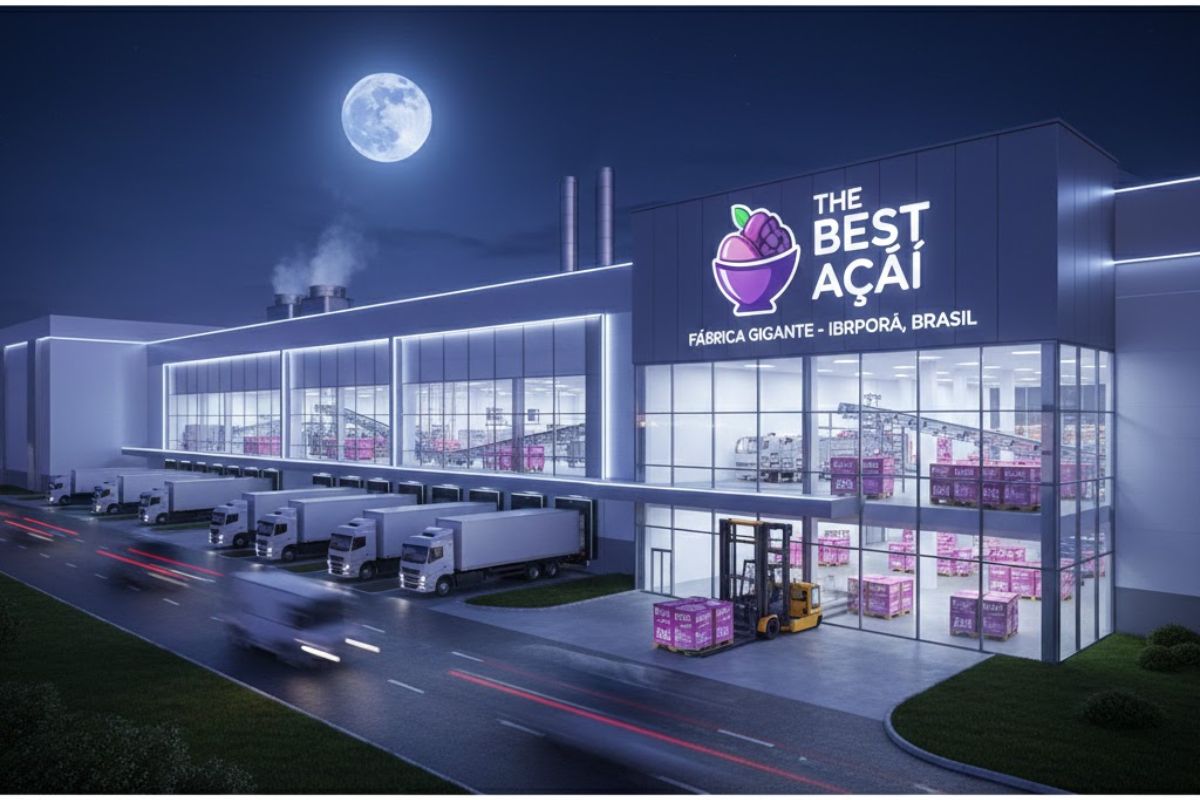


In Ibiporã, Located in the Northern Region of the State of Paraná (PR), Giant Factory of The Best Açaí Operates 24 Hours, Transforms Former Thicket Into Industrial Pole with 7 Thousand m² Built, Produces Up to 200 Thousand Boxes Monthly and Supplies a Thousand Stores with Its Own Network of Electric Trucks and Cold Rooms Spread Throughout the Brazilian Territory in Rapid Growth.
At the end of 2019, The Best Açaí was still operating in a small factory of about 300 m² with a capacity for only 30 stores. A few years later, the business built a giant factory in Ibiporã, resulting from an investment that is already approaching R$ 30 million, located on land that increased from 8 thousand to approximately 45 thousand m² after winning the auction.
Since then, the industrial structure has grown at an accelerated pace, with successive works, uninterrupted shifts, and a clear strategy: to concentrate in Ibiporã the production of açaí and ice creams that now serve around a thousand units franchised throughout the country, in an operation designed to reach up to 200 thousand boxes per month.
From Rented Shed to Giant Factory of R$ 30 Million

The first stage of the brand’s industrial history began in a small rented shed, about 300 m², designed to support up to 30 stores.
-
How 5,000 Indian dabbawalas manage to deliver around 200,000 lunchboxes a day in Mumbai for over 130 years using bicycles, crowded trains, and a manual system that continues to operate with impressive accuracy.
-
While restoring a historic mansion from 1910, a brick structure with an old turbine that generated energy from the Rio do Testo emerged, along with a hidden door and a rare floor concealed under layers of wax.
-
Italian researchers have detected what appears to be a second Sphinx buried under the sands of Egypt, and satellite scans reveal a gigantic underground megastructure hidden beneath the Giza Plateau for over 3,000 years.

-
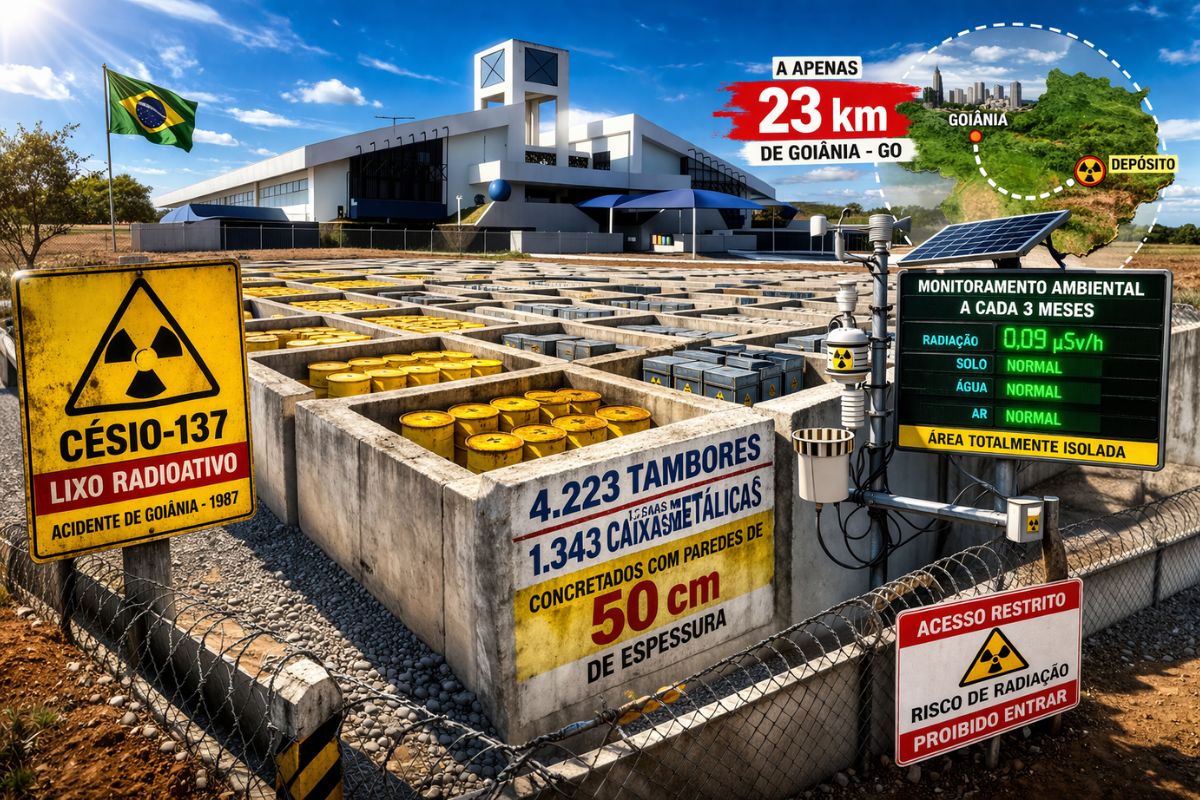
There are 4,223 drums and 1,343 metal boxes concreted with 50-centimeter walls that store the radioactive waste from Cesium-137 in the worst radiological accident in Brazil, just 23 kilometers from Goiânia, with environmental monitoring every three months.

Within a few months, however, demand exploded: by June of the following year, the network had already exceeded the planned limit, forcing the decision to seek a larger facility.
The opportunity came with an auction for land in Ibiporã. The company won the process, acquired an area of 8 thousand m², and started transforming a space that was just brush into an industrial complex.
Today, this land totals around 45 thousand m², with about 7 thousand m² already built, including production sectors, cold rooms, maneuvering yards, and administrative areas.
24-Hour Production to Supply a Thousand Stores

To cope with the network’s growth, the giant factory operates 24 hours a day. The routine includes traditional lines and a new plant, still in the ramp-up phase, capable of doing with a few people what previously required entire teams.
In one of the recent records, about 6,300 boxes were produced in a single day, equivalent to more than 60 tons of product.
With the expansion of the new area, the goal is to work with something close to 45 thousand to 50 thousand boxes per week, putting the factory at the level of 200 thousand boxes per month between açaí and ice creams.
Part of this leap came with the replacement of old machines with more powerful versions, such as the continuous producer that allows for the manufacturing of up to three flavors simultaneously in the same box, in a Neapolitan style.
Own Engineering, Custom Machines, and Internal Maintenance
One of the pillars of The Best Açaí’s industrial model is technical autonomy. The company built its own engineering team that designs projects for stores, industry constructions, and, mainly, the automation of the plant.
In several cases, solutions do not exist ready in the market, forcing the team to create specific equipment and adaptations for the process.
Along the same lines, the factory maintains a robust maintenance area, prepared to act at any time. Since the plant operates 24 hours, stopping production to wait for a part or assistance from the manufacturer is no longer an option.
Today, a good portion of the adjustments and repairs is resolved internally, which reduces downtimes, increases the reliability of the lines, and reinforces the independence of the operation.
Cold Rooms, Supply Chains, and Logistics with Electric Trucks
The cold structure is another highlight of the giant factory. The main cold room has about 3,500 m² and can store around 70 thousand boxes, between açaí and ice cream, before the load follows to regional hubs and to the distribution center dedicated to raw materials.
These stocks are sized for about ten days, in a quick turnover that keeps pace with the weekly delivery schedule.
On the other end, the supply chain is organized in layers. A separate distribution center gathers items like peanuts, chocolate, and powdered milk, while internal areas function as immediate supply lungs, prepared for each flavor that comes into line.
In the outgoing logistics, the company operates its own trucks, including vehicles with eutectic boxes and electric load, where frozen plates maintain stable temperatures throughout the routes.
Flavors, Quality, and Continuous Expansion of the Industrial Plant
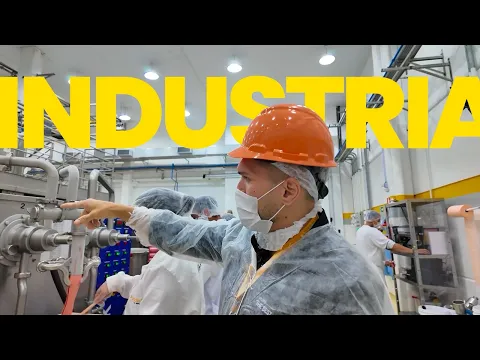

Inside the factory, production combines automation and artisanal steps. In some lines, the brownie filling is still done manually, while new recipes emerge from a joint work between the R&D team, the quality sector, and the company’s management. The owners continue to personally approve the flavors before they reach the stores.
The fruit also receives special attention. Boxes freshly out of the line are considered the “cream of the cream” of açaí, when the sweetness and flavor balance are at their peak, before freezing and transportation to the stores.
At the same time, the external area of the plant continues to expand, with new foundations, metal structures, and the preparation of a future additional cold room and new production modules.
In parallel with the Ibiporã industry, there is also a factory dedicated to fillings and another distribution center, which expand the constructed area and complete the logistical ecosystem. Together, these structures allow The Best Açaí to maintain a network of approximately a thousand stores supplied from a single production base.
In just eight years, the company transformed an empty lot into a giant factory that concentrates engineering, production, logistics, quality, and product development in one address.
And you, would you imagine that a network of a thousand stores could be supplied by a single giant factory like the one in Ibiporã?








E o Pará fornece a matéria prima, e o Paraná lucra e agrega valor.
Ó João Roberto Campos Gonçalves, o puro que você fala não é o congelado que a The Best Açaí vende. Qualquer fruta, extremamente congelada, não tem gosto nenhum. Encomende de um paraense um açaí puro, com ou sem açúcar, e você vai sentir a real diferença. Aí, sim, comente o que você sabe. Esse açaí é apenas uma variação do açaí original. Porém, se o mundo aprovou, melhor para a economia paraense e brasileira.
Açai,uma fruta ruim,com gosto de ****.
É tão ruim e sem sabor próprio que quase todo mundo adiciona leite condensado, leite em pó,coberturas dos mais variados sabores para consumir.
Quando fui experimentar essa **** sem artifícios para sentir o seu sabor,a balconista ficou espantada.
Quase ninguém consome isso puro.
Vende por causa do marketing e da moda.
Mas é muito ruim
Aprendi tomar açaí em 1968 quando fui trabalhar no Pará. Tomo o mesmo adoçado e mesmo nunca mais ter voltado ao Pará dede 1980 o açaí é o meu alimento diário.