





 Portuguese
  English
  Spanish
  5 min of reading
  2 comments


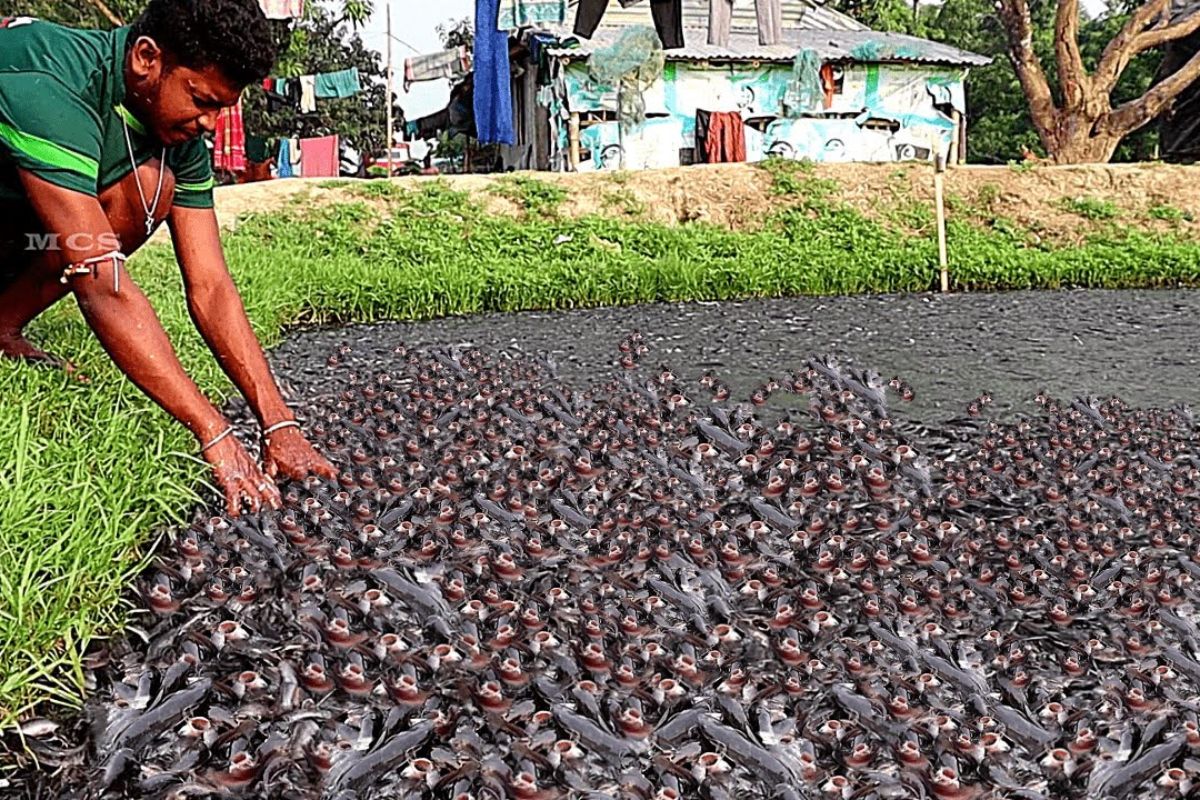


Focusing on Precision Nutrition, the Tested Hybrid Catfish Farm Shows That Pelletized Feed with 30% Protein Converts 900g of Feed into 450g of Fish, Reduces Competition, Protects Fry in Drought, and Stabilizes Small Overcrowded Lakes, Ensuring Growth, Meat Quality, and Balance of the System
From the first management, it becomes clear that it’s not just about throwing feed into the water. In the P-2 hybrid catfish farm, the performance of the stock is directly linked to the choice of a pelletized feed with 30% protein, designed to work in a small, crowded lake under constant pressure for food. When the producer makes a mistake in nutrition, it’s not just growth that declines; the entire lake goes out of balance.
With the right strategy, the scenario shifts. The supplementation with commercial pelletized feed doubled the growth rate of the fish, improved meat quality, increased the survival of fry during the critical spawning period, and kept the hybrid catfish farm productive even in drought when the natural food supply plummets, and the competition for every gram of feed becomes much more aggressive.
30% Protein Pelletized Feed Changes Farm Performance

In a small, overcrowded pond or tank under climate pressure, the food supply is the key factor for success.
-
How 5,000 Indian dabbawalas manage to deliver around 200,000 lunchboxes a day in Mumbai for over 130 years using bicycles, crowded trains, and a manual system that continues to operate with impressive accuracy.
-
While restoring a historic mansion from 1910, a brick structure with an old turbine that generated energy from the Rio do Testo emerged, along with a hidden door and a rare floor concealed under layers of wax.
-
Italian researchers have detected what appears to be a second Sphinx buried under the sands of Egypt, and satellite scans reveal a gigantic underground megastructure hidden beneath the Giza Plateau for over 3,000 years.

-
There are 4,223 drums and 1,343 metal boxes concreted with 50-centimeter walls that store the radioactive waste from Cesium-137 in the worst radiological accident in Brazil, just 23 kilometers from Goiânia, with environmental monitoring every three months.


Without supplementation, the growth rates of the fish drop below normal and the system balance begins to break down.
In the hybrid catfish farm, the choice was a nutritionally complete diet with 30% protein, using pelletized feed as the base, combined with alternative ingredients like cottonseed meal and DDGS corn gluten.
The goal is simple yet technical: to deliver enough energy and amino acids for rapid growth, with minimal waste within the farm.
The pelletized feed facilitates management because:
It maintains the appropriate particle size for different stages of the fish
Sinks or stays suspended in a predictable manner, reducing loss
Allows more precise control of the amount offered, especially in intensive systems
In a commercial hybrid catfish farm, this translates to fish growing faster, with less feed left at the bottom and less organic matter decomposing and disrupting the water.
Feed Conversion, Growth, and Meat Quality

The metric that stands out the most is conversion.
In the observed scenario, 900 grams of pelletized feed generates 450 grams of fish, a 2 to 1 ratio that provides economic clarity for the producer: each bag of feed has a direct impact on the final selling weight.
In practice, this means:
Better utilization of each kilogram of feed placed in the hybrid catfish farm
More uniform growth of the batch, with fewer “backward fish” in the middle of the harvest
More predictable planning of slaughter and turnover of the farm
In addition to speed, there is a noticeable effect on the carcass.
Supplemental feeding significantly improves meat quality, reducing variability between individuals and delivering a more standardized product for consumption.
In commercial operations, this is a differentiator when closing recurring sales with the same buyer.
Less Competition, More Live Fry, and Security in Drought
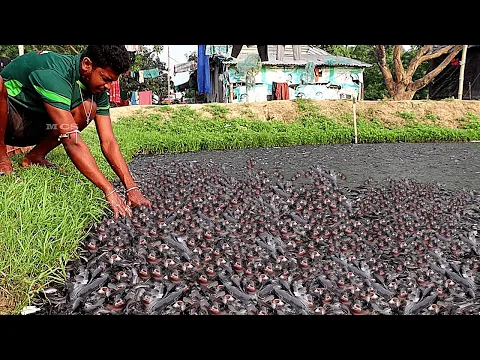

In small, crowded farms, without sufficient feed, the competition for food explodes.
Larger fish dominate the feeding area, smaller ones are pushed to the edge of the pond, and the result is:
- Uneven growth
- Chronic stress
- Higher chance of disease and mortality
With the right protein level pelletized feed, competition is reduced and the availability of food increases for the entire stock, including for sport fish that share the environment.
This relieves pressure on the natural food chain, keeping foragers and smaller organisms within a more stable range.
The most sensitive effect appears in the most delicate phase of the cycle: the fry during the critical spawning period.
With adequate supplemental feeding, survival rates rise, which is crucial to maintain the population in the hybrid catfish farm without needing costly and frequent restocking.
In drought, the impact is even more evident.
When the water volume recedes and the fish density increases, the farm enters a sort of “stress test”.
At that time, the properly formulated pelletized feed acts almost like a production insurance, preventing the lack of natural food from turning into mass mortality.
Diet Composition and Legal Requirements for Catfish Farming
The formulation used as a reference shows that a complete diet with 30% protein, based on pelletized feed, cottonseed meal, and DDGS corn gluten, is sufficient to sustain the growth and feeding efficiency of hybrid catfish in commercial farms.
This combination of ingredients:
provides protein in quantities and quality compatible with the metabolism of hybrid catfish
offers energy to support rapid weight gain
allows the producer to work with alternative raw materials without sacrificing performance
At the same time, the management of the hybrid catfish farm is not limited to nutrition.
Some communities require specific licenses for breeding catfish in captivity, especially when there is potential impact on natural water bodies, neighbors, or drainage systems.
Before setting up the project, the technical recommendation is clear: consult the local licensing agency and fit the farm within the applicable regulations.
What the Case of Farm P-2 Teaches for Small Overcrowded Lakes
The P-2 hybrid catfish farm leaves some direct lessons for those working on a small scale but with high fish density:
Supplemental feed is not a luxury, it’s the structure of the system. Without adequate feed, the lake loses balance, even if the water quality seems acceptable at first.
Pelletized feed with 30% protein and good feed conversion is a management tool, not just a weight gain factor. It protects the fry stock, reduces mortality in drought, and stabilizes production.
Small, overcrowded lakes can be commercial, as long as the feeding management is precisely thought out, knowing how much feed goes in, how much comes out in fish, and how that affects the environment.
For the producer, the message is clear: the hybrid catfish farm only becomes truly competitive when the feed ceases to be a generic cost and becomes a technical decision.
From there, each bag feeds a project, not just a lake.
For you, who has or intends to set up a hybrid catfish farm in a small and well-populated lake, what seems to be the biggest challenge today: getting the pelletized feed right, controlling fish density, or dealing with drought and environmental requirements?







Que horror ver seres tratados assim, muito triste.
Nunca vi uma matéria repetir as mesmas informações tantas vezes como essa, e ao mesmo tempo ser tão deficiente de informações sobre um assunto.