





 Portuguese
  English
  Spanish
  6 min of reading
  1 comment


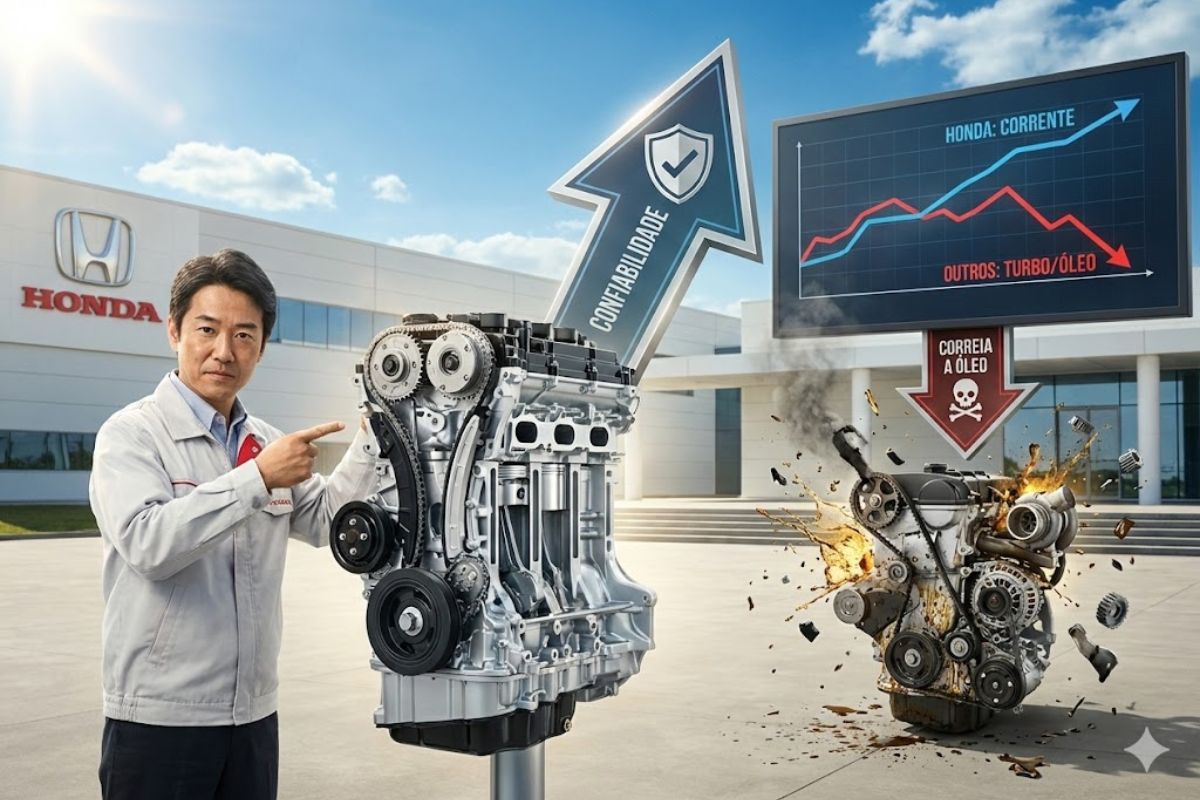


In Interview At The São Paulo Auto Show, Honda Executive For South America Says The Brand Will Never Have Oil-Bathed Timing Belts, Defends 1.5 Naturally Aspirated Engine With Chain, Praises CVT And Projects Hybrids As Next Step For Brazil And Argentina In The Coming Years Of The Market
Honda took advantage of the São Paulo Auto Show to send a direct message to the market about the future of its mechanics in South America. In a conversation with Argentina Autoblog, the commercial executive Renan Barba Dos Santos stated that the brand would never have engines with oil-bathed timing belts, advocating the combination of a 1.5 naturally aspirated engine with a metal timing chain as the basis of the current strategy.
This statement came in the wake of the presentation of the new WR-V and an open defense of the 1.5 i-VTEC engine used by City, WR-V and HR-V. According to the executive, Honda designed this setup to meet the upcoming rounds of emission standards without needing to increase displacement or make major structural changes, while rivals with smaller engines and high turbos, in the brand’s view, will need to reconsider their designs.
The Tough Phrase That Honda Chose To Make A Point
Renan Barba Dos Santos left no room for doubt when commenting on the adoption of oil-bathed timing belts in low-displacement turbo engines, a technology that several competitors use to reduce friction and noise.
-
OMODA & JAECOO grows in Europe in 2026 with an integrated strategy of sales, innovation, local production, and technological advancement in the United Kingdom, Italy, and Spain.
-
OMODA & JAECOO expands after-sales service in Brazil with competitive maintenance, a 7-year warranty, and high availability of parts for technological SUVs.
-
OMODA & JAECOO appoints Alessandra Souza as executive marketing director in Brazil and accelerates brand expansion with a focus on innovation, networking, and hybrid portfolio.

-
Jaecoo 7 with super hybrid SHS system exceeds 1,200 km of combined range with a 1.5 turbo engine, high-density battery, and intelligent energy management.

He was categorical in saying that “Honda would never have engines with oil-bathed timing belts”, linking the refusal to a question of long-term reliability.
According to the executive, many engines with oil-bathed timing belts start showing damage between 50,000 and 60,000 kilometers, when the lubricant has already degraded the belt to the point of shedding debris.
These fragments go into the lubrication circuit, can obstruct internal passages and, at the limit, seriously compromise the engine.
In this scenario, Honda prefers to keep its distance from this type of solution, even if it brings short-term laboratory efficiency gains.
Why Honda Rejects Small Turbos And Aggressive Downsizing
While many automakers in the region bet on 1.0 and 1.2 turbo engines, often with three cylinders, Honda insists on rowing in the opposite direction.
For the executive, small turbos with high pressures create a “feeling” of performance, but this aggressive response comes at a cost in durability and, particularly, in its ability to meet the emission standards that are yet to come.
Honda’s assessment is that many of these smaller engines will need to increase their displacement in the future to stay within environmental limits, moving to ranges like 1.2 or even 1.5 liters.
Instead of taking this path in two stages, the brand has determined that the 1.5 naturally aspirated engine is already designed for the next requirements, with room for calibration adjustments without relying on high-pressure turbos.
The Cow Of The Past: The 1.5 Naturally Aspirated Engine Is Also A Response To Recent Errors
The defense of the 1.5 naturally aspirated engine is not just theoretical.
The executive recalled that, in 2021, Honda itself was forced to end the production of Fit, Civic, City, and HR-V of the previous generation in Brazil because these projects had not been designed to absorb future regulatory evolutions.
It was a painful correction of course, which prematurely ended traditional models.
According to Barba Dos Santos, the new family of engines, centered on the 1.5 i-VTEC naturally aspirated engine, was conceived precisely to prevent the story from repeating itself.
Honda wants engines ready to last more than one regulatory cycle, reducing the risk of having to withdraw products from the market due to a lack of adherence to environmental rules.
In this logic, the choice of a larger 1.5 engine, without a turbo and with a timing chain, is directly linked to the brand’s recent negative experience.
Timing Chains, Taxis, And The Bet On “Useful Life”
Instead of an oil-bathed timing belt, Honda reinforces the option for a metal timing chain.
Barba Dos Santos emphasizes that the timing chain used in Honda’s current engines does not require specific maintenance, beyond the oil changes and revisions planned in the manual.
There is no dedicated lubrication, no need for periodic tensioning, nor scheduled replacement based on mileage.
To illustrate this robustness, the executive mentioned cases of taxis with over 500,000 kilometers driven using the same timing chain, without the distribution system requiring intervention.
In these extreme scenarios of heavy urban use, the brand understands that the timing chain confirms its proposal of “full vehicle life,” reinforcing the narrative of reliability that Honda wants to associate with the 1.5 naturally aspirated engine.
CVT Remains As Standard Transmission And Target Of Refinement
The interview also served to reaffirm Honda’s commitment to CVT automatic transmissions.
According to the executive, the CVT is the gearbox that best integrates with the current mechanical setup of the brand, especially in urban and family cars, where smoothness and efficiency weigh more than sporty responses.
Barba Dos Santos criticized the lag in response from traditional torque converter transmissions and pointed out the complexity of dual-clutch gearboxes, which require more care in use and maintenance.
Recently, Honda’s latest CVTs now simulate seven gears in kickdown, avoiding the fixed-rev feeling during hard accelerations, and incorporated an early downshift system to increase engine braking on descents and during braking, a feature that enhances control and comfort in real-world use.
Honda’s 1.5 Engine Leaves The Street And Arrives At Sea
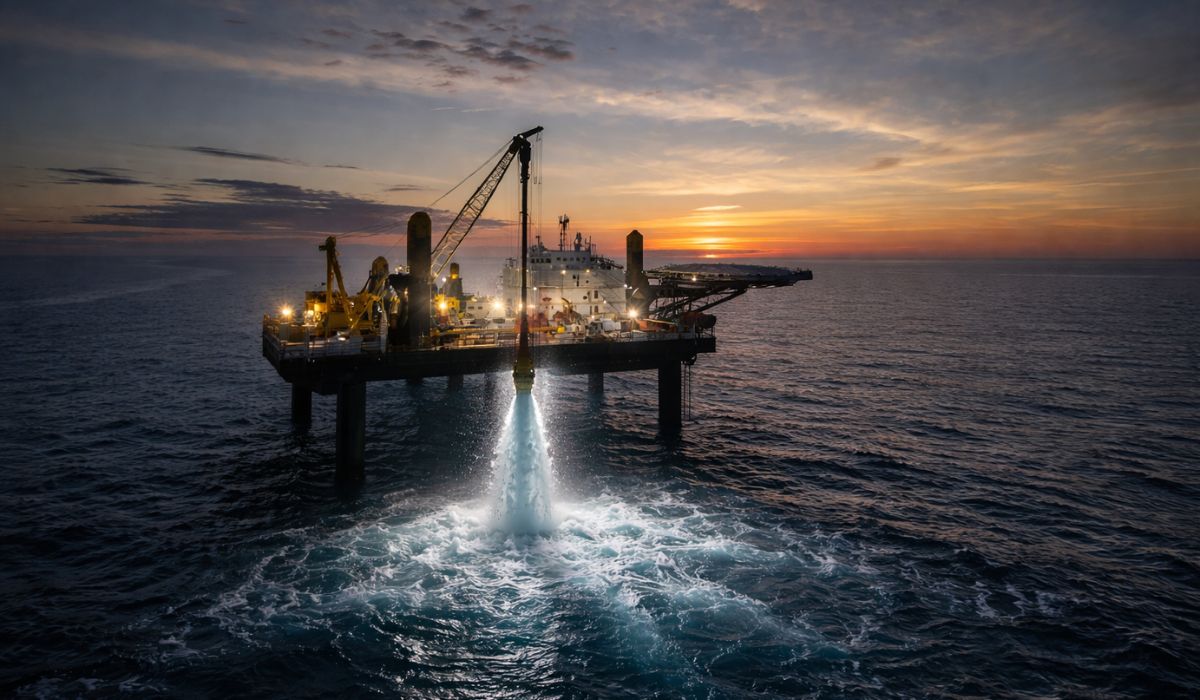
Honda’s confidence in the 1.5 i-VTEC goes beyond passenger cars. Renan Barba Dos Santos confirmed that this same block served as the basis for a marine engine from Honda Marine, the brand’s nautical division.
The choice is based on a combination of lightness, reliability, and efficiency, attributes that are even more critical in continuous-use applications and harsh environments, such as vessels.
By replicating the 1.5 in another segment, Honda seeks to show that the mechanical architecture it advocates for City, WR-V, and HR-V has room to go beyond urban and road traffic.
It is a way to reinforce the narrative that the engine was designed to endure, and not just to meet marketing numbers, both in terms of consumption and emissions.
Hybrids As “Logical Evolution” For Brazil And Argentina
Finally, the executive made it clear that the 1.5 naturally aspirated engine is not an end in itself, but a step toward the next phase of Honda’s strategy in the region.
In markets like Brazil and Argentina, where charging infrastructure still limits the adoption of pure electric vehicles, the brand sees hybrids as a “logical evolution” for the coming years.
In practice, this means that the 1.5 should remain relevant for a long time in Honda’s hybrid configurations, combining an efficient combustion engine with supportive electrical systems.
The message sent at the São Paulo Auto Show is that, before rushing into extreme downsizing and small turbos, Honda prefers to consolidate a reliable mechanical base and prepare this platform for gradual electrification, keeping the focus on durability and total cost of ownership.
In a scenario where much of the industry embraces small turbos, oil-bathed timing belts, and aggressive downsizing, do you agree with Honda’s choice to prioritize the 1.5 naturally aspirated engine with a chain and CVT in search of reliability, or do you think the brand risks falling behind in performance and innovation?







Certíssimo, a Honda só vai ganhar mais mercado com este motor 1.5 com corrente de comando,gosto muito da GM mas este motor bomba que criaram não tem como… saudades dos família 1,2,econoflex e ecotec.