





 Portuguese
  English
  Spanish
  5 min of reading
  0 comments


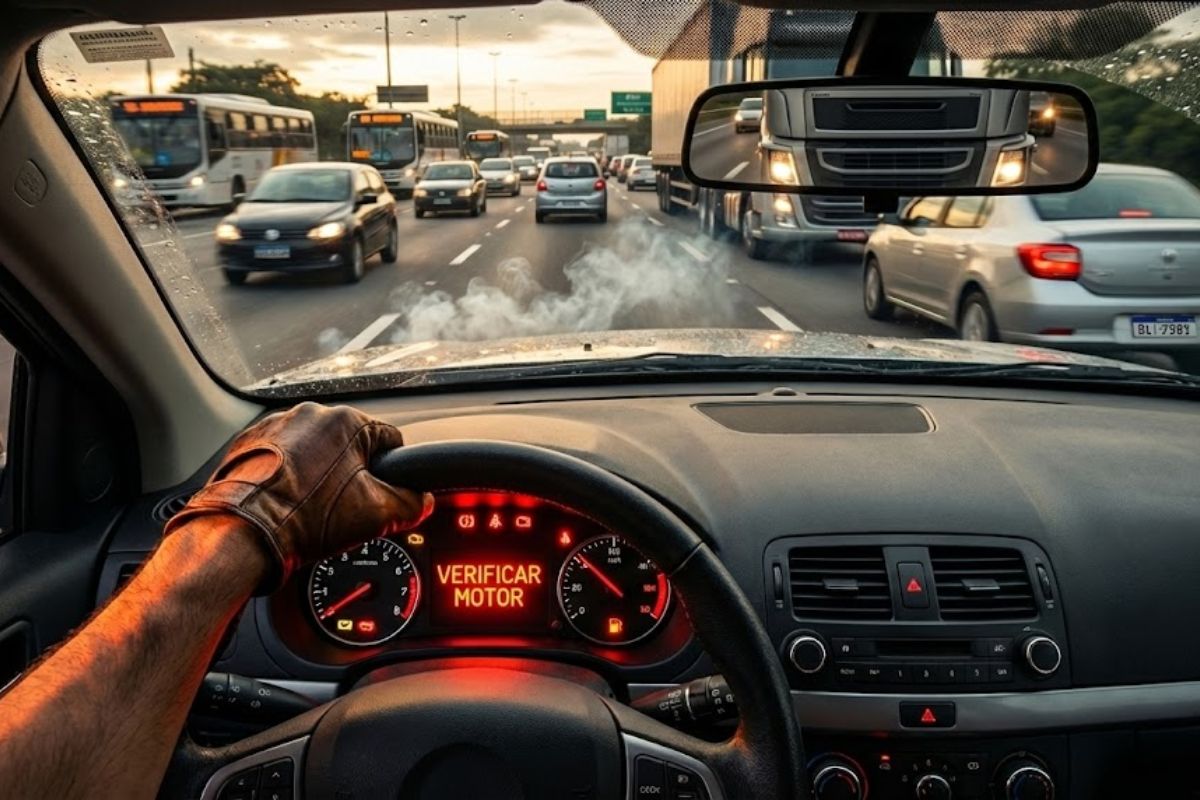
When the Car Starts Consuming More Fuel, The Dashboard Light Turns On, Releases A Strong Smell of Gasoline, And Loses Power on Hills, These Signs Indicate That Something Is Wrong And That The Engine May Simply Stop If Nothing Is Checked in Time, Putting Safety, Family, And The Wallet At Real Risk
Noticing that the car is consuming more fuel than normal is annoying at the gas station and alarming on the road. For many people, this increase seems like something casual, the fault of traffic or the price at the pump, but in practice, it’s the vehicle warning that something is wrong under the hood.
Ignoring these alerts is asking for trouble. Your car doesn’t consume more for no reason, it doesn’t turn on the dashboard light for no reason, and it doesn’t lose power overnight. If you keep driving like this, the risk of being stranded on the shoulder, at midnight or while traveling with family, increases with every kilometer driven.
How To Notice That The Car Is Consuming Much More Fuel
The first step is to admit that the car has changed its behavior.
-
While restoring a historic mansion from 1910, a brick structure with an old turbine that generated energy from the Rio do Testo emerged, along with a hidden door and a rare floor concealed under layers of wax.

-
Italian researchers have detected what appears to be a second Sphinx buried under the sands of Egypt, and satellite scans reveal a gigantic underground megastructure hidden beneath the Giza Plateau for over 3,000 years.

-
There are 4,223 drums and 1,343 metal boxes concreted with 50-centimeter walls that store the radioactive waste from Cesium-137 in the worst radiological accident in Brazil, just 23 kilometers from Goiânia, with environmental monitoring every three months.

-
Giant Roman treasure found at the bottom of Lake Neuchâtel in Switzerland reveals an advanced trade system, circulation of goods, and armed escort in the Roman Empire about two thousand years ago.


If previously a tank lasted the whole week and now you need to refuel more often on the same routes, something has gone out of the ordinary.
When the gas station becomes too frequent in your routine, it’s a sign that consumption has increased and your wallet is taking a hit.
In addition to the higher cost, the onboard computer helps confirm the suspicion.
If the fuel efficiency in kilometers per liter has dropped compared to what the manual indicates or what you usually observed, the car is sending a clear message.
Even without a computer, you can feel the difference by the frequency of refueling and the increasingly lower range.
Signs On The Dashboard, The Smell, And The Reaction Of The Car
The very behavior of the car reinforces that high consumption is not normal.
Difficulties in gaining speed, loss of power on hills, and slower responses when accelerating indicate that the fuel burn is not efficient.
A car that used to drive smoothly and now feels heavy deserves immediate attention.
Other signs are visible and even sensed by the nose.
Dark smoke from the exhaust indicates excess fuel in the mixture and a problem with combustion.
The strong smell of gasoline around the car, especially after starting the engine or after refueling, may indicate a leak or a flaw in the injection system, something that affects both safety and consumption.
On the dashboard, the warning light, like the famous “check engine,” does not appear for no reason.
If your car has the light on and you keep driving as if nothing is happening, you are pushing a problem that will cost you more later.
This is the phase where you can still correct flaws before they turn into complete failures.
What May Be Causing The Car To Consume More
Several components directly influence how the car burns fuel.
A dirty air filter, for example, forces the engine to work with less oxygen than it needs, disrupting the ideal mixture.
The result is higher consumption and worse performance, all at once.
Underinflated tires also weigh on your wallet.
With more friction on the ground, the engine needs more effort to move the car, especially on urban routes.
Clogged fuel filters, worn spark plugs, and defective sensors, especially those responsible for reading oxygen, complete the list of villains.
When the system does not measure correctly what goes in and what comes out, the car starts to consume too much and go less.
Even excess weight influences.
Driving with the trunk full of unnecessary luggage, tools you never use, or forgotten objects increases the load and requires more force from the engine.
Putting it all together, the car ends up working all the time outside the ideal range, consuming fuel that does not translate into real performance.
How To Care For The Car To Reduce Consumption In Everyday Life
The best defense is preventive maintenance.
Following the oil change and filter schedule recommended by the manufacturer prevents the car from reaching the point of showing extreme signs, such as dark smoke and strong smells of gasoline.
Keeping the basics in order is always cheaper than fixing a complete breakdown on the road.
Regularly inflated tires make a direct difference in consumption and safety.
Having spark plugs, cables, filters, and sensors checked at the right intervals ensures that the engine receives air and fuel in the right measure.
If the mechanic identifies premature wear or excessive dirt, it’s a warning that your car may be used in harsher conditions than you think.
Driving Habits That Help The Car Consume Less
It’s not just the workshop that solves the problem. The driver also plays a part in the cost.
Harsh accelerations, unnecessary braking, and using the wrong gears cause the car to consume fuel unnecessarily.
Instead, anticipating situations, maintaining a constant speed, and avoiding “heavy foot” at launches reduce consumption without making the trip longer.
Driving with the tank almost on empty can also harm components, such as the fuel pump, which depends on the liquid itself to work effectively.
A car that always runs on reserve is at a greater risk of problems and may start consuming more before showing serious defects.
Using the air conditioning in moderation, especially in the city, completes the daily care package.
When It Is Time To Stop The Car And Seek Help
If the car shows a combination of symptoms, such as high consumption, warning light on the dashboard, strong smell of gasoline, and clear loss of power, the scenario has moved from “suspicion” to “urgency.”
At this stage, continuing to drive only increases the chance of breakdown and damage to expensive components.
The ideal is to choose a safe time, avoid long trips, and take the vehicle to a trusted mechanic for a complete diagnosis.
The sooner the car is examined, the greater the chance of resolving with simple adjustments and common wear parts.
Waiting for the car to die on the shoulder, besides being dangerous, usually turns a cheap problem into a big headache.
In the end, the message is simple: the car is always communicating with you, whether through the dashboard, the smell, the behavior, or the price at the pump.
Paying attention to these signs is what separates a proactive driver from someone who discovers the flaw only when the vehicle shuts down in the worst possible place.
If your car started to consume more, turn on the dashboard light, and lose power on hills today, would you head to the mechanic immediately or risk a few more days driving like that?









Seja o primeiro a reagir!