





 Portuguese
  English
  Spanish
  4 min of reading
  0 comments


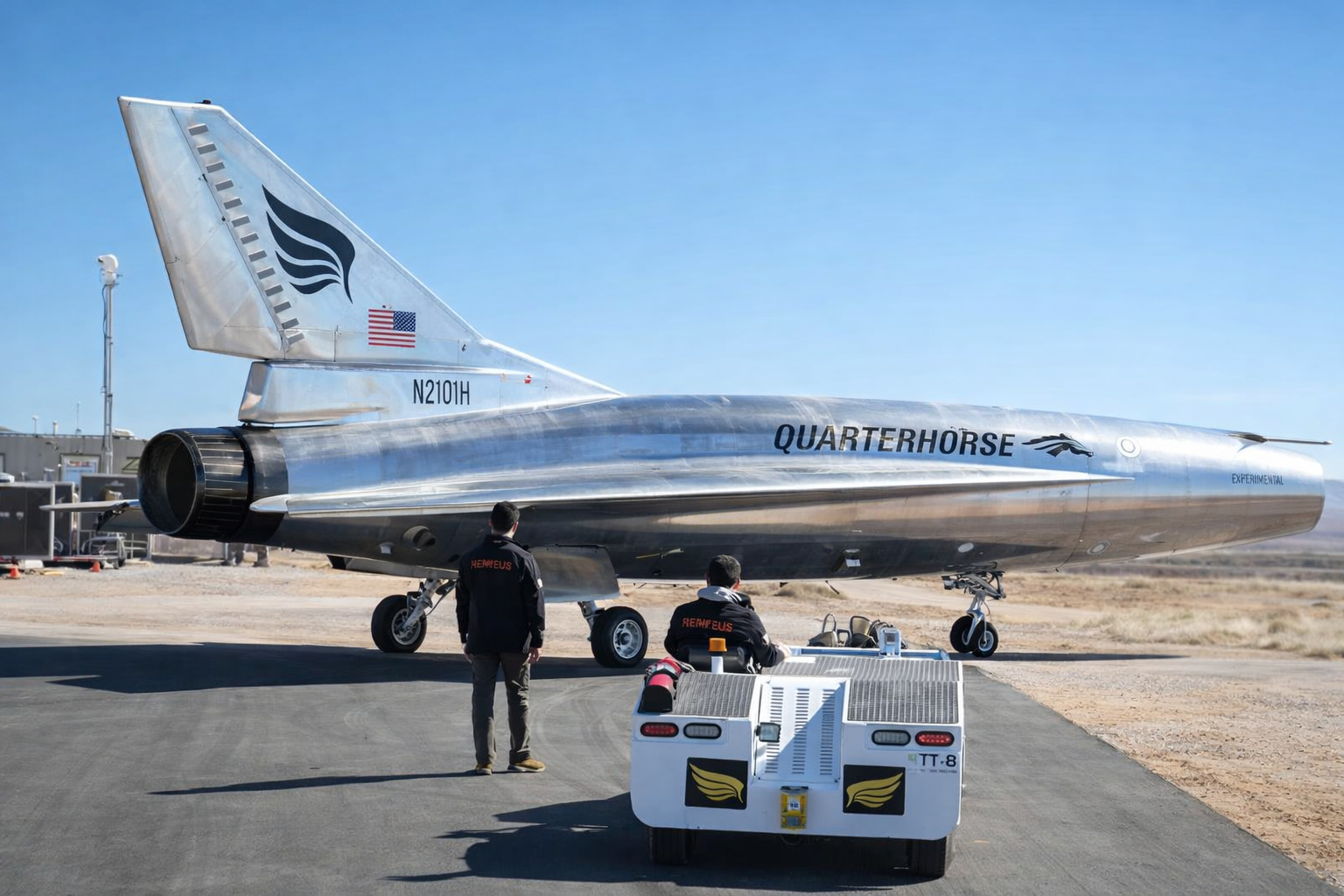
Experimental Project Marks New Chapter in the Race for High-Speed Aircraft and Demonstrates Rapid Advancement in the Development of Unmanned Aerial Systems Capable of Achieving Supersonic Speeds
The technological race for speed in the aerial domain has just gained a new chapter. The American company Hermeus, specializing in defense aviation and supported by venture capital, announced this week that it successfully completed the first flight of the new Quarterhorse Mk 2.1, an unmanned aircraft designed to achieve supersonic speeds. This achievement marks the second first flight of a company equipment in less than a year, highlighting the accelerated development pace adopted by the company.
Furthermore, the inaugural flight launches a dedicated flight test campaign to validate high-speed technologies, a crucial step for the aircraft to reach supersonic regime in the following phases of the program. With this, Hermeus aims to demonstrate that it is possible to develop advanced aircraft in much shorter cycles than the traditionally observed in the aerospace industry.
This information was released by Hermeus, which detailed the initial results of the operation and explained that the new prototype represents an important step in the company’s strategy to accelerate the development of high-speed aircraft.
-
In Mexico, a 3,000-year-old Maya site with the dimensions of an entire city may have been built as a colossal map of the cosmos, created to represent the order of the universe and reveal how this people organized space, time, and rituals.

-
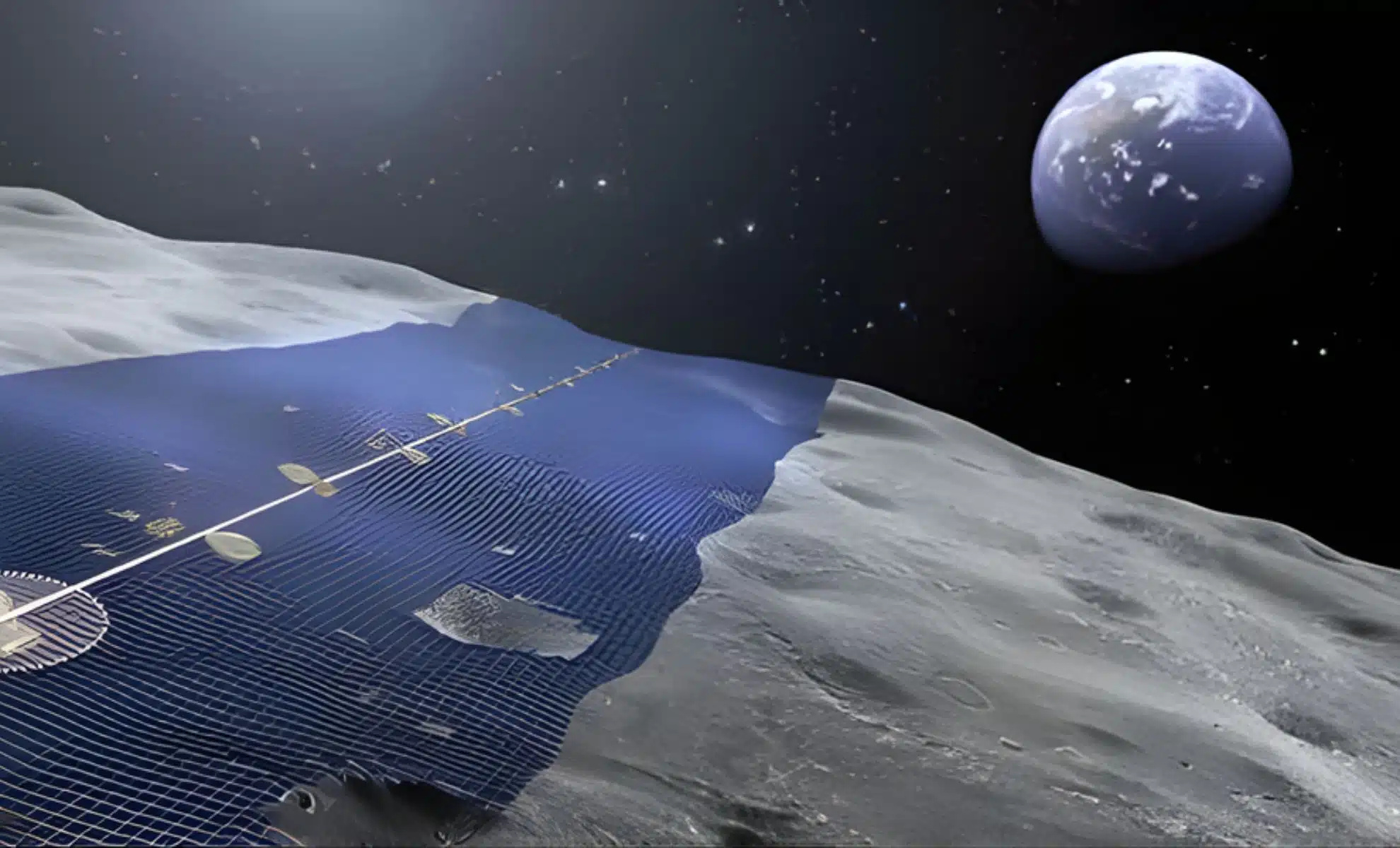
Japan wants to build a solar ring of 10,900 kilometers on the Moon to continuously send energy to Earth.
-
Weighing almost 1 ton, with temperatures of up to 3,000°C, the ability to launch 10,000 fragments within a radius of 1 km, capable of penetrating concrete and melting steel, Turkey’s terrifying bomb emerges as one of the most destructive non-nuclear weapons ever presented.

-
After a submarine disappeared beneath the “Doomsday Glacier,” scientists announce a new monstrous machine capable of operating at 3,000 meters depth to return to the heart of the ice and investigate a threat that could raise sea levels worldwide.


F-16 Sized Aircraft Represents a Technological Leap in the Quarterhorse Program
The Quarterhorse Mk 2.1 has impressive dimensions for an experimental drone. The aircraft is approximately the same size as an F-16 fighter, powered by a Pratt & Whitney F100 engine, a motor widely used in combat aircraft.
However, compared to the company’s previous prototype, the technological leap is significant. The Mk 2.1 is nearly three times larger, four times heavier, and significantly faster than the Mk 1, becoming one of the largest unmanned aircraft ever built.
This direct evolution is based on the first flight of the Quarterhorse Mk 1, conducted in May 2025, which served to validate the rapid and iterative development approach adopted by the company. Instead of waiting years for a single final prototype, Hermeus bets on rapid development cycles, where multiple aircraft are built and tested sequentially.
Consequently, each new prototype incorporates improvements based on real flight data, allowing the project to advance more quickly towards its main goal: sustained operation at supersonic speeds.

Tests Conducted in New Mexico Pave the Way for Supersonic Drones
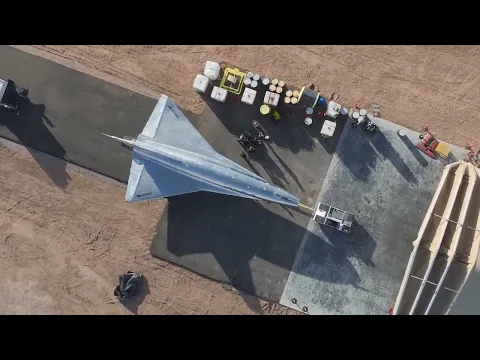
The inaugural flight of the Quarterhorse Mk 2.1 was conducted at Spaceport America, over the airspace of the White Sands Missile Range, in the state of New Mexico, one of the most used regions in the United States for aerospace testing.
During the operation, the aircraft was remotely piloted from the ground flight deck at Hermeus, allowing various important technical aspects to be validated, including:
- aircraft systems operation
- maneuverability characteristics
- operational procedures
- remote control of the platform
These evaluations are crucial to ensure that the aircraft is ready for the next stages of testing.
According to AJ Piplica, CEO and founder of Hermeus, the company’s focus is precisely to accelerate the development of systems capable of meeting current strategic needs.
“Speed is the fundamental requirement for our flight systems and for our company. We are building and flying aircraft on timelines that match the urgency of the world we live in,” stated Piplica.
According to the executive, the flight marks the beginning of a critical testing campaign that could lead the aircraft to achieve supersonic speeds, bringing the United States closer to the capability to operate high-speed systems within much shorter timelines than traditionally expected.
Rapid Development Strategy Could Transform Military Aviation
The Quarterhorse program follows a model considered innovative within the aerospace industry. Instead of developing a single aircraft over decades, Hermeus opted to create a sequence of prototypes that progressively evolve.
In this model, multiple aircraft are designed, built, and tested in rapid succession, allowing engineers to continuously refine designs using real flight data.
This process reduces technological risks and significantly accelerates program progress, which is particularly relevant in a global scenario marked by intense technological competition.
The project is currently in the Mk 2 phase, a series comprised of several aircraft intended specifically to achieve and expand supersonic flight.
The Quarterhorse Mk 2.1 represents the first step of this phase, but the company is already working on the next model in the series.
Next Version Could Become the Fastest Unmanned Aircraft in the World
According to the schedule released by the company, the Quarterhorse Mk 2.2 is expected to be the next prototype to enter operation.
Hermeus anticipates that this version will become the fastest unmanned aircraft in the world, further enhancing the performance achieved by the Mk 2.1.
Moreover, the subsequent phases of the program should advance towards the company’s ultimate goal: unlocking sustained ramjet-powered flight for the United States within this decade.
Ramjet engines are systems designed to operate at extremely high speeds, allowing aircraft to maintain sustained hypersonic flights, something that could revolutionize both military applications and future high-speed commercial aircraft.
If Hermeus’s plans come to fruition, the Quarterhorse program could play a significant role in the development of the next generation of high-speed aircraft, putting the United States back at the forefront of aerospace technology.
In the current scenario, marked by technological and military disputes among major powers, initiatives like this could redefine the limits of supersonic and unmanned aviation in the coming decades.
Do you believe that supersonic unmanned aircraft could replace traditional fighters in military missions in the future?







-

-

5 pessoas reagiram a isso.