





 Portuguese
  English
  Spanish
  5 min of reading
  0 comments


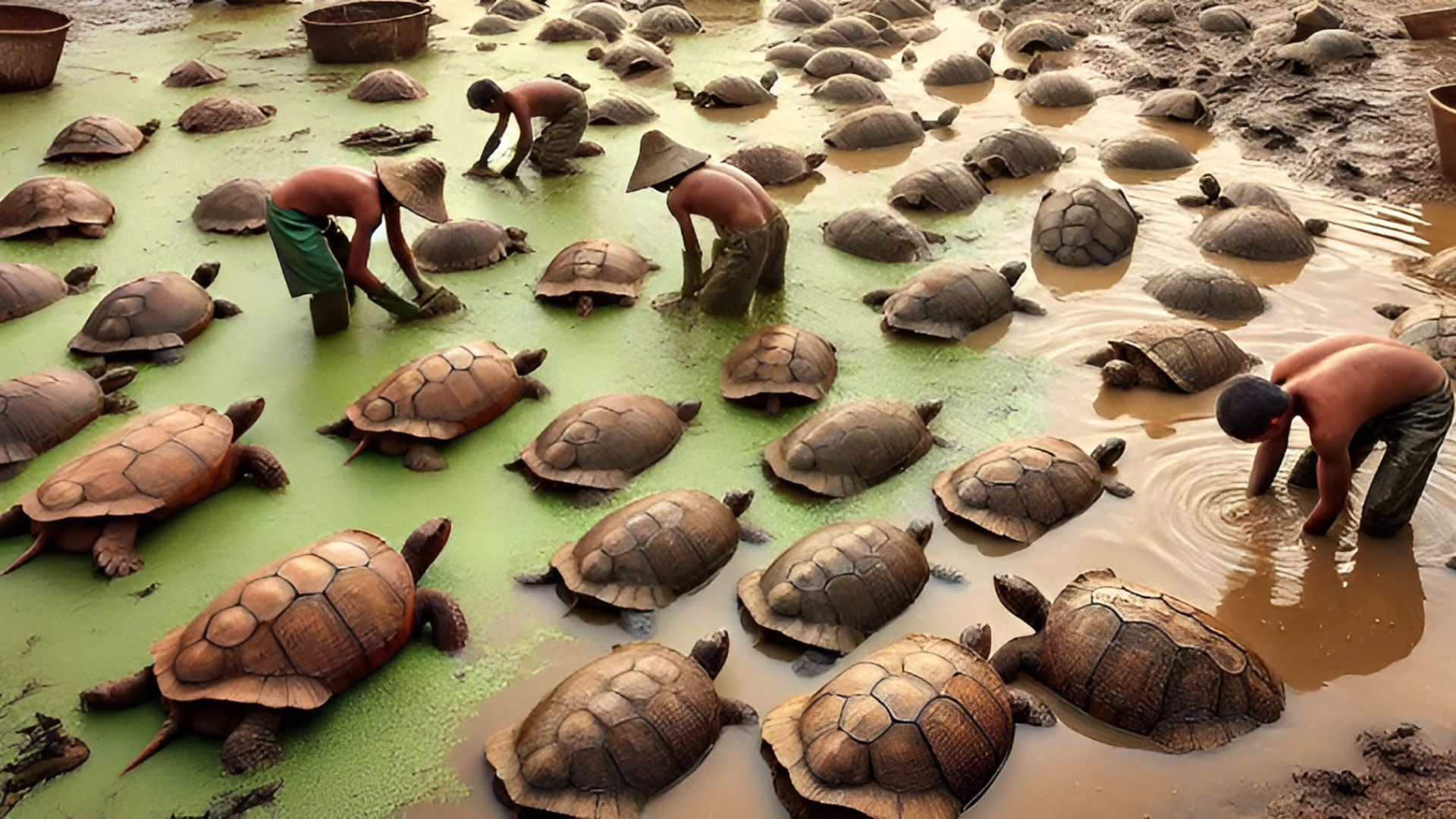
Chinese Farms Reveal A Huge And Little-Known Supply Chain Driven By Tanks, Greenhouses, And Millions Of Turtles Raised For Food And Traditional Products, Exposing The Industrial Dimension Of A Billion-Dollar Market.
Industrial-Scale Turtle Agriculture In China
A little-visible sector in global animal protein statistics moves hundreds of millions of animals annually in China.
These are freshwater turtle farms, structured in concrete tanks, dug ponds, and heated greenhouses, that supply a market primarily focused on meat and derivatives used in traditional Chinese medicine, with an economic impact amounting to billions of dollars, according to scientific studies and international reports.
The first major snapshot of this sector was drawn in a survey published in a conservation scientific journal at the end of the 2000s.
-
Brazilian nanotechnology surprises by transforming soybean seeds into intelligent structures that accelerate germination and may change the future of agricultural productivity in the country.
-
Brazil reaches historic record of judicial recoveries in 2025, with 2,466 companies in crisis and agribusiness leading the financial collapse.

-
From 13 borrowed cows to millions of liters per year: Argentine producer transforms small beginnings into an empire with technology, management, and high productivity of cows.

-
In just two months, Brazil exported 372 thousand tons of beef to China, and now the sector is racing against time before the quota of 1.1 million tons runs out and a 55% tariff comes into effect, changing everything.
Researchers identified 1,499 registered turtle farms in China and received complete responses from 684 enterprises.
Together, these units reported more than 300 million turtles sold per year, with an approximate value of 750 million dollars, and the authors estimated that the actual volume could be even higher, as more than half of the farms did not respond to the questionnaire.
Predominance Of The Chinese Soft-Shelled Turtle

The data from this study shows that the overwhelming majority of animals raised on farms belong to a single species: the Chinese soft-shelled turtle (Pelodiscus sinensis).
Information compiled from specialized reptile databases indicates that this species accounts for hundreds of thousands of tons of meat annually and is currently considered the economically most important chelonian in the world, with hundreds of millions of individuals destined for human consumption and the medicinal products industry each year.
How Turtle Farms Work
The structure of these farms varies by region but follows a logic of intensive aquaculture.
In eastern and southern provinces of China, such as Guangdong, Guangxi, and Jiangsu, production occurs in concrete tanks, dug ponds, and monoculture systems in freshwater ponds.
In areas subject to lower temperatures, juveniles are kept in heated greenhouses, with water maintained around 30 °C through coal boilers or other heating systems to ensure continuous growth during winter.

Technical studies describe structures with compartments separated by age, monitoring of water quality, feeding management, and cleaning routines aimed at reducing mortality and losses due to diseases.
In addition to intensive tank models, researchers detail systems of co-cultivation with rice, where soft-shelled turtles utilize the planting environment as habitat.
In this arrangement, the waste helps fertilize the soil, reducing the use of chemical inputs and improving water quality indicators, although challenges related to feeding and herd health remain.
Economic assessments of these models show significant differences in feed conversion and profitability, depending on stocking density and balance between agricultural and aquacultural productivity.
Breeding And Intensive Management
The production cycle is based on breeding in captivity.
Adult females lay eggs in dry areas of the tanks or in prepared structures, and the eggs are collected or protected for incubation.
After hatching, hatchlings are directed to specific rearing units, often in heated greenhouses, where they receive a balanced diet with a high protein content.
Management studies indicate the use of formulated diets, observation of parameters such as growth rate and feed conversion, and control of density to minimize disputes and cannibalism, a practice recorded in intensive systems with turtles.
Meat, Shells, And Exports

The fate of animals raised on farms is divided between the meat market, the supply of shells and other by-products intended for traditional Chinese medicine, as well as regional exports.
Studies on the turtle shell trade show that the shell of the soft-shelled turtle is used as an ingredient in medicinal preparations, while the meat is consumed in typical dishes, soups, and broths.
In some cases, processed shells in China also enter export chains to neighboring countries, as part of a poorly regulated and difficult-to-track market that includes products from farms and from animals captured in the wild or imported from other Asian countries.
Sustained Growth And Economic Impact
Recent data collected by international organizations and researchers indicate that production volume remains high.
Statistical series show consistent growth of soft-shelled turtle aquaculture since the 1990s, with global production, led by China, reaching hundreds of thousands of tons annually in the 2010s.
A technical study cited an approximate value of 350,000 tons of meat in 2015, with an estimated industry value of around 5.2 billion dollars, evidencing that the segment approaches, in revenue, known chains of Asian aquaculture.
A Little-Visible But Massive Agriculture

Despite this scale, the turtle agriculture remains largely hidden from the international public.
In broad aquaculture reports, production appears diluted in aggregated categories, and data on the number of farms, species raised, and product destinations are fragmented.
At the same time, specialized databases on biodiversity and conservation highlight the economic weight of the species Pelodiscus sinensis and the fact that hundreds of millions of individuals are moved annually, something that is poorly reflected in debates on food security and animal protein.
Conservation, Impacts, And Challenges
The expansion of this production system has generated an ambiguous relationship with conservation.
Documents related to the Convention on Biological Diversity and assessments from wildlife organizations indicate that the historical exploitation of turtles for food and traditional medicine has led several freshwater species to be endangered, even in Asia.
At the same time, the development of large-scale farms for species like the soft-shelled turtle is cited by some authors as a way to reduce pressure on wild populations, at least for taxa that already have established complete captive cycles.
However, concerns remain about illegal capture to supply farms, genetic impacts from mixing populations, and effects of diseases associated with high-density farming.
Regional Changes And Current Uncertainties
In recent years, regional reports have recorded the decline of farms in urbanized areas, such as Humen, in southern China, where rising land costs have reduced space for farming units.
Still, technical articles published in 2025 confirm that the soft-shelled turtle remains a key species in Chinese aquaculture, with production growing over nearly three decades and status as a high-value aquatic product.






Seja o primeiro a reagir!