





 Portuguese
  English
  Spanish
  5 min of reading
  17 comments


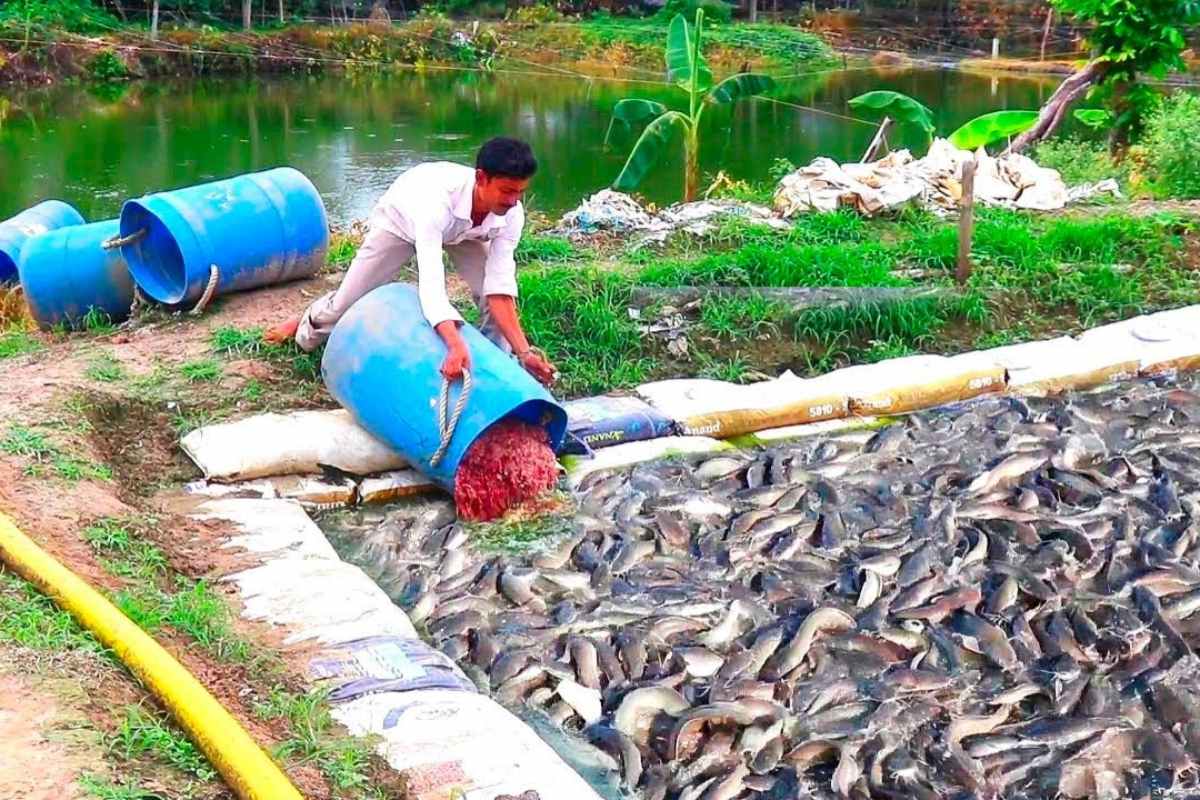


In The Super-Intensive Farming Of Pangasius In Southeast Asia, Shallow Tanks Are Crowded, Water Flows Continuously, And Any Leftover Becomes Daily Feed, Revealing Extreme Behind-The-Scenes Of A Cheap, Controversial, Mass-Produced, Exported Fish That Is Becoming Increasingly Present On The Plates Of Urban Brazilians From All Social Classes
The advancement of aquaculture in Asia has transformed pangasius farming into a permanent protein factory. In just a few meters of water, thousands of fish grow cramped, sustained by a continuous flow that enters clean from one side and exits carrying waste from the other, in a system designed to produce the maximum in the smallest possible space. Behind the cheap, white fillet that arrives in Brazil lies an industrial machinery that starts with giant breeding stock, goes through reproductive hormones, and ends at slaughter lines that do not stop.
At the same time, this same pangasius farming lives with extremes: on one side, farmers who use balanced feed and vitamin supplements, on the other, producers who grind offal and slaughterhouse scraps, including already decomposing chicken meat, to cut costs. The result is a supply chain that impresses with its efficiency, scares with its excesses, and helps explain why this tropical fish has become a symbol of cheap protein in many markets around the world.
How The Farming Of Pangasius That Supplies Entire Markets Begins

Everything starts with a few selected breeding stock, fish weighing 15 to 20 kilograms that become “egg factories.”
-
Archaeologists find a colossal 2,000-year-old vessel at the bottom of the sea near Alexandria linked to the elite of Egypt and reveal a pleasure barge from the last dynasty of the pharaohs that the sea has hidden for centuries.
-
United Kingdom clears 40 tons of shells and concrete into the sea in an innovative project that promises to restore a marine ecosystem lost for over 200 years and improve water quality.
-
With emergency diversion to abandoned mining craters, engineers save villages from a devastating flood that was advancing through the desert and threatening to destroy entire communities in a matter of hours.
-
It seems simple, but it enriches: from R$ 500 to R$ 6,000 per piece and up to 10 days of handcrafted production, how is the couple from Praia Grande making a high income with hyper-realistic miniatures and turning a hobby into a money-making machine?


Industrial pangasius farming does not wait for nature to act.
Technicians apply hormones to induce reproduction, accelerating the production of eggs and sperm and concentrating in a few hours what rivers and floods would take weeks to cause.
Next comes the most delicate procedure.
The females are squeezed in the belly to release millions of eggs into basins, while the males provide sperm for manual fertilization.
These eggs go to small aquariums, where they stay for about 72 hours until the larvae hatch.
Then, these larvae enter a controlled environment for 30 to 45 days, a critical stage where every millimeter of growth represents future weight of the fillet sold.
Planned Overcrowding: More Fish Than Water In Shallow Tanks
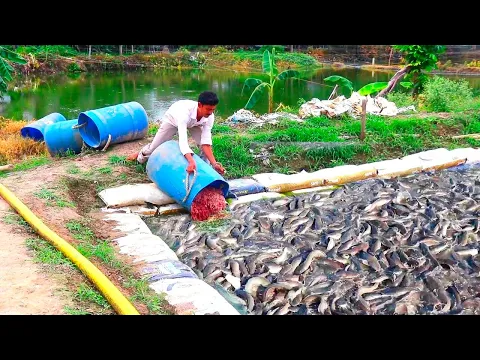

When they reach a sufficient size, the fry are transferred to the main tanks.
There, the logic of pangasius farming is simple and brutal: the more animals per cubic meter, the higher the revenue per tank.
In many systems, the impression is that there is more fish than water, with schools colliding all the time, in a density that few species would tolerate without collapsing.
To avoid a chemical disaster, producers rely on flowing water.
The same pump that pulls water from a mine or reservoir continuously feeds the tank and, at the same time, flushes the excess out the opposite way.
This constant flow acts as a “living filter”, carrying ammonia, feces, and leftover feed out before it collects to lethal levels.
It is this hydraulic design that makes overcrowding viable and distinguishes intensive farming from a real stagnant sewage scenario.
Phase One Of Fattening: Six Months Cramped To Become Marketable Juvenile
In the initial fattening phase, which can last up to six months, the goal is to turn larvae into robust juveniles.
In tanks about one meter deep, pangasius farming relies on quick cycles, where the fish must reach close to 20 centimeters to be considered ready for the next stage.
During this phase, stress is constant.
The competition for space, food, and oxygen is high, and it is only kept under control because the renewed water reduces some of the metabolic impact.
Even so, any failure in the flow, in the pump power, or in daily management can cause mass mortality in a matter of hours, showing how narrow the margin of safety is in this model.
The Hidden Menu: From Premium Feed To Ground Animal Remains
It is in feeding that pangasius farming splits into two worlds.
In the first, large producers with more capital invest in good quality industrial feed, supplemented with vitamin and mineral tablets.
The goal is to ensure fast growth, efficient feed conversion, and healthier fish, suitable for more demanding markets and export contracts.
In the second world, the priority is only to reduce costs.
Grinders work non-stop grinding offal and animal remains, mainly discarded chickens from slaughterhouses.
In many cases, this material already arrives in a state of decomposition.
For the fish, however, protein is protein, and the food is consumed voraciously.
For the consumer, doubts arise about the flavor, texture, and quality of the meat produced under these extreme conditions, which fuels the reputation of dubious origin fish.
From Final Fattening To Slaughter: When Pangasius Becomes Cheap Fillet
After leaving the initial overcrowding phase, the pangasius go to larger tanks, where they complete the fattening until they reach between 800 grams and just over 1.2 kilograms.
In this final stage of pangasius farming, the focus is to turn biological volume into standardized product, at the ideal weight for fillets to be cut, packaged, and sent to the domestic market or exported.
The fish destined for slaughter go to processing units where they are gutted, cut, and frozen.
Some of the remaining animals take on another role: some become breeding stock for new cycles, others are sold to fishing ponds, stocked in lakes, or even kept to reinforce the farm’s own productive structure.
The system closes in a nearly continuous circuit, revolving between reproduction, fattening, and slaughter with minimal interruption.
Sewage Fish Or Victim Of A Simplistic Label?
Calling pangasius a “sewage fish” ignores the variety of practices within pangasius farming.
There are technically planned structures, with flowing water and controlled feeding, and there are backyard operations that really abuse slaughterhouse scraps and poor management.
The final product reflects this contrast, both in meat quality and consumer perception.
In the end, pangasius is a fish like any other, capable of offering accessible protein when well managed or generating distrust when raised at the edge of what is acceptable.
For those who see only the white fillet on the supermarket tray, the overcrowded tanks, the pumps running continuously, and the machines grinding animal remains help explain why this cheap fish arouses so much curiosity and controversy at the same time.
And you, knowing now how this super-intensive pangasius farming works, would you have the courage to put this fish more often on your plate or would you rather pay more for another species?




Pode criar os peixes em tamques lagoas grandes limpos hegienes saude dar remedios para vermes e parasitas nos peixesde ervas raizes natural plantas para matar expelir vermes parasitas animais e peixes aves usar caixas grandes tipopiscinas para criar os filhotes controlar atemperaturas calor e no frios das aguas para os peixes nao morrer usar plasticos lonas para cobrir os tamques caixas lagoas no frios ou calor restos de peixes serve para fazer racao para gatos animais ou adubos
Quero saber o que é feito da água que sai suja dos tanques. São lançadas nos cursos d’água sem tratamento ou são analisadas e tratadas?
Nos alimentamos de muita **** sem saber. Mas agora sabendo, senti nojo
Nâo comerei mais. Argh!