





 Portuguese
  English
  Spanish
  4 min of reading
  0 comments


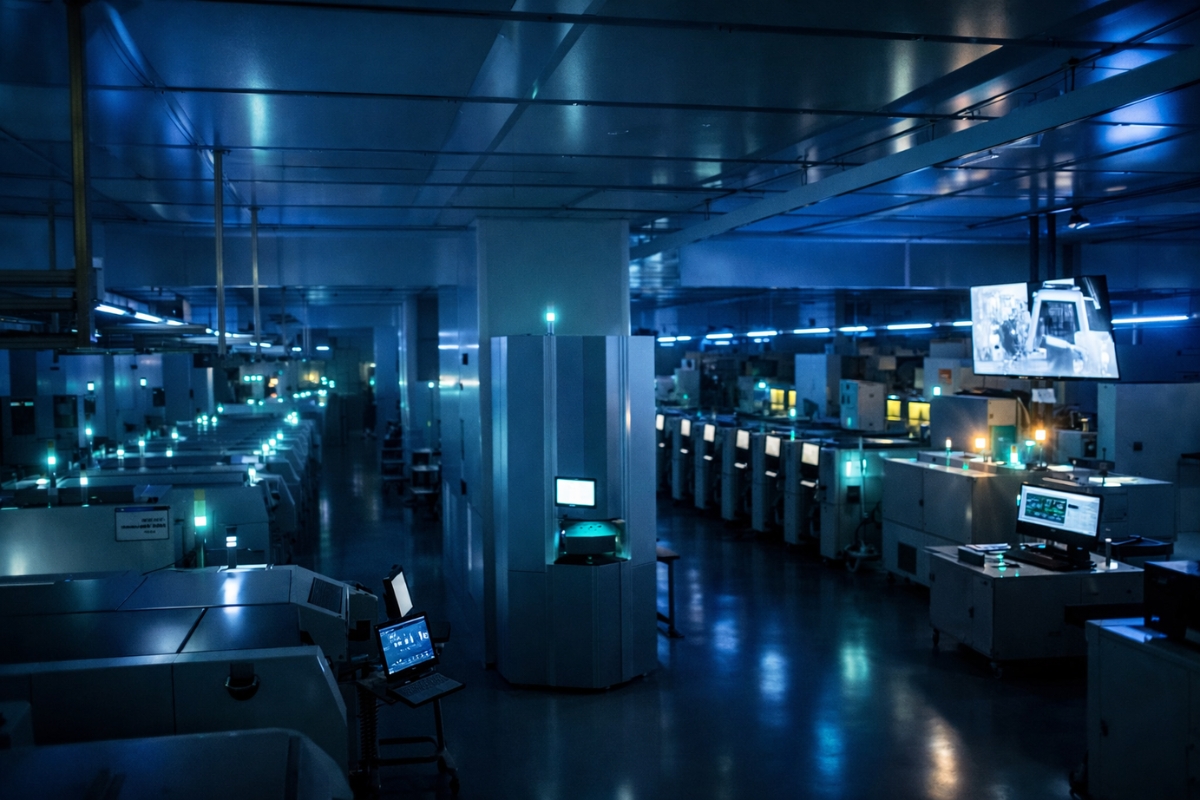
Xiaomi Set Up A Plant In Changping With US$ 330 Million, Operates 24 Hours A Day Without Operators And Aims For 10 Million Smartphones Per Year, Changing The Weight Of Automation In The Region.
81,000 m² in the dark. In the outskirts of Beijing, Xiaomi placed a factory to run without pause, with robots taking over practically everything that previously depended on shifts and people on the factory floor.
The result is straightforward: continuous production, fewer interruptions, and a more predictable assembly pattern. On the technological chessboard, this translates to presence and influence in the race for scale and industrial dominance.
Dark Factory Becomes Production Without Rest
The logic is simple and harsh. If there are no people on the line, the factory does not need light, thermal comfort, or infrastructure designed for the human pace.
-
With a cost per shot close to zero, the DragonFire laser could change naval warfare in 2027 and provide British ships with nearly unlimited defense against drones.

-
A British startup creates tires that generate electricity in electric vehicles when passing over potholes, speed bumps, and cracks.

-
Scientists have created robots made with living cells that have their own nervous system, swim on their own, explore the environment, and self-organize without any genetic engineering, and now they want to do the same with human cells.

-
Students create a solar-powered ambulance that operates without a plug, without fuel, and still keeps medical equipment running in remote areas.

In this model, automation takes over from raw material input to packaging. The plant operates continuously, with human access only when maintenance is needed.
Changping Lands On The Map With US$ 330 Million And 10 Million Per Year
The Changping Smart Factory is located in the Changping district, north of Beijing. The total area reaches 81,000 m², with an investment of approximately 330 million dollars.
At full capacity, the promise of scale is high: up to 10 million high-end smartphones per year. At factory pace, that is about one phone per second.
Among the models mentioned in production are the Xiaomi MIX Fold 4 and the MIX Flip. The message is strategic: to gain cadence and keep the premium portfolio supplied without relying on large contingents.

Internal Platform Controls 11 Lines And Pushes Quality Control
The central control goes through HyperIMP, an internal platform that monitors the lines and adjusts processes in real time. The factory has 11 fully automated production lines, with operational decisions guided by artificial intelligence.
The inspection uses computer vision to check components and point out flaws that would escape a common review. In practice, the gain is consistency, with less variation between units.
The assembly is also handled by robots in high-precision stages, such as soldering, screen assembly, and calibration. Additionally, there is predictive maintenance that anticipates wear and reduces unexpected downtime.
According To Gartner Research, A Research And Consulting Company In Technology, Total Automation Advances And By 2025 Could Put 60% Of Manufacturers With At Least Two Processes In This Standard
The pressure for efficiency is not just an internal movement. The idea of a factory running with the lights off fits into a larger competition for productivity and dominance of industrial chains.
In this scenario, Xiaomi attempts to position itself as part of a broader leap, where continuity of production becomes a power advantage. It’s a reading that alters the balance of the game.
Videos From 2026 Showcase The Spotlight, But The Competition Dates Back To 2020 And Has Precedents Since 2001

The intense circulation of images at the beginning of 2026 increased the feeling of novelty. However, the construction of the concept had already appeared in aspirational video since 2020, evolving over time.
There is also a history outside of Xiaomi. The Japanese FANUC had already operated with factories in this standard since 2001, with periods of up to 30 consecutive days without humans and production of more than 6,000 robots per month.
The central point is the strategic message: when automation becomes routine, the advantage ceases to be merely cost and becomes the ability to sustain pace and scale under pressure.
Employment Feels The Impact And The World Still Stumbles At The Cost Of US$ 330 Million
The more sensitive side shows up in labor. China recorded a drop in industrial participation from 30.3% to 29.1% between 2013 and 2023, while services increased from 38.4% to 48.1% in the same period.
Outside of China, expansion tends to be slower due to practical barriers. The initial investment is high, the infrastructure for robotics and automated logistics is not always ready, and the lack of specialized professionals limits the speed of change.
The Changping factory is not just a technological showcase. It pushes a new production standard that reduces human dependence, alters costs, and reinforces the competition for industrial influence, affecting the strategic reading of the Pacific.










-

-

-

-

-

-

39 pessoas reagiram a isso.