





 Português
  Inglês
  Espanhol
  4 min de leitura
  8 comentários


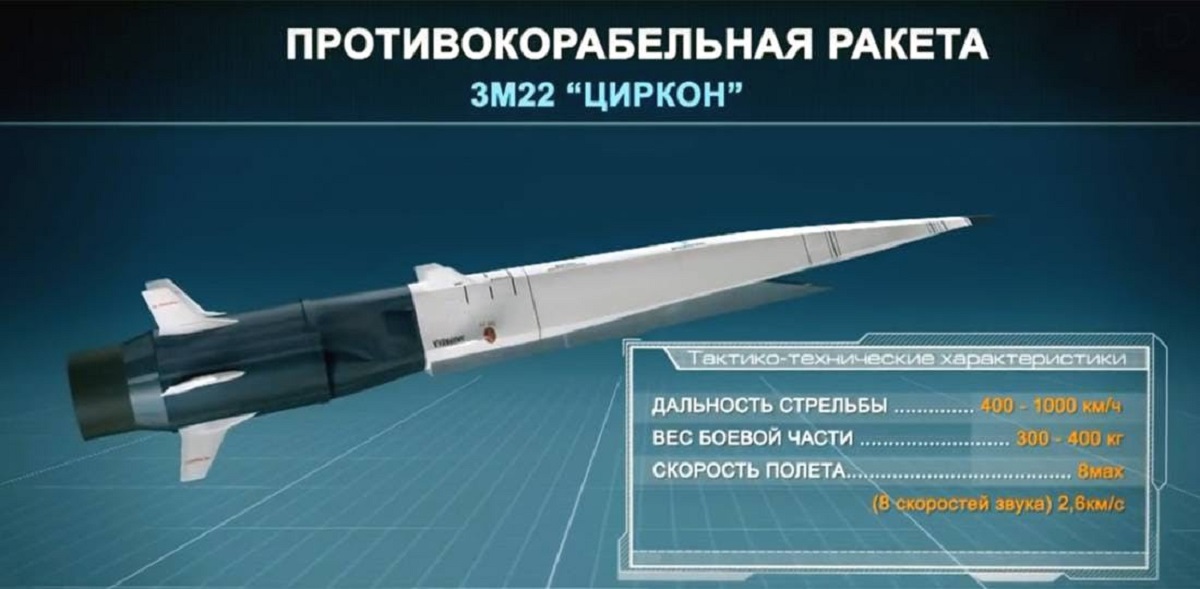


Russian Hypersonic Missile Tsirkon Advances In Naval And Submarine Integration; Mach 8, Evasive Maneuvering And Focus On Strategic Targets Raise Global Tension
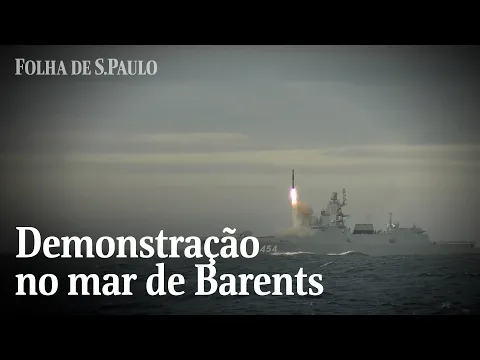
The 3M22 Tsirkon hypersonic missile (also romanized as Zircon) is one of the most closely watched military programs in the world for a simple reason: it combines three strategic trends at once, extreme speed, naval capability, and multi-platform integration. According to reports from Russian and Western media, the program is no longer just a conceptual prototype: it is in operational integration phase, a stage that places the project at the frontier between advanced testing and real military use.
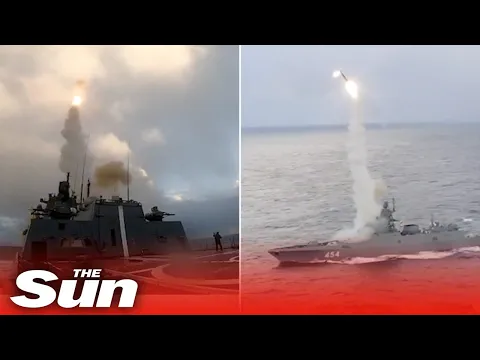
The existence of Tsirkon was publicly mentioned back in the 2010s but gained traction after documented tests between 2019 and 2022, which showed launches from frigates in the White Sea and ground platforms. In 2023-2024, state media such as TASS and RIA Novosti began reporting on the missile’s integration with the Admiral Gorshkov frigate and preparations for use on Yasen-M class submarines, marking a strategic leap: this is the first naval hypersonic missile in an advanced stage of adoption.
Extreme Speed And Extended Range: What Does It Mean

The term “hypersonic” refers to vehicles capable of exceeding Mach 5 (five times the speed of sound). In the case of Tsirkon, Russian reports cite estimated speeds between Mach 6 and Mach 9, although these values vary depending on altitude and trajectory.
-
North Korea tests intercontinental range rocket with a 2,500 kN solid fuel engine supervised by Kim Jong Un and advances in a five-year strategic plan.
-
Classified as a “amphibious monster” weighing 555 tons, 57 meters long, and featuring three propellers with a diameter of 5.5 meters, the Zubr is the largest military hovercraft ever built, capable of transporting 3 tanks or 500 soldiers at speeds exceeding 100 km/h over water, ice, and sand, and China has resumed production of it to project power in the South China Sea.
-
The U.S. Army receives the first Black Hawk helicopter that can fly without pilots, be controlled by a tablet, and even land on its own during high-risk missions.
-
With 11,000 tons and sensors capable of hunting submarines at long distances, the Type 055 has become one of the most feared floating arsenals of the Chinese navy.


The disclosed range is also not consensual, oscillating between 500 km and 1,000 km according to official statements, but the most sensitive characteristic is not the number itself, but rather the combination of high speed + maneuverability + mobile launch platforms, something considered disruptive in naval scenarios.
The logic is simple: ships and submarines equipped with fast, long-range missiles expand maritime denial radius and can operate far from their territorial waters. This helps explain why the U.S., China, India, and Russia are competing for dominance in the hypersonic sector — it’s not just about offensive power, but about geopolitical positioning.
Naval And Submarine Integration: The Program’s Differential
The majority of hypersonic systems in testing worldwide are ground or airborne. The Tsirkon, on the other hand, has been designed from the outset to be naval, placing it in a rare category. According to reports from Naval News, TASS, and RIA Novosti, Russia is working on three axes:
- Modern Frigates, such as the Gorshkov class
- Nuclear Submarines, such as the Yasen-M class
- Possible adaptation to other classes, such as cruisers and destroyers
The integration in submarines has unique weight because it adds camouflage + mobility + range, a trio that forms the core of 21st-century naval deterrence.
Why The Program Is Considered A “Transition Mark”
Even in the integration phase and with little public data, Tsirkon is already sparking debates about naval paradigm shifts. There are three key elements:
- Shorter Reaction Time: the higher the speed, the shorter the time for detection and decision-making.
- Difficulty Of Interception: atmospheric trajectories and high-speed maneuvers challenge traditional systems.
- Power Projection: a ship equipped with this type of missile has strategic impact far beyond its physical dimensions.
In analysts’ view, it is not just a new weapon, but a category, just like stealth in the 1980s and armed drones in the 2000s.
Current Status: Program Still Underway
Unlike already widely operational armaments, Tsirkon is in a hybrid zone — it is not an experimental prototype, but it is also not fully deployed across all intended platforms. The consensus among sources is that:
- Flight and performance tests have been completed
- Limited production is believed to be underway
- Integration with frigates is progressing
- Integration with submarines is ongoing
This intermediate stage is important because it validates engineering, logistics, doctrine, and industrial chain, something that no country can accelerate without years of work.
The International Scenario: A Race Of Multiple Competitors
The Tsirkon does not exist in a vacuum. It is part of a hypersonic race involving:
- United States: DARPA + US Navy/USAF programs (HAWC, ARRW, CPS)
- China: DF-ZF and experimental aerospace models
- India: BrahMos II (in development with possible Mach 7)
- Russia: Avangard (strategic glider), Kinzhal (air-launched), and Tsirkon (naval)
It is no coincidence that all these countries are investing in the same type of technology: control of the marine, aerial, and orbital environment in the 21st century will be defined not only by who has larger platforms, but by who has speed, sensors, and digital integration.








Vamos se honestos e tirar os EUA desta corrida pois o mesmo não possui armamento hipersônico.
Grande **** o Kinzhal o míssil hipersonico invencível do Putin já foi derrubado inúmeras vezes pelo patriota esses mísseis podem ser derrubados pelo patriot e pelo Arrow 3 de Israel, todo míssil balístico é hipersonico voa acima de mach 5 e Israel derrubou centenas de mísseis balísticos do Irã ano passado com o Arrow 3
Não há um único derrube deste míssel
O próprio General da ucrania falou que esse missil passou pela defesa semana passada.
Há muito tempo Rússia vem usando mísseis supersônicos contra a Ucrânia e com resultados pífios. Não adiantaram nada .
Verdade esses misseis são da época da União Soviética com adaptações e melhorias já que a Rússia sofre um embargo gigante sem tecnologias em chpis avançados para fazer novas tecnologias em mísseis.
Supespnicos nao hipersonico estes ainda nao foram usados, e se colocar ogiva tatica nuclear ai quero ver.
Sim Kiev e o resto da Ucrânia estão praticamente sem energia por invasão alienígena não ataque aéreos da Rússia…