





 English
  Francês
  Alemão
  Italiano
  Japonês
  Norueguês
  Portuguese
  Spanish
  3 min of reading


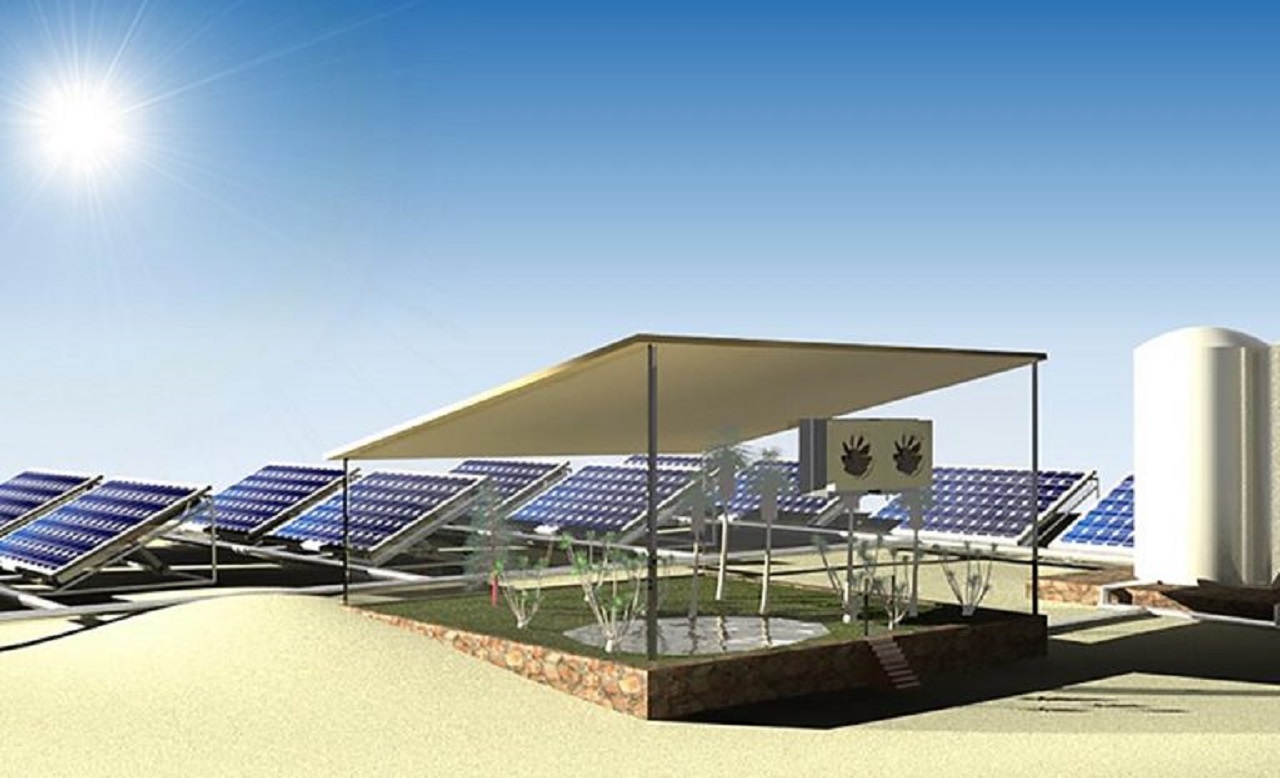
The Innovative Technology That Produces Water and Electricity in the Desert Is Based on a Type of Hydrogel Developed by Scientists That Has the Capacity to Cool Solar Panels
By combining photovoltaic solar panels and an absorbent hydrogel, scientists from King Abdullah University of Science and Technology (KAUST) in Saudi Arabia developed an experimental system capable of integrating electricity generation and water for irrigating agricultural crops in the desert.
Related Articles
University Develops Technology Capable of Generating Electricity and Water in the Middle of the Desert
The new technology developed by KAUST provides a solution to the lack of electricity and water in desert areas. According to Peng Wang, a professor of environmental science and engineering at KAUST, the project extracts water from the air using clean energy that would otherwise be wasted and adapts this water for decentralized small-scale farms located in places like deserts and ocean islands.
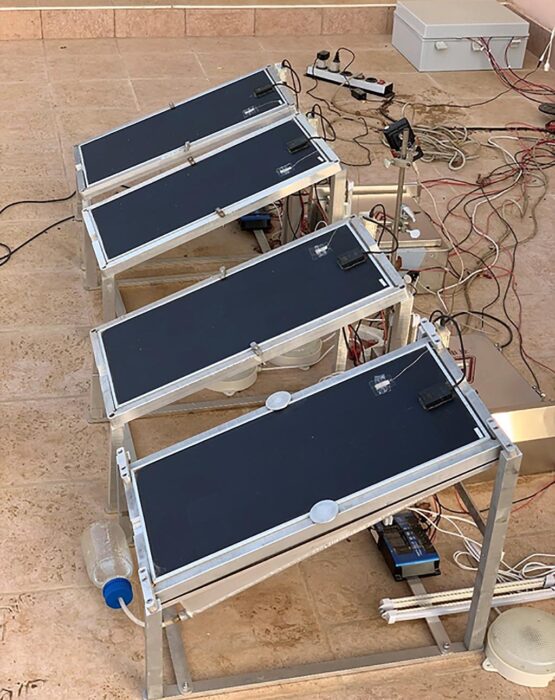
The system is named WEC2P and consists of solar panels placed over a layer of hydrogel. The hydrogel was developed based on previous research by Professor Wang and his team at KAUST. According to Wang, the hydrogel can absorb all the water vapor from the air and release the water when heated.
-
Rio Grande do Sul accelerates energy transition: State invests in renewable technologies and consolidates decarbonization strategies and pathways to attract billions in new industrial investments.

-
With 160,000 m² of collectors, an area larger than 20 football fields, Silkeborg, in Denmark, hosts a solar thermal plant that heats 19,500 homes and could become the largest solar heating plant in the world.

-
A study reveals the expansion of renewable energy procurement in Brazil and shows how companies are taking advantage of opportunities to reduce expenses, ensure energy efficiency, and strengthen strategic environmental commitments.

-
Roraima bets on the sun to escape high tariffs: Amid the energy crisis and price hikes, solar energy is growing in Roraima and transforming consumption in the North region.

The metal box formed by the hydrogel and solar panels remains open at night so that the hydrogel can absorb moisture from the air. At dawn, as soon as the sunlight arrives, the box is closed, and from then on, the solar panels are responsible for generating electricity. The water absorbed by the hydrogel evaporates due to the heat, and all the vapor goes to the back of the panel, while the water flows down the panel directly into the box. Once in the box, the water cools the equipment, ensuring it operates with up to 9% more efficiency. All the water collected at the bottom of the metal box is accessible through a tap and can be used for irrigation and even for human consumption.
Tests Conducted Using Solar Energy and Hydrogel Developed by Scientists
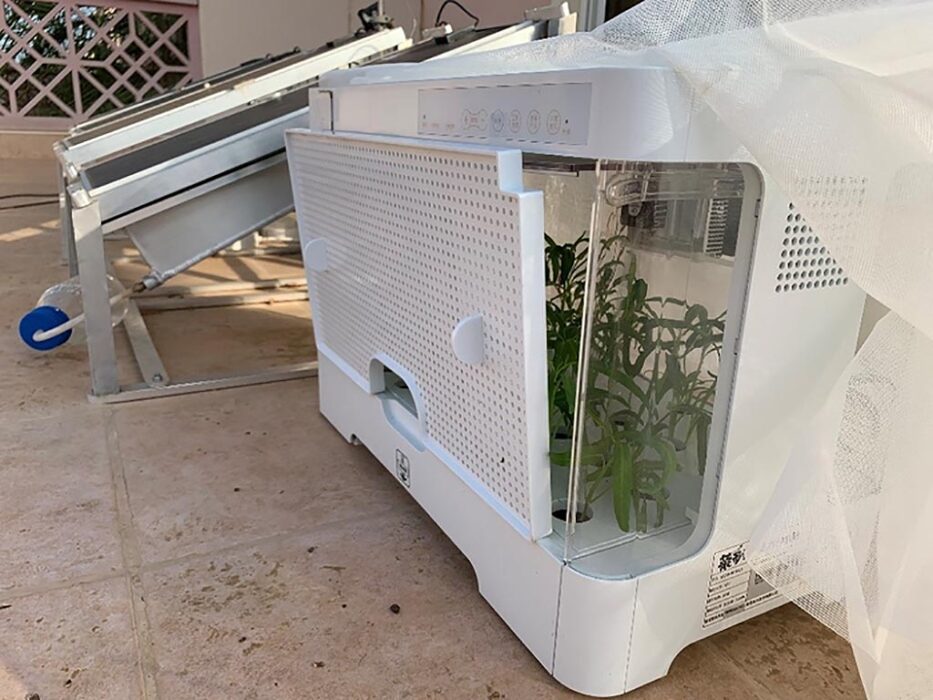
KAUST wants this experimental system to become a real product, and for that, Wang’s team is refining the hydrogel to be able to absorb much more water from the air.
In mid-2021, a small-scale test was conducted on the system in Saudi Arabia. The team used a photovoltaic panel and a hydrogel layer the size of a table for the test.
The system installation generated a total of 1,519 watt-hours of electricity, along with about 2 liters of water. With this 2 liters of water, about 60 spinach seeds planted in a plastic growing box were irrigated, where 57 sprouted and grew up to 18 cm in height.
KAUST Seeks Sustainable, Technology-Driven Solutions for Desert Regions
The results of the tests were published in Cell Reports Physical Science. Undoubtedly, the system can offer a sustainable and low-cost solution that could greatly improve food and water security for people living in desert regions.
Professor Wang stated that ensuring everyone around the world has access to clean drinking water and affordable clean energy is part of the Sustainable Development Goals established by the United Nations.
Wang also expressed hope that his team’s project will become a type of decentralized energy and water system that serves to provide energy to homes and irrigate crops.






Seja o primeiro a reagir!