





 Portuguese
  English
  Spanish
  5 min of reading
  0 comments


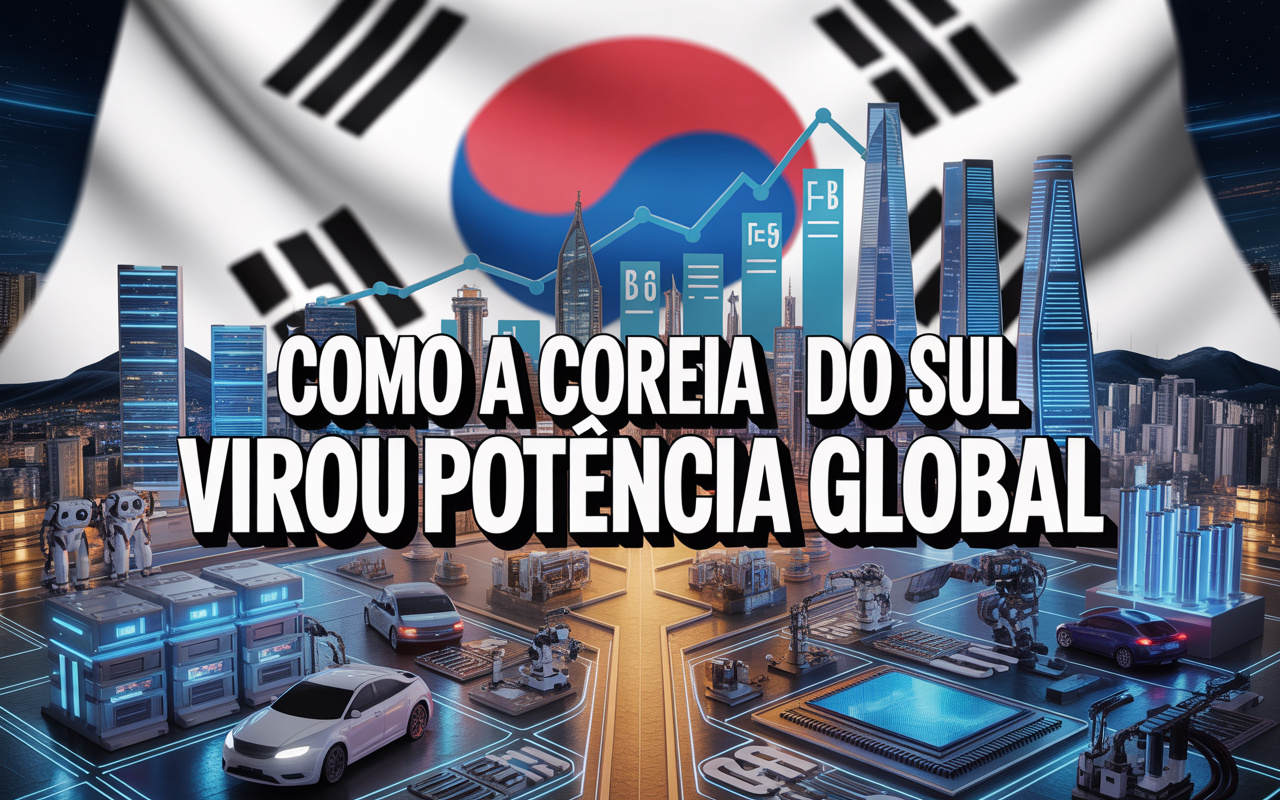
How South Korea, Smaller Than Ceará and Devastated by War, Became a Global Power in Technology, Industry, and Education Driven by Samsung, Hyundai, and LG.
When the Korean War ended in 1953, the south of the peninsula was one of the poorest places on the planet. The entire country had been destroyed by bombings, the infrastructure was in ruins, and the economy relied almost entirely on humanitarian aid. Much of the population survived on less than one dollar a day, and hunger was a constant threat. Today, less than 80 years later, this same nation with only 100,000 km², a territory smaller than the state of Ceará, has transformed into one of the most sophisticated economies in the world, a technological reference and home to conglomerates that influence global consumption. It is a historical leap that fascinates economists, educators, and innovation experts.
The South Korean rise was no coincidence. It combines aggressive industrial policies, heavy investment in education, and an integration into international trade that changed the fate of a geographically small country, poor in natural resources, and with a recent history marked by conflicts. The turnaround was so profound that today Korea consistently ranks among the most innovative nations on the planet, according to international rankings like the Bloomberg Innovation Index.
From Devastated Country to Organized Economy: The Beginning of the Korean Miracle
In the years following the war, the South Korean government realized that it had no oil, large mineral reserves, or vast agricultural plains. With limited territory, its only way out was to invest in industrialization and, later, technology.
-
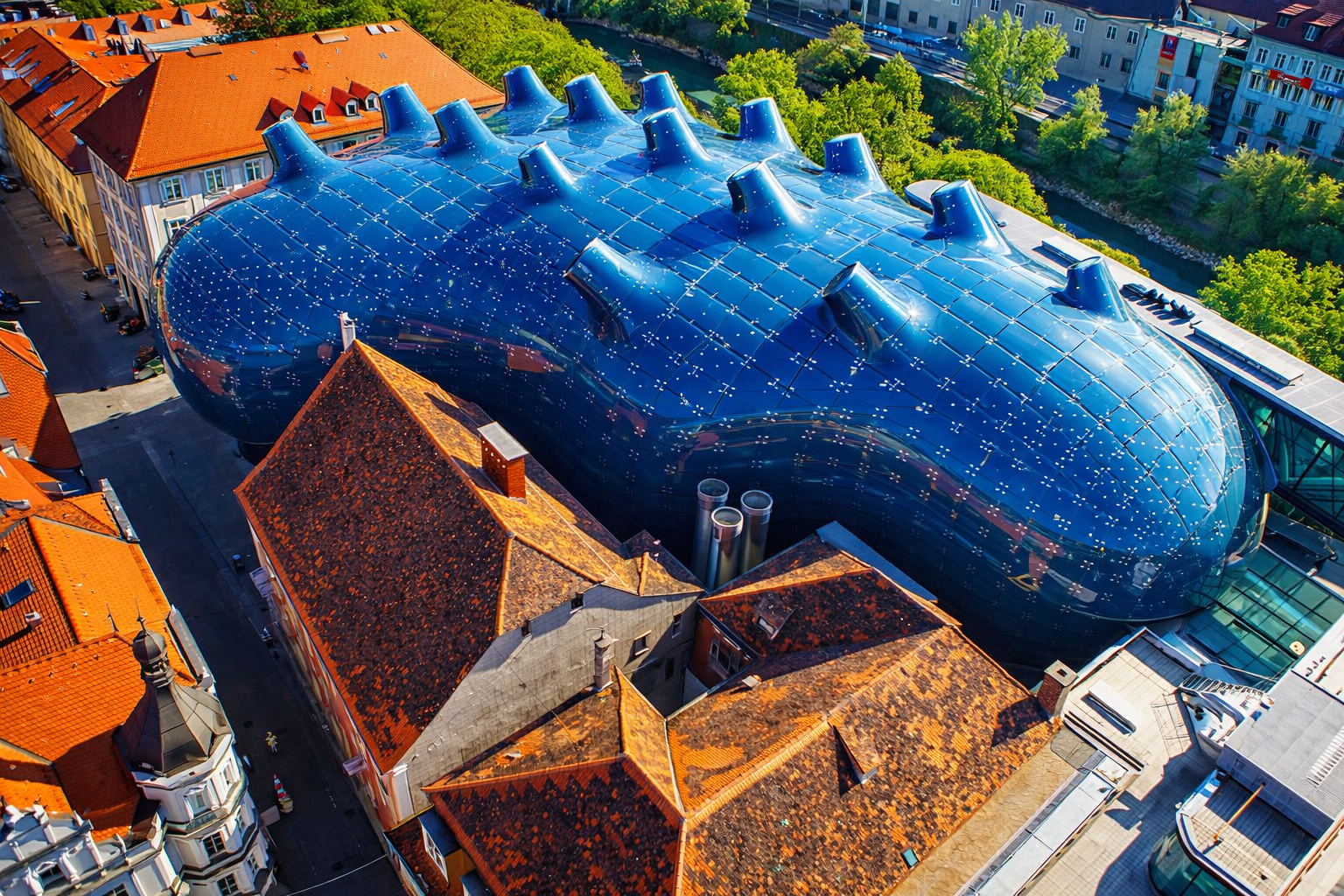
With 1,066 acrylic panels, the building known as the friendly alien is supported by a steel skeleton, has a façade that functions as a giant screen, and impresses the world without any internal columns.
-
Scientists warn that a comet about 1 km in size that has started to release gases may actually change direction in space. It was spotted by NASA and surprises with potential impacts near Earth.

-
These living root bridges and ladders are over 700 years old and help indigenous people survive in one of the rainiest regions in the world.

-
From sertanejo star to international investor: Ana Castela invests millions in a mansion in the USA, creates a themed accommodation in Orlando, and shows that the “boiadeira” also wants to grow away from the stage.


To this end, it adopted a national policy known as a “developmental state,” where the government coordinates and directs economic growth.


In the 1960s, President Park Chung-hee initiated the transformation by identifying strategic sectors such as steel, automobiles, shipbuilding, electronics, and later semiconductors. The government provided incentives, subsidized credit, and strict export targets. This laid the foundation for the chaebols, the family-owned conglomerates that today dominate the economy of the country.
Samsung, Hyundai, LG, and SK Group were propelled during this period, growing from small local businesses to global giants.
At the same time, Korea heavily invested in basic education. In less than two decades, it achieved literacy rates above 95%.
This combination of industrial discipline and population qualification paved the way for what became known as the “Miracle on the Han River,” a reference to the river that runs through Seoul and symbolizes Korean prosperity.
The Economy That Learned to Export Technology to the World
Starting in the 1980s, Korea flipped the script in the sector that would define its future: advanced electronics. Samsung began investing billions of dollars in research and development, betting on semiconductor manufacturing when the market was still dominated by Americans and Japanese.
Decades later, the company would become one of the largest memory chip producers in the world.
Hyundai made a similar move in the automotive sector. Previously known for its simple cars, it invested in engineering, design, and quality until it became a global brand competing with Toyota, Volkswagen, and GM.
LG expanded its projects in screens, appliances, and batteries, becoming a global leader in various segments.

By the early 2000s, Korea was not just a manufacturer but also an innovator. Its investments in research and development reached 4.8% of GDP, one of the highest percentages in the world. The country also created technology parks, incubators, and training programs for engineers.
The strategy worked: Korea now boasts one of the fastest internet networks on the planet, leads the production of OLED screens, is among the largest shipbuilders, and has one of the most dynamic gaming industries in the world.
Society, Culture, and Education as a Basis for Competitiveness
Education remained the central axis of development. Korea ranks among the countries with the best performance in PISA — an international assessment that measures the learning of young people in reading, mathematics, and science. The system is strict and competitive, but at the same time deeply structured.
Moreover, Korean culture has become an economic force in its own right. Since the 2000s, the government has encouraged the export of cultural products — music, series, cinema, lifestyle.
This movement, known as Hallyu (Korean Wave), has transformed the country into a global reference for entertainment. Today, K-pop, dramas, and South Korean films generate billions of dollars and expand the country’s international influence.
From Crisis to Reinvention: How the Country Became a Global Reference
Not everything was a straight line. The Asian financial crisis of 1997 nearly collapsed the South Korean financial system. The country needed help from the IMF, and thousands of businesses went bankrupt. But, unlike other affected economies, Korea used the crisis to restructure itself.
It dismantled monopolies, strengthened corporate governance, and accelerated the transition to high-tech sectors.

The result of this reinvention is impressive:
• Today, South Korea has a per capita GDP above US$ 33,000 (World Bank).
• It is a global leader in 5G, semiconductors, and batteries.
• It exports over US$ 680 billion annually.
• It has one of the lowest infant mortality rates in the world.
• It has a life expectancy that exceeds 83 years.
All of this in a territory smaller than Ceará, without oil and surrounded by geopolitical challenges, including the presence of North Korea.
A Small Country That Became a Giant and a Model of Transformation
South Korea proves that size does not define destiny. With discipline, long-term planning, focus on education, and investment in technology, it transformed itself from a war-devastated country into an economically and culturally admired power globally.
It is also a reminder that well-planned industrial policies, continuous investment in innovation, and the valuing of human capital can completely change a country’s trajectory.
Today, Korea is a case study for economists worldwide, one of the largest technological production hubs on the planet, and an example that, even with limited territory, it is possible to build a future much greater than what the map allows one to see.







Seja o primeiro a reagir!