





 Portuguese
  English
  Spanish
  3 min of reading
  0 comments


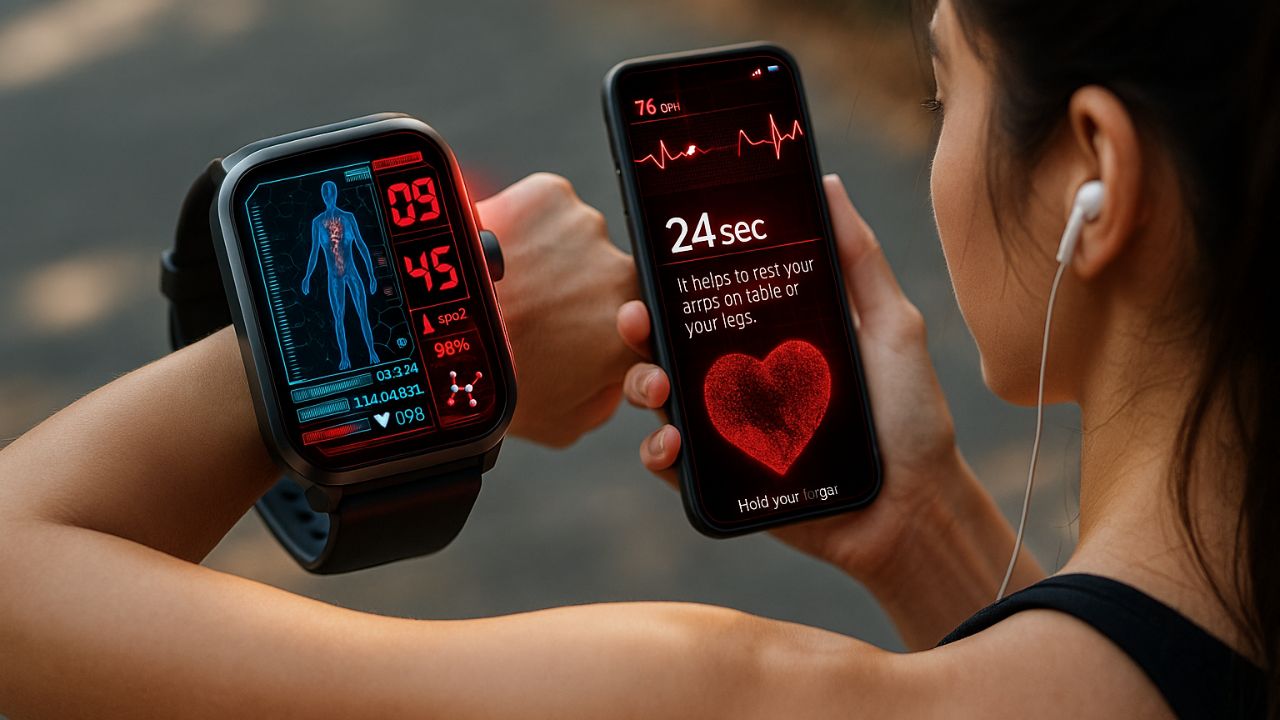
With a Market Projected to Exceed USD 152 Billion by 2029, the Application of Game Mechanics in Wearable Devices Is Radically Transforming the Way We Care for Our Well-Being.
Wearable technology, led by smartwatches, represents one of the largest transformations in personal health. This dynamic market is driven by consumer demand for self-awareness and by gamification, which uses points and challenges to sustain engagement. Giants like Apple, Samsung, and Garmin compete with integrated ecosystems, while the industry faces critical challenges in user retention and data privacy. The future points to an increasingly predictive health landscape driven by Artificial Intelligence.
The Growth of Wearables
The global wearable technology market is experiencing robust expansion. Projections indicate a leap from USD 70.30 billion in 2024 to USD 152.82 billion by 2029. This growth is driven by consumer preference for stylish devices, the expansion of the Internet of Things (IoT), and technological advancements that add functionalities like contactless payments.
In Brazil, the scenario is more volatile. The sector faced sales declines, impacted by the strong presence of the so-called “grey market”. This parallel market, which operates without taxes and certification, accounted for an impressive 41.7% of units sold in the second quarter of 2023. Despite eroding official revenue, the grey market validates a strong demand for more affordable devices like smartwatches.
-
Historic bankruptcy of Centauro shocks the market, and the century-old company puts more than 500,000 products, machines, and complete infrastructure up for online auction.

-
New shoe factory in Ceará is expected to create 400 jobs and strengthen the local economy.

-
No one imagined it, but a mixture of sawdust with a mineral that fights fires surprises scientists with a result that changes the course of fire-resistant construction.

-
From empty land to a high-end house, wooden construction uses a lightweight system, metal structure for the foundation, ventilated ceramic cladding, and special windows to create an efficient and comfortable living space throughout the year.

How Games Keep Us Healthy
Gamification is the psychological engine that keeps users engaged. It applies game elements, such as points and challenges, in health contexts. The goal is to transform repetitive tasks, such as exercising or taking medication, into more enjoyable and rewarding experiences.
This process works by creating a positive feedback loop in the brain. Each goal achieved releases dopamine, a neurotransmitter linked to pleasure and motivation. This reinforces behavior and connects the immediate reward of the “game” with the long-term health benefit. Companies like Fitbit excel at this, turning step counting into epic and motivating journeys.
The Technology That Monitors Our Lives


The magic of smartwatches lies in their orchestra of sensors. The optical heart rate sensor (PPG) uses light to measure beats, serving as the basis for detecting arrhythmias. Other important sensors include the ECG sensor, which records the heart’s electrical activity, and the SpO2 monitor, which measures oxygen saturation in the blood.
However, the sensors only collect data. It is Artificial Intelligence (AI) that acts as the brain of the device. AI transforms raw data into useful insights, identifies patterns, and enables predictive analytics. The competitive differentiator is shifting: value is migrating from hardware (the sensor) to software (the AI).
The Tech Giants Competing for Your Pulse
Competition in the wearables market is an ecosystem war. Apple bets on a premium “walled garden” with the Apple Watch, creating strong loyalty. Samsung seeks a more open platform, with an increasing focus on clinical integration to connect user data to the formal healthcare system.
Fitbit, now part of Google, stands out for its accessible gamification and strong sense of community. Garmin dominates high-performance niches such as runners and outdoor athletes, leveraging its credibility to expand into the B2B market and partnerships with insurers. Each company sells not just a device but an adherence to a comprehensive health philosophy.
Retention, Privacy, and the Future of Wearables
The biggest “Achilles’ heel” of the industry is the high abandonment rate. Many devices are abandoned in a drawer after about six months. The solution lies in software that offers customization, sophisticated gamification, and, importantly, a strong sense of community.
Another monumental challenge is privacy. The continuous collection of sensitive data demands absolute trust in the brand, which becomes a crucial competitive differentiator. The future points to more discreet formats, such as rings and smart clothing, and to sensors capable of non-invasive glucose monitoring. In the end, success will not belong to those who sell devices, but to those who build the most reliable, integrated, and engaging health ecosystem.









Seja o primeiro a reagir!