





 Portuguese
  English
  Spanish
 6 min of reading
  6 comments


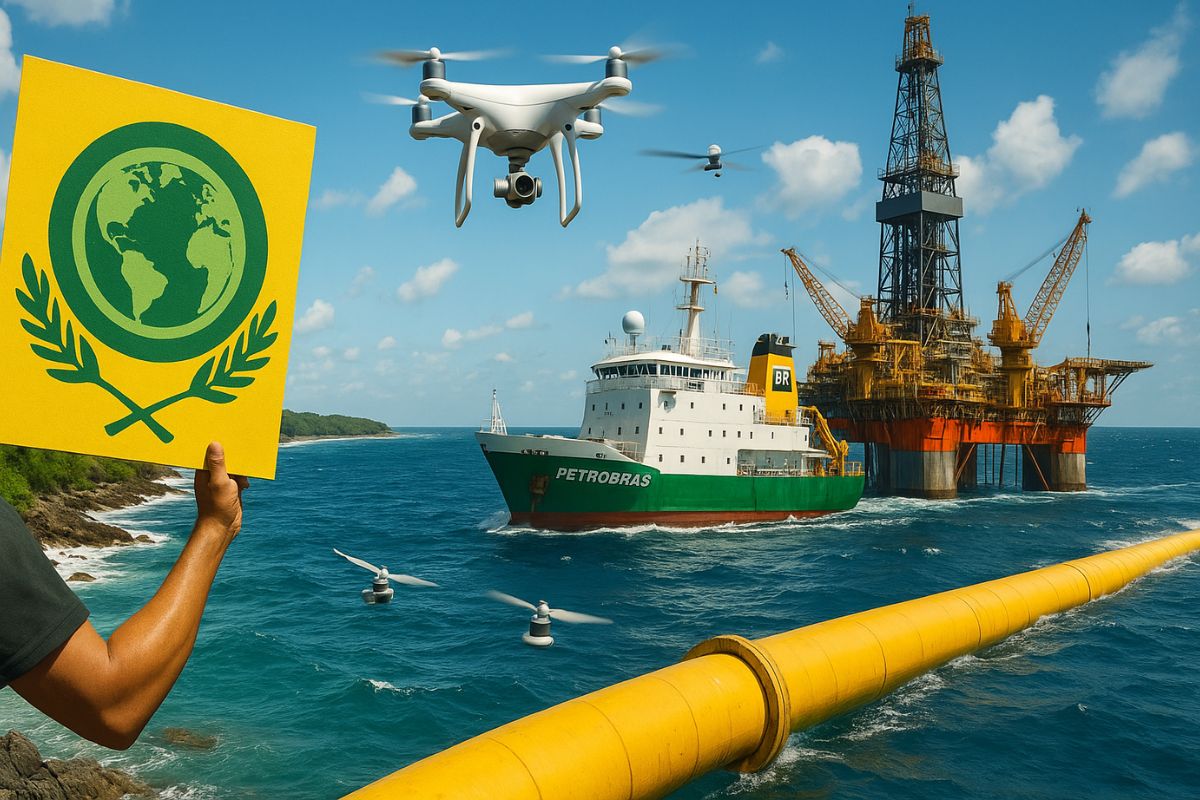


Exploration in the Equatorial Margin Advances After IBAMA License and Puts Petrobras Before the Challenge of Drilling at the Mouth of the Amazon with Strict Environmental Controls, High Logistic Complexity, and the Promise of Opening a New Billion-Dollar Oil Frontier for Brazil.
Petrobras has received authorization to drill at the Mouth of the Amazon and begin the most sensitive phase of exploration in the Equatorial Margin, an area seen by the state-owned company as a possible successor to the pre-salt in terms of volume and strategic relevance. Drilling the first exploratory well will be the turning point to confirm whether the geological potential identified in previous studies translates into commercially viable reserves.
The authorization came after years of environmental requirements, emergency simulations, and the presentation of incident response structures. Even under criticism from environmentalists, the company began to emphasize that the immediate goal is not to produce oil, but to verify the existence and quality of the reservoirs. Only after that will there be a development plan, definition of production systems, and investment schedule, all subject to a new review by regulatory bodies.
Why the Equatorial Margin is Treated as the Next Frontier
The Brazilian Equatorial Margin is a geological continuation of areas in the Atlantic that have already seen major discoveries, such as Guyana and Suriname. This means there is consistent evidence of ready-made oil systems in the region, with a chance of forming significant accumulations of oil and gas.
-
Petrobras surprises the world again by announcing a new discovery in the pre-salt with excellent quality oil.

-
Offshore industrial demand in Macaé skyrockets with the recovery of oil and gas and could grow by up to 396% by 2026 in the Campos Basin.
-
Offshore industrial demand in Macaé surges with the recovery of oil and gas and could grow by up to 396% by 2026 in the Campos Basin.
-
Brazilian giant expands borders in the Southeast: Petrobras confirms new oil discovery in ultra-deep waters in the pre-salt of the Campos Basin.

For a country that has already seen the peak of pre-salt expansion, opening a new oil province in the North of the country is strategic to keep Brazil among the major exporters in the next decade.
The Mouth of the Amazon is one of the five basins in this margin and, until now, it is also one of the most environmentally sensitive. That is why the license took longer than usual.
The technical reading is straightforward: without drilling, there is no way to confirm volume, oil quality, or economic viability. The stage that begins now serves precisely to reduce this uncertainty and bring the project closer to reality.
How the Seismic Phase Preceding Drilling Was Conducted
Before the arrival of the drilling rig, Petrobras had already conducted the seismic phase, which is the detailed mapping of the seabed through acoustic waves.
A specialized ship emits signals that penetrate the seabed and return with information about the geological layers. These data are processed by geophysicists and geologists, creating a sort of tomography of the terrain.
This stage is indirect. It indicates where a reservoir may exist, but does not measure volume or confirm the presence of hydrocarbons.
That is why exploratory drilling is indispensable: only the well traverses all the formations and collects real samples from the subsurface, allowing the evaluation of pressure, porosity, saturation, and other technical variables that determine whether the discovery can turn into production.
What Happens During Drilling at the Mouth of the Amazon
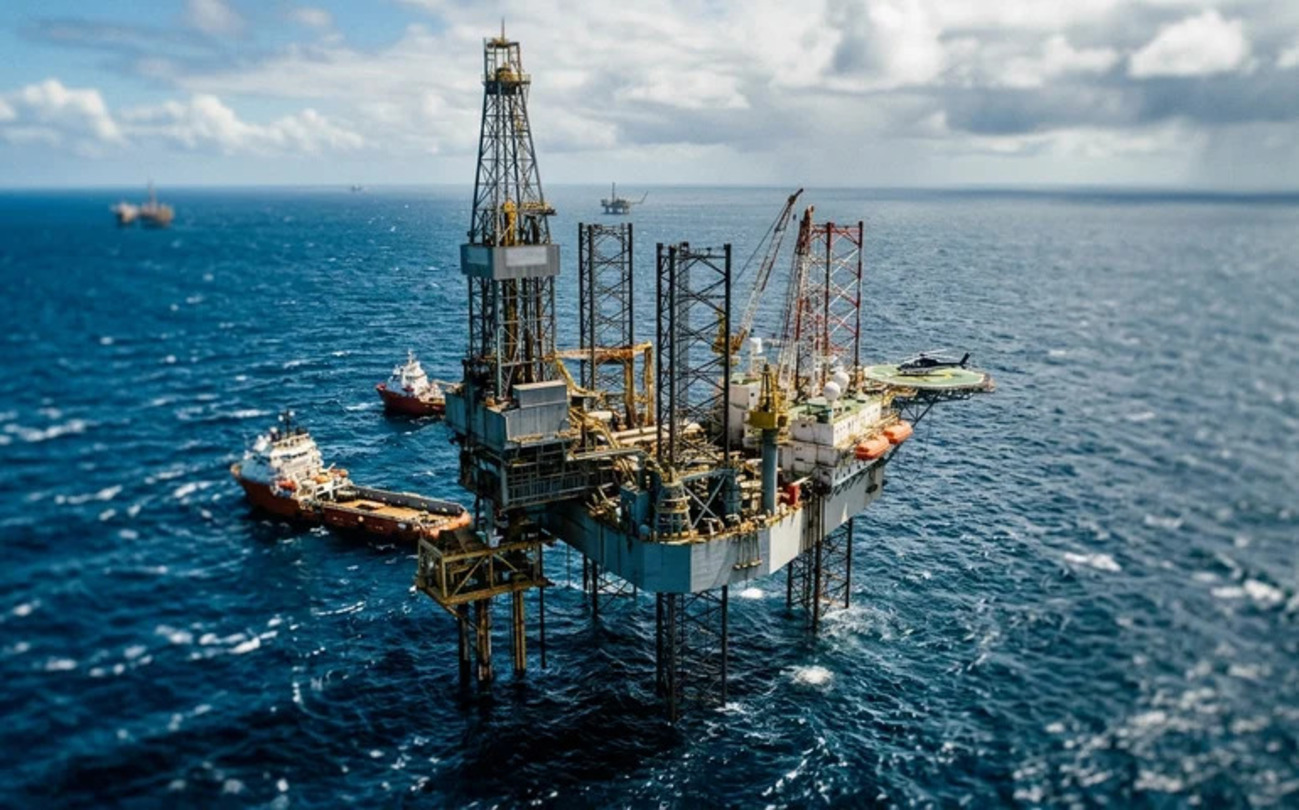
In the exploratory phase that will drill at the Mouth of the Amazon, Petrobras uses a deep-water drilling rig equipped for offshore drilling and a set of high-performance drill bits, ultimately using a diamond bit to penetrate harder formations.
The well is drilled in sections, with successive casings and circulation of fluids to maintain the stability of the hole and prevent unwanted influxes.
The goal is to reach the depth projected in the seismic model and, along the way, collect cores and electrical logs. These samples will be analyzed to understand if the reservoir rock has the capacity to store and flow oil or gas.
If the result is positive, Petrobras may schedule additional wells to delineate the deposit, a stage technically called the discovery assessment phase.
Why Environmental Licensing Was More Rigorously Enforced
The region of the Mouth of the Amazon is classified as an area of high ecological sensitivity. It houses extensive mangroves, reefs, endangered species, and rehabilitating animals.
For this reason, the environmental agency required specific plans for the rescue and detoxification of fauna, rapid response centers, and proof that, in the event of an incident, there would be conditions to act with speed and appropriate reach.
This greater requirement does not prevent drilling but changes the operational logic. Petrobras will have to operate with a monitored weather window, previously designed logistics, and constant communication with the environmental agency to register each stage of the process.
It is a way to keep the risk at an acceptable level for an area that does not have the same history of operations as more mature basins.
Logistical Challenges and Incident Response
Drilling in a remote area, with a less structured coastline and environmentally sensitive, requires a different support chain. Support vessels, wildlife care bases, containment equipment, and trained teams need to be pre-positioned.
The licensing agency only allowed the operation after the company proved it would have the structure to rescue and treat affected marine animals in the event of a spill.
Another point of concern is the current and ocean dynamics at the mouth of a large river like the Amazon. Any spill simulation must consider this more complex scenario.
That is why, even with a license, the operation begins gradually and under close monitoring, to create a safety history and environmental behavior for the area.
From Exploratory Well to Production Project
Exploratory drilling does not mean immediate production. If the well confirms the presence of oil in adequate volume and quality, the next step is to develop a field development plan to present to the regulatory agency and the environmental body.
This plan defines the number of production and injection wells, installation of subsea systems, and hiring of production units, usually in the form of floating production storage and offloading (FPSO) units.
This phase requires the largest investments and takes the longest time. It only occurs if the studies show a compatible economic return and if licensing remains viable.
Petrobras’s logic is to anticipate the stage of geological knowledge so that, if the discovery is confirmed, it can quickly enter the market with a new source of production.
Why the Equatorial Margin Could Be Billion-Dollar
Energy projections indicate that if a significant portion of the Brazilian Equatorial Margin’s potential is confirmed, the country could significantly expand its proven reserves, repeating the effect that pre-salt had in the 2000s.
Since it involves offshore oil, with technology that Brazil already dominates at deep and ultra-deep waters, the leap from exploration to production is shorter than in completely new provinces.
In addition, a new production hub in the North of the country diversifies Brazilian production geographically, which is currently very concentrated in the Southeast and South. This reduces logistical vulnerability and increases Brazil’s strategic relevance in global oil flows.
Conclusion and Call for Comments
The decision to drill at the Mouth of the Amazon marks the beginning of a cycle in which Petrobras tries to combine the expansion of frontiers with enhanced environmental oversight.
It is a more costly, more monitored, and politically more scrutinized operation than other exploratory campaigns, but it could place Brazil in a privileged position if the anticipated potential is confirmed.
For those following oil and gas, the critical point is not just finding oil but proving that it is possible to operate safely in a sensitive area while keeping the licensing active. That will determine whether the Equatorial Margin will indeed be the next great energy story of the country.
For those who read up to this point, a direct question for debate in the comments: in your assessment, should Brazil continue with exploration in the Equatorial Margin even with higher costs and environmental risks, or should it prioritize already consolidated areas?








Sim, explorar e dar garantias seguras.
Deve explorar
Áreas já consolidadas são finitas. Se a exploração na Margem Equatorial der certo, fornecerá petróleo quando as outras áreas estiverem se esgotando.
A Petrobrás é conhecida por alto rigor técnico e larga experiência na exploração em águas profundas, reduzindo em quase 100% as possibilidades de acidentes.
Fato que não ocorre com empresas petrolíferas norte-americanas.
Além disso, se o Brasil for governado novamente pela extrema-direita, certamente se repetirá a venda de nossas reservas (a preços subestimados) para empresas estrangeiras (em troca de propinas).
Aí sim, os riscos de acidentes ambientais se tornam possíveis. Empresas estrangeiras pouco se importam com meio ambiente, Leis, etc….
Se der ruim, posso mandar a conta pra você pagar? Porque cara…afirmar com 100% de certeza qualquer coisa nessa vida já é difícil…agora apostar toda a biodiversidade da foz amazônica nisso, acho uma conta muito alta.