





 Portuguese
  English
  Spanish
  8 min of reading
  6 comments


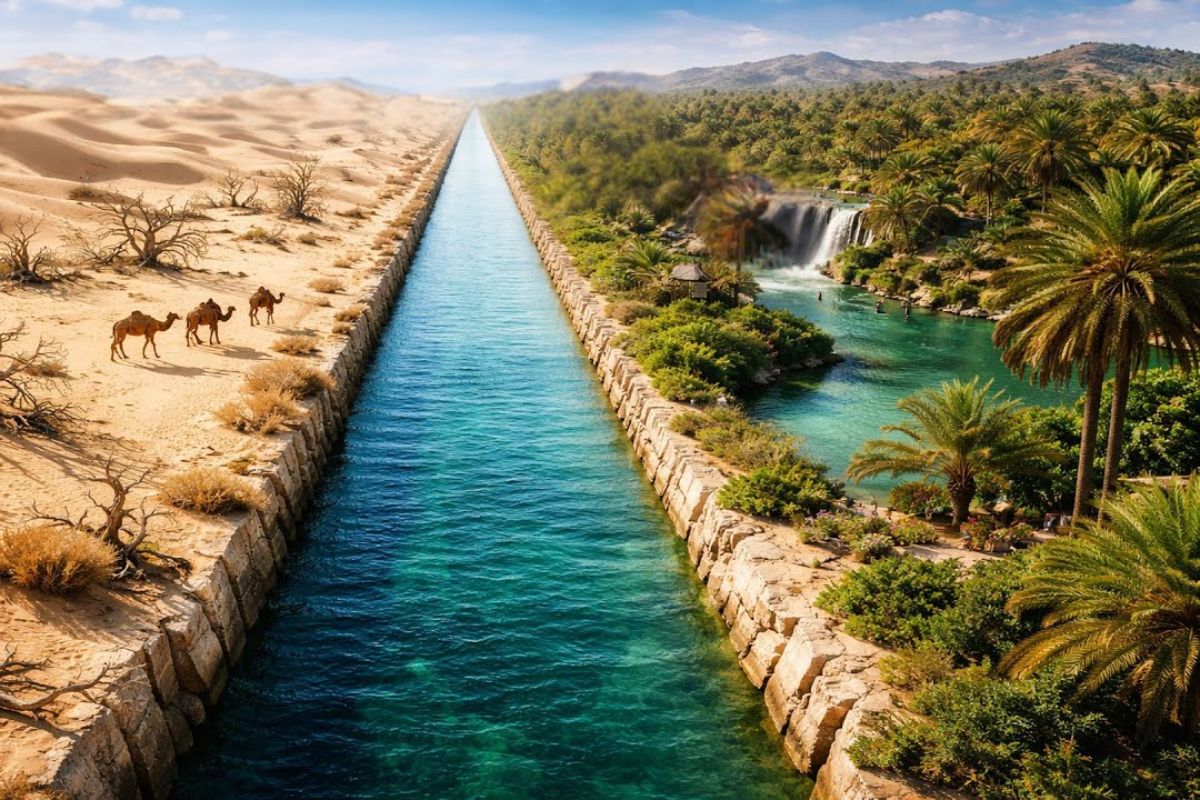


The Productive Oasis of Thar Was Born from the Combination of the Khadin System, Taanka Reservoirs, Johads, and the Khejri Tree, Which Together Store Each Short Rain, Recharge Aquifers, Raise Soil Humidity, Return Drinking Water to Villages, and Place Agriculture at the Center of Local Survival in the Region
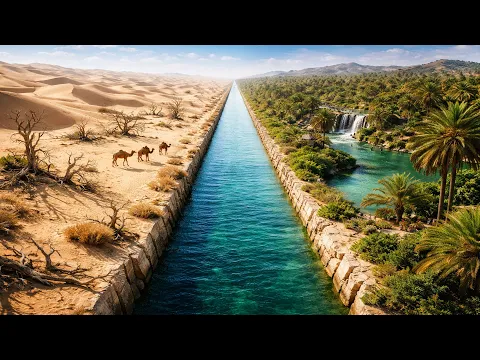
The productive oasis that reappears in the Thar Desert, India, was not created by expensive technology, increasingly deep wells, or large electrical projects. It emerged when farmers decided to work with gravity, with the shape of the terrain, and with the logic of violent rains that last only a few minutes but carry almost all the water of the year.
The turning point happened in a region where the heat reaches 50°C, rain varies between 100 mm and 300 mm per year, and the majority of that water was always lost to runoff. Instead of trying to defeat the desert, these communities learned to slow down water, infiltrate the soil, and rebuild life from what the climate offered for a short time.
When the Desert Showed That the Problem Wasn’t Just Lack of Rain
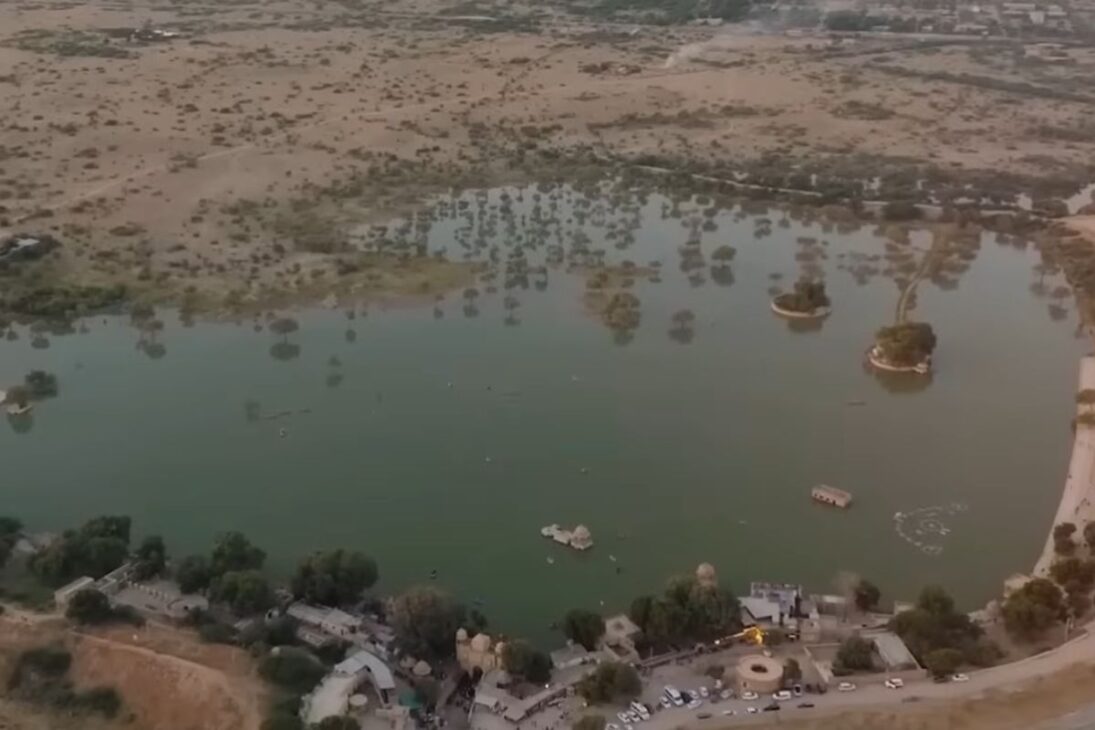
For a long time, the official response to scarcity was to drill increasingly deeper wells. The logic seemed modern, but the result was disastrous.
-
Man uses technique to save plaster with 20mm polystyrene panels, promises efficient thermal insulation and impresses with low cost in the construction.

-
Man digs a pool in his backyard, finds bars and coins of gold hidden, and discovers a treasure of nearly R$ 4 million buried for years.
-
Material present in millions of kitchens raises global alarm after causing severe lung disease and leading to multimillion-dollar lawsuits in the United States.

-
A person became a millionaire with just a 10-hour video of a lit fireplace on YouTube.


At about 300 meters deep, the water found was saline and carried fluoride levels five times above the permissible limit, causing bone deformities and dental problems in millions of children.
Water existed, but it was contaminated and deepened the crisis instead of solving it.
The scenario was even harsher because rain in the Thar Desert does not fall gently and evenly. It comes in short storms, sometimes lasting only 15 minutes, dumping almost the entire annual precipitation at once.
Since the soil is hardened by the extreme heat, about 90% of this water cannot infiltrate. It quickly runs off, washes away the fertile topsoil, and evaporates under the next day’s sun.
It was this failure that opened the way for a change in mindset. The productive oasis was not born when someone found more water.
It began when farmers understood that water was already arriving, but it always left too quickly. The central issue shifted from digging deeper to holding rain in the right place.
This realization seems simple, but it changed everything. If the desert could not receive continuous large-scale irrigation, then the only sustainable option was to retain each extreme rainfall event and push it into the ground before it disappeared.
Khadin, the Engineering That Transforms Fields into Sponges
The main response came from the Khadin system, created centuries ago by the Paliwal Brahmins and now revived on a much larger scale.
Instead of thinking about deep, isolated reservoirs, the Khadin transforms the field itself into a temporary storage area.
A earthen dam is built across the natural slope of the valley, extending from hundreds of meters to several kilometers.
When the storm arrives, the water flows down from high areas and is contained by this barrier. The field behind the dam gets flooded to about one meter deep.
The turning point comes after the shock of the rain: the water does not stay there forever, but slowly seeps down to the deeper layers of the soil, where evaporation can no longer destroy it.
This is what makes the system seem so powerful. When the surface layer disappears, the ground is still loaded with moisture.
After a few weeks, farmers sow wheat or mustard, and the roots manage to survive in winter using the water stored below the surface.
Satellite data cited in the base material indicate that one hectare within the system maintains five times more moisture than the surrounding land, even after four months without rain.
This performance explains the reported productivity of up to 4 tons of wheat per hectare, equivalent to that of areas irrigated by expensive canals, but without ongoing operational costs.
The productive oasis does not depend on pumps, energy, or sophisticated parts. It relies on terrain, compacted soil, well-positioned barriers, and community maintenance.
There is also a political dimension built into this. The Khadin returns control of water to farmers. They stop depending on a distant system and begin to manage locally what the climate itself offers.
This autonomy helps sustain the logic of what later became a true water parliament within communities.
Taanka, Drinking Water at Home and the End of “Water Wives”

If Khadin solves farming, Taanka answers the tougher question: where does the water for drinking come from?
The Taanka is a cylindrical underground reservoir, buried in the ground, lined with durable materials and connected to a sloped circular catchment area leading to the center.
Around it, the surface is compacted or lined so that rain does not disperse.
The efficiency is impressive because it works with very little precipitation.
With just 100 mm of rain, a catchment area of 300 square meters can collect about 25,000 liters of clean water, enough for a family of six for eight months.
The water is stored in the dark at about 25°C, even when the exterior reaches 50°C, which drastically reduces the proliferation of algae and bacteria.
The social impact may be even greater than the technical one.
For decades, in various villages, scarcity helped sustain a system where men married two or three women to ensure that there was always someone capable of walking long distances to carry water.
These women were known as panihari, or “water wives,” and spent their lives subjected to extreme physical strain.
With the expansion of Taankas, this burden began to disappear. Organizations helped build over 20,000 reservoirs in the last decade, and the change was profound.
The rate of girls in school rose by 60%, and diseases associated with contaminated water dropped by 75%. The productive oasis ceased to be merely an agricultural gain and became a domestic and social liberation.
When water enters the backyard, everyday life changes completely. The reservoir is not just a tank. It redefines work, time, health, and dignity within families.
The Khejri Tree, Grafted Orchards, and the Biology That Holds the System
The reconstruction of the desert also depended on a central biological ally: the Khejri tree, locally called the king of the desert.
Its roots can reach up to 30 meters deep, but the most important phenomenon is hydraulic lift.
During the night, the tree redistributes some of the moisture from the deep layers to more superficial levels of the soil, sharing water with the surrounding crops.
Moreover, the fall of its leaves forms a layer of humus rich in nitrogen. The effect is direct on productivity.
Crops under its canopy achieve yields twice as high as those in exposed areas. The Khejri does not compete with the crops; it acts as an ecological partner in the system.
From there, the desert also began to generate income. Scientists from the Central Institute for Dryland Research developed a grafting technique on local drought-resistant shrubs.
They used roots extremely adapted to drought to support productive apple branches.
The result was the creation of orchards capable of surviving on just 10 liters of water per month and still yielding about 50 per harvest to the farmer.
This explains why the productive oasis is not limited to survival. It also creates economic surplus.
What was once a territory associated with the absence of water began exporting fruits to other areas of Rajasthan, transforming the water captured from rain into tangible agricultural value.
Johads, Recharged Aquifers, and a River That Returned After 40 Years
In the Alwar district, one of the driest regions of Rajasthan, the return of johads changed not only the fields but the entire hydrology of the basin.
Johads are small earthen structures built to retain rainwater, slow down runoff, and promote deep infiltration.
Under the leadership of Rajendra Singh and the Tarun Bharat Sangh organization, residents built about 4,000 of these structures using manual labor and simple materials.
The effect on the aquifers was so strong that it surprised specialists. The retained water did not serve only for temporary irrigation.
It began to recharge the groundwater more quickly than extraction could deplete it. The groundwater level, once around 100 meters deep, rose to just 3 to 5 meters below the surface.
Water was not just stored; it was returned to the geological body of the region.
In 1995, the most symbolic result appeared. The Arvari River, which had been dry for 40 years, began to flow permanently again.
Fish reappeared, migratory birds returned, and the microclimatic temperature of the region dropped by 2°C. What seemed impossible in an extreme desert was achieved through the infiltration accumulated throughout the basin.
This may be the strongest point of the entire case. The productive oasis was not born merely on a farm or in a backyard.
It reached the territorial scale and demonstrated that, when rainwater is distributed correctly, entire rivers can be reborn.
What This Desert Teaches the Rest of the Planet
The Thar case is valuable because it confronts the model of heavy, expensive infrastructure used in many dry countries.
A concrete canal to carry water for one kilometer requires a high investment, loses up to 30% due to evaporation, and depends on constant maintenance.
In contrast, a Khadin system covering 10 hectares costs much less, can last indefinitely with soil maintenance, and does not require electricity or pumps.
This contrast helps explain why regions such as Namibia, Jordan, and parts of Australia began sending specialists to learn from Rajasthan.
They are not seeking software or sophisticated machinery.
They are going to study how to respect the natural flow of rain, soil, and infiltration instead of trying to replace everything with expensive technology.
The backdrop is even broader. Data from NASA’s GRACE project indicate that some of the largest aquifers on the planet, such as those in California, the Middle East, and northern China, are draining rapidly.
In contrast, satellites show that areas of Rajasthan managed to stabilize or even raise the level of their aquifers even under climate change.
The productive oasis of Thar shows that, in certain landscapes, the most powerful solution may be the combination of ancient knowledge, community organization, and simple engineering.
It is not nostalgia. It is real hydrological efficiency applied to an extreme environment.
Today, when fresh water comes from a Taanka in the backyard and a river flows again after four decades of dryness, what appears is not a mystical miracle.
It is proof that nature responds when management stops wasting rain and starts treating each storm as a precious resource.
In your view, could models like this productive oasis in the Thar Desert be adapted to other dry regions of the world, or does this type of transformation only work where the community is willing to reorganize water use as a collective good?








This is a very inspiring article. I am vry much impressed by this transformation at Thar desert. People everywhere only think about using water for their present own needs and depleting the underground water table. They should be reminded and taught how to always replenish it . That would make this earth a better place in the future..
Yes, this is a great practice and reflects the knowledge of our ancestors! 👏
In the era of negative, demoralising news like destructive wars, dirty politics, rampant corruption and natural disasters, this type of positive news comes like a welcome change. Such constructive news should be spread through detailed documentaries across different media platforms to educate and motivate the people of affected areas to undertake remedial measures. Govt initiative in this matter and infusion of requisite funds and manpower will help a lot to achieve sustainable socio – economic results