





 Portuguese
  English
  Spanish
  4 min of reading
  0 comments


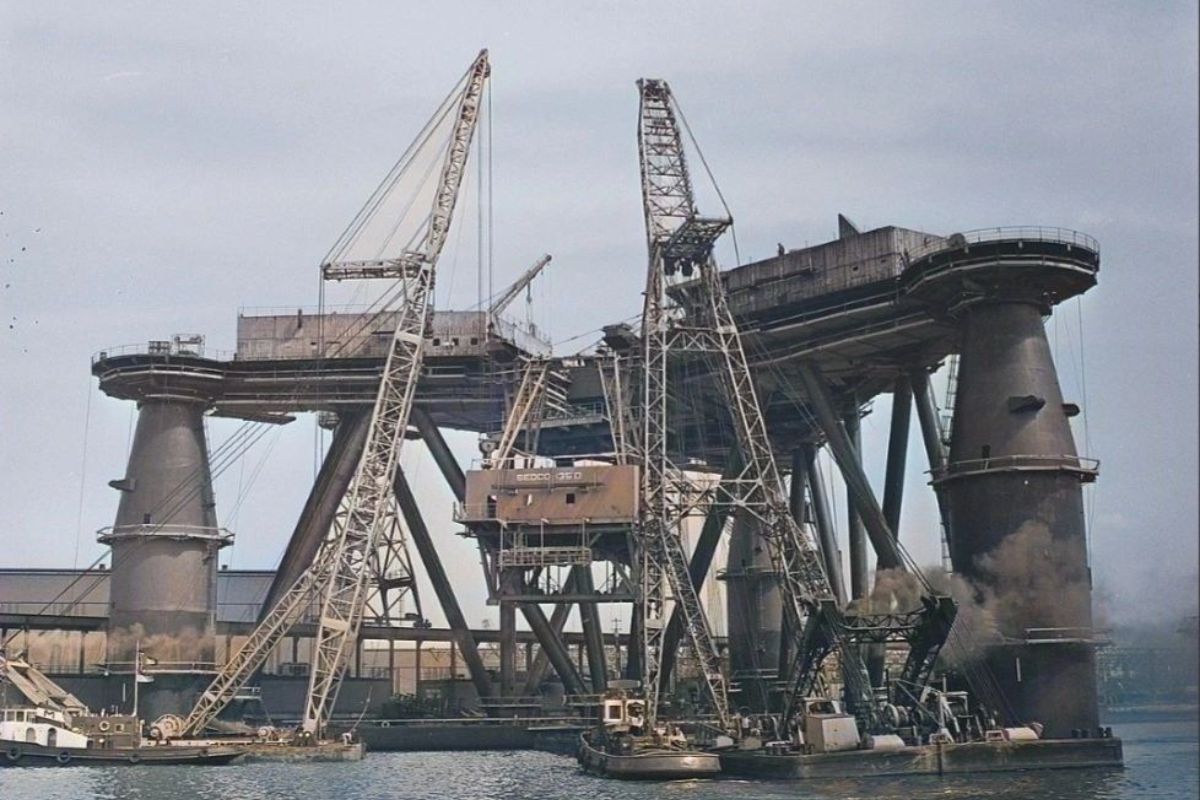
The Technologies And The Generation Of Specialists That Overcame The Challenges Of The Campos Basin In The 80s And 90s Laid The Foundation That Allowed Petrobras To Conquer The Pre-Salt Frontier.
The discovery of the Pre-Salt, which placed Brazil among the world’s largest oil powers, was not a stroke of luck. It was the final proof of a ‘graduation’ that lasted decades, in a challenging environment: the Campos Basin. The first production platforms in the Campos Basin served as a true “school” for Petrobras, a laboratory offshore that prepared the company and its technicians for the even greater challenge that lay ahead.
The history of oil exploration in Brazil is a cycle of overcoming, where necessity generated innovation. Understanding how Petrobras learned to operate in deep waters in the Campos Basin is key to understanding how it was possible to reach the wealth hidden beneath the salt layer and how this legacy continues to generate value for the country in 2025.
The Discovery Of Oil In 1974 And The Urgency For Self-Sufficiency
Brazil’s journey offshore began out of necessity. The global oil crises in the 1970s exposed the country’s vulnerability, as it imported more than 80% of the oil it consumed. Faced with immense economic pressure, Petrobras received a clear mandate: to find oil on national territory.
-
Inside an active volcano in Africa, residents use volcanic rocks to build houses in an impressive setting.
-
After 14 years of waiting, a rammed earth mansion built in 1702 in the North Zone of São Paulo will become a park with leisure facilities and green areas, with a million-dollar investment.
-
With 2 unfinished nuclear reactors, up to 25 billion in costs, and proven fraud, the Nukegate case has left 800,000 consumers still paying today for energy that will never be produced.
-
The household appliance that consumes the most energy in Brazilian homes is not the air conditioner; it is located in the smallest room of the house, is used daily, and can account for up to 25% of the electricity bill, while an alternative in the same outlet can reduce this cost by up to 75%.

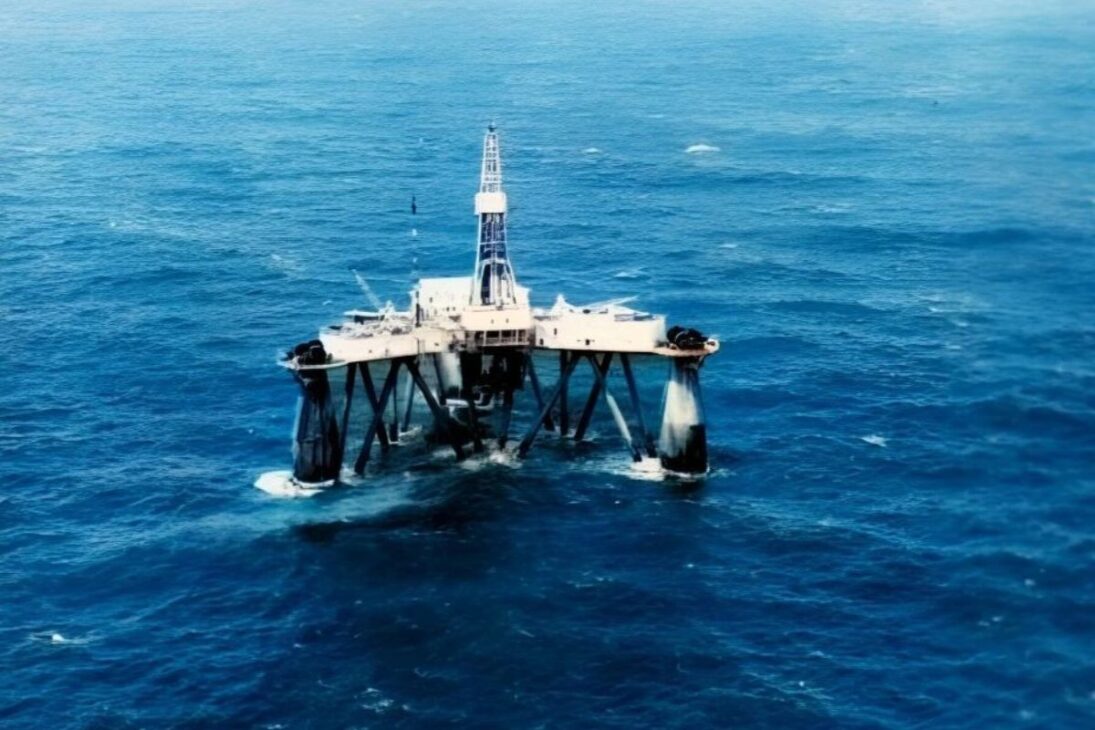
The bet on the sea paid off in 1974, with the discovery of the Garoupa field in the Campos Basin. Brazil’s first offshore oil was extracted on August 13, 1977, at the Enchova field. In light of the urgency, Brazilian engineers created the Advanced Production System (SPA), an ingenious solution that used a floating platform to accelerate production, reducing the time between discovery and extraction from years to months.
The PROCAP Of 1986: The Training Program That Transformed Brazil Into A Leader In Offshore Technology
The game changer occurred with the discoveries of the giant fields of Albacora (1984) and Marlim (1985). These reservoirs were in “deep waters,” between 400 and 1,000 meters, a technological frontier that no company in the world fully dominated at the time.
Instead of relying on foreign technology, Petrobras made the strategic decision to invest in its own capacity. In 1986, the Deep Water Technological Training Program (PROCAP) was launched. This program, in collaboration with universities and research centers, was the engine that propelled Brazil to the forefront of offshore technology, focusing on the development of floating production systems (FPSOs), which would become the country’s hallmark.
The First Production Platforms In The Campos Basin As A Laboratory For Innovation
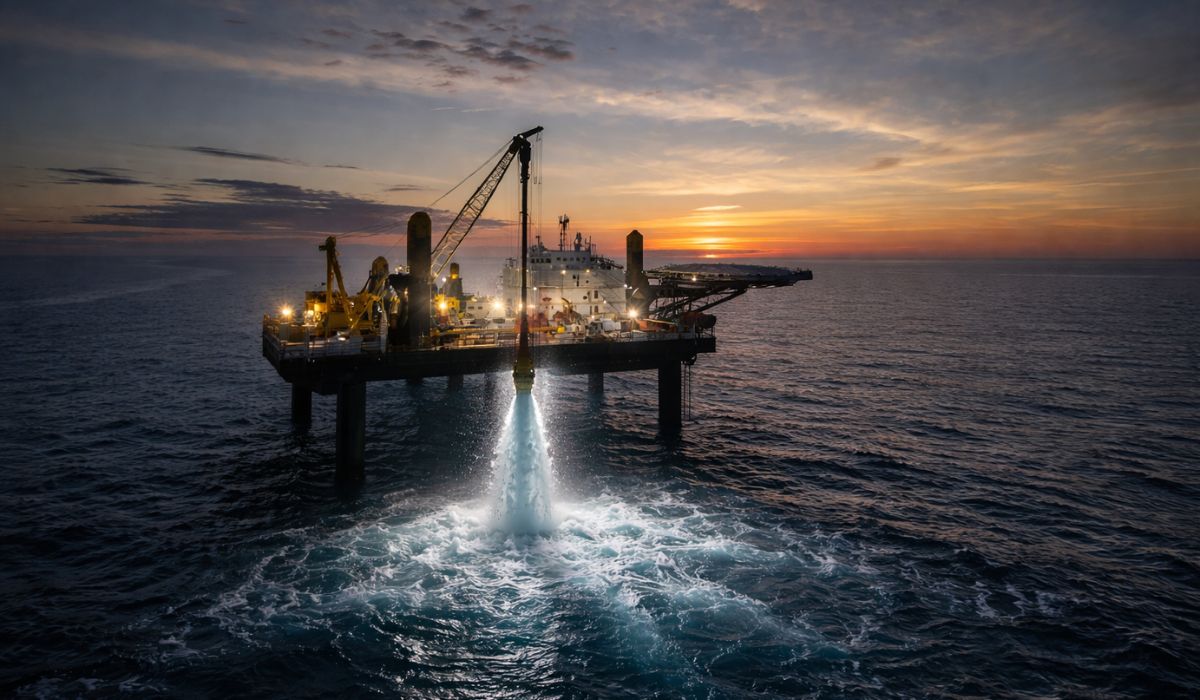
The Campos Basin became a huge open-air laboratory. The first production platforms in the Campos Basin were not just extraction units but proving grounds for technologies that would be crucial decades later.
It was there that Petrobras perfected the use of FPSOs, subsea completion systems, and flexible risers (the pipelines that connect the well to the platform). The success of this “school” was recognized worldwide with the Offshore Technology Conference (OTC) award — considered the “Oscar” of the oil industry — which Petrobras received in 1992 for the technologies of Marlim, and again in 2001 for the innovations in Roncador.
The First Oil From The Pre-Salt Extracted In Campos On September 2, 2008
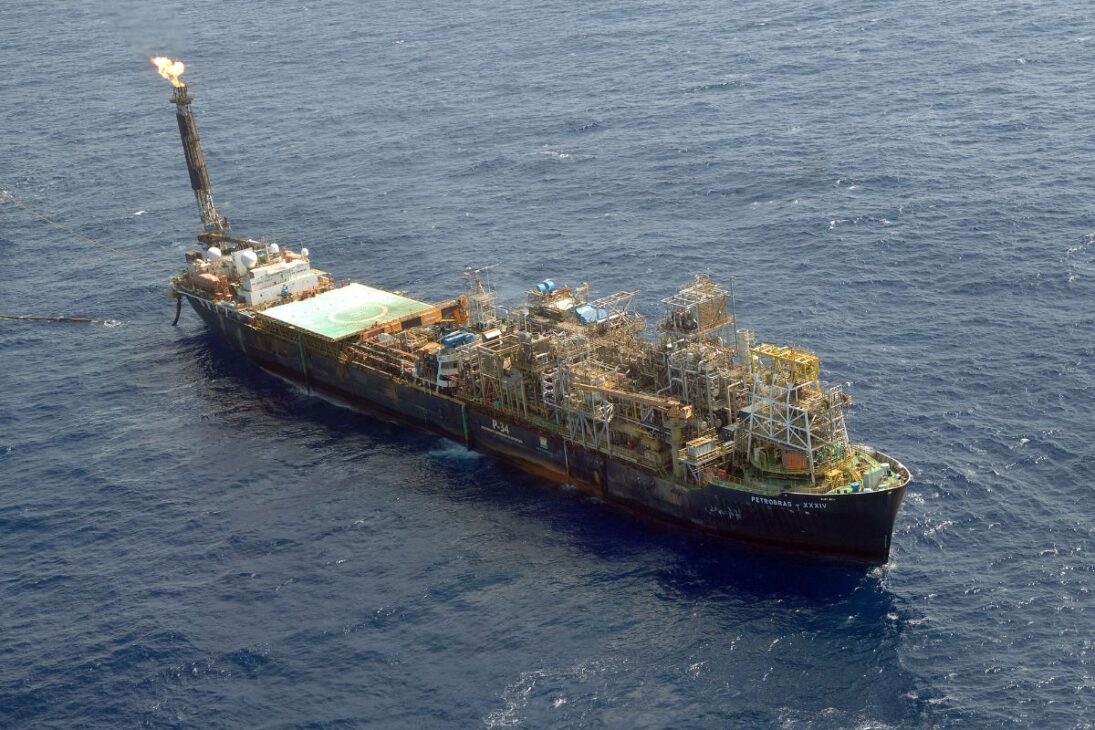
The final link that connected the two eras and proved the importance of the “school” of Campos was the extraction of the first oil from the Pre-Salt. This historic milestone did not occur in the Santos Basin, but in the Jubarte field, located in the Cambos Basin on September 2, 2008.
The production was made possible by the P-34 platform, a unit that was already operating in the post-salt and was adapted for the new challenge. This event unequivocally proved: the knowledge, infrastructure, and operational capacity developed in Campos were the direct enablers that inaugurated the Pre-Salt era.
How The Pre-Salt Technology Today Revitalizes The Fields That Originated It
Closing the learning cycle, the history of innovation now makes its way back. Today, the cutting-edge technologies developed to overcome the challenges of the Pre-Salt, such as drilling in salt and CO₂ reinjection, are being applied to revitalize the mature fields of the Campos Basin.
The Marlim Revitalization Project, the largest program of its kind in the world, is replacing nine old platforms with two new state-of-the-art FPSOs, the Anna Nery and the Anita Garibaldi. This modernization, which earned Petrobras its fifth OTC award in 2024, will not only extend the life of the field by decades but also reduce gas emissions by more than 50%. It is the final proof of how the learning from the first production platforms in the Campos Basin not only enabled the conquest of the Pre-Salt but continues to generate value and shape Brazil’s energy future.





-

Uma pessoa reagiu a isso.