





 Portuguese
  English
  Spanish
  4 min of reading
  0 comments


From The Height of the Water Tank to Clogs and Technological Solutions Like Pressure Boosters, Discover The Causes and Solutions for The Low Water Pressure Problem.
The scene is classic and frustrating: you arrive home after a long day, dreaming of a relaxing shower, and when you turn on the shower, you are faced with a weak and discouraging trickle of water. Or maybe your struggle is at the kitchen sink, trying to wash dishes with a weak faucet. Low water pressure is one of the most irritating household problems, and in some cases, it can even damage appliances like showers and water heaters.
The good news is that, most of the time, the solution is simpler than it seems and does not require major construction. To help you, we created a complete guide for you to diagnose the possible causes and learn the engineering solutions to finally increase the water pressure in your home.
Diagnosis 1: The Height of The Water Tank (The Most Common Cause)
The main source of water pressure in a house is gravity. The force with which water flows down from the water tank to the faucets directly depends on the height at which the reservoir is installed.
-
What the Public House of Julius Caesar was like inside in the Roman Forum: layout, atrium with compluvium and impluvium, tablinium and peristyle, and the scandal of the Bona Dea, revealed in an AI recreation.

-
While digging a trench next to a pool in Germany, workers found more than 1,500 silver coins from 1320 in the rubble, revealing a treasure buried for over 700 years.
-
Flight Helios 522, the “ghost” flight with 121 people: the commercial aircraft flew for more than 2 hours on autopilot after a pressurization failure left pilots and passengers unconscious and only stopped when it ran out of fuel.

-
Researchers have located a nearly intact vessel that disappeared 125 years ago on the bottom of icy waters, with masts still preserved and rare details that impress archaeologists.


- The Golden Rule of Engineering: For good pressure, the vertical distance between the bottom of the water tank and the water outlet of your shower (the highest point of use) must be at least 2 meters.
- Why Does This Matter? The greater this “water drop,” the higher the pressure will be at all points in the house. In buildings, for example, the lower floors often have very high pressure due to being far below the water tank at the top of the building. If your house is a single story or the tank is installed very close to the slab, this may be the cause of the problem.
Diagnosis 2: The Hydraulic Installation and The ‘Vent’
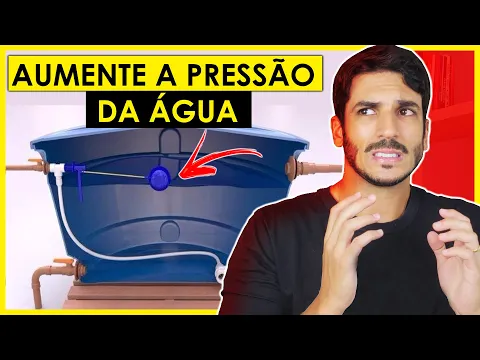

Often, the problem is not the height, but rather the installation. A technical detail that is often forgotten is the vent pipe, or “breather.”
- What Is It For? Every pipe contains air bubbles. If this air has no way to escape, it creates “blocks” that hinder the water flow and decrease the pressure.
- The Solution: A proper installation requires a “breather,” a pipe that exits the main pipeline right after the water tank and rises above its level. It allows the air in the pipe to escape, ensuring a continuous and uninterrupted flow of water. The absence or incorrect installation of this item is a common cause of low pressure.
Diagnosis 3: Clogs and Leaks
If the pressure has decreased over time, the cause may be a physical blockage or a leak.
- Cleaning the Tips: The first thing to check are the aerators of the faucets and the small holes in the water outlet of the shower. Debris and limescale can accumulate in these areas, obstructing the water flow. A simple cleaning often solves the problem.
- Invisible Leaks: Small leaks in the piping or, especially, in the toilet tank, are major villains. A constant leak, even if small, relieves the pressure from the entire hydraulic system of the house.
Engineering Solutions (Without Breaking Anything)
If after checking all the above points the problem persists, there are two main technological solutions that do not require major construction.
Solution 1: Pressure Alternator Valve
- How It Works: This smart device uses the water pressure coming from the street to pressurize the water in your house. It is installed at the outlet of your water tank and essentially “mixes” the pressure of the public network with that of your reservoir.
- Advantages: Easy to install and does not consume electricity.
- Disadvantages: You become dependent on the street pressure. If the public network in your neighborhood has low pressure or supply problems, your house will too.
Solution 2: Water Pressure Booster (The Definitive Solution)
This is the most efficient solution, ensuring strong and constant pressure, regardless of the height of your water tank or the pressure from the street.
- How It Works: The water pressure booster is a pump installed at the outlet of the water tank that “pushes” the water more forcefully through the entire piping of the house. There are several types, but the most common for residences are those with a flow switch, which turn on automatically as soon as you open a faucet or the shower.
- Advantages: High and constant pressure at all points, independent of the public network, and solves the problem definitively.
- Disadvantages: Consumes electricity (although modern models are efficient) and represents a higher initial investment.
Understanding the cause of low pressure is the first step to finding the right solution, which can range from simple cleaning to a technological installation, ensuring that your shower is always relaxing and never frustrating.
Do you have low water pressure at your home? What have you tried to solve this problem? Share it in the comments to help others!








Seja o primeiro a reagir!