





 Portuguese
  English
  Spanish
  5 min of reading
  0 comments


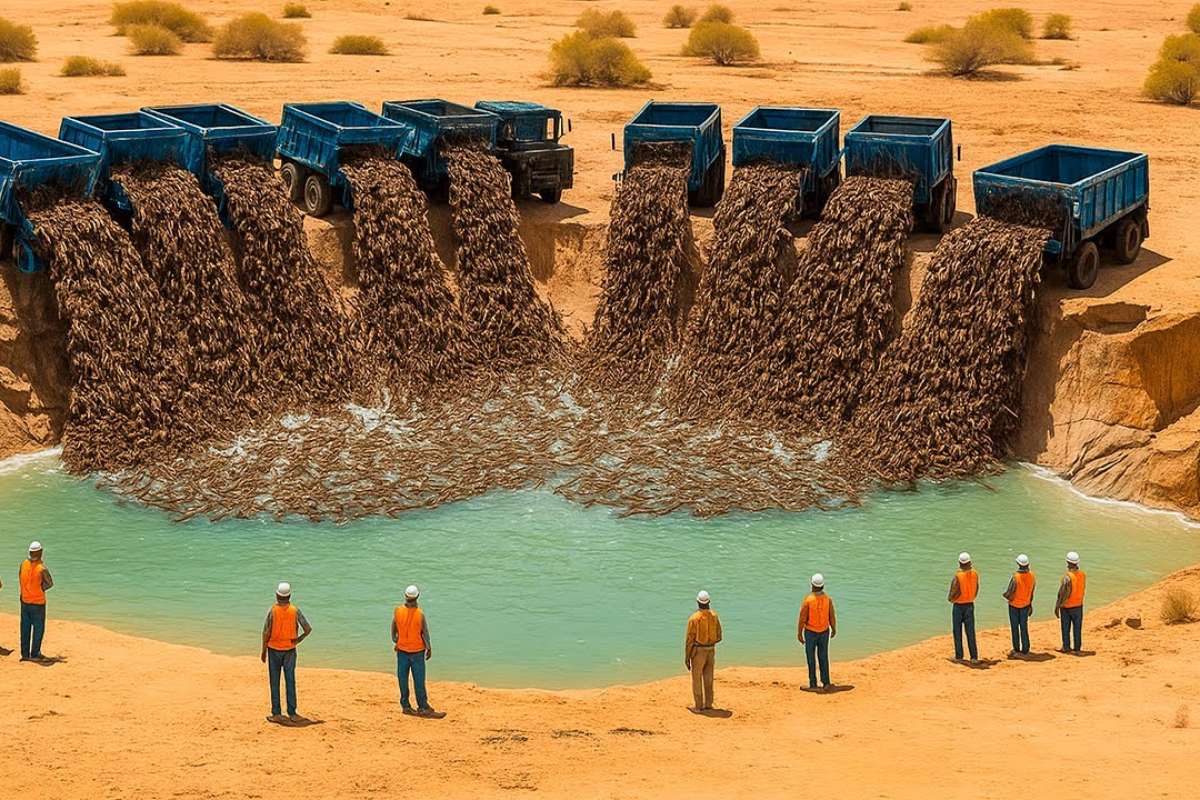
Nearly Exterminated by the Hat Industry, Beavers Return as Essential Hydraulic Engineers, Creating Dams That Hold Water, Reduce Wildfires, Alleviate the Water Crisis, Protect Fragile Ecosystems, and Offer Humanity an Unexpected Ally in the Climate War Without Spending Billions on Concrete While Human Machines Fail in the Face of Fire.
Beavers were hunted to near extinction for luxury hats, treated only as raw material and not as a vital part of nature. Today, in the midst of a climate war, this same 30-kilogram animal is back at the center of the debate as a strategic piece to face wildfires, severe droughts, and the water crisis in various regions of the planet. Where our billion-dollar machines fail, discreet beavers are able to stabilize rivers, hold water, and create true natural shields against fire.
Instead of concrete, pumps, and megaprojects that take years, beavers work with teeth, mud, and branches, with no salary, no bidding, and no deadlines. That’s why more and more scientists, public managers, and communities see these animals as true engineers of hydraulic systems at the service of nature, capable of restoring swamps, rehydrating soils, and transforming degraded areas into mosaics of water and life in the midst of a climate war.
Beavers, The Hydraulic Engineers That Humanity Nearly Fired Forever

For centuries, beavers were treated as mere industrial input. Their fine underfur became the basis for luxury felt hats, and millions of beavers were killed until the species nearly disappeared from entire regions. By the early 20th century, only small groups remained hidden in remote swamps.
-
With over 14 million baskets of earth moved, an ancient North American metropolis built a monumental pyramid of 30 meters and established a city with 20,000 inhabitants nearly a thousand years ago.

-
A 1,900-year-old treasure emerges from a Roman house destroyed by fire and sealed since antiquity in Romania, with coins and metals fused among the ashes.
-
The Brazilian colonial city that stopped in time and shares territory with a rocket launch base.

-
79-year-old woman challenges limits, visits 193 countries in the world after 56 years of planning and reveals the behind-the-scenes of a global journey that few have managed to accomplish.

By hunting beavers at this level, humanity failed to realize they were literally firing some of the best hydraulic engineers on the planet. Each beaver dam is an ecological engineering feat that costs zero in public budget and delivers tremendous environmental benefits, from aquifer recharge to flood and drought protection.
Today the trend is reversed. Instead of exterminating, environmental projects capture beavers that become a “problem” in urban areas and relocate them to degraded basins, where these hydraulic engineers can rebuild swamps, rivers, and entire lakes, helping to alleviate the water crisis and the pressure of the climate war on critical regions.
How Beavers’ Dams Help Address the Water Crisis

While our concrete infrastructure transforms rivers into fast and hard channels, beaver structures do the opposite. They build permeable dams of branches and mud that do not completely block the water, but slow down the current.
By slowing the water down, the dams force the flow to spread, flood banks, infiltrate the soil, and recharge groundwater. In real projects, a single dam can retain about a million gallons of water on the surface, and networks of dams have already accounted for tens of millions of gallons stored in lakes, channels, and underground aquifers.
This completely changes the game in regions suffering from the water crisis. Even when it hasn’t rained for months, areas with beaver dams keep soils moist, maintain active streams, and allow cold water to circulate below the surface, reducing stress on ecosystems and communities.
Instead of expensive and fragile systems, these hydraulic engineers create organic, flexible, and self-repairing infrastructure, essential in the midst of a climate war.
Natural Fortresses Against Wildfires
Wildfires are one of the most violent symptoms of the current climate war. Dry forests, rising temperatures, and strong winds turn entire landscapes into fuel. In this reality, beavers and their dams become natural fire defense lines.
Satellite observations have shown that areas with networks of beaver dams retain up to three times more moisture than areas without this natural engineering.
When large wildfires advance, the pattern is repeated: the flames consume everything around, but lose strength upon encountering soaked valleys, ponds, and saturated soils created by the patient work of beavers.
In the case of an intense fire in 2015, the flames devastated vast dry areas, but stopped at the edge of beaver ponds, where the soil was so moist that there simply wasn’t enough fuel to keep burning.
Firefighters also used the water from these ponds to support direct combat, proving in practice that these small hydraulic engineers can be concrete allies in regions with high wildfire risks.
For countries facing fire season every year, integrating beavers into basin management can be as strategic as purchasing planes and special trucks.
They help hold water, reduce the intensity of wildfires, and also decrease the cost of recovering burned areas, tackling the root of the water crisis that dries out soils and forests.
When Beavers Restore Rivers and Bring Fish Back

The beaver logic benefits not only water and fire. By slowing down rivers, filtering sediments, and reducing water temperatures, their dams recover ecological services that human machines cannot replicate with the same efficiency.
In regions where the combination of concrete and rising water temperatures has led to salmon populations declining by 70 to 90 percent, planned beaver release projects have created true natural industrial complexes, with chains of over ten consecutive dams.
These structures act as nurseries filled with insects, cold water, and hiding places, allowing for the return of hundreds of juvenile fish to streams that were previously considered dead.
In this scenario, beavers emerge as hydraulic engineers of an entire ecosystem, reactivating food chains, improving water quality, and restoring swamps that also function as sponges against the water crisis.
Each pond is a water reserve, a filter, and a shield at the same time, with a direct impact on the climate war threatening rivers and oceans.
Beavers on the Front Lines of the Climate War
The current crisis is not just one of temperature, but of water, soil, rivers, and forests. The climate war is being fought in the swamps, on riverbanks, and in valleys that dried up after decades of drainage and concrete. In this battlefield, beavers stand out as unexpected allies.
Instead of destroying beavers that fell trees in backyards, specialized teams now treat these animals as “VIP consultants” of nature, capturing, examining, and relocating beavers to burned, dry, or degraded basins, where their presence can completely reconfigure the water cycle.
Each new lake that emerges is a victory against the water crisis, every cooled river stretch is a practical response to the climate war, and every soaked area reduces the impact of future wildfires.
In the end, the message is simple and powerful. We spent centuries trying to dominate water with steel and concrete, but some of the most efficient solutions have always been swimming discreetly in our rivers.
Instead of betting solely on giant machines, integrating beavers into landscape management can be one of the smartest ways to reinforce the water infrastructure on a warming planet.
And you, after knowing the role of beavers in this climate war, do you think we should invest more in these natural hydraulic engineers to contain wildfires and address the water crisis?







-

Uma pessoa reagiu a isso.