





 Portuguese
  English
  Spanish
  3 min of reading
  4 comments


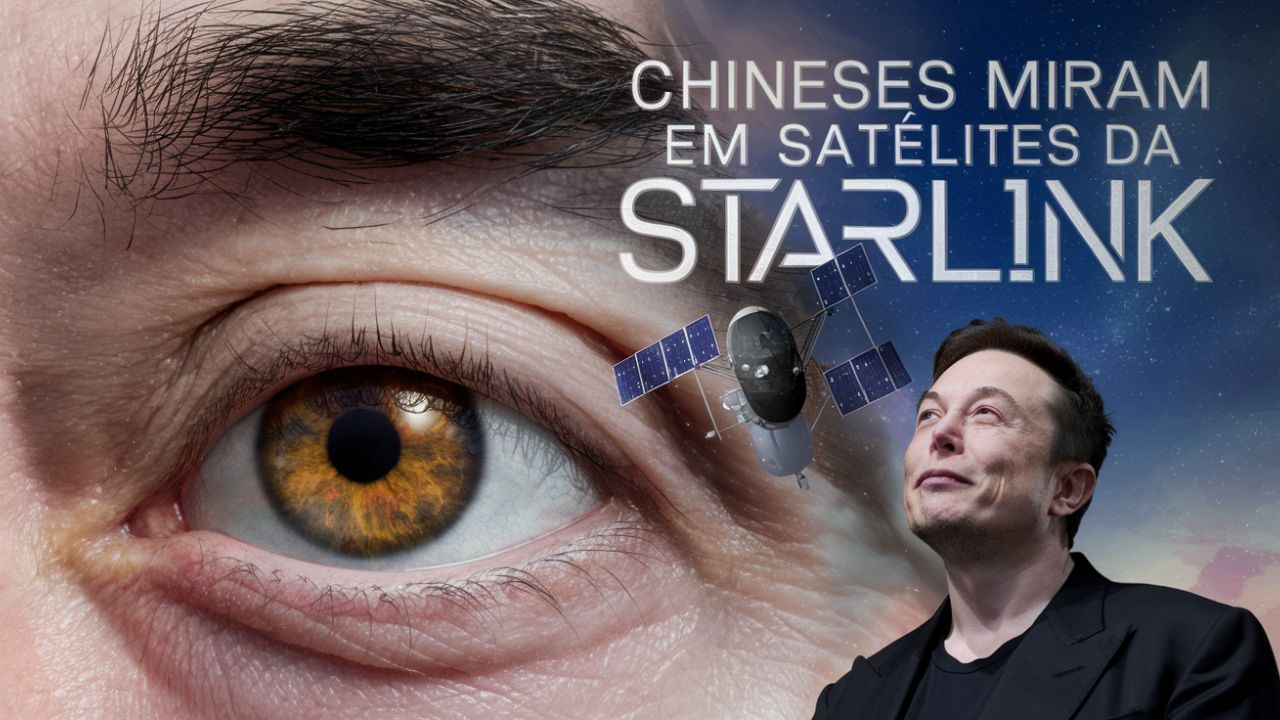


Using Only 99 Satellites Equipped with Lasers and Microwaves, Chinese Researchers Simulated Tracking 1,400 Starlink Satellites in 12 Hours, Showing an Innovative Nature-Inspired Approach and Challenging the Limits of Space Technology.
The space is becoming increasingly crowded, like a highway during rush hour. This is exactly what happens with satellite constellations, such as Elon Musk’s Starlink from SpaceX. But what surprised recently was the innovative method created by Chinese scientists to track these satellites in orbit. Let’s understand better how they did this and what it means for the future of space security.
The Starlink Constellation: The Giant in Space
Starlink is one of the largest satellite projects ever created. Launched by SpaceX, Elon Musk’s company, it has already placed over 6,700 satellites in orbit. The goal? To bring high-speed internet to the entire world, including remote areas. But beyond connecting people, this constellation has raised concerns on the global stage.
Why? The answer lies in the impact it can have on military and security issues. During the Russia-Ukraine conflict, for example, the use of Starlink satellites was crucial to maintaining strategic communications. This led many countries, like China, to intensify their efforts to monitor this technology.
-
Expedition 501: Scientists drill into the ocean floor and discover a giant reserve of fresh water hidden beneath the sea, extracting nearly 50,000 liters and revealing an invisible system that could reshape the map of water scarcity.

-
Archaeologists find an intact tomb over 2,500 years old, with more than 100 preserved objects, weapons, jewelry, and human remains never touched.

-
Volcanic lava transforms into threads as fine as human hair that travel over 30 kilometers by wind and fall like cutting rain on roofs and backyards in Hawaii and Iceland.

-
NASA issues a warning for the feared Godzilla El Niño that could change the planet’s climate in 2026 with extreme warming of the Pacific capable of causing devastating droughts in some regions and historic floods in others simultaneously.


The Challenge: Monitoring Starlink Satellites
Imagine trying to follow thousands of cars on a road without GPS. This is the complexity of tracking Starlink satellites. Each of them is in constant motion, which requires extremely precise orbital calculations. The enormous number of satellites makes monitoring even more difficult.
However, the militarization of space has forced countries to seek creative solutions. As highlighted by the team led by Wu Yunhua from Nanjing University of Aeronautics and Astronautics, understanding how these constellations operate is essential for national security. The Chinese simulation showed that this is possible, but not without challenges.
The Innovative Chinese Approach
What do whales have to do with satellites? Quite a lot, actually. Inspired by how these mammals track their prey, Chinese scientists developed a method to monitor the Starlink constellation. Using only 99 satellites, they were able to “hunt” virtually around 1,400 Starlink satellites in just 12 hours.
This innovative approach involves technologies like lasers and microwaves for recognition and tracking. But don’t think it’s as simple as it sounds. These devices consume a lot of energy, and the Chinese satellites needed specific time to recharge their batteries using solar energy.
Promising Results from the Simulation
The simulation was a success and showed that it is possible to track Starlink satellites with a limited number of resources. The Chinese scientists managed to keep the target satellites within reach for at least 10 seconds, enough to perform monitoring operations.
Still, the mission was not free of obstacles. Maneuvering the satellites in real time and avoiding collisions required complex calculations. The challenge of balancing energy consumption and solar recharge time made the process even more complicated.
With the race for satellite constellations, space is becoming a new field of geopolitical disputes. Monitoring these networks is crucial to ensure they are used peacefully. However, it also raises questions about international regulation. Who should have the right to monitor or even interfere with these constellations?









Falsa novidade. Isso já era feito por diversos países, dentre eles os próprios EUA.
Sério mesmo que a China revolucionou !!! Não existe e nunca existiu a intenção de ocultar satélites em especial de baixa orbita , onde até a olho nú na escuridão noturna e possível ver estes satélites ! Outra coisa , estes satélites emitem sinal constante na forma de microondas de banda baixa que por si só ja é perfeitamente identificável por qualquer detector de fase espectral . Então acredito que a Starlink que, não tem nem patente registrada sobre este sistema está pouco se importando que os chineses, russos, iranianos ou qualquer outra nação esteja rastreando os seus satélites .
A China vê os satélites da starlink como uma potencial ameaça de interferencia externa nas comunicações do seu país, afinal quem controla as comunicações pode controlar o fluxo de informações e o conteúdo das mensagens e isso pode resultar em uma revolução civil para queda do regime ditatorial chinês. Se a China consegue monitorar tambem consegue travar alvo para derrubar os satélites. Estamos caminhando para uma terceira guerra mundial.
China logo logo vai ser a número um