





 Portuguese
  English
  Spanish
  4 min of reading
  0 comments


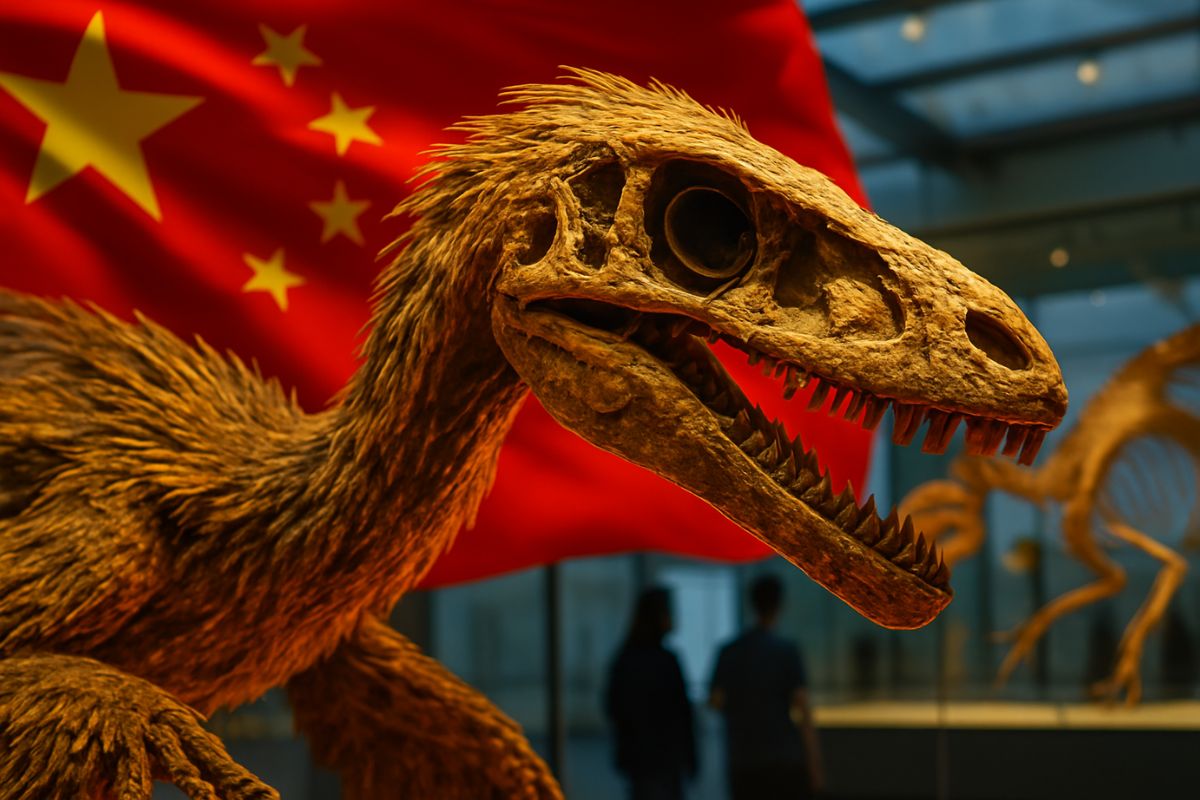
How Dinosaurs Are Helping China in Its Plan to Become a Superpower. Feathered Fossils Found in the Country Have Changed Paleontology and Turned into a Strategic Piece in the Chinese Project for Science, Culture, and Global Power.
When it comes to how dinosaurs are helping China, the immediate association may seem curious. But the truth is that the discovery of Sinosauropteryx in 1996 transformed not only global paleontology but also the country’s position in the scientific and geopolitical landscape. The fossil, described as the first non-avian dinosaur with feathers, placed China at the forefront of research on prehistoric giants and revealed a strategic path to strengthen its image as a power.
According to Estadão, this movement did not happen by chance: the Chinese government realized that science and culture could be used as instruments of soft power, elevating the country’s international influence in parallel with its economic rise.
From Scientific Periphery to Global Leadership
For decades, Chinese fossils were smuggled abroad, fueling research conducted in the United States and Europe. This dynamic changed radically starting in 1996. With Sinosauropteryx, China entered the global map of paleontology, boosting internal investments and tightening laws against illegal fossil export.
-
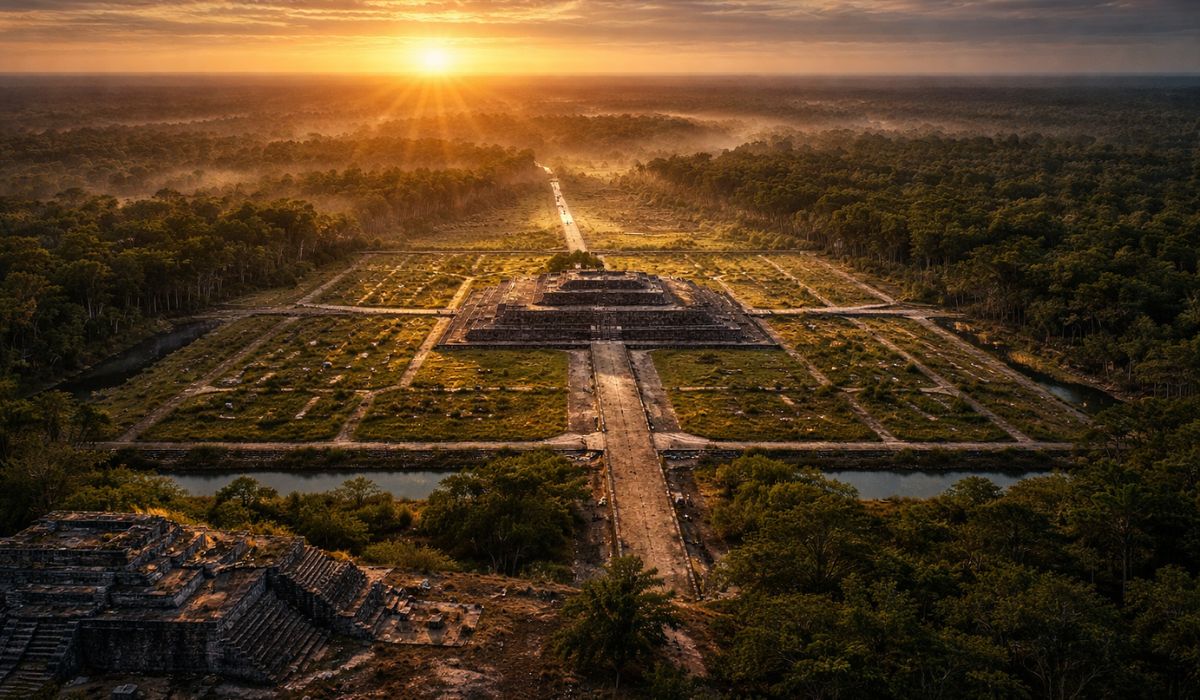
In Mexico, a 3,000-year-old Maya site with the dimensions of an entire city may have been built as a colossal map of the cosmos, created to represent the order of the universe and reveal how this people organized space, time, and rituals.
-
Japan wants to build a solar ring of 10,900 kilometers on the Moon to continuously send energy to Earth.

-
Weighing almost 1 ton, with temperatures of up to 3,000°C, the ability to launch 10,000 fragments within a radius of 1 km, capable of penetrating concrete and melting steel, Turkey’s terrifying bomb emerges as one of the most destructive non-nuclear weapons ever presented.

-
After a submarine disappeared beneath the “Doomsday Glacier,” scientists announce a new monstrous machine capable of operating at 3,000 meters depth to return to the heart of the ice and investigate a threat that could raise sea levels worldwide.


Today, the country has already surpassed the U.S. in the number of paleontological publications. Monuments, museums, and research centers have emerged in cities near major fossil sites, turning dinosaurs into symbols of national pride. Fossils have become state heritage, strengthening control over knowledge and natural resources.
The Contrast with Brazil and the Ubirajara Case
The Chinese rise also exposes Brazilian losses. In 1995, a fossil found in Ceará was illegally taken to Germany. Decades later, it was discovered to be Ubirajara jubatus, the first feathered dinosaur from the Southern Hemisphere.
Experts, such as paleontologist Aline Ghilardi, emphasize that Brazil could have had scientific prominence similar to that of China if the fossil had not been removed from the country. “This story could have been ours,” laments Ghilardi, recalling that the Chinese discovery has opened doors to massive investments in science.
Dinosaurs as a Soft Power Tool
Just like panda diplomacy and the display of the Terracotta Army, Chinese dinosaurs have become a powerful instrument of global image. In parallel to Hollywood’s cultural success with “Jurassic Park” and icons like Tyrannosaurus rex, Beijing has built its own narrative by showcasing unique fossils, attracting tourists, scientists, and international attention.
For experts like Nussaibah Raja from the University of Erlangen-Nuremberg, China’s strength comes not only from the number of fossils but from how the country has transformed science into state policy, associating discoveries with the strengthening of national identity.
The Challenge of “Blood Amber” from Myanmar
Over time, the country ceased to be merely a victim of scientific colonialism and began facing accusations of neocolonialism. Recent research shows Chinese interest in amber from Myanmar, which preserves rare fossils of insects and small reptiles from the Cretaceous period. The problem is that part of this material comes from areas controlled by warring factions, which has earned the practice the nickname “blood amber.”
Scientific journals like Nature have already limited the publication of studies related to this material in light of allegations of exploitation and human rights violations. Nonetheless, almost half of the research involving amber from Myanmar originates in China, reflecting the relentless search for new resources.
Dinosaurs and the Future of Chinese Influence
The case of fossils shows how science, economy, and politics are interconnected. China realized early on that controlling its paleontological heritage was also about controlling cultural and scientific narratives on the global stage.
Today, how dinosaurs are helping China goes far beyond paleontology: they are part of a national power project that combines scientific development, cultural projection, and strategic diplomacy.
The rise of China as a paleontological power is an example of how science can transform into a geopolitical tool. By investing in fossils, the country gained scientific prestige, attracted tourism, and strengthened its international image.
And you, do you believe that Brazil could have taken a similar path if it had better protected its fossils? Share your opinion in the comments — we want to hear your views on the role of science in building global power.








-

-

-

-

-

20 pessoas reagiram a isso.