





 Portuguese
  English
  Spanish
  6 min of reading
  0 comments



Discover How to Build a Career in Renewable Energy and Stand Out in a Promising Sector That Combines Innovation, Sustainability, and Positive Impact on the Future of the Planet.
Over the past few decades, the search for clean and sustainable energy sources has completely transformed the job market.
With the growth of environmental awareness, as well as favorable public policies and technological advances, a career in renewable energy has become one of the most promising areas for those who want to make a difference in the world — while also ensuring a solid professional future.
Since ancient times, energy has supported human development. Initially, humanity relied on the burning of materials such as wood and coal for heating, cooking, and producing goods.
-
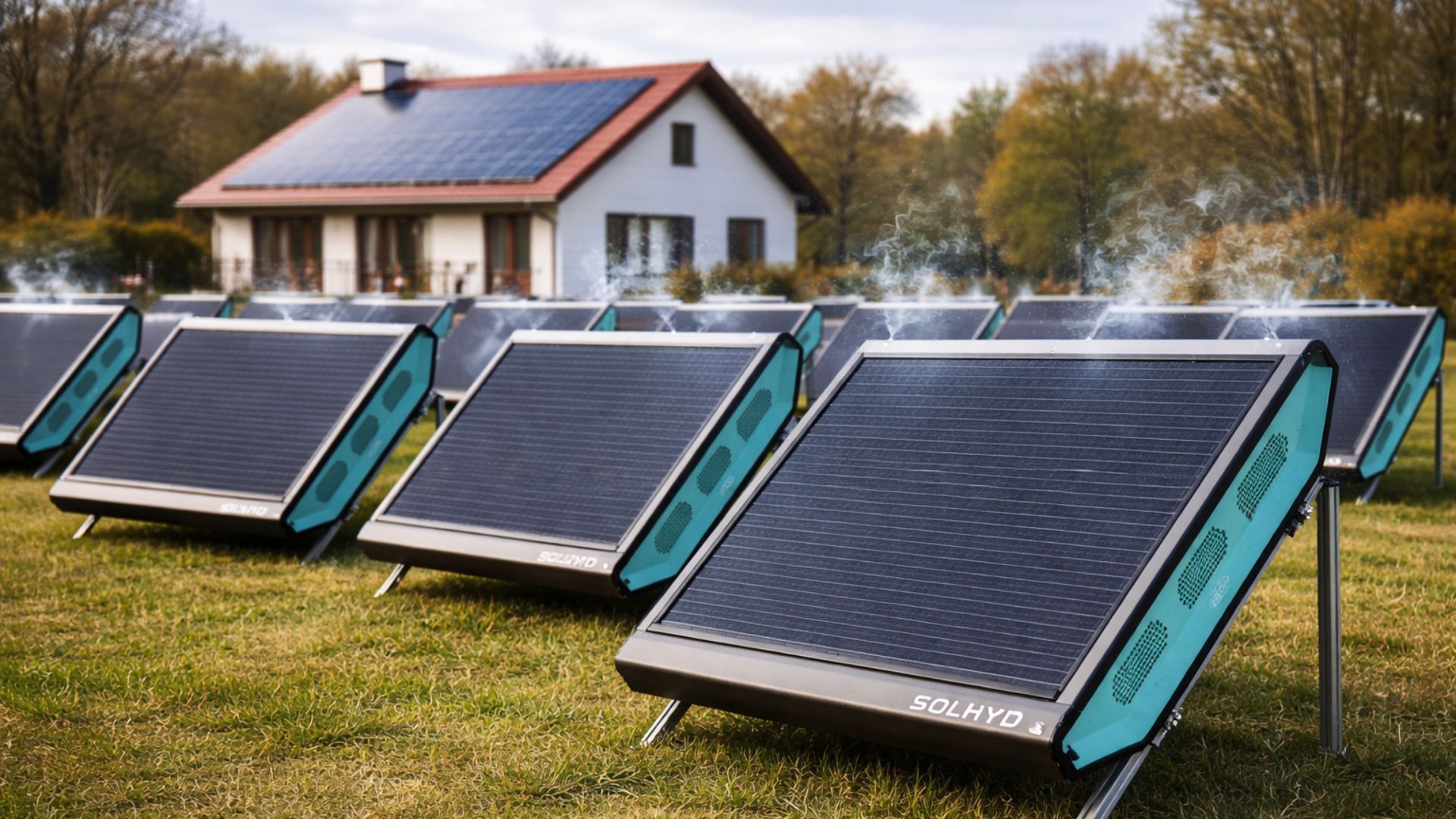
Green hydrogen at home: Belgium launches new technology that makes solar panels produce fuel from the moisture in the air, which could boost the energy transition.
-
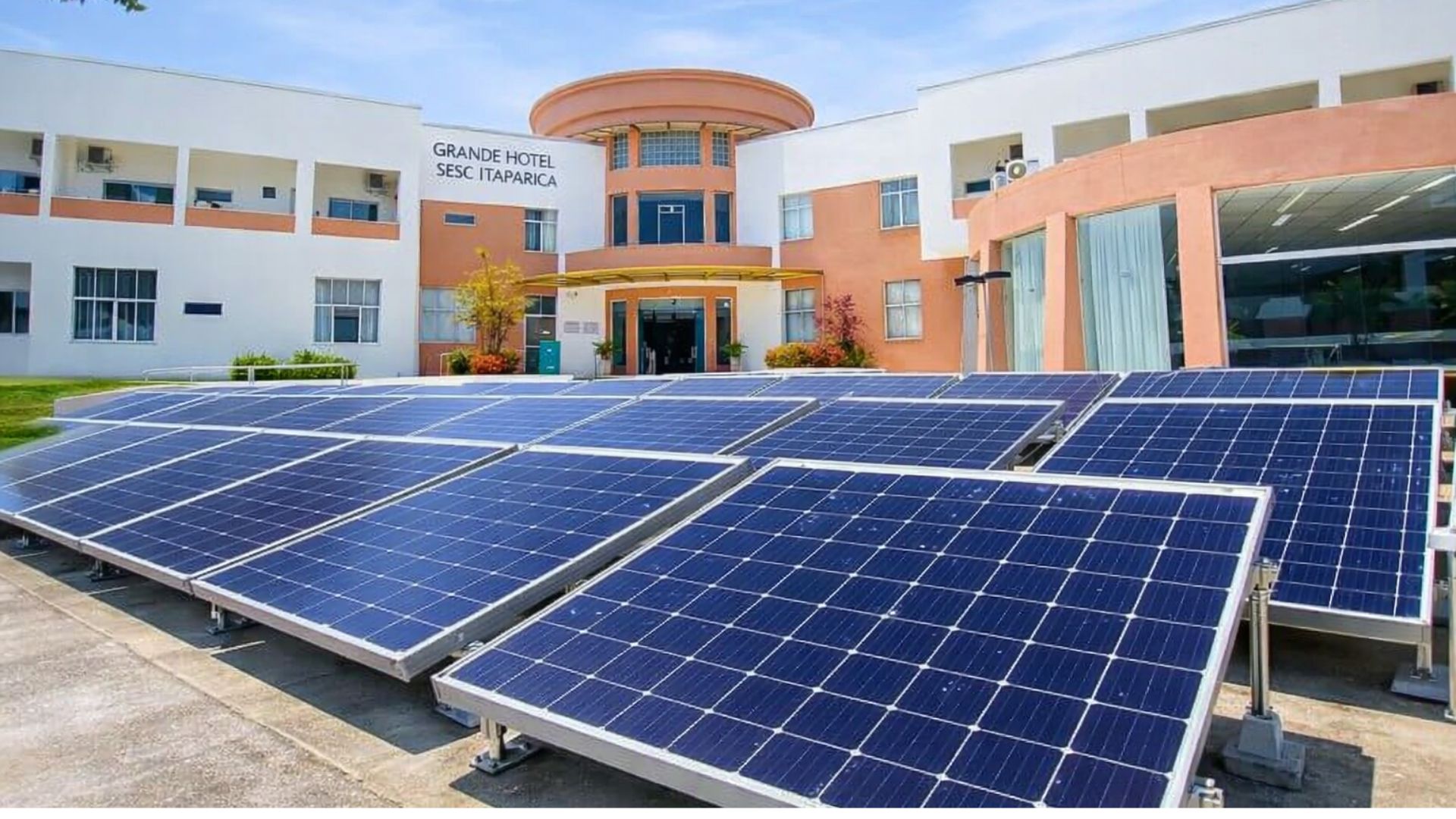
Sesc-BA bets on renewable energy with the support of EDP and drives the energy transition with a direct impact on cost reduction and the sustainability of its operations in Bahia.
-
Technology giant breaks global sustainability records: How Amazon’s leadership in renewable energy procurement transformed the global energy market in the past year.

-
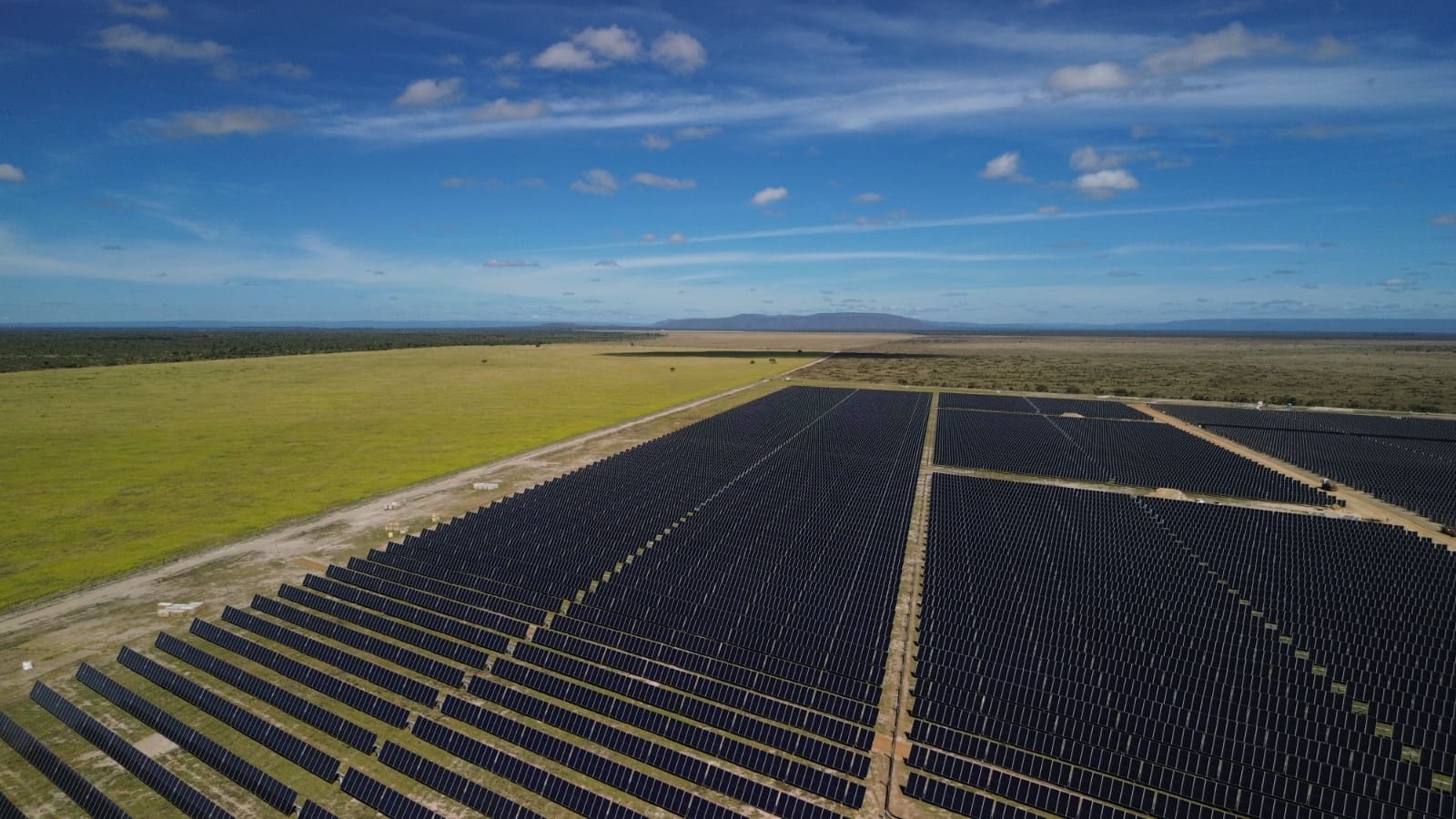
Alert in the electric sector: Atlas Renewable Energy confirms billion-dollar investment and Brazil risks losing a share of the new investment in Latin America to neighboring countries.

However, with the Industrial Revolution, which according to the BBC’s history occurred between the 18th and 19th centuries, the intensive use of fossil fuels like oil and natural gas increased exponentially.
Nonetheless, this progress brought significant costs: environmental degradation, pollution, and climate change, which became subjects of study and growing concern.
Only in the 20th century did the first efforts begin to emerge to diversify the energy matrix and reduce dependence on fossil fuels.
For example, oil proved to be economically and geopolitically unstable, while the environmental impact started to be widely discussed.
According to the International Energy Agency (IEA), after the oil crisis of 1973, countries began to invest in alternative energy sources.
This crisis, as reported by the IEA, marked an important turning point in global energy policy.
Thus, renewable energies — such as solar, wind, hydro, biomass, and geothermal — began to represent viable and strategic alternatives.
This transformation did not occur in isolation. In fact, scientific advancement, social pressure, and the creation of international bodies, such as the International Renewable Energy Agency (IRENA), founded in 2009, provided technical and political support for countries to invest heavily in clean energy.
Therefore, the concept of sustainability has established itself as an essential value, influencing government and private decisions, as highlighted by the UN’s annual reports on sustainable development.
The Growth of Renewable Energies and the Demand for Professionals
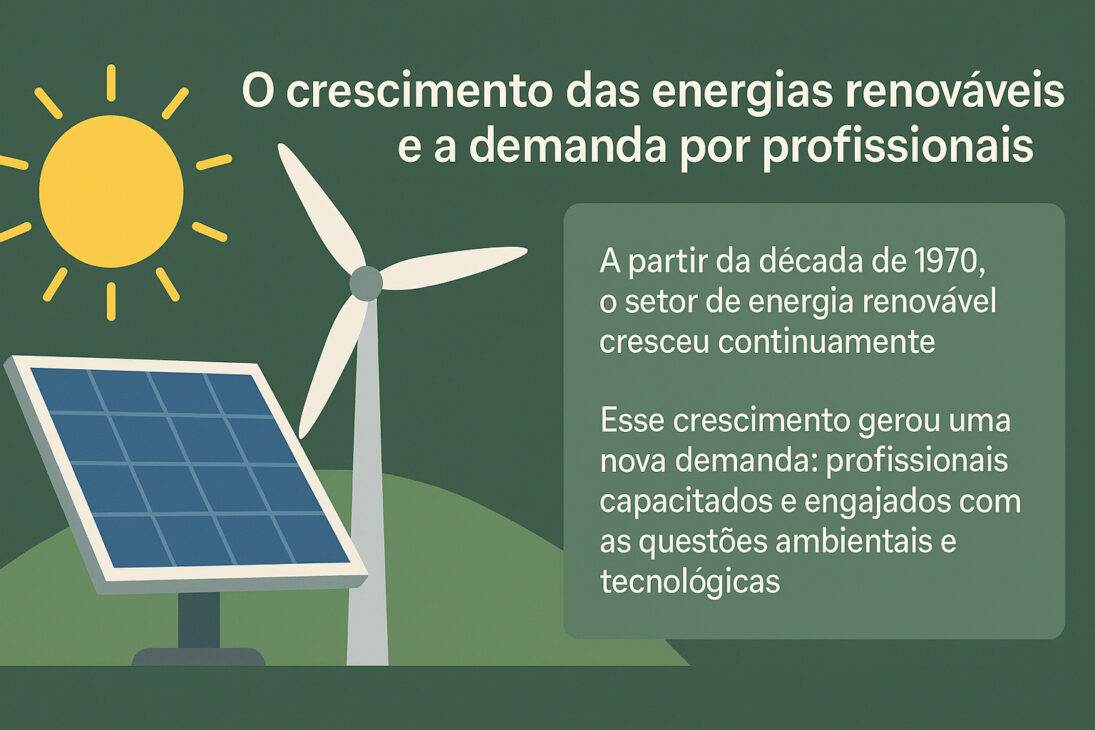
Starting in the 1970s, with the oil crises and the first international conferences on the environment — such as the Stockholm Conference of 1972, according to the United Nations (UN) — the concept of clean energy gained strength. Since then, the sector has grown continuously.
Moreover, with the popularization of photovoltaic technologies, more efficient wind turbines, and new models of environmental management, the renewable energy market has expanded rapidly, according to data from the Global Wind Energy Council (GWEC) and the International Energy Agency (IEA).
Consequently, this growth has generated a new demand: qualified professionals engaged with environmental and technological issues.
Therefore, a career in renewable energy today involves a wide range of functions, from technical areas to sectors of planning, regulation, and innovation.
In summary, the field combines scientific knowledge, environmental sensitivity, and the ability to adapt to constant changes.
For those starting, one of the first steps is to understand the main fronts of the sector.
For instance, solar energy requires electrical engineers, installation technicians, sales professionals, and energy efficiency specialists.
On the other hand, the wind sector demands knowledge in aerodynamics, logistics, and equipment maintenance.
Additionally, transversal areas such as project management, environmental law, green economics, environmental engineering, and public policies also have relevance.
Furthermore, academic training represents an important step, but practical learning is equally essential.
Thus, internships, research projects, participation in events, and complementary courses help to build solid knowledge and develop networking, which is fundamental in this dynamic and competitive market.
Opportunities in the Brazilian Market and Professional Updating
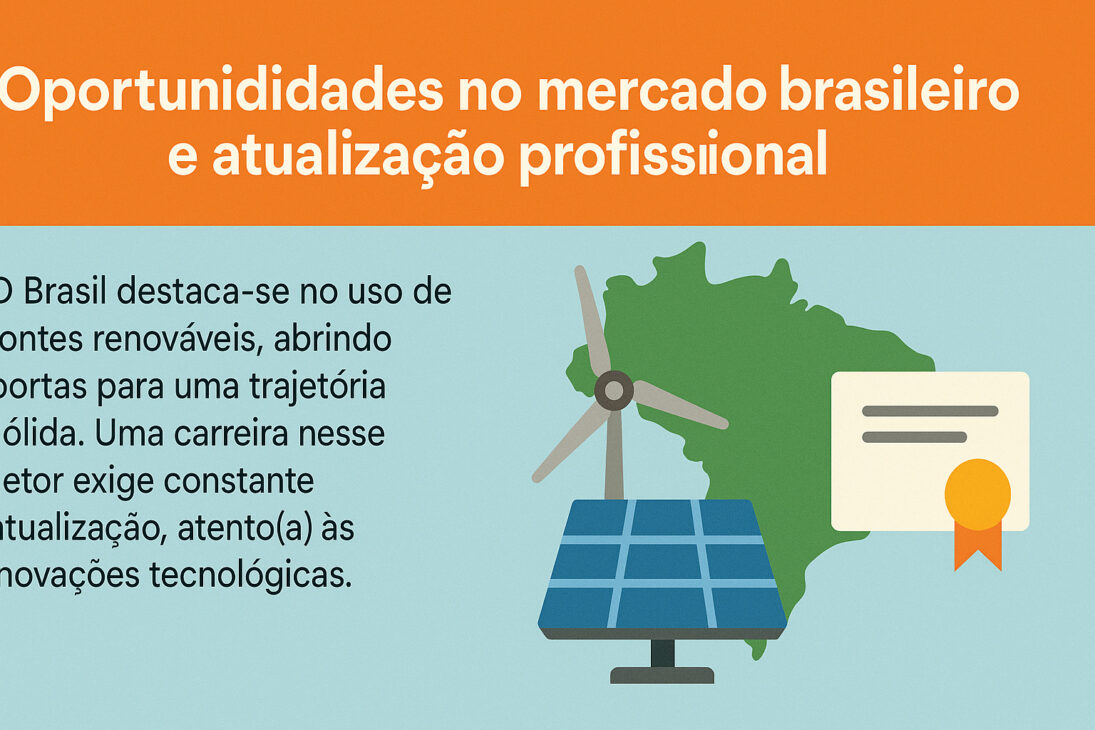
Brazil stands out internationally in the use of renewable sources, mainly due to its hydropower matrix and the growth of solar and wind energy in recent years.
According to data from the Energy Research Company (EPE) released in 2023, Brazil already has over 30% of its energy matrix derived from non-conventional renewable sources.
Therefore, this prominence opens doors for professionals who wish to build a solid career, especially in regions with greater energy potential, such as the Northeast for wind energy and the Southeast and Central-West for solar energy.
Thus, a career in renewable energy requires constant updating.
As the advancement of technologies requires professionals to pay attention to innovations, such as energy storage systems, smart grids, microgrids, and new forms of integration between different sources.
Consequently, many seek specialization courses, MBAs, or international certifications to enhance their knowledge.
Additionally, areas of management and strategic planning are gaining increasing importance.
Thus, professionals who align technical knowledge with business vision and environmental policies gain prominence in the market.
In other words, the ability to analyze data, interpret regulations, and develop sustainable projects offers a competitive differential.
However, the energy transition is, above all, a cultural and strategic movement.
Indeed, companies need professionals capable of communicating the benefits of clean energy, developing sustainability plans, monitoring environmental impact metrics, and working in education and awareness of society.
Therefore, areas such as communication, marketing, pedagogy, sociology, and law also have space in this ecosystem.
Entrepreneurship, Challenges, and International Vision
Another important point is entrepreneurship.
Many professionals open their own businesses, providing consulting services, selling equipment, or developing sustainable solutions for companies and consumers.
Therefore, the sector is fertile for those with a future vision who wish to act independently, bringing innovation and socio-environmental responsibility to their projects.
Moreover, renewable energy represents an open field for technological innovation and creative business models.
Startups focused on energy efficiency, monitoring software, platforms for selling distributed energy, and integrated solutions for communities present great potential.
Without a doubt, the environment encourages those who want to undertake with purpose.
However, like any professional journey, a career in renewable energy faces challenges.
Bureaucracy, the lack of stable policies in some countries, inequalities in access to technology, and the resistance of traditional sectors still represent barriers that require resilience and strategic vision.
Therefore, it is essential to cultivate clear values: commitment to the planet, environmental ethics, and the pursuit of lasting solutions.
Furthermore, this career has a strong international bias. In fact, many professionals work on cooperation projects, multinational companies, or non-governmental organizations linked to energy and the environment.
Consequently, knowing English and being willing to work in multicultural contexts broadens the job possibilities.
Skills to Stand Out and the Impact of the Career
To stand out, those looking to build a career in renewable energy should develop skills beyond the technical curriculum.
Therefore, critical thinking, creativity, leadership skills, teamwork, and empathy are increasingly valued competencies.
After all, it is not just about generating energy more cleanly, but about transforming the way we live, consume, and interact with nature.
Additionally, adapting to the rapid technological evolution becomes essential.
For instance, digital tools, data analysis, artificial intelligence, and automation are increasingly present in the sector.
Thus, professionals who invest in developing these skills find greater chances for growth and innovation.
Finally, mastering a career in renewable energy means committing to the future, to science, to social justice, and to the preservation of natural resources.
Without a doubt, this mission contributes to building a fairer, more resilient, and sustainable economic model.
In times of climate crisis and resource scarcity, the relevance of this choice intensifies.
Therefore, whether you are a student seeking your first opportunity or a professional transitioning careers, the renewable energy sector offers many opportunities.
With dedication, study, and purpose, it is possible not only to build a successful trajectory but also to leave a positive legacy for future generations.










-

-

3 pessoas reagiram a isso.