





 Portuguese
  English
  Spanish
  5 min of reading
  0 comments


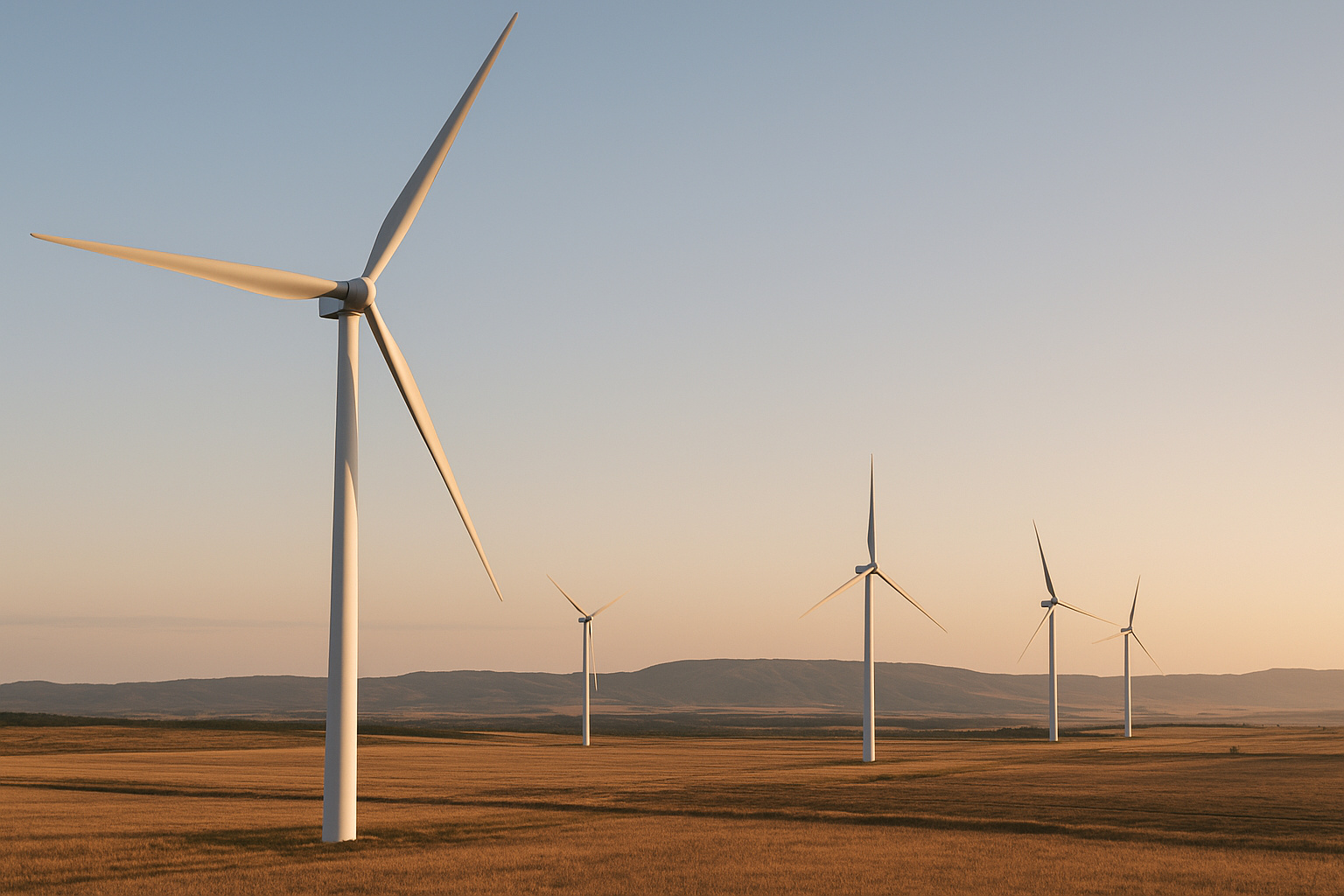
Discover How Investment in Wind Energy Can Generate Sustainable Financial Return, Transform the Energy Sector and Open New Opportunities in the Renewable Energy Market.
First of all, it is important to understand why investment in wind energy has grown so much in recent years.
In a world seeking sustainable solutions, this renewable source stands out more and more. Additionally, it represents a real opportunity for financial return combined with environmental responsibility.
Historically, winds have always been harnessed intelligently by various civilizations. For example, Persians and Greeks used mills for agricultural activities.
-
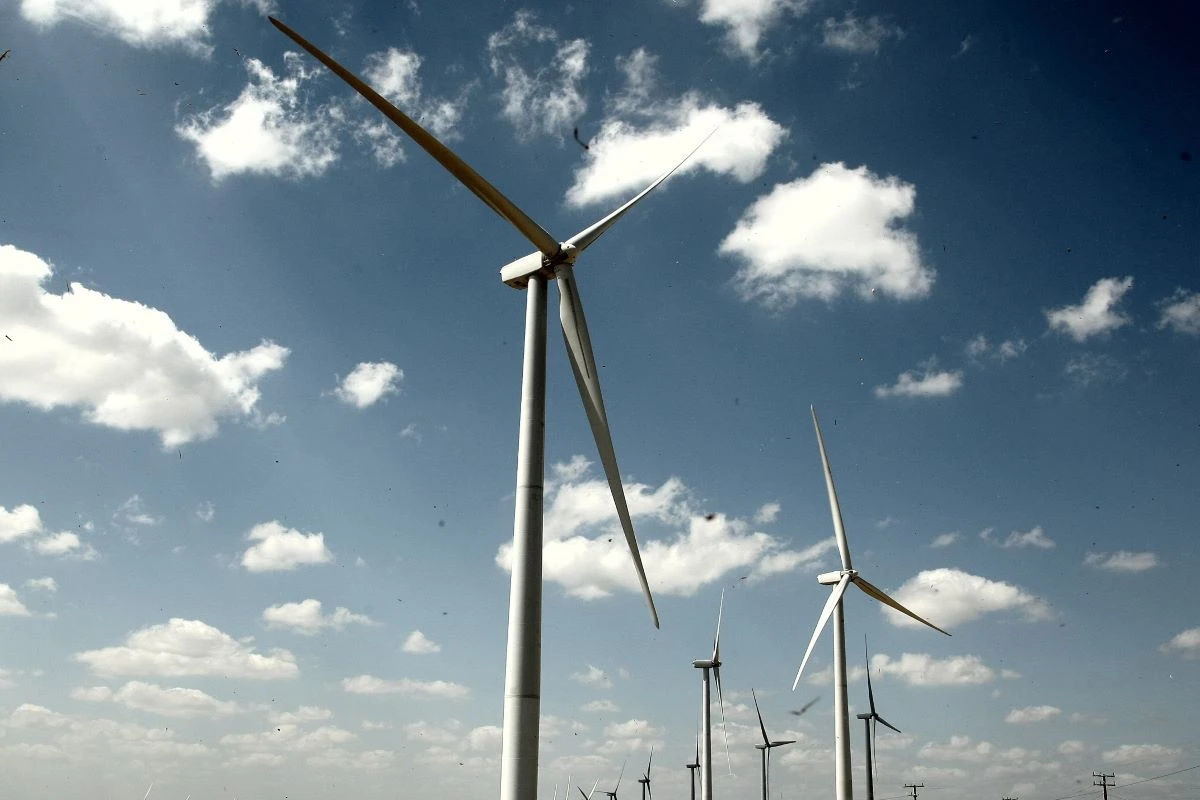
Urgent energy transition: Greenpeace advocates for massive investments and points to Brazil as a global leader in wind energy production in the coming years.
-
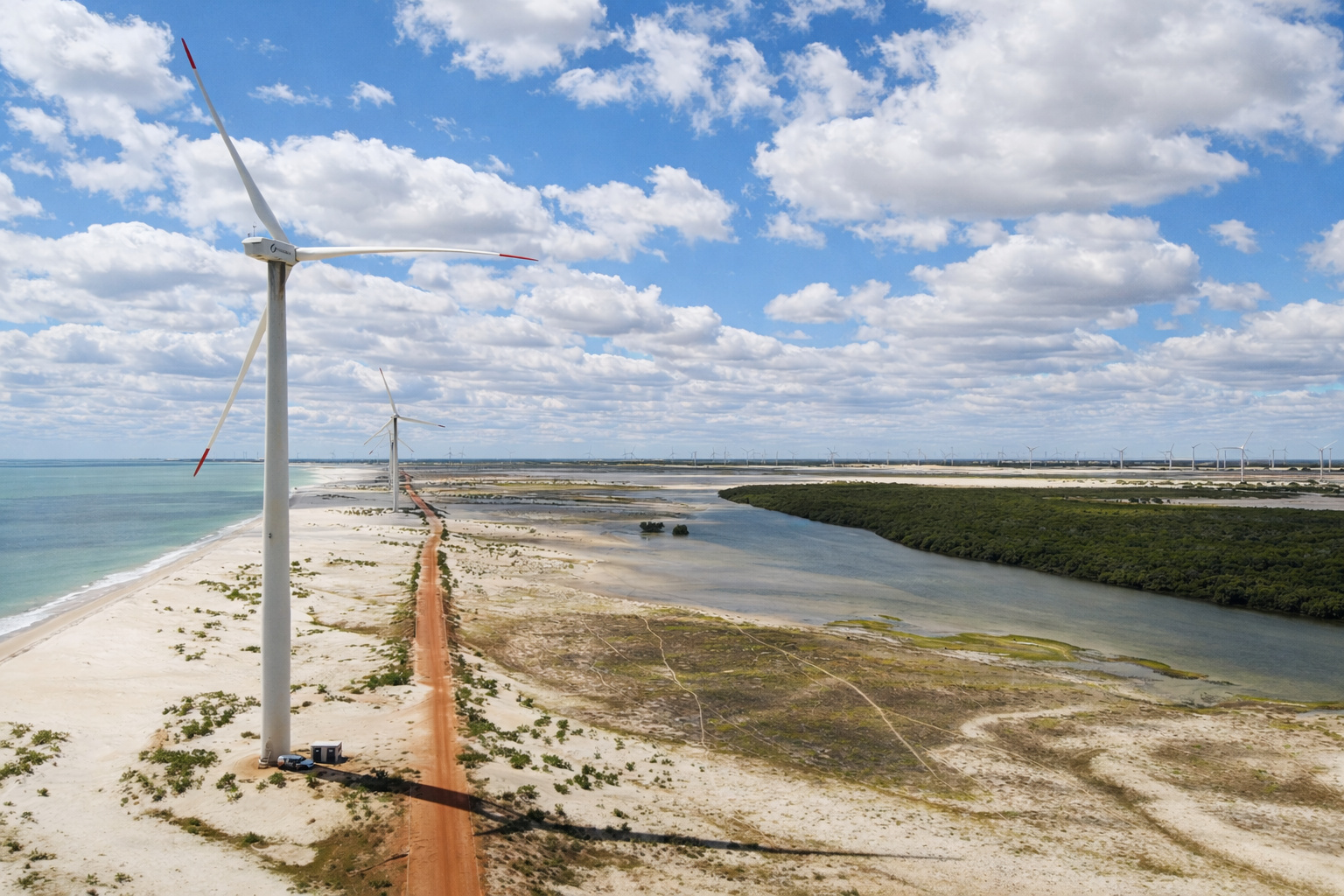
Conflict in the Sertão: Rural communities in Rio Grande do Norte report issues with wind farms and the new challenges of clean energy in the semi-arid region.
-
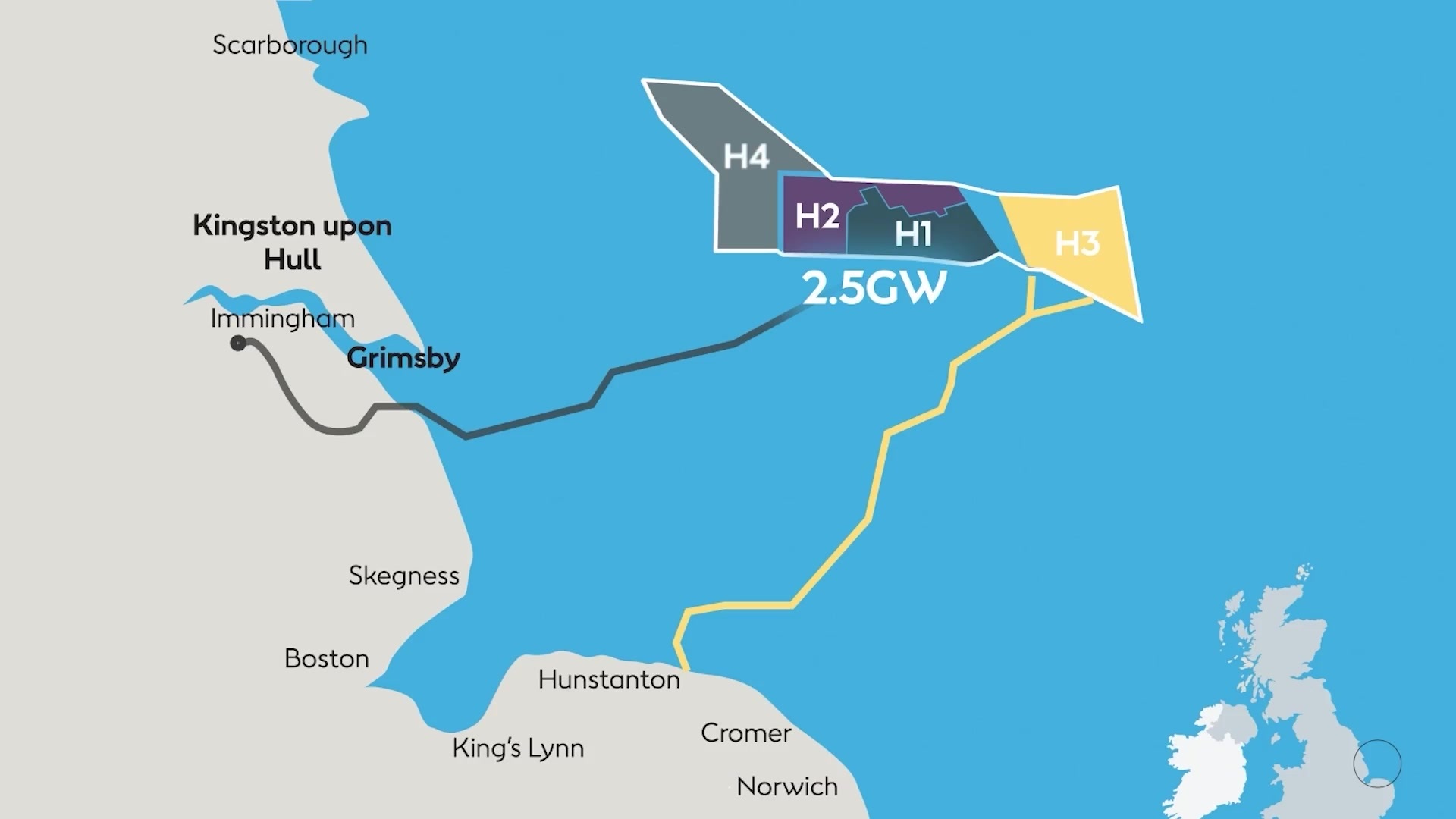
231 turbines of 260 meters at 160 km from the coast, monopiles weighing as much as nine blue whales embedded in the North Sea, and a crane ship taller than the Eiffel Tower: Hornsea 3 will be the largest offshore wind farm on the planet by 2027, and its first components have already arrived in England.
-
International Certification Puts Senai Norte on the Renewable Energy Map and Expands Access to Essential Training for Qualified Wind Power Professionals


However, it was only in the 20th century that wid energy was explored with a focus on electricity.
According to the International Energy Agency (IEA), the first modern turbines appeared in the 1980s, with significant technological advancements in the following decades.
Since the 2000s, global installed capacity has grown rapidly, driven by increasing concerns about global warming and the search for clean sources.
In Brazil, this transformation gained momentum in the last decade. According to data from the Energy Research Company (EPE), in 2010 the country had about 400 MW installed, and in 2023 this capacity surpassed 21 GW.
This expansion places Brazil among the largest producers of wind energy in the world.
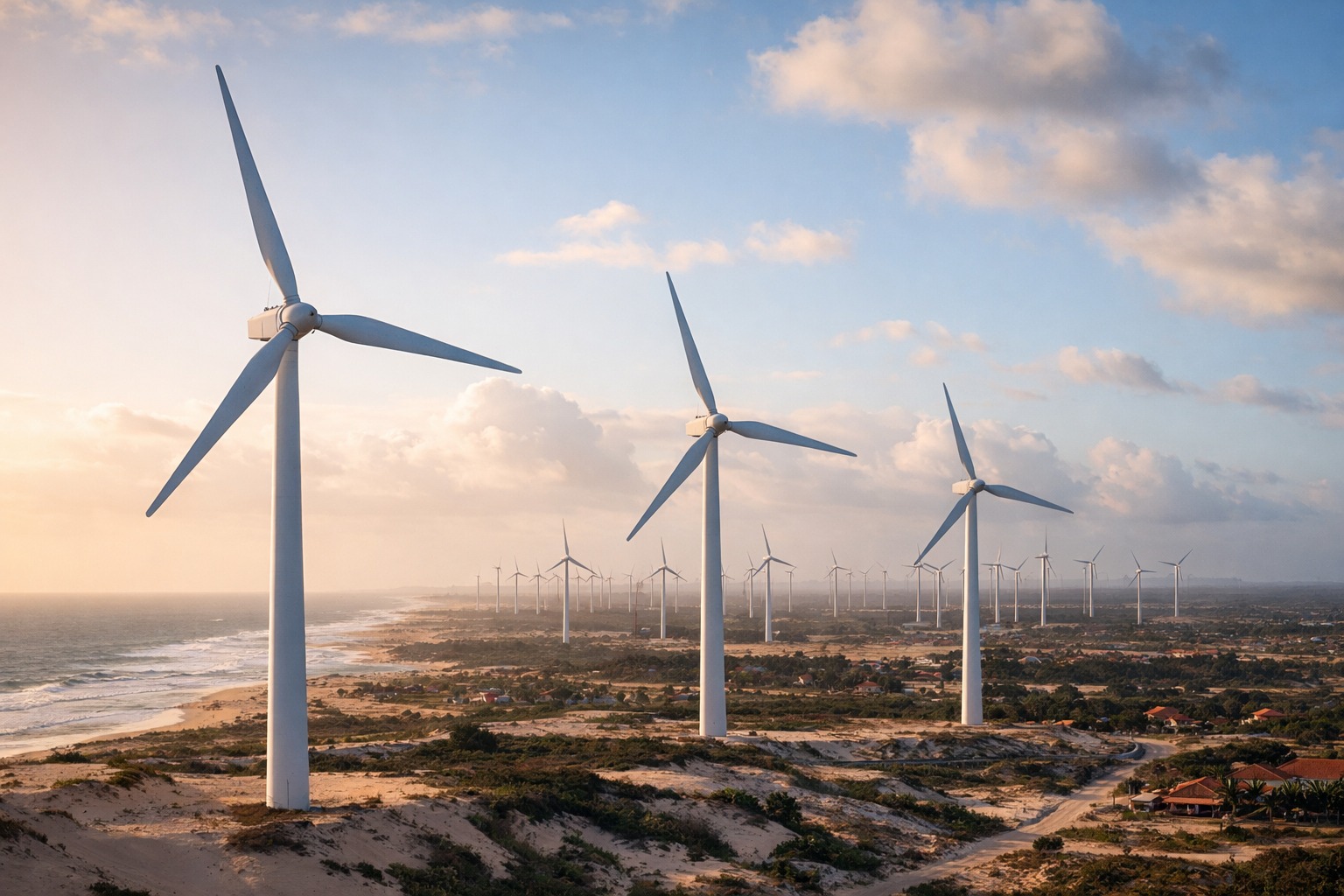
Due to its privileged geography, especially in coastal regions and the northeastern interior, the country has become a reference in wind power generation.
Furthermore, the cost of production has been progressively decreasing, reinforcing the appeal of this market for new investors.
For this reason, large Brazilian and foreign companies have been investing in this type of energy.
According to a report from the Ministry of Mines and Energy (MME), this expansion is due to the combination of technological innovation, tax incentives, and the increasing valuation of the green economy.
As a result, opportunities are becoming more accessible and attractive for those looking to start investing.
How the Wind System Works and Where to Invest
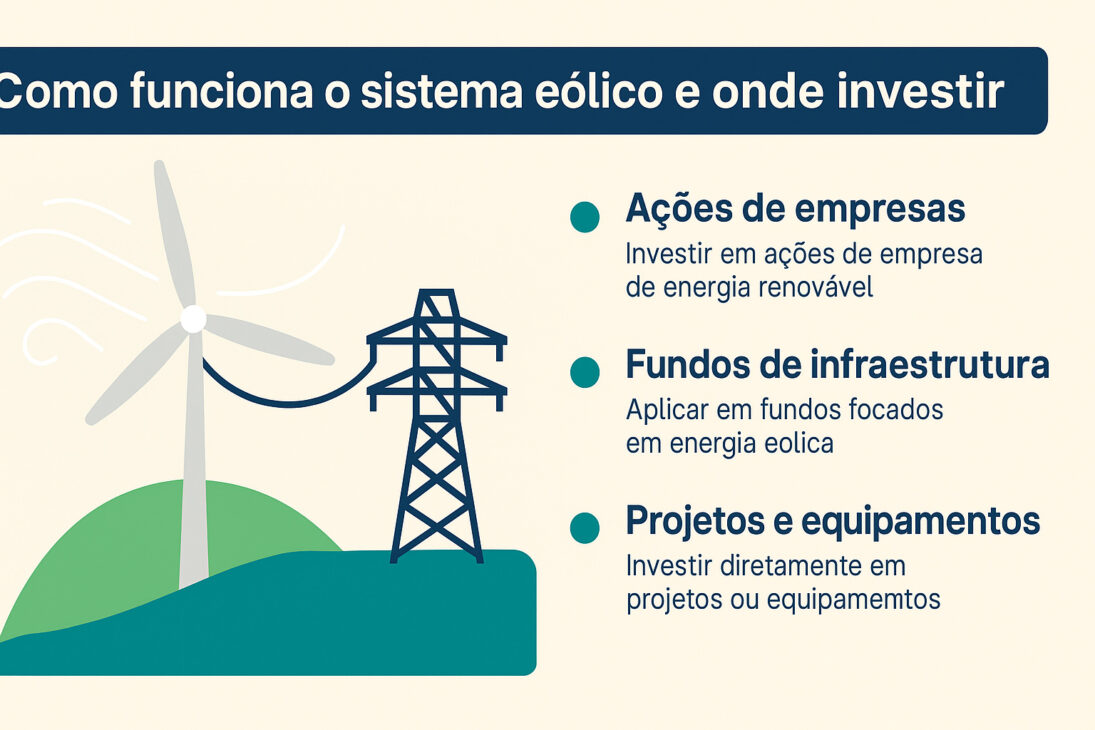
To better understand investment in wind energy, it is necessary to know how turbines operate.
First, these structures convert the kinetic energy of winds into electricity. Then, the generated energy is distributed to the grid.
Therefore, even with a high initial cost, the return can be significant over time.
In addition, there are different ways to invest in this sector. Many investors choose stocks of companies specialized in renewable energy.
Others prefer infrastructure funds focused on wind energy, allowing greater risk diversification.
On the other hand, some choose to invest directly in projects or purchase equipment for self-production.
In this regard, agribusiness has greatly benefited from wind energy. In rural areas, many properties install turbines aiming to reduce operational expenses.
Moreover, these producers can take advantage of specific lines of credit and incentive programs from the National Bank for Economic and Social Development (BNDES).
This way, they combine economy and sustainability.
It is worth noting that the technology has evolved constantly. As a result, newer, quieter, and more efficient wind turbines have emerged in the market.
Thus, even small entrepreneurs or families can generate their own energy and, eventually, sell the surplus to the electric grid.
According to the National Electric System Operator (ONS), distributed generation is growing at rates exceeding 30% per year in Brazil, highlighting the growing interest in the sector.
Risks, Return, and Environmental Impact
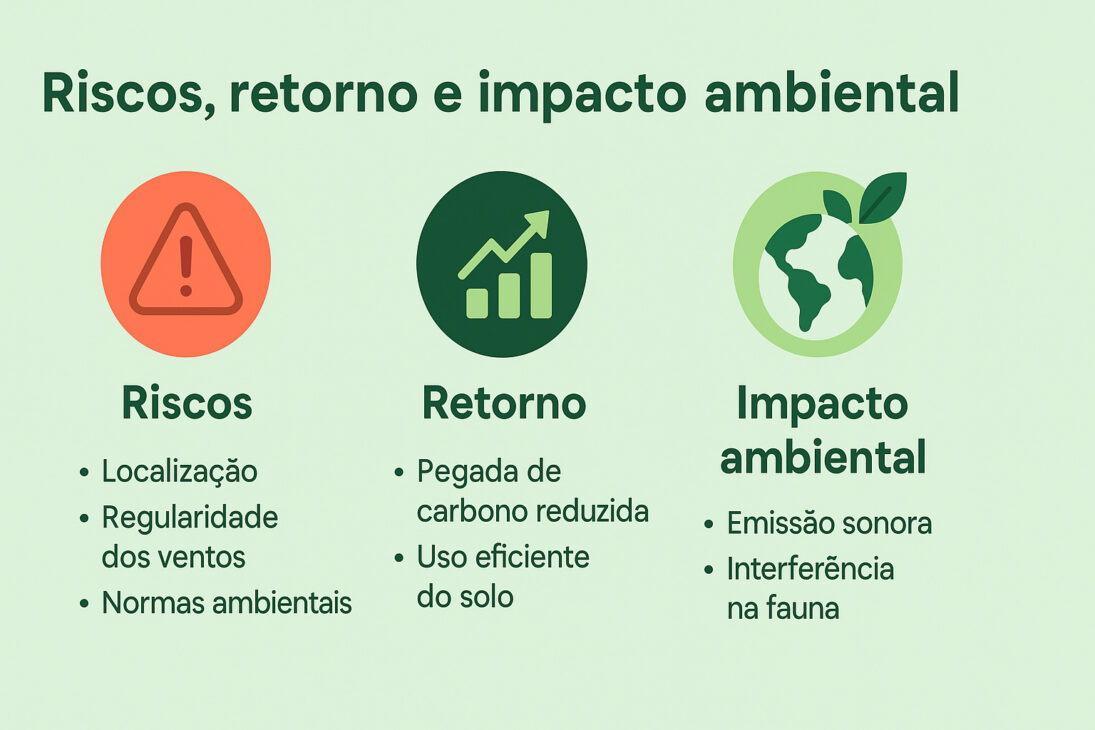
Despite the numerous benefits, it is essential to assess the risks before investing. Therefore, the investor should analyze factors such as location, wind regularity, environmental regulations, and estimated return.
Still, technological advancements have contributed to making these decisions safer.
In addition, wind energy stands out for its reduced environmental impact. As it does not emit polluting gases, it directly contributes to the reduction of carbon footprint.
At the same time, its land use is efficient, allowing, for example, coexistence with agriculture.
On the other hand, like any enterprise, this model also presents challenges. Visual impact, noise emission, and interference with fauna must be monitored.
However, with planning and responsibility, it is possible to minimize these effects and ensure environmentally viable projects.
In addition to environmental aspects, it is crucial to consider the social return of wind energy. This is because projects generate jobs, stimulate the local economy, and strengthen communities.
Thus, investing in this sector also contributes to regional and social development.
Another advantage is the predictability of return. As wind data is extensively studied, it is possible to estimate energy production with good accuracy.
Additionally, long-term contracts with distributors ensure stability and security for the investor.
According to the Ministry of Mines and Energy (MME), the forecast is that wind energy will continue to grow significantly in the country, potentially reaching 40 GW by 2030.
The Future of Wind Energy and Innovation Opportunities
Each year, the market increasingly values sustainable initiatives. Therefore, companies that operate with clean sources gain a competitive advantage and consumer trust.
Thus, investing in renewable energy is not just an ethical choice, but also strategic.
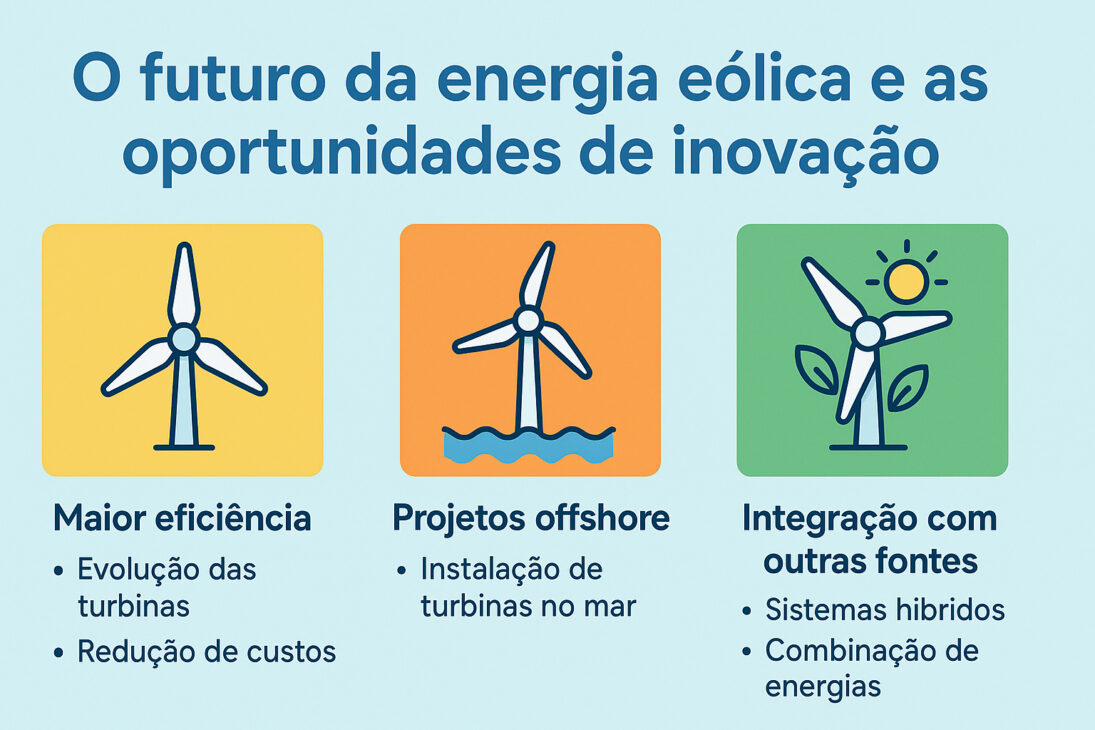
In this context, wind energy stands out as a fertile field for innovation. The evolution of turbines has increased efficiency, reduced costs, and allowed expansion into different types of terrain.
Furthermore, Brazil is already starting to advance with offshore projects, that is, turbines installed at sea, which take advantage of more constant winds.
Even more relevant is the integration with other sources. Hybrid systems that combine solar, wind, and biomass energy are becoming increasingly common.
This allows for greater reliability in supply and improves network performance.
Therefore, mastering investment in wind energy involves more than just putting money into it. It requires vision, study, and purpose.
Through this choice, the investor strengthens the global energy transition, collaborates with the environment, and builds a solid legacy.
Finally, the wind that drives turbines can also boost your journey in the world of investments. With responsibility and strategy, you transform clean energy into financial returns and a positive legacy.






Seja o primeiro a reagir!