





 Portuguese
  English
  Spanish
  4 min of reading
  2 comments


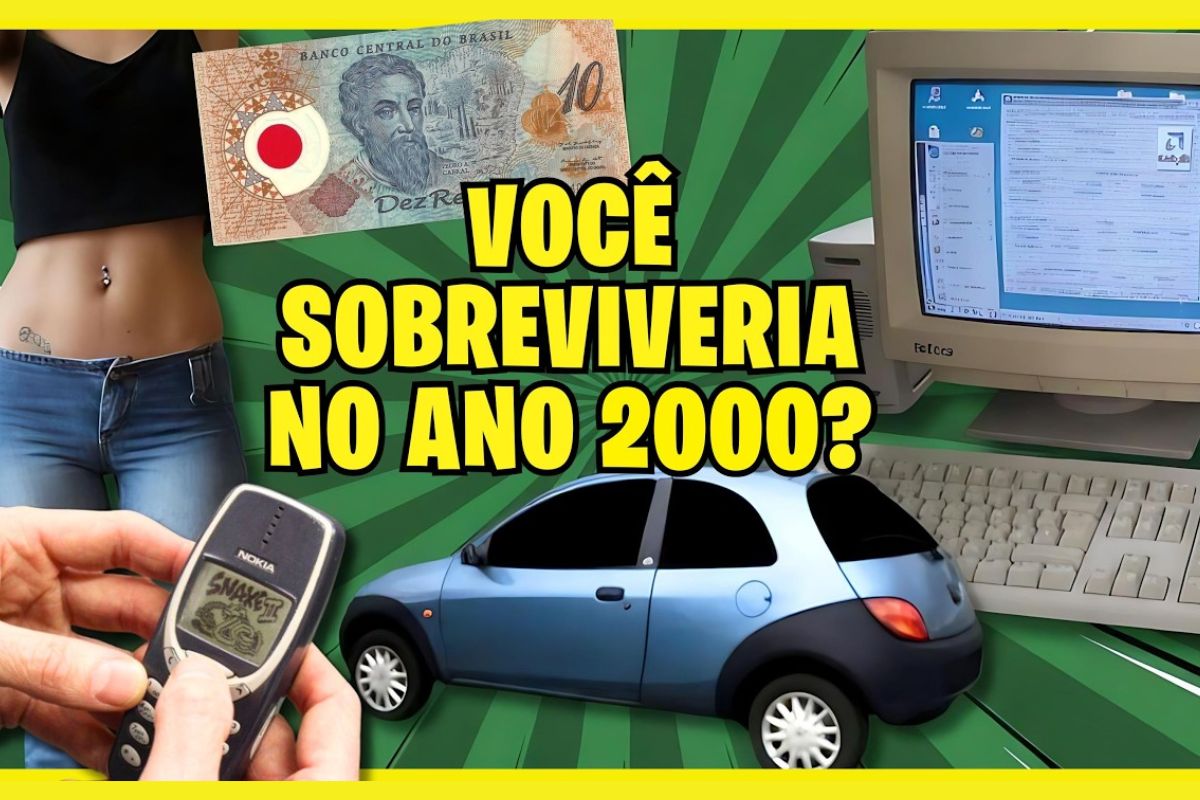


Brazil In The Year 2000 Mixed Optimism And Simplicity: An Era Without Mobile Internet, With A Minimum Wage Of 151 Reais, French Bread At Five Cents, And An Analog Routine That Shaped An Entire Generation
Trying to imagine what it was like to live in the year 2000 is to return to a country in transition. The 21st century began with promises of modernity, but daily life still had much of the 90s. Brazil was under the second term of Fernando Henrique Cardoso, and the Real Plan consolidated the economic stability initiated six years earlier. The country surpassed 170 million inhabitants, and the big debate at the turn of the millennium was the dreaded Y2K bug, a supposed computer crash at the turn of the year 2000 — which never happened.
The internet was crawling, and the mobile phone was still a status symbol. Having a computer at home was a luxury, and few imagined that, 25 years later, connectivity would fit in a pocket. Daily life was analog: landline phone calls, printed telephone directories, and meetings arranged by word of mouth. Even so, the feeling was one of euphoria: Brazil seemed to finally be entering the “future.”
Minimum Wage Of R$ 151 And French Bread At Five Cents
The minimum wage in May 2000 was R$ 151, rising to R$ 180 the following year.
-
These living root bridges and ladders are over 700 years old and help indigenous people survive in one of the rainiest regions in the world.

-
From sertanejo star to international investor: Ana Castela invests millions in a mansion in the USA, creates a themed accommodation in Orlando, and shows that the “boiadeira” also wants to grow away from the stage.

-
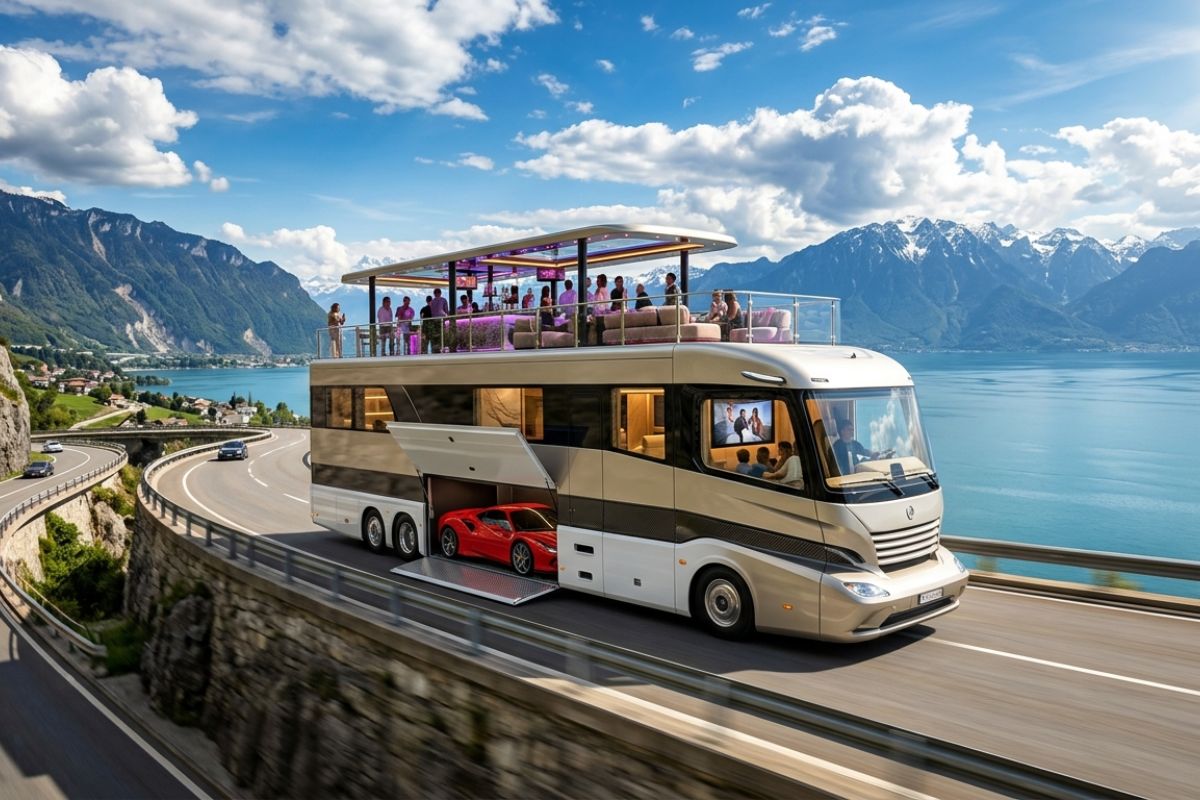
The 10 most stunning motorhomes in the world: a $3 million trailer with a rooftop nightclub and garage for a Ferrari, “palaces on wheels” with Italian marble, private cinema, and five-star hotel luxury for billionaires.
-
Trump wanted to spend $400 million on the White House, but the courts prohibited the million-dollar construction.


As a result, purchasing power was reduced, but prices were also quite different.
A French bread cost R$ 0.05, half a kilogram of coffee cost R$ 2.59, and a can of Ninho milk cost R$ 2.99.
A new Volkswagen Gol could be bought for R$ 12 thousand, and the Fiat Palio, considered a popular car, cost around R$ 14 thousand.
However, buying a vehicle required sacrifice: even with the expansion of credit, high interest rates and expensive financing limited the dream of consumption.
Those earning minimum wage would need over six years of income to buy a new car.
Technology And Internet At The Beginning Of The Century
The average Brazilian lived in a world without mobile internet. Dial-up connections were slow, noisy, and occupied the phone line.
When broadband internet began to arrive, it was a privilege for a few. Personal computers were still expensive and seen as a status symbol.
The mobile phone only made calls and cost a fortune. Models like the Nokia 3310 cost between R$ 300 and R$ 500, the equivalent of up to three minimum wages.
MSN Messenger and ICQ were the social networks of the time, while SMS was starting to become popular.
Digital life was restricted to those who could afford connection minutes and megabytes of patience.
School And Daily Life: Chalk Still Dominated The Rooms
In Brazilian schools, the chalkboard still reigned supreme. School internet was a rarity and computer classes were just beginning to emerge.
Private schools were expanding, driven by the search for quality education, while public education faced significant structural challenges.
The Fundamental and Secondary Education, recently instituted by the reform of 1996, replaced the old “first” and “second degrees.”
Academic focus was growing, while practical subjects, like manual work and arts, were losing space.
Meanwhile, preparatory courses gained strength as a gateway to the most competitive public universities.
Cars, Motorcycles And Traffic In The 2000s
On the streets, popular cars dominated the urban landscape. Gol, Palio, Celta, and Ford Ka were the most visible models.
A brand new Celta cost about 80 minimum wages, while a Vectra or Corolla easily exceeded R$ 20 thousand.
In the two-wheeled segment, the Honda CG 125 reigned among workers, and the newly launched Honda Biz won over female audiences.
The popularization of motorcycles led the government to tighten licensing rules, requiring specific licenses even for vehicles under 100 cc.
Fashion, Music And Television Shaping A Generation
The early 2000s was a mix of trends. Low-rise waist dominated women’s fashion, paired with crop tops and shiny fabrics.
In hair, straight hairstyles became an obsession, fueling the boom of straighteners and chemical treatments.
Among men, cargo shorts and loose t-shirts marked the aesthetic influenced by hip-hop and international pop.
In music, Charlie Brown Jr., CPM 22, and Detonautas refreshed Brazilian rock.
Sandy & Júnior led the pop scene, while Exaltasamba and Katinguelê filled the airwaves with romantic pagode.
In soap operas, “Laços de Família” stopped the country, and in national cinema, “O Auto da Compadecida” showcased the power of Brazilian audiovisual alongside international blockbusters.
Between The Y2K Bug And The Glow Of Nostalgia


Living in the year 2000 was balancing the past and the future.
Brazil was starting to become computerized, but daily life still depended on analog clocks, paper planners, and landline contacts. Life felt slower — and, for many, lighter.
Technology promised the future, but it had not yet dominated every second of the present.
Those who lived through this transition carry the memory of a time of simplicity and discoveries, when the country seemed to restart under the light of the new millennium, and the biggest innovation was being able to send an instant message from one computer to another.
Do you remember what it was like to live in the year 2000? What marked you the most: the simplicity of life without mobile internet or the charm of the new things that were coming?







Devo lembrar que a época trouxe esperança financeira. O salário real das pessoas estava acima do salário mínimo. Essa época marcou meu início no mercado de trabalho. Iniciei ganhando 1500,00 por mês. Na época comprei um astra ano 98 semi novo por 13 mil financiado em 48x. A prestação foi de 410 reais. Auxiliares de produção na empresa ganhavam 520 reais por mês. Assim como funcionários e ajudantes. Pessoas da família trabalhando em serviços comuns como ajudantes d pedreiro ganhavam 3 a 5 salários mínimos. Com o passar dos anos o salário mínimo subiu, mas a crise econômica congelou o salário das pessoas. Ganhar um pouco mais que um salário mínimo foi normal até 2005,2006. Quando o salário não acompanhou a inflação, como o salário já estava acima do mínimo, não havia muito o que fazer. As empresas também começaram a trocar os funcionários, para poder abaixar o salário para o mínimo. Muitas pessoas compraram carros, casas financiadas. Não podiam pagar com o salário menor. Foi o início da crise que teve seu pico entre 2008 e 2010.
Bem lembrado.