





 Portuguese
  English
  Spanish
  3 min of reading
  5 comments


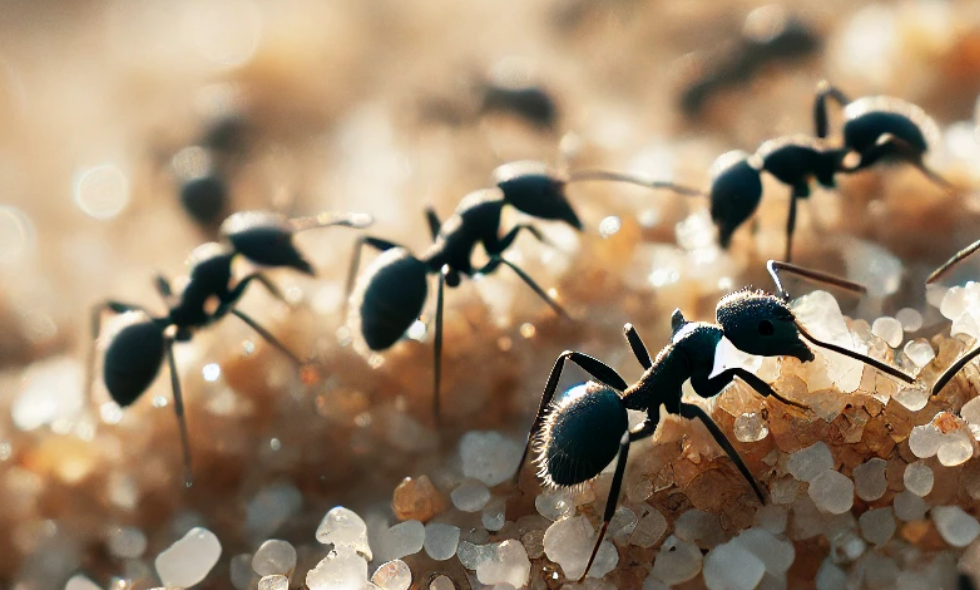


Incredible! Hugo Dean, only 8 years old, made a discovery that intrigued scientists for more than 100 years.
A simple observation by a boy in the backyard changed the scientific understanding of the relationship between ants, wasps, and oaks. Hugo Deans, only 8 years old, noticed something seemingly trivial: ants carrying what appeared to be seeds.
This small detail turned out to be a gateway to understanding evolutionary strategies, chemical mimicry, and ecological interdependencies.
With the help of his father, Andrew Deans, an entomology professor at Penn State, the discovery gained depth and became a research of global impact.
-
With a cost per shot close to zero, the DragonFire laser could change naval warfare in 2027 and provide British ships with nearly unlimited defense against drones.

-
A British startup creates tires that generate electricity in electric vehicles when passing over potholes, speed bumps, and cracks.

-
Scientists have created robots made with living cells that have their own nervous system, swim on their own, explore the environment, and self-organize without any genetic engineering, and now they want to do the same with human cells.

-
Students create a solar-powered ambulance that operates without a plug, without fuel, and still keeps medical equipment running in remote areas.

A Look That Made a Difference
At eight years old, Hugo saw something that might have gone unnoticed by many. He spotted seed-like objects around an anthill and decided to share his discovery with his father. Andrew Deans quickly identified that those “seeds” were actually wasp galls – growths on oak leaves used to shelter the larvae of those wasps.
Intrigued by the proximity between the galls and the ants, the professor initiated an investigation that revealed a previously unknown relationship.
The galls, as it turned out, play a crucial role. Created by wasps to protect their larvae, they have characteristics that attracted the attention of the ants.
This connection, previously ignored, led scientists to investigate whether there was a collaboration between the two insects.
Surprising Alliance Between Ants and Wasps
The study led by Andrew showed that the gall wasps do more than manipulate oaks. They also influence the behavior of ants.
The galls contain capsules rich in fatty acids, which mimic elaiosomes – nutrient-rich appendages of seeds, often collected by ants. Thus, the wasps trick the ants into transporting the galls to their nests, believing they are food.
This phenomenon, called myrmecochory, is a strategy in which ants disperse seeds in exchange for nutrition.
In the case of the wasps, the larvae inside the galls benefit from the protection provided by the ants’ nests. The interaction benefits both sides, highlighting the complexity of these natural relationships.
The Role of Chemical Mimicry
Chemical analyses showed that the galls attract ants because they contain substances similar to those found in dead insects, part of their natural diet.
The research revealed that ants prefer galls with intact caps, ignoring those without these appendages. These “caps” act as irresistible baits, proving the central role of chemical mimicry in the interaction.
This discovery raises intriguing questions. Did ants start collecting galls by chance, or did wasps manipulate this behavior over time? The answer could change our understanding of how species co-evolve and adapt.
The Evolution of the Strategy
The evolution of this relationship is a puzzle. Scientists wonder if the behavior of ants is a recent adaptation or if the manipulation by wasps predates the seed dispersal by plants. Both hypotheses challenge established ideas about evolutionary processes.
“The behavior of ants collecting elaiosomes has been documented for over 100 years,” explained Andrew Deans. “It is a classic example of mutualism between plants and insects. Now, we see how other organisms can exploit these interactions.”
Science Driven by Curiosity
Hugo’s discovery serves as a powerful reminder of the role of curiosity in science. Children have a fresh perspective on the world, noticing details that go unnoticed by adults. Andrew recognized the importance of his son’s observant eye: “This interaction between ants, wasps, and oaks is incredibly complex. Hugo noticed something that seemed simple, but contained extraordinary depth.”
Hugo, however, does not consider himself a little scientist. He dreams of pursuing different paths than his father, but his contribution to this research is undeniable.
Implications for Ecology and Conservation
This discovery underscores the delicate web of ecological interactions that sustain ecosystems. Understanding how species like ants and wasps collaborate can aid in conservation efforts. Species that rely on such specific relationships are particularly vulnerable to environmental changes.
Moreover, the research broadens the understanding of mutualism and co-evolution. It shows how organisms can take advantage of existing behaviors in other species to ensure their survival.








Sim, tudo isso é regido e foi criado por por Deus, por isso, essa complexidade que quanto mais se estuda, mais se descobre! Uma ação sem fim!
Quero saber mais sobre lambaris.
Em que ano se deu essa ‘descoberta’…?
Poderiam ilustrar mais as reportagens!